Kirjojen hintavertailu. Mukana 12 390 323 kirjaa ja 12 kauppaa.

Kirjailija

Dudley Andrew

Kirjat ja teokset yhdessä paikassa: 10 kirjaa, julkaisuja vuosilta 1995-2023, suosituimpien joukossa Sansho Dayu (Sansho the Bailiff). Vertaile teosten hintoja ja tarkista saatavuus suomalaisista kirjakaupoista.

10 kirjaa

Kirjojen julkaisuhaarukka 1995-2023.

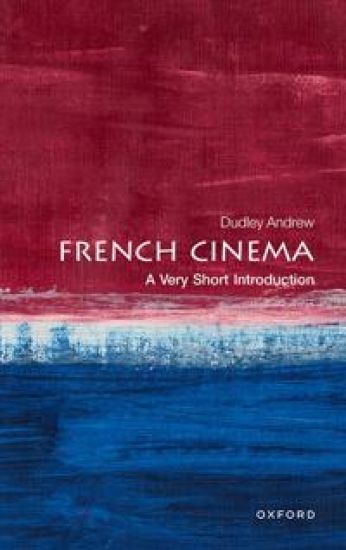
French Cinema

French Cinema

Dudley Andrew

Oxford University Press
2023
nidottu
It is often claimed that the French invented cinema. Dominating the production and distribution of cinema until World War 1, when they were supplanted by Hollywood, the French cinema industry encompassed all genres, from popular entertainment to avant-garde practice. The French invented the "auteur" and the "ciné-club"; they incubated criticism from the 1920s to our own day that is unrivalled; and they boast more film journals, fan magazines, TV shows, and festivals devoted to film than anywhere else. This Very Short Introduction opens up French cinema through focusing on some of its most notable works, using the lens of the New Wave decade (1958-1968) that changed cinema worldwide. Exploring the entire French cinematic oeuvre, Dudley Andrew teases out distinguishing themes, tendencies, and lineages, to bring what is most crucial about French Cinema into alignment. He discusses how style has shaped the look of female stars and film form alike, analysing the "made up" aesthetic of many films, and the paradoxical penchant for French cinema to cruelly unmask surface beauty in quests for authenticity. Discussing how French cinema as a whole pits strong-willed characters against auteurs with high-minded ideas of film art, funded by French cinema's close rapport to literature, painting, and music, Dudley considers how the New Wave emerged from these struggles, becoming an emblem of ambition for cinema that persists today. He goes on to show how the values promulgated by the New Wave directors brought the three decades that preceded it into focus, and explores the deep resonance of those values today, fifty years later. ABOUT THE SERIES: The Very Short Introductions series from Oxford University Press contains hundreds of titles in almost every subject area. These pocket-sized books are the perfect way to get ahead in a new subject quickly. Our expert authors combine facts, analysis, perspective, new ideas, and enthusiasm to make interesting and challenging topics highly readable.
Sansho Dayu (Sansho the Bailiff)

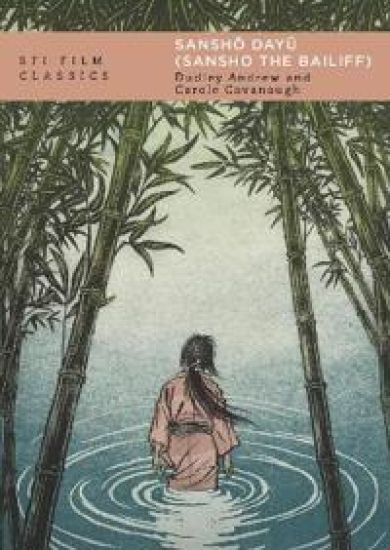
Sansho Dayu (Sansho the Bailiff)

Dudley Andrew; Carole Cavanaugh

Bloomsbury Publishing PLC
2020
nidottu
Kenji Mizoguchi's masterpiece Sanshô Dayû (1954) retells a classic Japanese folktale about an eleventh-century feudal official forced into exile by his political enemies. In his absence, his children fall under the corrupting influence of the malevolent bailiff Sansho. In their study of the film, film scholar Dudley Andrew and Japanese literature professor Carole Cavanaugh highlight the cultural, aesthetic and social contexts of this film which is at once rooted in folk legend and a modern artwork released in the aftermath of World War II. This edition includes a new foreword by the authors in which they consider the film's contemporary parallels in modern slavery and children torn from their families by malevolent authorities.
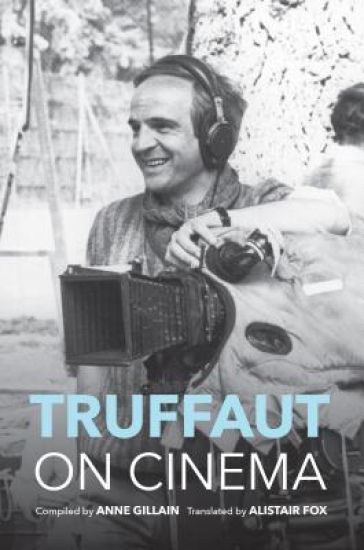
Truffaut on Cinema

Truffaut on Cinema

Anne Gillain; Dudley Andrew

Indiana University Press
2017
sidottu
Between 1959 and 1984, French film director François Truffaut was interviewed over three hundred times. Each interview offers critical insight into the genesis of Truffaut's films as he shares the sources of his inspiration, the choice of his themes, and the development of his screenplays. In addition, Truffaut discusses his relationships with collaborators, actors, and the circumstances surrounding the shooting of each film. These texts, originally assembled by Anne Gillain and published in French in 1988, are presented here in a montage arranged chronologically by film. This compilation includes an impressive array of reflections on cinema as an art form. Truffaut defines the aims and practices of the French New Wave, comparing their efforts to the films made by their predecessors and including comments that encompass the entire history of cinema. Truffaut on Cinema provides commentary on contemporary events, a wealth of biographical information, and Truffaut's own artistic itinerary.
Truffaut on Cinema

Truffaut on Cinema

Anne Gillain; Dudley Andrew

Indiana University Press
2017
pokkari
Between 1959 and 1984, French film director François Truffaut was interviewed over three hundred times. Each interview offers critical insight into the genesis of Truffaut's films as he shares the sources of his inspiration, the choice of his themes, and the development of his screenplays. In addition, Truffaut discusses his relationships with collaborators, actors, and the circumstances surrounding the shooting of each film. These texts, originally assembled by Anne Gillain and published in French in 1988, are presented here in a montage arranged chronologically by film. This compilation includes an impressive array of reflections on cinema as an art form. Truffaut defines the aims and practices of the French New Wave, comparing their efforts to the films made by their predecessors and including comments that encompass the entire history of cinema. Truffaut on Cinema provides commentary on contemporary events, a wealth of biographical information, and Truffaut's own artistic itinerary.
André Bazin

André Bazin

Dudley Andrew

Oxford University Press Inc
2013
nidottu
André Bazin, often dubbed the father of the French New Wave, has had an immense impact on film art. He is credited with almost single-handedly establishing the study of film as an accepted intellectual pursuit. The journal that he founded in 1951, Cahiers du Cinéma, remains the most influential archive of cinema criticism. He remains one of the most read, most studied, and most engaging figures ever to have written about film. The last few years have witnessed a massive resurgence of interest in Bazin among critics, scholars, and students of every persuasion. His writings, a mainstay of film theory courses, are now finding a place on the syllabi of core courses in film history, criticism, and appreciation. Andrew's intellectual biography is a landmark in film scholarship.
What Cinema Is!

What Cinema Is!

Dudley Andrew

Wiley-Blackwell (an imprint of John Wiley Sons Ltd)
2010
nidottu
What Cinema Is! offers an engaging answer to Andre Bazin's famous question, exploring his 'idea of cinema' with a sweeping look back at the near century of Cinema's phenomenal ascendancy. Written by one of the foremost film scholars of our timeEstablishes cinema's distinction from the current enthusiasm over audio-visual entertainment, without relegating cinema to a single, older modeExamines cinema's institutions and its social force through the qualities of key filmsTraces the history of an idea that has made cinema supremely alive to (and in) our times
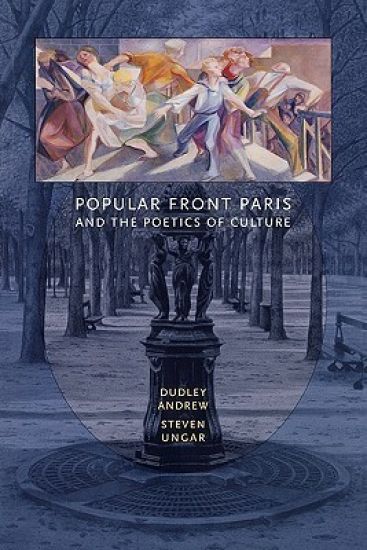
Popular Front Paris and the Poetics of Culture

Popular Front Paris and the Poetics of Culture

Dudley Andrew; Steven Ungar

The Belknap Press
2008
nidottu
The story of Paris in the 1930s seems straightforward enough, with the Popular Front movement leading toward the inspiring 1936 election of a leftist coalition government. The socialist victory, which resulted in fundamental improvements in the lives of workers, was then derailed in a precipitous descent that culminated in France's capitulation before the Nazis in June 1940. Yet no matter how minutely recounted, this "straight story" clarifies only the political activity behind which turbulent cultural currents brought about far-reaching changes in everyday life and the way it is represented.In this book, Dudley Andrew and Steven Ungar apply an evocative "poetics of culture" to capture the complex atmospherics of Paris in the 1930s. They highlight the new symbolic forces put in play by technologies of the illustrated press and the sound film—technologies that converged with efforts among writers (Gide, Malraux, Céline), artists (Renoir, Dalí), and other intellectuals (Mounier, de Rougemont, Leiris) to respond to the decade's crises.Their analysis takes them to expositions and music halls, to upscale architecture and fashion sites, to traditional neighborhoods, and to overseas territories, the latter portrayed in metropolitan exhibits and colonial cinema. Rather than a straight story of the Popular Front, they have produced something closer to the format of an illustrated newspaper whose multiple columns represent the breadth of urban life during this critical decade at the end of the Third French Republic.
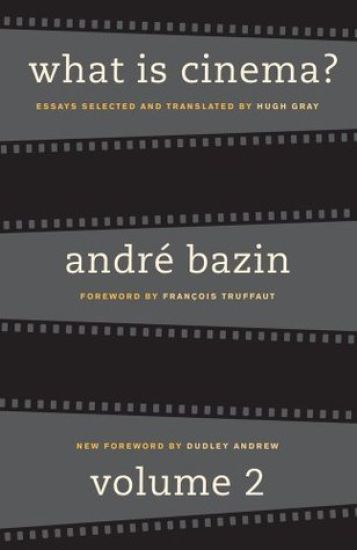
What Is Cinema? Volume II

What Is Cinema? Volume II

André Bazin; Dudley Andrew; Francois Truffaut

University of California Press
2004
pokkari
Andre Bazin's What Is Cinema? (volumes I and II) have been classics of film studies for as long as they've been available and are considered the gold standard in the field of film criticism. Although Bazin made no films, his name has been one of the most important in French cinema since World War II. He was co-founder of the influential Cahiers du Cinema, which under his leadership became one of the world's most distinguished publications. Championing the films of Jean Renoir (who contributed a short foreword to Volume I), Orson Welles, and Roberto Rossellini, he became the protege of Francois Truffaut, who honors him touchingly in his forword to Volume II. This new edition includes graceful forewords to each volume by Bazin scholar and biographer Dudley Andrew, who reconsiders Bazin and his place in contemporary film study. The essays themselves are erudite but always accessible, intellectual, and stimulating. As Renoir puts it, the essays of Bazin "will survive even if the cinema does not."
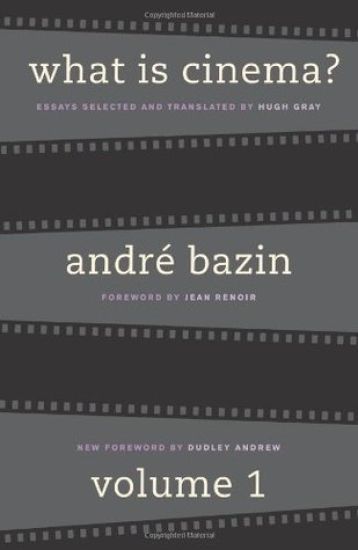
What Is Cinema? Volume I

What Is Cinema? Volume I

André Bazin; Jean Renoir; Dudley Andrew

University of California Press
2004
pokkari
Andre Bazin's What Is Cinema? (volumes I and II) have been classics of film studies for as long as they've been available and are considered the gold standard in the field of film criticism. Although Bazin made no films, his name has been one of the most important in French cinema since World War II. He was co-founder of the influential Cahiers du Cinema, which under his leadership became one of the world's most distinguished publications. Championing the films of Jean Renoir (who contributed a short foreword to Volume I), Orson Welles, and Roberto Rossellini, he became the protege of Francois Truffaut, who honors him touchingly in his forword to Volume II. This new edition includes graceful forewords to each volume by Bazin scholar and biographer Dudley Andrew, who reconsiders Bazin and his place in contemporary film study. The essays themselves are erudite but always accessible, intellectual, and stimulating. As Renoir puts it, the essays of Bazin "will survive even if the cinema does not."
Mists of Regret

Mists of Regret

Dudley Andrew

Princeton University Press
1995
pokkari
Just before World War II, French cinema reached a high point that has been dubbed the style of "poetic realism." Working with unforgettable actors like Jean Gabin and Arletty, directors such as Renoir, Carne, Gremillon, Duvivier, and Chenal routinely captured the prizes for best film at every festival and in every country, and their accomplishments led to general agreement that the French were the first to give maturity to the sound cinema. Here the distinguished film scholar Dudley Andrew examines the motivations and consequences of these remarkable films by looking at the cultural web in which they were made. Beyond giving a rich view of the life and worth of cinema in France, Andrew contributes substantially to our knowledge of how films are dealt with in history. Where earlier studies have treated the masterpieces of this era either in themselves or as part of the vision of their creators, and where certain recent scholars have reacted to this by dissolving the masterpieces back into the system of entertainment that made them possible, Andrew stresses the dialogue of culture and cinema. In his view, the films open questions that take us into the culture, while our understanding of the culture gives energy, direction, and consequence to our reading of the films. The book demonstrates the value of this hermeneutic approach for one set of texts and one period, but it should very much interest film theorists and film historians of all sorts.