Kirjojen hintavertailu. Mukana 12 595 353 kirjaa ja 12 kauppaa.

Kirjailija

Duncan B Campbell

Kirjat ja teokset yhdessä paikassa: 8 kirjaa, julkaisuja vuosilta 2003-2012, suosituimpien joukossa Roman Legionary Fortresses 27 BC–AD 378. Vertaile teosten hintoja ja tarkista saatavuus suomalaisista kirjakaupoista.

8 kirjaa

Kirjojen julkaisuhaarukka 2003-2012.

Spartan Warrior 735–331 BC

Spartan Warrior 735–331 BC

Duncan B Campbell

Osprey Publishing
2012
nidottu
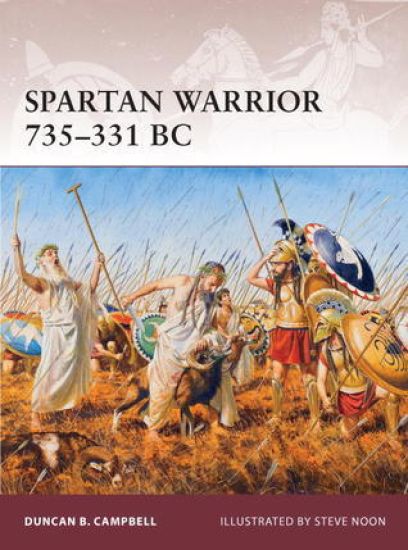
Immortalized through their exploits at the battle of Thermopylae under the legendary Leonidas, as well as countless other victories throughout the classical period, the Spartans were some of the best-trained, -organized and most-feared warriors of the ancient world. The small state of Sparta, known to the Ancient Greeks as Lakedaimon, developed a unique warrior society that used serfs and non-citizens to do all of the manual work, leaving the free-born men of Sparta free to concentrate all of their energies on warfare. Forbidden from engaging in any form of manual labour, these Spartan warriors were trained from an early age in a brutal regime that gave them the necessary discipline and tolerance to withstand the pressures of phalanx warfare and endure all manner of hardships on campaign. This book covers all aspects of the Spartan warrior's life, from the earliest days of his training through his life in peace and war, culminating in the battlefield experiences of these feared combatants.
Mons Graupius AD 83

Mons Graupius AD 83

Duncan B Campbell

Osprey Publishing
2010
nidottu
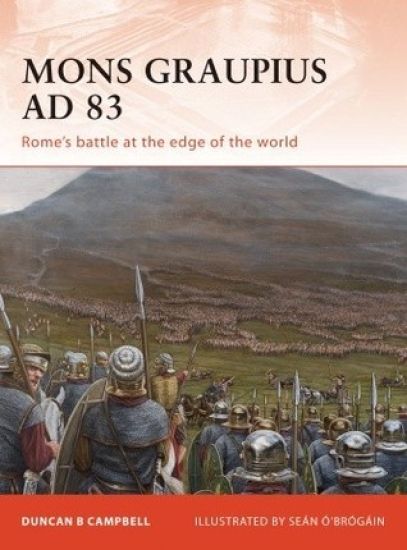
In AD 77, Roman forces under Agricola marched into the northern reaches of Britain in an attempt to pacify the Caledonian tribesman. For seven years, the Romans marched and battled across what is now Scotland. Finally, in AD 83, they fought the final battle at Mons Graupius where 10,000 Caledonians were slaughtered from only 360 Roman dead. It proved the high-water mark of Roman power in Britain. Following unrest elsewhere in the empire, the north of Scotland was abandoned and Rome's forces began their long retreat. Never again would Roman arms stand on the edge of the known world.
Roman Auxiliary Forts 27 BC–AD 378

Roman Auxiliary Forts 27 BC–AD 378

Duncan B Campbell

Osprey Publishing
2009
nidottu
With the vast expansion of the Roman Empire came a need for more and more fortifications to defend it. The borders of the Empire stretched through wildly different terrains which demanded a huge variety of different fortifications, depending on the local conditions and the threats faced by the different areas. The adoption of local troops (auxiliaries) and local building techniques at key strategic points on the outskirts of the empire led to an intriguing mix of strong Roman structure with unique culturally diverse elements. Describing the development of these hugely varied defensive systems, Duncan Campbell delves into the operation and social history behind the fortifications.With detailed colour artwork and maps, he traces their history through the Batavian Revolt of the 1st century AD, which saw auxiliary units scattered far from their native regions, until the decline of the late 3rd and 4th centuries placed their fortifications in an increasingly pressurized and eventually untenable position.
Roman Legionary Fortresses 27 BC–AD 378

Roman Legionary Fortresses 27 BC–AD 378

Duncan B Campbell

Osprey Publishing
2006
nidottu
The concept of a legionary fortress as a permanent structure dates from the reign of Augustus (27 BC-AD 14). It is only from that time that we find a standing army distributed around the empire, and their permanent fortresses developed from the temporary field fortifications of the legions on campaign. This book describes the development, design and construction of these fortresses throughout the length and breadth of the Empire. It also deals extensively with the experience of life within a typical fortress and covers the operational history of these fortifications, including the famous siege of Vetera in AD 69.
Siege Warfare in the Roman World

Siege Warfare in the Roman World

Duncan B Campbell

Osprey Publishing
2005
nidottu
Sieges played a central role in the many conflicts of the Ancient World and many famous generals, including Alexander the Great, Hannibal, Julius Caesar and Trajan, successfully used siegecraft to gain their objectives. This title explores the range of techniques and tactics which developed during the period, including crossing, penetrating and tunnelling through defences; starvation by blockade; and gaining access by deception. Describing the various techniques used, the author tracks the developments in siegecraft in the Roman world from 100 BC to AD 378.
Ancient Siege Warfare

Ancient Siege Warfare

Duncan B Campbell

Osprey Publishing
2005
nidottu
Explores the central role sieges played in many conflicts of the ancient world and tracks developments in siege warfare from Ancient Persia through the Roman sieges of the second century BC.
Greek and Roman Artillery 399 BC–AD 363

Greek and Roman Artillery 399 BC–AD 363

Duncan B Campbell

Osprey Publishing
2003
nidottu
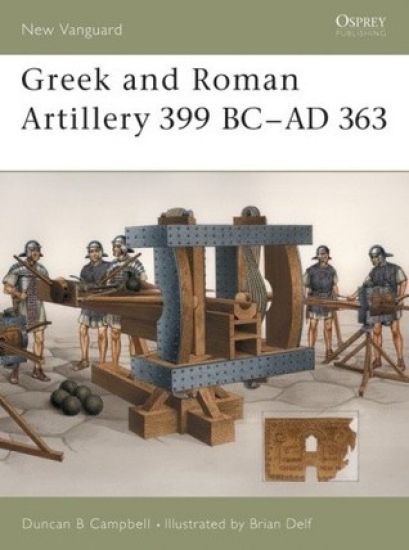
The catapult (katapeltikon) was developed around 400 BC by engineers and craftsmen assembled by Dionysius I of Syracuse. Catapults are mentioned in Athens in the 360s and 350s BC, and by the 330s young men were routinely trained in their use. During these years, artillery appears to have been considered as a defensive weapon. They finally appear in the hands of an aggressor in 340 BC when Philip of Macedon assaulted Perinthus, but it was left to Alexander to fully develop the use of catapults. Under the Romans, catapults initially went through some minor variations with a view to improving their performance. This title decribes the development and operational use of siege artillery throughout the classical period.
Greek and Roman Siege Machinery 399 BC–AD 363

Greek and Roman Siege Machinery 399 BC–AD 363

Duncan B Campbell

Osprey Publishing
2003
nidottu
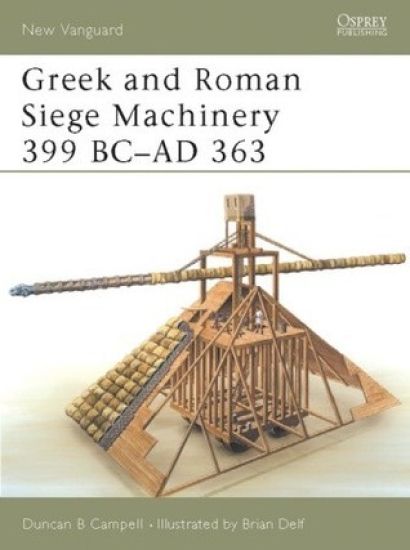
Siege machinery first appeared in the West during the Carthaginian invasion of Sicily in the late 5th century BC, in the form of siege-towers and battering rams. After a 50-year hiatus they re-appeared in the Macedonian armies of Philip II and Alexander the Great, a period that saw the height of the machinery's development in the Ancient World. Experience of Carthaginian practice during the later 3rd century, and familiarity with the operations of Philip V of Macedon during the early-2nd century, prompted the introduction of the siege-tower and the battering-ram to Roman siegecraft. This title traces the development and use of these weapons across the whole of this period.