Kirjojen hintavertailu. Mukana 12 595 353 kirjaa ja 12 kauppaa.

Kirjailija

Duncan Bell

Kirjat ja teokset yhdessä paikassa: 8 kirjaa, julkaisuja vuosilta 2011-2026, suosituimpien joukossa Utopia. Vertaile teosten hintoja ja tarkista saatavuus suomalaisista kirjakaupoista.

8 kirjaa

Kirjojen julkaisuhaarukka 2011-2026.

Utopia

Utopia

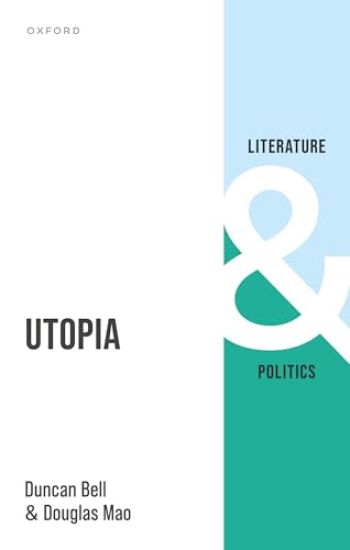
Duncan Bell; Douglas Mao

Oxford University Press
2026
sidottu
Ideal societies, better worlds, more just and peaceful ways of living: these have long been the stuff of human beings' social dreaming. In this compact volume, two leading scholars from different disciplines join to consider the life of utopian imagining within the frame of literature and politics. Duncan Bell, a political scientist and intellectual historian, opens the book with a critical overview of the Anglophone utopian tradition and a fresh definition of utopia. He then shows how the threat of technological annihilation, and the promise of transcendence of human limitations, has shaped utopian and dystopian writing of the last hundred years. Douglas Mao, a scholar of literature, begins the second part of the book by delving into utopian literature's vexed relation to sentimental feeling, especially as this is signalled by speculation on how inhabitants of utopia themselves would read literary works. He then shows how utopian writing's orientation to problem-solving puts it into surprising relation with both politics and literature in general. An interview in which the two authors compare their methods and conclusions closes out the book.
Utopia

Utopia

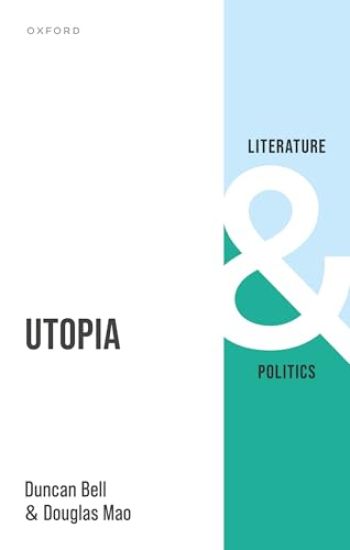
Duncan Bell; Douglas Mao

Oxford University Press
2026
nidottu
Ideal societies, better worlds, more just and peaceful ways of living: these have long been the stuff of human beings' social dreaming. In this compact volume, two leading scholars from different disciplines join to consider the life of utopian imagining within the frame of literature and politics. Duncan Bell, a political scientist and intellectual historian, opens the book with a critical overview of the Anglophone utopian tradition and a fresh definition of utopia. He then shows how the threat of technological annihilation, and the promise of transcendence of human limitations, has shaped utopian and dystopian writing of the last hundred years. Douglas Mao, a scholar of literature, begins the second part of the book by delving into utopian literature's vexed relation to sentimental feeling, especially as this is signalled by speculation on how inhabitants of utopia themselves would read literary works. He then shows how utopian writing's orientation to problem-solving puts it into surprising relation with both politics and literature in general. An interview in which the two authors compare their methods and conclusions closes out the book.
Dreamworlds of Race

Dreamworlds of Race

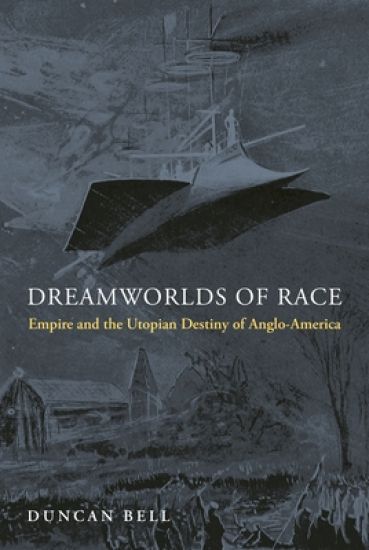
Duncan Bell

PRINCETON UNIVERSITY PRESS
2022
pokkari
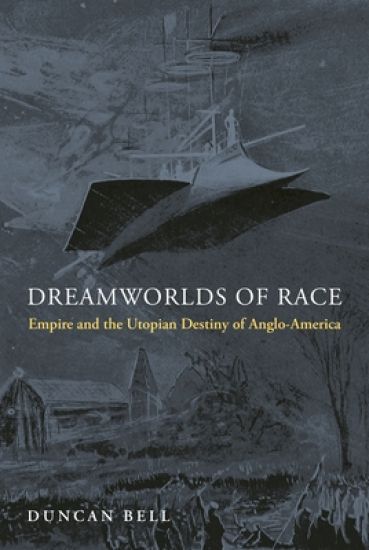
How transatlantic thinkers in the late nineteenth and early twentieth centuries promoted the unification of Britain and the United StatesBetween the late nineteenth century and the First World War an ocean-spanning network of prominent individuals advocated the unification of Britain and the United States. They dreamt of the final consolidation of the Angloworld. Scholars, journalists, politicians, businessmen, and science fiction writers invested the “Anglo-Saxons” with extraordinary power. The most ambitious hailed them as a people destined to bring peace and justice to the earth. More modest visions still imagined them as likely to shape the twentieth century. Dreamworlds of Race explores this remarkable moment in the intellectual history of racial domination, political utopianism, and world order.Focusing on a quartet of extraordinary figures—Andrew Carnegie, W. T. Stead, Cecil J. Rhodes, and H. G. Wells—Duncan Bell shows how unionists on both sides of the Atlantic reimagined citizenship, empire, patriotism, race, war, and peace in their quest to secure global supremacy. Yet even as they dreamt of an Anglo-dominated world, the unionists disagreed over the meaning of race, the legitimacy of imperialism, the nature of political belonging, and the ultimate form and purpose of unification. The racial dreamworld was an object of competing claims and fantasies. Exploring speculative fiction as well as more conventional forms of political writing, Bell reads unionist arguments as expressions of the utopianism circulating through fin-de-siècle Anglo-American culture, and juxtaposes them with pan-Africanist critiques of racial domination and late twentieth-century fictional narratives of Anglo-American empire.Tracing how intellectual elites promoted an ambitious project of political and racial unification between Britain and the United States, Dreamworlds of Race analyzes ideas of empire and world order that reverberate to this day.
Dreamworlds of Race

Dreamworlds of Race

Duncan Bell

PRINCETON UNIVERSITY PRESS
2020
sidottu
How transatlantic thinkers in the late nineteenth and early twentieth centuries promoted the unification of Britain and the United StatesBetween the late nineteenth century and the First World War an ocean-spanning network of prominent individuals advocated the unification of Britain and the United States. They dreamt of the final consolidation of the Angloworld. Scholars, journalists, politicians, businessmen, and science fiction writers invested the “Anglo-Saxons” with extraordinary power. The most ambitious hailed them as a people destined to bring peace and justice to the earth. More modest visions still imagined them as likely to shape the twentieth century. Dreamworlds of Race explores this remarkable moment in the intellectual history of racial domination, political utopianism, and world order.Focusing on a quartet of extraordinary figures—Andrew Carnegie, W. T. Stead, Cecil J. Rhodes, and H. G. Wells—Duncan Bell shows how unionists on both sides of the Atlantic reimagined citizenship, empire, patriotism, race, war, and peace in their quest to secure global supremacy. Yet even as they dreamt of an Anglo-dominated world, the unionists disagreed over the meaning of race, the legitimacy of imperialism, the nature of political belonging, and the ultimate form and purpose of unification. The racial dreamworld was an object of competing claims and fantasies. Exploring speculative fiction as well as more conventional forms of political writing, Bell reads unionist arguments as expressions of the utopianism circulating through fin-de-siècle Anglo-American culture, and juxtaposes them with pan-Africanist critiques of racial domination and late twentieth-century fictional narratives of Anglo-American empire.Tracing how intellectual elites promoted an ambitious project of political and racial unification between Britain and the United States, Dreamworlds of Race analyzes ideas of empire and world order that reverberate to this day.
Reordering the World

Reordering the World

Duncan Bell

Princeton University Press
2019
pokkari
A leading scholar of British political thought explores the relationship between liberalism and empireReordering the World is a penetrating account of the complexity and contradictions found in liberal visions of empire. Focusing mainly on nineteenth-century Britain—at the time the largest empire in history and a key incubator of liberal political thought—Duncan Bell sheds new light on some of the most important themes in modern imperial ideology.The book ranges widely across Victorian intellectual life and beyond. The opening essays explore the nature of liberalism, varieties of imperial ideology, the uses and abuses of ancient history, the imaginative functions of the monarchy, and fantasies of Anglo-Saxon global domination. They are followed by illuminating studies of prominent thinkers, including J. A. Hobson, L. T. Hobhouse, John Stuart Mill, Henry Sidgwick, Herbert Spencer, and J. R. Seeley. While insisting that liberal attitudes to empire were multiple and varied, Bell emphasizes the liberal fascination with settler colonialism. It was in the settler empire that many liberal imperialists found the place of their political dreams.Reordering the World is a significant contribution to the history of modern political thought and political theory.
Reordering the World

Reordering the World

Duncan Bell

PRINCETON UNIVERSITY PRESS
2016
sidottu
Reordering the World is a penetrating account of the complexity and contradictions found in liberal visions of empire. Focusing mainly on nineteenth-century Britain--at the time the largest empire in history and a key incubator of liberal political thought--Duncan Bell sheds new light on some of the most important themes in modern imperial ideology. The book ranges widely across Victorian intellectual life and beyond. The opening essays explore the nature of liberalism, varieties of imperial ideology, the uses and abuses of ancient history, the imaginative functions of the monarchy, and fantasies of Anglo-Saxon global domination. They are followed by illuminating studies of prominent thinkers, including J. A. Hobson, L. T. Hobhouse, John Stuart Mill, Henry Sidgwick, Herbert Spencer, and J. R. Seeley. While insisting that liberal attitudes to empire were multiple and varied, Bell emphasizes the liberal fascination with settler colonialism. It was in the settler empire that many liberal imperialists found the place of their political dreams. Reordering the World is a significant contribution to the history of modern political thought and political theory.
The Idea of Greater Britain

The Idea of Greater Britain

Duncan Bell

Princeton University Press
2011
pokkari
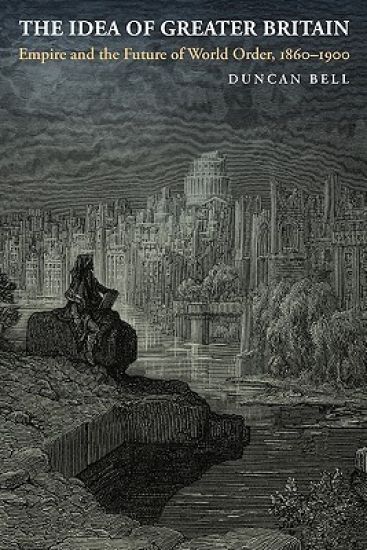
During the tumultuous closing decades of the nineteenth century, as the prospect of democracy loomed and as intensified global economic and strategic competition reshaped the political imagination, British thinkers grappled with the question of how best to organize the empire. Many found an answer to the anxieties of the age in the idea of Greater Britain, a union of the United Kingdom and its settler colonies in Australia, Canada, New Zealand, and southern Africa. In The Idea of Greater Britain, Duncan Bell analyzes this fertile yet neglected debate, examining how a wide range of thinkers conceived of this vast "Anglo-Saxon" political community. Their proposals ranged from the fantastically ambitious--creating a globe-spanning nation-state--to the practical and mundane--reinforcing existing ties between the colonies and Britain. But all of these ideas were motivated by the disquiet generated by democracy, by challenges to British global supremacy, and by new possibilities for global cooperation and communication that anticipated today's globalization debates. Exploring attitudes toward the state, race, space, nationality, and empire, as well as highlighting the vital theoretical functions played by visions of Greece, Rome, and the United States, Bell illuminates important aspects of late-Victorian political thought and intellectual life.