Kirjojen hintavertailu. Mukana 12 595 353 kirjaa ja 12 kauppaa.

Kirjailija

Duncan Cramer

Kirjat ja teokset yhdessä paikassa: 17 kirjaa, julkaisuja vuosilta 1996-2024, suosituimpien joukossa Understanding Statistics in Psychology with SPSS. Vertaile teosten hintoja ja tarkista saatavuus suomalaisista kirjakaupoista.

17 kirjaa

Kirjojen julkaisuhaarukka 1996-2024.

Understanding Statistics in Psychology

Understanding Statistics in Psychology

Dennis Howitt; Duncan Cramer

pearson education limited
2024
nidottu
Become confident with the most common statistical techniques so that you can grasp the fundamentals and transition from a student to a professional researcher Now in its ninth edition, Understanding Statistics in Psychology, by Dennis Howitt and Duncan Cramer continues to provide an accessible introduction to the intimidating subject of statistics in psychology for students of all years and abilities. Clear explanations and diagrams break down the statistical techniques that are used in modern psychological research and updated examples of real-life studies bring the topic to life by showing you how statistics are used in practice. The new software-agnostic approach of this edition means that you will gain a solid understanding of statistics which can be applied to whichever statistical package you are using to analyse your data. The modular structure of this text and its small accessible chapters also mean that it is easy to dip in and out of, concentrating on the techniques that are the most relevant for you and your own research projects. This text does not just focus on how to analyse data but also contains clear and detailed guidance of the whole research process, from how to choose the appropriate tests, to interpreting your findings and successfully writing up your research.
Research Methods in Psychology

Research Methods in Psychology

Dennis Howitt; Duncan Cramer

pearson education limited
2024
nidottu
The essential guide in Research Methods in Psychology whether you are new to psychological research or moving on to more complex projects. Research Methods in Psychology, 7e by Dennis Howitt and Duncan Cramer is a highly accessible introduction to both quantitative and qualitative research methods. Ideal for undergraduate students of any level studyingrelevant courses inresearch methods, this book will help you connect your learning to relevant research examples and give you the practical guidance you need to prepare you to undertake your own projects. Covering everything - from the role of research in Psychology to the pitfalls to avoid - this text will not only help you critically evaluate existing research but will guide you through all the stages of developing and managing your own research project. Key Features include: A focus on the most recent developments and insights in the field of researchLearning objectives at the beginning of each chapter and end-of-chapter summariesDiagrams throughout the book to help you visualise and understand more complex conceptsChapters dedicated to developing your research ideas, conducting literature searches and writing research reports This newest edition of the text also covers the latest advances in modern psychological research, including a whole new chapter on online research methods and up-to-date coverage of the most recent standards of ethics.
Understanding Statistics in Psychology with SPSS

Understanding Statistics in Psychology with SPSS

Dennis Howitt; Duncan Cramer

Pearson Education Limited
2020
nidottu
Develop confidence conducting statistical analysis with this trusted text Understanding Statistics in Psychology with SPSS, eighth edition, by Dennis Howitt and Duncan Cramer is the comprehensive guide that helps you conduct statistical analyses using SPSS with confidence. Combining coverage of statistics with full guidance on how to use SPSS to analyse data, the book's straightforward content is neatly organised into short, accessible chapters that can be used in class or for independent study. Clear diagrams and full colour screenshots from SPSS make the text suitable for beginners, while the broad coverage of topics helps you progress to more advanced techniques. This edition provides an engaging learning aid packed with examples from real psychological studies that illustrate how statistical techniques are used in practice. Learning features including key concept boxes, 'focus' sections and 'explaining statistics' sections ensure solid understanding of underpinning principles. This trusted book is the ideal companion for undergraduate students in psychology. Key features Combines coverage of statistics with full guidance on how to use SPSS to analyse data.Suitable for use with all versions of SPSS.Examples from a wide range of real psychological studies illustrate how statistical techniques are used in practice.Includes clear and detailed guidance on choosing tests, interpreting findings and reporting and writing up research.Student-focused pedagogical approach including: Key conceptboxes detailing important terms.Focus onsections exploring complex topics in greater depth.Explaining statisticssections clarify important statistical concepts. Dennis Howitt and Duncan Cramer are with Loughborough University.
Introduction to Statistics with SPSS for Social Science

Introduction to Statistics with SPSS for Social Science

Faiza Qureshi; Gareth Norris; Dennis Howitt; Duncan Cramer

Routledge
2017
sidottu
This is a complete guide to statistics and SPSS for social science students. Statistics with SPSS for Social Science provides a step-by-step explanation of all the important statistical concepts, tests and procedures. It is also a guide to getting started with SPSS, and includes screenshots to illustrate explanations. With examples specific to social sciences, this text is essential for any student in this area.
Introduction to Statistics with SPSS for Social Science

Introduction to Statistics with SPSS for Social Science

Qureshi Faiza; Norris Gareth; Howitt Dennis; Duncan Cramer

Routledge
2012
nidottu
This is a complete guide to statistics and SPSS for social science students. Statistics with SPSS for Social Science provides a step-by-step explanation of all the important statistical concepts, tests and procedures. It is also a guide to getting started with SPSS, and includes screenshots to illustrate explanations. With examples specific to social sciences, this text is essential for any student in this area.
Quantitative Data Analysis with IBM SPSS 17, 18 & 19

Quantitative Data Analysis with IBM SPSS 17, 18 & 19

Alan Bryman; Duncan Cramer

Routledge
2011
nidottu
This latest edition has been fully updated to accommodate the needs of users of SPSS Releases 17, 18 and 19 while still being applicable to users of SPSS Releases 15 and 16.As with previous editions, Alan Bryman and Duncan Cramer continue to offer a comprehensive and user-friendly introduction to the widely used IBM SPSS Statistics. The simple, non-technical approach to quantitative data analysis enables the reader to quickly become familiar with SPSS and with the tests available to them.No previous experience of statistics or computing is required as this book provides a step-by-step guide to statistical techniques, including:Non-parametric testsCorrelationSimple and multiple regressionAnalysis of variance and covarianceFactor analysis.This book comes equipped with a comprehensive range of exercises for further practice, and it covers key issues such as sampling, statistical inference, conceptualization and measurement and selection of appropriate tests. The authors have also included a helpful glossary of key terms.The data sets used in Quantitative Data Analysis with IBM SPSS 17, 18 and 19 are available online at http://www.routledgetextbooks.com/textbooks/_author/bryman-9780415579193/; in addition, a set of multiple-choice questions and a chapter-by-chapter PowerPoint lecture course are available free of charge to lecturers who adopt the book.
Quantitative Data Analysis with IBM SPSS 17, 18 & 19

Quantitative Data Analysis with IBM SPSS 17, 18 & 19

Alan Bryman; Duncan Cramer

Routledge
2011
sidottu
This latest edition has been fully updated to accommodate the needs of users of SPSS Releases 17, 18 and 19 while still being applicable to users of SPSS Releases 15 and 16.As with previous editions, Alan Bryman and Duncan Cramer continue to offer a comprehensive and user-friendly introduction to the widely used IBM SPSS Statistics. The simple, non-technical approach to quantitative data analysis enables the reader to quickly become familiar with SPSS and with the tests available to them.No previous experience of statistics or computing is required as this book provides a step-by-step guide to statistical techniques, including:Non-parametric testsCorrelationSimple and multiple regressionAnalysis of variance and covarianceFactor analysis.This book comes equipped with a comprehensive range of exercises for further practice, and it covers key issues such as sampling, statistical inference, conceptualization and measurement and selection of appropriate tests. The authors have also included a helpful glossary of key terms.The data sets used in Quantitative Data Analysis with IBM SPSS 17, 18 and 19 are available online at http://www.routledgetextbooks.com/textbooks/_author/bryman-9780415579193/; in addition, a set of multiple-choice questions and a chapter-by-chapter PowerPoint lecture course are available free of charge to lecturers who adopt the book.
Quantitative Data Analysis with SPSS 12 and 13

Quantitative Data Analysis with SPSS 12 and 13

Alan Bryman; Duncan Cramer

Routledge
2004
sidottu
This new edition has been completely updated to accommodate the needs of users of SPSS Release 12 and 13 for Windows, whilst still being applicable to those using SPSS Release 11 and 10.Alan Bryman and Duncan Cramer provide a non-technical approach to quantitative data analysis and a user-friendly introduction to the widely used SPSS. No previous familiarity with computing or statistics is required to benefit from this step-by-step guide to techniques including:Non-parametric testsCorrelationSimple and multiple regressionMultivarate analysis of variance and covarianceFactor analysisThe authors discuss key issues facing the newcomer to research, such as how to decide which statistical procedure is suitable, and how to interpret the subsequent results. Each chapter contains worked examples to illustrate the points raised and ends with a comprehensive range of exercises which allow the reader to test their understanding of the topic.This new edition of this hugely successful textbook will guide the reader through the basics of quantitative data analysis and become an essential reference tool for both students and researchers in the social sciences.The datasets used in Quantitative Data Analysis for SPSS Release 12 and 13 are available online at www.psypress.com/brymancramer/ .
Quantitative Data Analysis with SPSS 12 and 13

Quantitative Data Analysis with SPSS 12 and 13

Alan Bryman; Duncan Cramer

Routledge
2004
nidottu
This new edition has been completely updated to accommodate the needs of users of SPSS Release 12 and 13 for Windows, whilst still being applicable to those using SPSS Release 11 and 10.Alan Bryman and Duncan Cramer provide a non-technical approach to quantitative data analysis and a user-friendly introduction to the widely used SPSS. No previous familiarity with computing or statistics is required to benefit from this step-by-step guide to techniques including:Non-parametric testsCorrelationSimple and multiple regressionMultivarate analysis of variance and covarianceFactor analysisThe authors discuss key issues facing the newcomer to research, such as how to decide which statistical procedure is suitable, and how to interpret the subsequent results. Each chapter contains worked examples to illustrate the points raised and ends with a comprehensive range of exercises which allow the reader to test their understanding of the topic.This new edition of this hugely successful textbook will guide the reader through the basics of quantitative data analysis and become an essential reference tool for both students and researchers in the social sciences.The datasets used in Quantitative Data Analysis for SPSS Release 12 and 13 are available online at www.psypress.com/brymancramer/ .
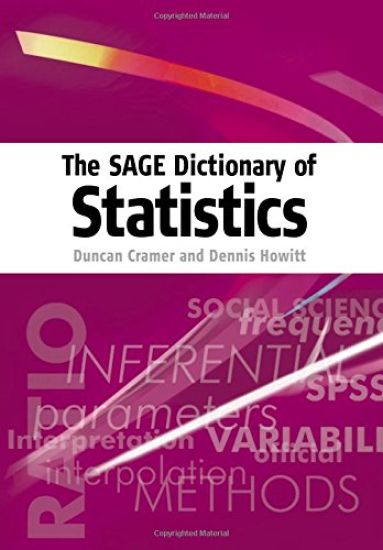
The SAGE Dictionary of Statistics

The SAGE Dictionary of Statistics

Duncan Cramer; Dennis Laurence Howitt

SAGE Publications Inc
2004
nidottu
`The authors make excellent use of illustrative examples' - Reference Reviews The SAGE Dictionary of Statistics provides students and researchers with an accessible and definitive resource to use when studying statistics in the social sciences, reading research reports and undertaking data analysis. Written by leading academics in the field of methodology and statistics, the Dictionary will be an essential study guide for the first-time researcher as well as a primary resource for more advanced study. This is a practical and concise dictionary that serves the everyday uses of statistics across the whole range of social science disciplines. It offers basic and straightforward definitions of key concepts, followed by more detailed step-by-step explanations of situating specific methods and techniques. It also contains lists of related concepts to help the user to draw connections across various fields and increase their overall understand of a specific technique. A list of key readings helps to reinforce the aim of the Dictionary as an invaluable learning resource. Designed specifically for students and those new to research, and written in a lively and engaging manner, this Dictionary is an essential reference work for students and researchers across the social sciences.
The SAGE Dictionary of Statistics

The SAGE Dictionary of Statistics

Duncan Cramer; Dennis Laurence Howitt

SAGE Publications Inc
2004
sidottu
`The authors make excellent use of illustrative examples' - Reference Reviews The SAGE Dictionary of Statistics provides students and researchers with an accessible and definitive resource to use when studying statistics in the social sciences, reading research reports and undertaking data analysis. Written by leading academics in the field of methodology and statistics, the Dictionary will be an essential study guide for the first-time researcher as well as a primary resource for more advanced study. This is a practical and concise dictionary that serves the everyday uses of statistics across the whole range of social science disciplines. It offers basic and straightforward definitions of key concepts, followed by more detailed step-by-step explanations of situating specific methods and techniques. It also contains lists of related concepts to help the user to draw connections across various fields and increase their overall understand of a specific technique. A list of key readings helps to reinforce the aim of the Dictionary as an invaluable learning resource. Designed specifically for students and those new to research, and written in a lively and engaging manner, this Dictionary is an essential reference work for students and researchers across the social sciences.
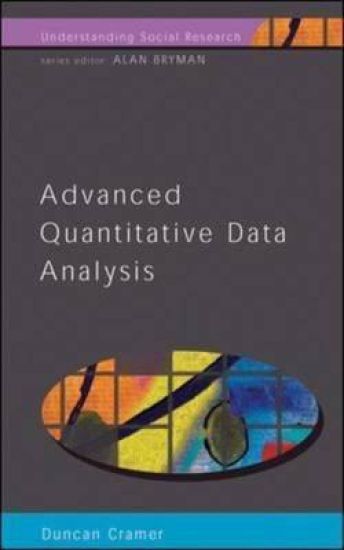
ADVANCED QUANTITATIVE DATA ANALYSIS

ADVANCED QUANTITATIVE DATA ANALYSIS

Duncan Cramer

Open University Press
2003
nidottu
*What do advanced statistical techniques do?*When is it appropriate to use them?*How are they carried out and reported?There are a variety of statistical techniques used to analyse quantitative data that masters students, advanced undergraduates and researchers in the social sciences are expected to be able to understand and undertake. This book explains these techniques, when it is appropriate to use them, how to carry them out and how to write up the results. Most books which describe these techniques do so at too advanced or technical a level to be readily understood by many students who need to use them. In contrast the following features characterise this book:- concise and accessible introduction to calculating and interpreting advanced statistical techniques- use of a small data set of simple numbers specifically designed to illustrate the nature and manual calculation of the most important statistics in each technique- succinct illustration of writing up the results of these analyses- minimum of mathematical, statistical and technical notation- annotated bibliography and glossary of key conceptsCommonly used software is introduced, and instructions are presented for carrying out analyses and interpreting the output using the computer programs of SPSS Release 11 for Windows and a version of LISREL 8.51, which is freely available online. Designed as a textbook for postgraduate and advanced undergraduate courses across the socio-behavioural sciences, this book will also serve as a personal reference for researchers in disciplines such as sociology and psychology.
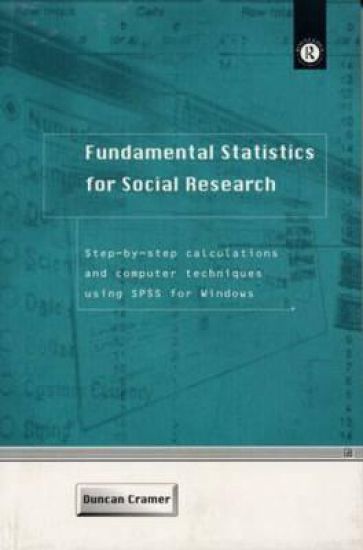
Fundamental Statistics for Social Research
This accessible introduction to statistics using the program SPSS for Windows explains when to apply and how to calculate and interpret a wide range of statistical procedures commonly used in the social sciences. Keeping statistical symbols and formulae to a minimum and using simple examples, this book:* assumes no prior knowledge of statistics or computing* includes a concise introduction to the program SPSS for Windows* describes a wider range of tests than other introductory texts* contains a comprehensive range of exercises with answersFundamental Statistics for Social Research covers SPSS Release 6 for Windows 3.1 and Release 7 for Windows 95. It will prove an invaluable introductory statistics text for students, and a useful resource for graduates and professionals engaged in research in the social sciences.
Fundamental Statistics for Social Research
This accessible introduction to statistics using the program SPSS for Windows explains when to apply and how to calculate and interpret a wide range of statistical procedures commonly used in the social sciences. Keeping statistical symbols and formulae to a minimum and using simple examples, this book:* assumes no prior knowledge of statistics or computing* includes a concise introduction to the program SPSS for Windows* describes a wider range of tests than other introductory texts* contains a comprehensive range of exercises with answersFundamental Statistics for Social Research covers SPSS Release 6 for Windows 3.1 and Release 7 for Windows 95. It will prove an invaluable introductory statistics text for students, and a useful resource for graduates and professionals engaged in research in the social sciences.
Basic Statistics for Social Research
This accessible introdution to statistics using the program Minitab explains when to apply and how to calculate and interpret a wide range of statistical procedures commonly used in the social sciences. Keeping statistical symbols and formulae to a minimum and using simple examples, this book:* Assumes no prior knowledge of statistics or computing* Includes a concise introduction to the program Minitab* Describes a wider range of tests than other introductory texts* Contains a comprehensive range of exercises with answers.Basic Statistics for Social Research will prove an invaluable introductory statistics text for students, and a useful resource for graduates and professionals engaged in research in the social sciences.
Quantitative Data Analysis with Minitab

Quantitative Data Analysis with Minitab

Alan Bryman; Duncan Cramer

Routledge
1996
nidottu
Quantitative data analysis is now a compulsory component of most degree courses in the social sciences and students are increasingly reliant on computers for the analysis of data. Quantitative Data Analysis with Minitab explains statistical tests for Minitab users using the same formulae free, non technical approach, as the very successful SPPS version.Students will learn a wide range of quantitative data analysis techniques and become familiar with how these techniques can be implemented through the latest version of Minitab. Techniques covered include univariate analysis (with frequency table, dispersion and histograms), bivariate (with contingency tables correlation, analysis of varience and non-parametric tests) and multivariate analysis (with multiple regression, path analysis, covarience and factor analysis). In addition the book covers issues such as sampling, statistical significance, conceptualisation and measurement and the selection of appropriate tests. Each chapter concludes with a set of exercises.Social science students will welcome this integrated, non mathematical introduction to quantitative data anlysis and the minitab package.