Kirjojen hintavertailu. Mukana 12 595 353 kirjaa ja 12 kauppaa.

Kirjailija

Duncan K. Foley

Kirjat ja teokset yhdessä paikassa: 6 kirjaa, julkaisuja vuosilta 1986-2019, suosituimpien joukossa U: Marxian Economics I. Vertaile teosten hintoja ja tarkista saatavuus suomalaisista kirjakaupoista.

6 kirjaa

Kirjojen julkaisuhaarukka 1986-2019.

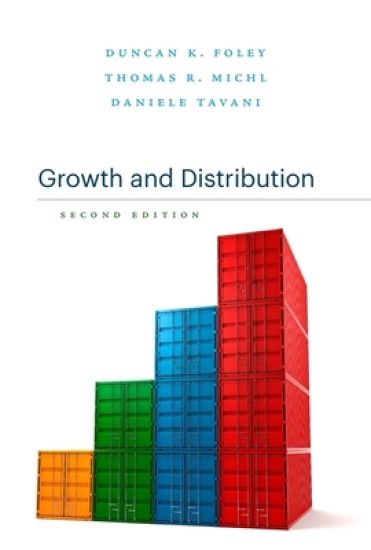
Growth and Distribution

Growth and Distribution

Duncan K. Foley; Thomas R. Michl; Daniele Tavani

Harvard University Press
2019
sidottu
A major revision of an established textbook on the theory, measurement, and history of economic growth, with new material on climate change, corporate capitalism, and innovation.Authors Duncan Foley, Thomas Michl, and Daniele Tavani present Classical and Keynesian approaches to growth theory, in parallel with Neoclassical ones, and introduce students to advanced tools of intertemporal economic analysis through carefully developed treatments of land- and resource-limited growth. They cover corporate finance, the impact of government debt and social security systems, theories of endogenous technical change, and the implications of climate change. Without excessive formal complication, the models emphasize rigorous reasoning from basic economic principles and insights, and respond to students’ interest in the history and policy dilemmas of real-world economies.In addition to carefully worked out examples showing how to use the analytical techniques presented, Growth and Distribution presents many problems suitable for inclusion in problem sets and examinations. Detailed answers to these problems are available. This second edition includes fresh data throughout and new chapters on climate change, corporate capitalism, models of wealth inequality, and technical change.
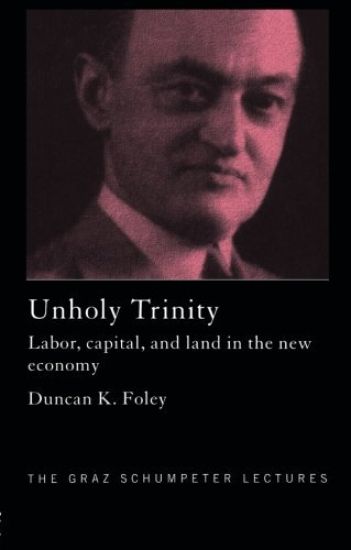
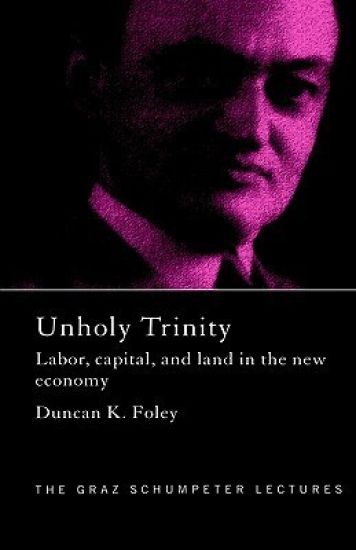
Unholy Trinity

Unholy Trinity

Duncan K. Foley

Routledge
2009
nidottu
Many of the central results of Classical and Marxian political economy are examples of the self-organization of the capitalist economy as a complex, adaptive system far from equilibrium. An Unholy Trinity explores the relations between contemporary complex systems theory and classical political economy, and applies the methods it develops to the problems of induced technical change and income distribution in capitalist economies, the control of environmental externalities such as global warming and the stabilization of the world population. The arguments and methods of this important book address central problems both of economic science and economic policy and provide fresh paths for theoretical exploration.
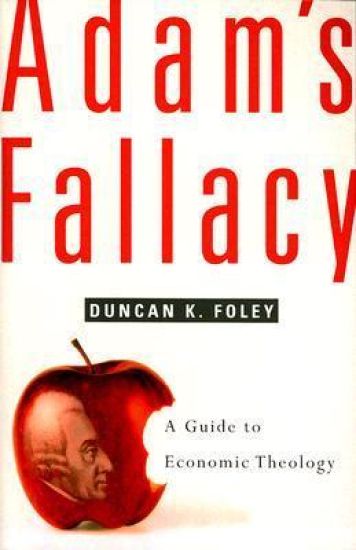
Adam’s Fallacy

Adam’s Fallacy

Duncan K. Foley

The Belknap Press
2008
nidottu
This book could be called “The Intelligent Person’s Guide to Economics.” Like Robert Heilbroner’s The Worldly Philosophers, it attempts to explain the core ideas of the great economists, beginning with Adam Smith and ending with Joseph Schumpeter. In between are chapters on Thomas Malthus, David Ricardo, Karl Marx, the marginalists, John Maynard Keynes, Friedrich Hayek, and Thorstein Veblen. The title expresses Duncan Foley’s belief that economics at its most abstract and interesting level is a speculative philosophical discourse, not a deductive or inductive science. Adam’s fallacy is the attempt to separate the economic sphere of life, in which the pursuit of self-interest is led by the invisible hand of the market to a socially beneficial outcome, from the rest of social life, in which the pursuit of self-interest is morally problematic and has to be weighed against other ends.Smith and his successors argued that the market and the division of labor that is fostered by it result in tremendous gains in productivity, which lead to a higher standard of living. Yet the market does not address the problem of distribution—that is, how is the gain in wealth to be divided among the classes and members of society? Nor does it address such problems as the long-run well-being of the planet.Adam’s Fallacy is beautifully written and contains interesting observations and insights on almost every page. It will engage the reader’s thoughts and feelings on the deepest level.
Unholy Trinity

Unholy Trinity

Duncan K. Foley

Routledge
2003
sidottu
Many of the central results of Classical and Marxian political economy are examples of the self-organization of the capitalist economy as a complex, adaptive system far from equilibrium. An Unholy Trinity explores the relations between contemporary complex systems theory and classical political economy, and applies the methods it develops to the problems of induced technical change and income distribution in capitalist economies, the control of environmental externalities such as global warming and the stabilization of the world population. The arguments and methods of this important book address central problems both of economic science and economic policy and provide fresh paths for theoretical exploration.
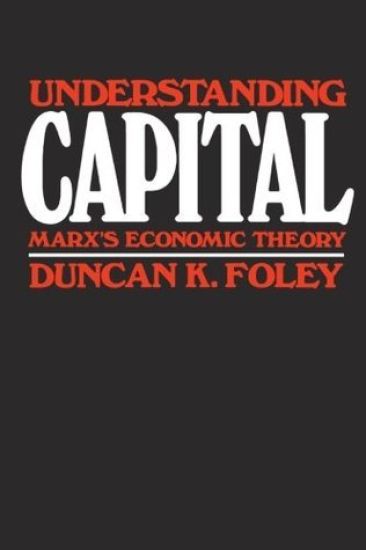
Understanding Capital

Understanding Capital

Duncan K. Foley

Harvard University Press
1986
nidottu
Understanding Capital is a brilliantly lucid introduction to Marxist economic theory. Duncan Foley builds an understanding of the theory systematically, from first principles through the definition of central concepts to the development of important applications. All of the topics in the three volumes of Capital are included, providing the reader with a complete view of Marxist economics.Foley begins with a helpful discussion of philosophical problems readers often encounter in tackling Marx, including questions of epistemology, explanation, prediction, determinism, and dialectics. In an original extension of theory, he develops the often neglected concept of the circuit of capital to analyze Marx’s theory of the reproduction of capital. He also takes up central problems in the capitalist economy: equalization of the rates of profit (the “transformation problem”); productive and unproductive labor and the division of surplus value; and the falling rate of profit. He concludes with a discussion of the theory of capitalist crisis and of the relation of Marx’s critique of capitalism to his conception of socialism.Through a careful treatment of the theory of money in relation to the labor theory of value, Foley clarifies the relation of prices to value and of Marx’s categories of analysis to conventional business and national income accounts, enabling readers to use Marx’s theory as a tool for the analysis of practical problems. The text is closely keyed throughout to the relevant chapters in Capital and includes suggestions for further reading on the topics discussed.