Kirjojen hintavertailu. Mukana 12 657 676 kirjaa ja 12 kauppaa.
Kirjailija
Duncan Macmillan
Kirjat ja teokset yhdessä paikassa: 18 kirjaa, julkaisuja vuosilta 2005-2026, suosituimpien joukossa People, Places and Things. Vertaile teosten hintoja ja tarkista saatavuus suomalaisista kirjakaupoista.
Five Centuries of Scottish Art has its roots in Duncan Macmillan's seminal book Scottish Art 1460-1990, which received many accolades including the Saltire Prize as Scottish book of the year. Now fully updated, this ambitious publication celebrates Scotland's singular place in the history of art and examines how the twists and turns of its specific history have influenced the remarkable work produced by the nation's painters and printmakers in particular. Starting at the Court of James III, the narrative weaves its way through the Reformation, the Enlightenment, Victorian Scotland, the 20th century and the years following the Millennium. Bringing together first-class scholarship and over 350 beautiful reproductions of key works by a wide-range of artists, the book reveals the depth and breadth of Scotland's artistic heritage and its distinctive artistic identity. Looking beyond Scotland, Duncan Macmillan also makes the case for a distinctive Scottish artistic tradition which, while it reflects Scotland's particular political, social and cultural history, both belongs in, and has contributed to, the wider history of European art.
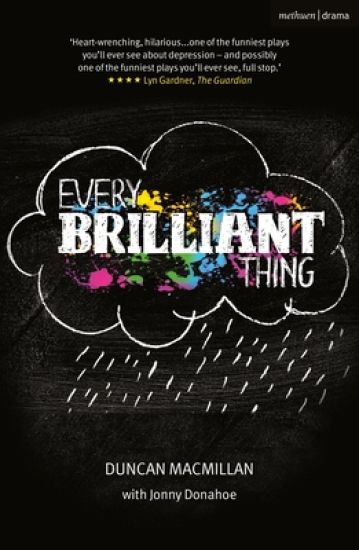
If you live a long life and get to the end of it without ever once feeling crushingly depressed, then you probably haven't been paying attention. You’re seven years old. Mum’s in hospital. Dad says she’s ‘done something stupid’. She finds it hard to be happy. You start a list of everything that’s brilliant about the world. Everything worth living for. You leave it on her pillow. You know she’s read it because she’s corrected your spelling. A child attempts to ease their mother’s depression by creating a list of all the best things in the world. Through adulthood, as the list grows, they learn the deep significance it has on their own life. From Olivier Award-nominated writer Duncan Macmillan (People, Places and Things), Every Brilliant Thing is a comedy about the lengths we will go for those we love. This edition was published to coincide with the long-awaited Broadway premiere at the Hudson Theatre with Tony Award winner Daniel Radcliffe.
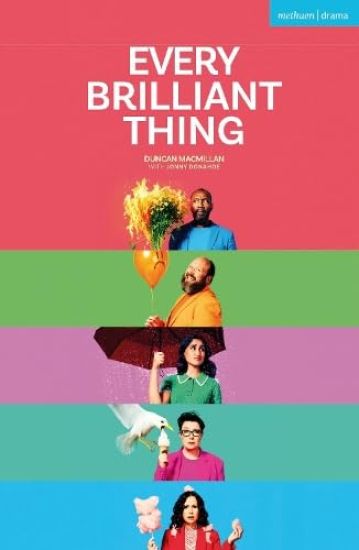
If you live a long life and get to the end of it without ever once feeling crushingly depressed, then you probably weren’t paying attention. You’re seven years old. Mum’s in hospital. Dad says she’s ‘done something stupid’. She finds it hard to be happy. You start a list of everything that’s brilliant about the world. Everything worth living for. You leave it on her pillow. You know she’s read it because she’s corrected your spelling. A child attempts to ease their mother’s depression by creating a list of all the best things in the world. Through adulthood, as the list grows, they learn the deep significance it has on their own life. From Olivier Award-nominated writer Duncan Macmillan (People, Places and Things), Every Brilliant Thing is a comedy about the lengths we will go for those we love. This edition was published to coincide with the West End premiere at @sohoplace in August 2025. Co-directed by Jeremy Herrin (Best of Enemies), this production featured Lenny Henry, Ambika Mod, Sue Perkins, Minnie Driver, and the show’s original performer Jonny Donahoe.
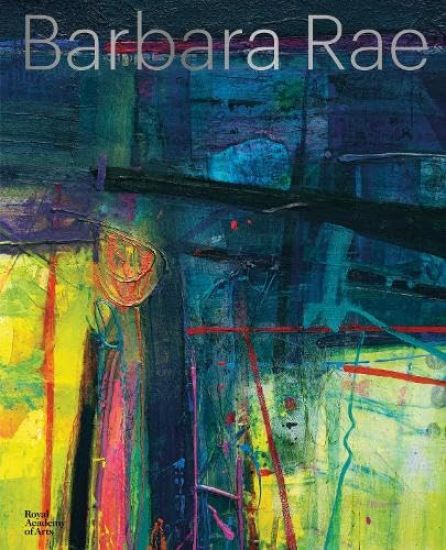
With authoritative texts and a wide array of illustrations, this handsome monograph charts Barbara Rae’s long and successful career as a redoubtable travelling artist. From her native Scotland, particularly the Lammermuirs, to Spain, Ireland, and the polar regions, Rae’s painterly abstraction brings together her fascinations with landscape and travel. Her sketchbooks feature here, too, revealing her process as she uses them to conceive the larger works she makes in her studio.
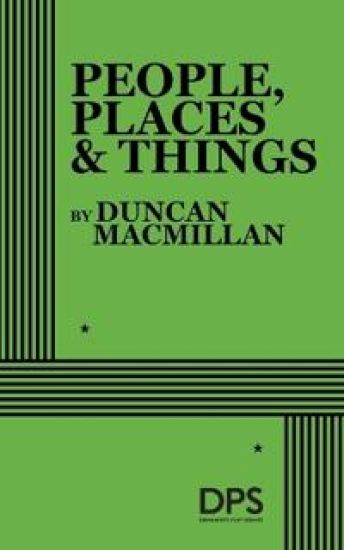
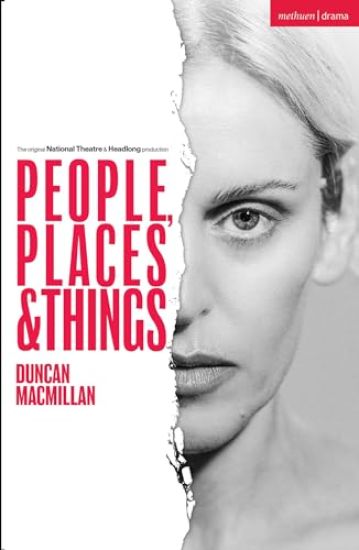
"Macmillan doesn’t shy away from difficult questions about addiction and recovery and, rightly, doesn’t answer them ... this is a bold, timely and searching play" - Financial TimesEmma was having the time of her life. Now she’s in rehab. Her first step is to admit that she has a problem. But the problem isn’t with Emma, it’s with everything else. She needs to tell the truth. But she’s smart enough to know that there’s no such thing. When intoxication feels like the only way to survive the modern world, how can she ever sober up?People, Places & Things premiered at the National Theatre in 2015 before transferring to London’s West End and St. Ann’s Warehouse in New York. This edition is published to coincide with the return to the West End in June, 2024
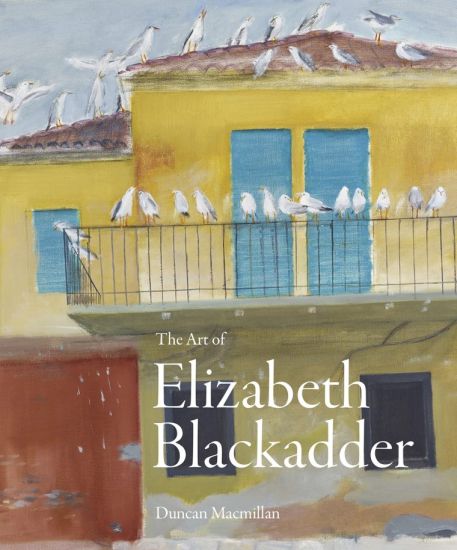
Exploring the development of Elizabeth Blackadder’s art in all its richness, this revised edition of Duncan Macmillan's 1999 book expands the account of an important artist and her significant body of work. With her oeuvre ranging through still life, landscapes and flower painting, Elizabeth Blackadder (1931-2021) was one of the best known and respected artists in the British painting tradition. The first woman to be elected to both the Royal Academy and the Royal Scottish Academy, she exhibited widely from the 1960s and her work has been reproduced extensively. Updated to include new imagery, Duncan Macmillan's expert text is essential reading for Blackadder's legion of fans.
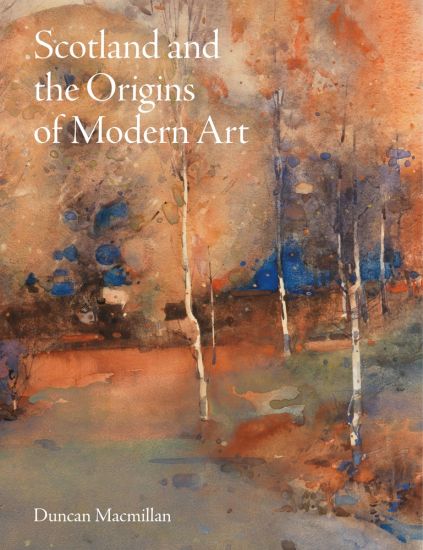
A discussion of sensibility, sensation, perception and painting, Scotland and the Origins of Modern Art is an original work which argues that the eighteenth-century Scottish philosophy of moral sense played a central role in shaping ideas explored by figures such as Cézanne and Monet over one hundred years later.Proposing that sensibility not reason was the basis of morality, the philosophy of moral sense gave birth to the idea of the supremacy of the imagination. Allied to the belief that the imagination flourished more freely in the primitive history of humanity, this idea became a potent inspiration for artists. The author also highlights Thomas Reid's method in his philosophy of common sense of using art and artists to illustrate how perception and expression are intuitive. To be truly expressive, artists should unlearn what they have learned and record their raw sensations, rather than the perceptions that derive from them.Exploring the work of key philosophical and artistic protagonists, this thought-provoking book unearths the fascinating exchanges between art, philosophy and literature during Enlightenment in Scotland that provided the blueprint for modernism.
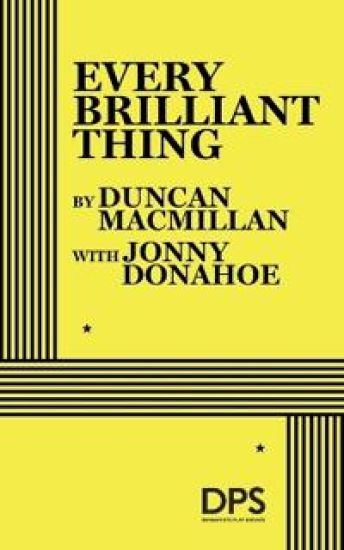
You’re six years old. Mum’s in hospital. Dad says she’s ‘done something stupid’. She finds it hard to be happy.So you start to make a list of everything that’s brilliant about the world. Everything that’s worth living for.1. Ice Cream2. Kung Fu Movies3. Burning Things4. Laughing so hard you shoot milk out your nose5. Construction cranes6. MeYou leave it on her pillow. You know she’s read it because she’s corrected your spelling. Soon, the list will take on a life of its own.A new play about depression and the lengths we will go to for those we love.
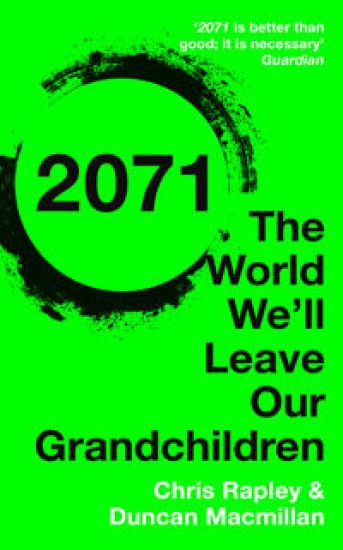
‘I could fly to New York and back every day for seven years and still not leave a carbon footprint as big as if I have a child. Ten thousand tonnes of CO2. That’s the weight of the Eiffel Tower. I’d be giving birth to the Eiffel Tower.’In a time of global anxiety, terrorism, erratic weather and political unrest, a young couple want a child but are running out of time. If they over think it, they’ll never do it. But if they rush, it could be a disaster.They want to have a child for the right reasons. Except, what exactly are the right reasons? And what will be the first to destruct – the planet or the relationship?
This is the first collection from critically acclaimed playwright Duncan Macmillan, containing the plays Monster, Lungs, 2071, Every Brilliant Thing and People, Places and Things.
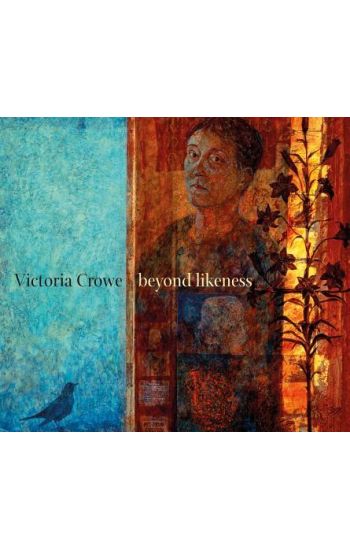
Victoria Crowe is one of the world's most vital and original figurative painters. Her instantly recognisable work is represented in a large number of public and private collections. This extensively illustrated new book looks in depth at some of her own favourite portraiture. Looking at the psychology of her subjects and of herself in painting them, this is a fascinating book. Whether you are intrigued by the enigmatic stare of a psychiatrist, struck by the haunted eyes of an Auschwitz survivor or curious about the meaningful surroundings of her own self-portrait, this is an absorbing and enthralling read. Victoria Crowe lives in Scotland and Venice.
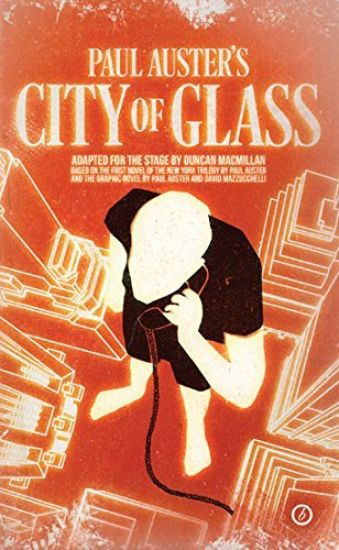
When reclusive crime writer Daniel Quinn receives a mysterious call seeking a private detective in the middle of the night, he quickly and unwittingly becomes the protagonist in a thriller of his own. As the familiar territory of the noir detective genre gives way to something altogether more disturbing, Quinn becomes consumed by his mission, and begins to lose his grip on reality.
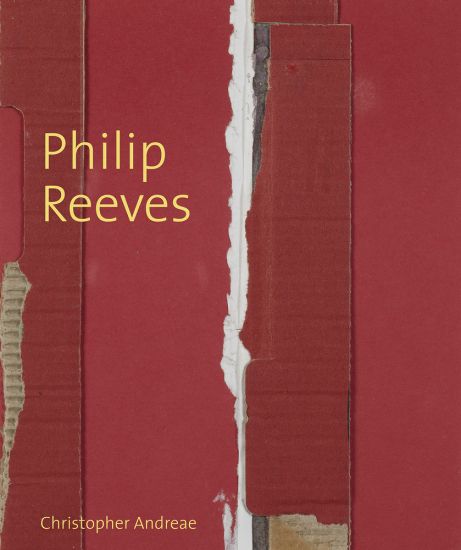
Artist Philip Reeves (b.1931, Cheltenham) has lived and worked in Glasgow since the mid-1950s. Landscape and cityscape underpin his artistic vision, which has explored varying degrees of representation and realism, as well as an ever-evolving abstraction. This long overdue book is the first to survey his entire career, covering his printmaking, watercolour painting, drawing, collage and reliefs.Reeves has brought his own fresh subtlety and distinctiveness to the developing history and expressive potential of abstraction. His printmaking experiments have encompassed both innovative uses of the etching plate and the deployment of found objects. Such work has led to his recognition as an artist of note, particularly in Scotland where he has had many exhibitions. Author Christopher Andreae charts this exhibition history alongside Reeves' impact as a teacher at Glasgow School of Art and as a founding member of print studios in Edinburgh and Glasgow.The breadth of Reeves's work, illustrated extensively here for the first time, may surprise even those who know and like his art. Those who are yet to encounter the oeuvre will find in Philip Reeves a fascinating introduction to a highly inventive artist.
"He's got zero empathy. You could be having a conversation and start choking to death and he'd just think, 'Well, this conversation's over. He'd probably just sit there and finish eating whatever you were choking on."An inexperienced teacher is given the job of saving a disturbed and violent fourteen-year-old boy from permanent exclusion. Alone in the classroom, an intense battle of wills takes place. But what can be done when a child cares for no one and is afraid of nothing? Monster won two awards at the inaugural Bruntwood Playwriting Competition and was first performed in 2007 at the Royal Exchange, Manchester, where Duncan MacMillan was Writer-in-Residence.
"You put it in the freezer, so when you transfer it to the boiling water it doesn't feel a thing. I suppose that this is how I've felt recently. I've been in some deep freeze and suddenly I can feel steam in my face, I'm falling headlong into scalding water."It's 2005, the sun is shining and Loretta is planning to make her daughter's favourite meal. But when Sophie stops talking to her, children start vanishing, and rooms begin to cry, Loretta can't help feeling that something is up and that she might have something to do with it.A play about one woman's journey back to her childhood, to stop her past flooding into the present.