Kirjojen hintavertailu. Mukana 12 595 353 kirjaa ja 12 kauppaa.

Kirjailija

E.A. Heaman

Kirjat ja teokset yhdessä paikassa: 6 kirjaa, julkaisuja vuosilta 1999-2022, suosituimpien joukossa Civilization. Vertaile teosten hintoja ja tarkista saatavuus suomalaisista kirjakaupoista.

Mukana myös kirjoitusasut: E. A. Heaman

6 kirjaa

Kirjojen julkaisuhaarukka 1999-2022.

Civilization

Civilization

E.A. Heaman

MCGILL-QUEEN'S UNIVERSITY PRESS
2022
nidottu
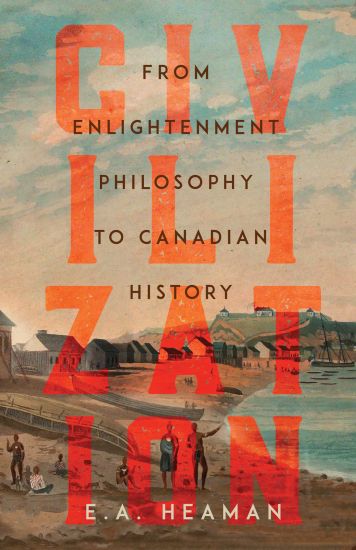
Colonial Canada changed enormously between the 1760s and the 1860s, the Conquest and Confederation, but the idea of civilization seen to guide those transformations changed still more. A cosmopolitan and optimistic theory of history was written into the founding Canadian constitution as a check on state violence, only to be reversed and undone over the next century. Civilization was hegemony, a contradictory theory of unrestrained power and restraints on that power. Occupying a middle ground between British and American hegemonies, all the different peoples living in Canada felt those contradictions very sharply. Both Britain and America came to despair of bending Canada violently to their will, and new forms of hegemony, a greater reckoning with soft power, emerged in the wake of those failures.E.A. Heaman shows that the view from colonial Canada matters for intellectual and political history. Canada posed serious challenges to the Scottish Enlightenment, the Pax Britannica, American manifest destiny, and the emerging model of the nation-state. David Hume’s theory of history shaped the Canadian imaginary in constitutional documents, much-thumbed histories, and a certain liberal-conservative political and financial orientation. But as settlers flooded across the continent, cosmopolitanism became chauvinism, and the idea of civilization was put to accomplishing plunder and predation on a transcontinental scale. Case studies show crucial moments of conceptual reversal, some broadly representative and some unique to Canada. Dissecting the Seven Years’ War, domestic relations, the fiscal military state, liberal reform, social statistics, democracy, constitutionalism, and scholarly history, Heaman shows how key British and Canadian public figures grappled with the growing gap between theory and practice.By historicizing the concept of civilization, this book connects Enlightenment ideals and anti-colonialism, shown in contest with colonialism in Canada before Confederation.
Civilization

Civilization

E.A. Heaman

MCGILL-QUEEN'S UNIVERSITY PRESS
2022
sidottu
Colonial Canada changed enormously between the 1760s and the 1860s, the Conquest and Confederation, but the idea of civilization seen to guide those transformations changed still more. A cosmopolitan and optimistic theory of history was written into the founding Canadian constitution as a check on state violence, only to be reversed and undone over the next century. Civilization was hegemony, a contradictory theory of unrestrained power and restraints on that power. Occupying a middle ground between British and American hegemonies, all the different peoples living in Canada felt those contradictions very sharply. Both Britain and America came to despair of bending Canada violently to their will, and new forms of hegemony, a greater reckoning with soft power, emerged in the wake of those failures.E.A. Heaman shows that the view from colonial Canada matters for intellectual and political history. Canada posed serious challenges to the Scottish Enlightenment, the Pax Britannica, American manifest destiny, and the emerging model of the nation-state. David Hume’s theory of history shaped the Canadian imaginary in constitutional documents, much-thumbed histories, and a certain liberal-conservative political and financial orientation. But as settlers flooded across the continent, cosmopolitanism became chauvinism, and the idea of civilization was put to accomplishing plunder and predation on a transcontinental scale. Case studies show crucial moments of conceptual reversal, some broadly representative and some unique to Canada. Dissecting the Seven Years’ War, domestic relations, the fiscal military state, liberal reform, social statistics, democracy, constitutionalism, and scholarly history, Heaman shows how key British and Canadian public figures grappled with the growing gap between theory and practice.By historicizing the concept of civilization, this book connects Enlightenment ideals and anti-colonialism, shown in contest with colonialism in Canada before Confederation.
Tax, Order, and Good Government

Tax, Order, and Good Government

E.A. Heaman

McGill-Queen's University Press
2017
sidottu
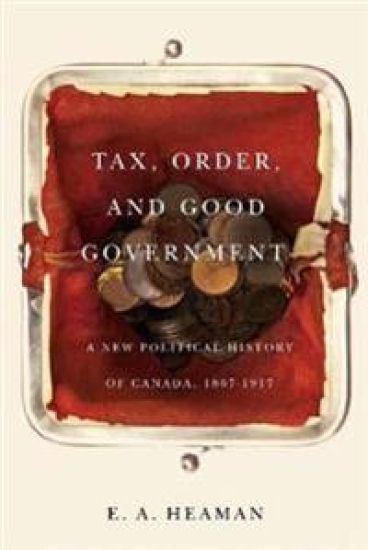
Was Canada's Dominion experiment of 1867 an experiment in political domination? Looking to taxes provides the answer: they are a privileged measure of both political agency and political domination. To pay one's taxes was the sine qua non of entry into political life, but taxes are also the point of politics, which is always about the control of wealth. Modern states have everywhere been born of tax revolts, and Canada was no exception. Heaman shows that the competing claims of the propertied versus the people are hardwired constituents of Canadian political history. Tax debates in early Canada were philosophically charged, politically consequential dialogues about the relationship between wealth and poverty. Extensive archival research, from private papers, commissions, the press, and all levels of government, serves to identify a rising popular challenge to the patrician politics that were entrenched in the Constitutional Act of 1867 under the credo "Peace, Order, and good Government." Canadians wrote themselves a new constitution in 1867 because they needed a new tax deal, one that reflected the changing balance of regional, racial, and religious political accommodations. In the fifty years that followed, politics became social politics and a liberal state became a modern administrative one. But emerging conceptions of fiscal fairness met with intense resistance from conservative statesmen, culminating in 1917 in a progressive income tax and the bitterest election in Canadian history. Tax, Order, and Good Government tells the story of Confederation without exceptionalism or misplaced sentimentality and, in so doing, reads Canadian history as a lesson in how the state works. Tax, Order, and Good Government follows the money and returns taxation to where it belongs: at the heart of Canada's political, economic, and social history.
A Short History of the State in Canada

A Short History of the State in Canada

E. A. Heaman

University of Toronto Press
2015
sidottu
A concise, elegant survey of a complex aspect of Canadian history, A Short History of the State in Canada examines the theory and reality of governance within Canada’s distinctive political heritage: a combination of Indigenous, French, and British traditions, American statism and anti-statism, and diverse, practical experiments and experiences. E.A. Heaman takes the reader through the development of the state in both principle and practice, examining Indigenous forms of government before European contact; the interplay of French and British colonial institutions before and after the Conquest of New France; the creation of the nineteenth-century liberal state; and, finally, the rise and reconstitution of the modern social welfare state. Moving beyond the history of institutions to include the development of political cultures and social politics, A Short History of the State in Canada is a valuable introduction to the topic for political scientists, historians, and anyone interested in Canada’s past and present.
A Short History of the State in Canada

A Short History of the State in Canada

E. A. Heaman

University of Toronto Press
2015
pokkari
A concise, elegant survey of a complex aspect of Canadian history, A Short History of the State in Canada examines the theory and reality of governance within Canada’s distinctive political heritage: a combination of Indigenous, French, and British traditions, American statism and anti-statism, and diverse, practical experiments and experiences. E.A. Heaman takes the reader through the development of the state in both principle and practice, examining Indigenous forms of government before European contact; the interplay of French and British colonial institutions before and after the Conquest of New France; the creation of the nineteenth-century liberal state; and, finally, the rise and reconstitution of the modern social welfare state. Moving beyond the history of institutions to include the development of political cultures and social politics, A Short History of the State in Canada is a valuable introduction to the topic for political scientists, historians, and anyone interested in Canada’s past and present.
The Inglorious Arts of Peace

The Inglorious Arts of Peace

E. A. Heaman

University of Toronto Press
1999
sidottu
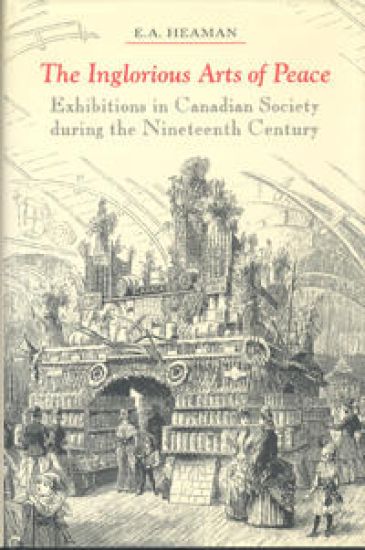
The exhibition was one of the great nineteenth-century projects for improving the world. Combining the Victorian virtues of communication, cooperation, and competition, it promised to advertise the choice products of civilization to a receptive public. The Inglorious Arts of Peace is the first comprehensive look at the history of these cultural extravaganzas in Canada. Early in the nineteenth century, provincial governments began to sponsor exhibitions that advertised highly bred livestock and modern techniques of rotation and manuring to farmers. Hundreds of agricultural and industrial exhibitions sprang up across central Canada until, by the end of the century, exhibiting was an enormous industry attracting a mass audience. Heaman examines the ways in which British North America was advertised at home and abroad in the pursuit of productivity, markets, capital, and immigrants, and evaluates the exhibitions' impact on private industry, the government, and Canadian identity. She also considers the participation of women and native peoples at local and international exhibits, showing how they transcended the limited spheres of representation imposed upon them. The Inglorious Arts of Peace will appeal to those interested in Canadian history and in the historical constructions of gender and race.