
Kirjailija
E. E. Cummings
Kirjat ja teokset yhdessä paikassa: 65 kirjaa, julkaisuja vuosilta 1977-2026, suosituimpien joukossa XLI Poems - Poetry by e.e. cummings. Vertaile teosten hintoja ja tarkista saatavuus suomalaisista kirjakaupoista.
Mukana myös kirjoitusasut: E E Cummings, E.E. Cummings, E.E Cummings
65 kirjaa
Kirjojen julkaisuhaarukka 1977-2026.

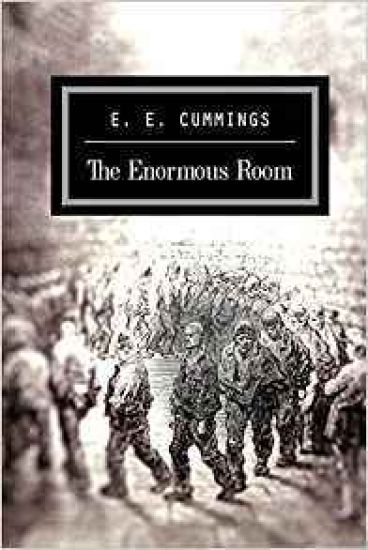
The most notable work of fiction from our most beloved modernist poet, The Enormous Room was one of the greatest—yet still not fully recognised— American literary works to emerge out of World War I. Drawing on E. E. Cummings’s experiences in France as a volunteer ambulance driver, this novel takes us through a series of mishaps that led to the poet being arrested for treason and imprisoned. Out of this trauma Cummings produced a work like no other—a story of oppression and injustice told with his characteristic linguistic energy and unflappable exuberance, which celebrates the spirit of the individual and offers a brave and brilliant opposition in the face of the inhumanity of war.
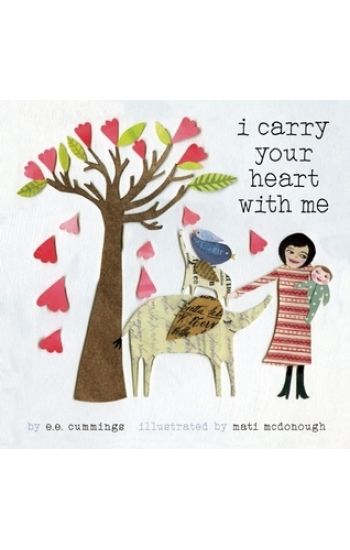
I Carry Your Heart With Me is a children's adaptation of the beloved E. E. Cummings poem, beautifully illustrated by Mati Rose McDonough. Showing the strong bond of love between mother and child, within nature and throughout life, Cummings' heartfelt words expressed through McDonough's lovely illustrations combine to create a fresh, yet classic, portrayal of love. First published by Liveright Publishing in 1952 in Complete Poems: 1904-1962 by E. E. Cummings, as [i carry your heart with me (i carry it in], "I Carry Your Heart With Me" has become a classic and very popular poem over the years. McDonough's illustrations provide a new artistic interpretation on this familiar poem.

The Enormous Room: (Starbooks Classics Editions)
E. E. Cummings
Createspace Independent Publishing Platform
2014
nidottu
The Enormous Room (The Green-Eyed Stores) is a 1922 autobiographical novel by the poet and novelist E. E. Cummings about his temporary imprisonment in France during World War I. Cummings served as an ambulance driver during the war. In late August 1917 his friend and colleague, William Slater Brown (known in the book only as B.), were arrested by French authorities as a result of anti-war sentiments B. had expressed in some letters. When questioned, Cummings stood by his friend and was also arrested. While Cummings was in captivity at La Fert -Mac , his father received an erroneous letter to the effect that his son had been lost at sea. The cable was later rescinded, but the subsequent lack of information on his son's whereabouts left the elder Cummings distraught. Meanwhile, Cummings and B. had the bad luck to be transported to La Fert only five days after the local commissioners in charge of reviewing cases for trial and pardon had left - and the commissioners were not expected back until November. When they finally did arrive, they agreed to allow Cummings, as an official "suspect", a supervised release in the remote commune of Oloron-Sainte-Marie. B. was ordered to be transferred to a prison in Pr cign . Before Cummings was to depart, he was unconditionally released from La Fert due to U.S. diplomatic intervention. He arrived in New York City on January 1, 1918. Cummings thus spent over four months in the prison. He met a number of interesting characters and had many picaresque adventures, which he compiled into The Enormous Room. The book is written as a mix between Cummings' well-known unconventional grammar and diction and the witty voice of a young Harvard-educated intellectual in an absurd situation. The title of the book refers to the large room where Cummings slept beside thirty or so other prisoners. However, it also serves as an allegory for Cummings' mind and his memories of the prison - such that when he describes the many residents of his shared cell, they still live in the "enormous room" of his mind.


Many years ago the prodigious and famously prolific E. E. Cummings sat in his study writing and thinking about sex. His private brooding gave way to poems and drawings of sexual and romantic love that delight and provoke. Here, collected for this first time in a single volume, are those erotic poems and sketches, culled from Cummings’s original manuscripts by the distinguished editor George James Firmage. from “16” may i feel said he (i’ll squeal said she just once said he) it’s fun said she (may i touch said he how much said she a lot said he) why not said she

The four tales in this enchanting, newly illustrated volume, tell of lonely and extraordinary characters finding friendship in unlikely companions. In "The Old Man Who Said Why" a wise fairy's kind nature is taxed when one old man's questions throw the entire heavens into madness. In "The Elephant and the Butterfly" and "The House That Ate Mosquito Pie" shyness is overcome by the compelling love of new friends. "The Little Girl Named I" is a conversation between the author and a small girl, in the manner of A. A. Milne's Winnie-the-Pooh. Clever, insightful, and magical, peopled with vivid characters—a house that prefers one bird to any human inhabitants, an elephant paralyzed with delight, a fairy who "always breakfasted on light and silence"here are tales as only Cummings could write them. A delightful and surprising gift for anyone, young or old.
Four months after Cummings's death in September 1962, his widow, the photographer Marion Morehouse, collected the typescripts of 29 new poems. These poems, as well as uncollected poems published only in periodicals up to that time, make up 73 Poems. This is the final volume in Liveright's reissue of Cummings's individual volumes of poetry, with texts and settings based on E. E. Cummings: The Complete Poems 1904-1962.

Published in 1958, 95 Poems is the last book of new poems published in Cummings's lifetime. Remarkable for its vigor, freshness, interest in ordinary individuals, and awareness of the human life cycle, the book reflects Cummings's observations on nature and his prevailing gratitude for whatever life offers: "Time's a strange fellow: more he gives than takes." This new edition joins other individual uniform Liveright paperback volumes drawn from the Complete Poems, most recently Etcetera and 22 and 50 Poems.
Cummings's ninth book of poems, One Times One, was first published in 1944. The poems in One Times One have as their theme "oneness and the means (one times one) whereby that oneness is achieved—love," in the words of Cummings's biographer Richard S. Kennedy. Besides new expressions of universal concerns, Cummings writes here in a lyric and optimistic mode, drawing portraits of people dear to him in New Hampshire and New York City's Greenwich Village. This new edition joins other individual uniform Liveright paperback volumes drawn from the Complete Poems, most recently Etcetera and 22 and 50 Poems.

Appearing for the first time in a Liveright paperback edition, 22 and 50 Poems combines twenty-two new poems from Cummings's Collected Poems (1938) with his 50 Poems (1940). Included are such favorites as "My father moved through dooms of love" and "anyone lived in a pretty how town," along with the usual Cummings dazzle of satirical epigrams, love poems, and syntactical anagrams.This edition is published in a uniform format with Is 5, Tulips & Chimneys, ViVa, XAIPE, and No Thanks.

The poems in Etcetera were discovered in three Cummings manuscript collections and selected from more than 350 unpublished pieces. Many of the poems are from his early years and all convey his freshness and youthful spirit, exhibiting his celebration of love and delight in common natural phenomena. Etcetera was first published by Liveright in 1983. This newly reissued edition is published in a uniform format with Is 5, Tulips & Chimneys, ViVa, XAIPE, and No Thanks.
AnOther E.E. Cummings
E. E. Cummings; Richard Kostelanetz
Liveright Publishing Corporation
2000
nidottu
As a poet, Cummings was a pioneer not only in linguistic and typographic inventions, but also in sound and concrete poetry. But his prose is no less experimental; he wrote memoirs, essays, and fiction that are constantly provocative and often radically experimental. To read the avant-garde Cummings is to read a writer who consistently broke with established norms, "never to rest and never to have: only to grow." To not read the avant-garde Cummings is to not read Cummings.
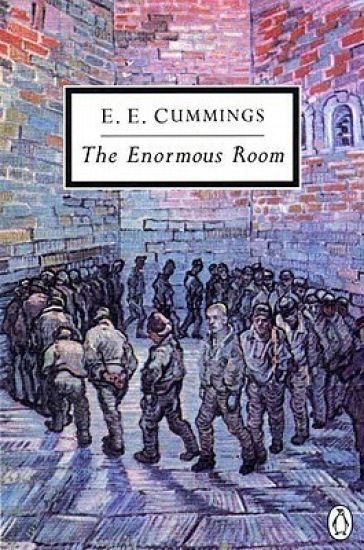
In 1917 young Edward Estlin Cummings went to France as a volunteer with a Red Cross ambulance unit on the western front. But his free-spirited, insubordinate ways soon got him tagged as a possible enemy of La Patrie, and he was summarily tossed into a French concentration camp at La Ferte-Mace in Normandy. Under the vilest conditions, Cummings found fulfillment of his ever elusive quest for freedom. The Enormous Room, his account of his four-month confinement, reads like a latter-day Pilgrim's Progress, a journey into dispossession, to a place among the most debased and deprived of human creatures. Cummings's hopeful tone reflects the essential paradox of his existence: to lose everything is to become free, and so to be saved.For more than seventy years, Penguin has been the leading publisher of classic literature in the English-speaking world. With more than 1,700 titles, Penguin Classics represents a global bookshelf of the best works throughout history and across genres and disciplines. Readers trust the series to provide authoritative texts enhanced by introductions and notes by distinguished scholars and contemporary authors, as well as up-to-date translations by award-winning translators.
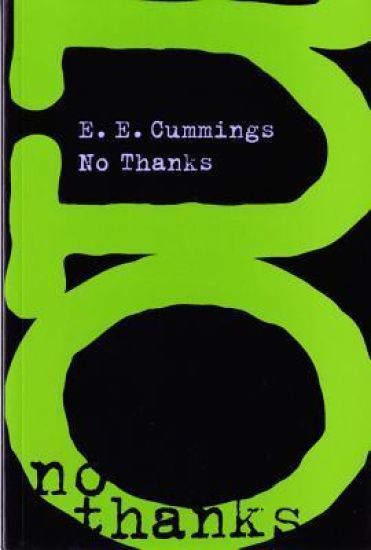
E. E. Cummings, along with Pound, Eliot, and Williams, helped bring about the twentieth-century revolution in literary expression. He is recognized as the author of some of the most beautiful lyric poems written in the English language and also as one of the most inventive American poets of his time. Fresh and candid, by turns earthy, tender, defiant, and romantic, Cummings's poems celebrate the uniqueness of each individual, the need to protest the dehumanizing force of organizations, and the exuberant power of love. No Thanks was first published in 1935; although Cummings was by then in mid-career, he had still not achieved recognition, and the title refers ironically to publishers' rejections. No Thanks contains some of Cummings's most daring literary experiments, and it represents most fully his view of life—romantic individualism. The poems celebrate an openly felt response to the beauties of the natural world, and they give first place to love, especially sexual love, in all its manifestations. The volume includes such favorites as "sonnet entitled how to run the world)," "may I feel said he," "Jehovah buried. Satan dead," "be of love (a little)," and the now-famous grasshopper poem.
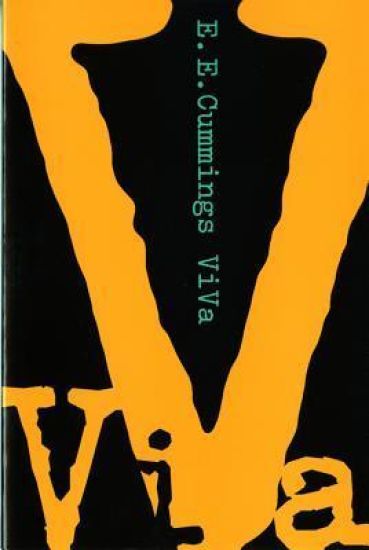
First published in 1931, ViVa contains four of E. E. Cummings' most experimental poems as well as some of his most memorable. The volume includes such no-famous celebrations as "i sing of Olaf glad and big" and "if there are any heavens my mother will (all be herself) have," along with such favorites as "Space being (don't forget to remember) Curved," "a clown's smirk in the skull of a baboon," and "somewhere I have never traveled, gladly beyond."
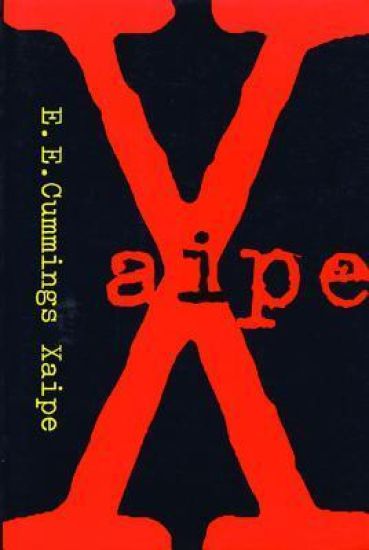
Among many poems can be found "dying is fine)but Death," "so many selves(so many friends and gods," "when serpents bargain for the right to squirm," "no time ago," "I thank You God for most this amazing," and "now all the fingers of this tree(darling)have."