Kirjojen hintavertailu. Mukana 12 595 353 kirjaa ja 12 kauppaa.

Kirjailija

E. M. Cioran

Kirjat ja teokset yhdessä paikassa: 23 kirjaa, julkaisuja vuosilta 1980-2023, suosituimpien joukossa Betrachtungen über Frankreich/Über das Opfer/Sechs Paradoxa an die Marquise von Nav.../Über das reaktionäre Denken. Vertaile teosten hintoja ja tarkista saatavuus suomalaisista kirjakaupoista.

Mukana myös kirjoitusasut: E M Cioran, E.M. Cioran

23 kirjaa

Kirjojen julkaisuhaarukka 1980-2023.

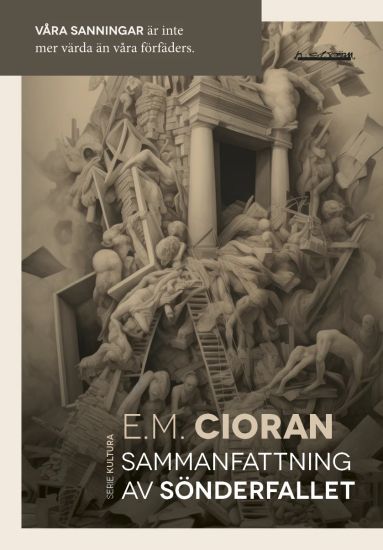
Sammanfattning av sönderfallet

Sammanfattning av sönderfallet

E. M. Cioran

h:ström - Text Kultur AB
2023
nidottu
I de aforismer, essäer i miniatyr och prosapoetiska betraktelser som Sammanfattning av sönderfallet rymmer finner vi teman som återkommer i Ciorans författarskap: självmordet, sömnlösheten, skepticismen och nihilismen, gnostiska kätterier, religionernas och utopiernas ohållbarhet, människans outtömliga förmåga till självbedrägeri, tiden och glömskan, historiens tragiska mönster, exilen och alienationen - här vägleds vi till begrundan av intigheten, till en samexistens med existensens slut. När denna bok publicerades i Frankrike 1949 väckte boken stor uppskattning och belönades med Prix Rivarol för bästa bok på franska av en icke-fransk författare. Under de föregående åren hade rumänen Cioran i sin självvalda exil i Paris fulländat sin franska och renodlat sin lyriska, kärnfulla stil i syfte att åstadkomma detta melankoliska och muntert misantropiska mästerverk.
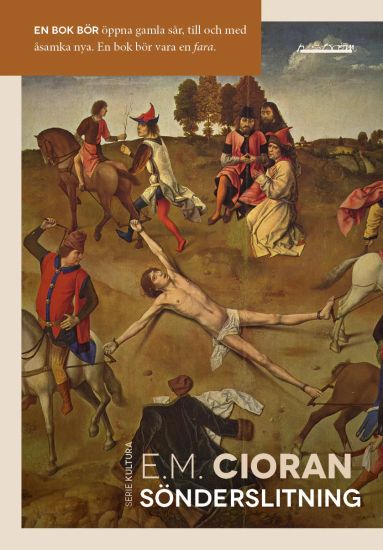
Sönderslitning

Sönderslitning

E. M. Cioran; Tobias Dahlkvist

h:ström - Text Kultur AB
2023
nidottu
Hur dystert Ciorans tänkande än kan tyckas vara, leder hans reflektioner över tillvarons grundvillkor inte fram till något försök att bevisa tillvarons meningslöshet, utan handlar snarare om att använda svärtan, som reflektionen över existensens grundvalar inrymmer, som ett redskap för att väcka kärleken till livet. Sönderslitning (1979) är ett karaktäristiskt verk. I en blandning av essäistik och aforistik får vi ta del av en serie reflektioner över hans återkommande teman: historien och Västerlandets förfall, självmordets lockelse, sömnlöshetens prövningar, den moderna akademiska filosofins värdelöshet, framhållen i jämförelser med Buddha, några kristna helgon och ett litet antal tänkare som Pascal, Marcus Aurelius och Epikuros. Stilen är sedvanligt kristallklar, helt skyende all fackfilosofisk terminologi. Idéhistorikern Tobias Dahlkvist, författare till flera böcker om pessimismens historia, däribland Eremiten i Paris: Emil Cioran och pessimismen som levnadskonst (2013), har försett boken med ett initierat efterord. "Detta är Cioran-högtid. Detta är en bok som självklart bör stå bland de få som finns till hands bredvid sängen (där också en handfull andra centrala verk av andra författare finns)." - Thomas Nydahl, NYDAHLS OCCIDENT.
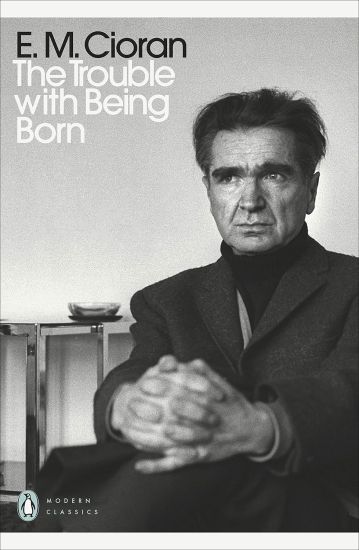
The Trouble With Being Born

The Trouble With Being Born

E. M. Cioran

Penguin Classics
2020
pokkari
'Not to be born is undoubtedly the best plan of all. Unfortunately it is within no one's reach.'In The Trouble With Being Born, E. M. Cioran grapples with the major questions of human existence: birth, death, God, the passing of time, how to relate to others and how to make ourselves get out of bed in the morning.In a series of interlinking aphorisms which are at once pessimistic, poetic and extremely funny, Cioran finds a kind of joy in his own despair, revelling in the absurdity and futility of our existence, and our inability to live in the world.Translated by Pulitzer Prize-winning poet and critic Richard Howard, The Trouble With Being Born is a provocative, illuminating testament to a singular mind.
All Gall Is Divided: The Aphorisms of a Legendary Iconoclast
"An antidote to a world gone mad for bedside affirmation"--Washington Post. E. M. Cioran has been called the last worthy disciple of Nietzsche and "a sort of final philosopher of the Western world" who "combines the compassion of poetry and the audacity of cosmic clowning" (Washington Post). All Gall Is Divided is the second book Cioran published in French after moving from his native Romania and establishing himself in Paris. It revealed him as an aphorist in a long tradition descending from the ancient Greeks through La Rochefoucault but with a gift for lacerating, subversively off-kilter insights, a twentieth-century nose for the absurdities of the human condition, and what Baudelaire called "spleen." The aphorisms collected here address themes from the atrophy of utterance and the condition of the West to the abyss, solitude, time, religion, music, the vitality of love, history, and the void. The award-winning poet and translator Richard Howard has characterized them as "manic humor, howls of pain, and a vestige of tears," but, as he notes too, in these expressions of the philosopher's existential estrangement, there glows "a certain sweetness for all of what Cioran calls 'amertume.'"
A Short History of Decay

A Short History of Decay

E. M. Cioran

Penguin Classics
2018
pokkari
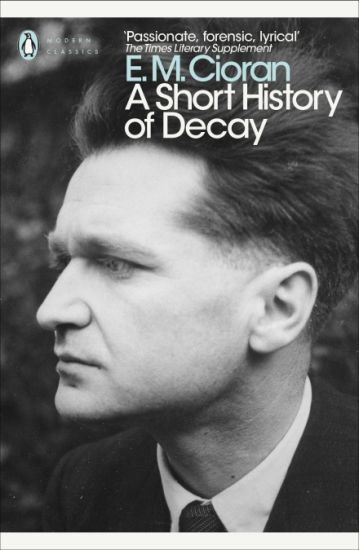
A Short History of Decay (1949) is E. M. Cioran's nihilistic and witty collection of aphoristic essays concerning the nature of civilization in mid 20th-century Europe. Touching upon man's need to worship, the feebleness of God, the downfall of the Ancient Greeks and the melancholy baseness of all existence, Cioran's pieces are pessimistic in the extreme, but also display a beautiful certainty that renders them delicate, vivid, and memorable. Illuminating and brutally honest, A Short History of Decay dissects man's decadence in a remarkable series of moving and beautiful pieces.
Bitterhedens syllogismer

Bitterhedens syllogismer

E.M. Cioran

Forlaget Sidste Århundrede
2017
nidottu
"Naturen har udelukkende skabt individerne for at understøtte Lidelsen, for at hjælpe den med at sprede sig på deres bekostning." Mange af sætningerne i Bitterhedens syllogismer (1952) kunne være formuleret med det formål at udtrykke mest mulig fortvivlelse på mindst mulig plads. Aforismesamlingen er skrevet på fransk af den rumænskfødte filosof Emil Cioran, som for at overvinde en mangeårig depression gav afkald på sit modersmål og tilegnede sig en formfuldendt frankofon stil med syttenhundredetallets belletristik som forbillede. Den knappe prosa i Bitterhedens syllogismer bærer præg af denne "kærlighedsaffære med en ordbog": De mest destruktive tankerækker fremføres på en subtil og elegant måde, som hvis Nietzsches filosofiske hammer var forvandlet til en fleuret.Umiddelbart virker Bitterhedens syllogismer heller ikke som en bog skrevet af nogen, der har overvundet en depression, snarere tværtimod: Sortsynet er konstant og angår alt fra religion og ateisme over kærlighed og ensomhed til liv og død. Alligevel er teksten, på trods af det pessimistiske udgangspunkt, altid lystbetonet, motiveret af en generøs vilje til at charmere og underholde. Cioran forstår kunsten at være "elskværdigt ulykkelig", som han selv udtrykker det, og går aldrig af vejen for en vittighed: "En filosofisk mode er ligesom en gastronomisk; man er lige så utilbøjelig til at gendrive en idé som til at gendrive en sovs."Det paradoksale ved Cioran – den vennesæle misantrop – afspejles også i modtagelsen af hans værker. Allerede udgivelsen af hans første bog udløste på den ene side en pris til forfatteren, mens den på den anden side, hvis man skal tro en vandrehistorie, tvang hans forældre til at mørklægge deres hjem om aftenen. Den ikonoklastiske præstesøn var ikke sen til at forlade hjemlandet til fordel for Paris, hvor han boede resten af sine dage, altid nødtørftigt indkvarteret på små hotels med livsledsageren Simone Boué og en enorm bogsamling. Ciorans eneboertendenser og hans værkers uforsonlige udtryk forhindrede ham dog ikke i at indtage en plads i det intellektuelle parisiske miljø. Han var venner med især to andre eksilforfattere, Samuel Beckett og landsmanden Paul Celan, og er blevet beundret på afstand af Susan Sontag og Herta Müller. Bitterhedens syllogismer er det første af hans værker, der er oversat til dansk.Emil Mihai Cioran (1911-1995) var rumænsk forfatter og filosof. Langt størstedelen af sit liv tilbragte han i selvvalgt ­eksil i Paris, hvor han som "rejsende i smuldrende kosmologier" forfinede sit sortsyn til punktnedslag i altings utilstrækkelighed. På trods af en afsmag for anerkendelse lykkedes det ikke Cioran at holde alle læsere fra livet: Samuel Beckett skrev, at han "fandt ly" i hans "ruiner", landsmanden Paul Celan oversatte ham til tysk, og for Susan Sontag var han en arvtager efter Kierkegaard, Nietzsche og Wittgenstein.
History and Utopia

History and Utopia

E M Cioran; Eugene Thacker

Arcade Publishing
2015
pokkari
"Only a monster can allow himself the luxury of seeing things as they are," writes E. M. Cioran, the Romanian-born philosopher who has rightly been compared to Samuel Beckett. In History and Utopia, Cioran the monster writes of politics in its broadest sense, of history, and of the utopian dream. His views are, to say the least, provocative. In one essay he casts a scathing look at democracy, that "festival of mediocrity"; in another he turns his uncompromising gaze on Russia, its history, its evolution, and what he calls "the virtues of liberty." In the dark shadow of Stalin and Hitler, he writes of tyrants and tyranny with rare lucidity and convincing logic. In "Odyssey of Rancor," he examines the deep-rooted dream in all of us to "hate our neighbors," to take immediate and irremediable revenge. And, in the final essay, he analyzes the notion of the "golden age," the biblical Eden, the utopia of so many poets and thinkers.
The New Gods

The New Gods

E. M. Cioran

University of Chicago Press
2013
nidottu
Dubbed "Nietzsche without his hammer" by literary critic James Wood, the Romanian philosopher E. M. Cioran is known as much for his profound pessimism and fatalistic approach as for the lyrical, raging prose with which he communicates them. Unlike many of his other works, such as On the Heights of Despair and Tears and Saints, The New Gods eschews his usual aphoristic approach in favor of more extensive and analytic essays. Returning to many of Cioran's favorite themes, The New Gods explores humanity's attachment to gods, death, fear, and infirmity, in essays that vary widely in form and approach. In "Paleontology" Cioran describes a visit to a museum, finding the relatively pedestrian destination rife with decay, death, and human weakness. In another chapter, Cioran explores suicide in shorter, impressionistic bursts, while "The Demiurge" is a shambolic exploration of man's relationship with good, evil, and God. All the while, The New Gods reaffirms Cioran's belief in "lucid despair," and his own signature mixture of pessimism and skepticism in language that never fails to be a pleasure. Perhaps his prose itself is an argument against Cioran's near-nihilism: there is beauty in his books.
The Trouble with Being Born

The Trouble with Being Born

E. M. Cioran

Arcade Publishing
2013
nidottu
"A love of Cioran creates an urge to press his writing into someone's hand, and is followed by an equal urge to pull it away as poison."--The New Yorker In this volume, which reaffirms the uncompromising brilliance of his mind, Cioran strips the human condition down to its most basic components, birth and death, suggesting that disaster lies not in the prospect of death but in the fact of birth, "that laughable accident." In the lucid, aphoristic style that characterizes his work, Cioran writes of time and death, God and religion, suicide and suffering, and the temptation to silence. Through sharp observation and patient contemplation, Cioran cuts to the heart of the human experience. "In the company of Nietzsche and Kierkegaard."--Publishers Weekly "No modern writer twists the knife with Cioran's dexterity. . . . His writing . . . is informed with the bitterness of genuine compassion."--Boston Phoenix
The Temptation to Exist

The Temptation to Exist

E. M. Cioran

Arcade Publishing
2013
nidottu
This collection of eleven essays originally appeared in France thirty years ago and created a literary whirlwind on the Left Bank. Cioran writes incisively about Western civilizations, the writer, the novel, mystics, apostles, and philosophers. The Temptation to Exist first introduced this brilliant European thinker twenty years ago to American readers, in a superb translation by Richard Howard. This literary mystique around Cioran continues to grow, and The Temptation to Exist has become an underground classic. In this work Cioran writes about Western civilizations, the writer, the novel, about mystics, apostles, philosophers. For those to whom the very word philosophy brings visions of arduous reading, be assured: Cioran is crystal-clear, his style quotable and aphoristic."A sort of final philosopher of the Western world. His statements have the compression of poetry and the audacity of cosmic clowning"--The Washington Post
A Short History of Decay

A Short History of Decay

E. M. Cioran; Eugene Thacker

Arcade Publishing
2012
pokkari
E. M. Cioran confronts the place of today's world in the context of human history—focusing on such major issues of the twentieth century as human progress, fanaticism, and science—in this nihilistic and witty collection of aphoristic essays concerning the nature of civilization in mid-twentieth-century Europe. Touching upon Man's need to worship, the feebleness of God, the downfall of the Ancient Greeks and the melancholy baseness of all existence, Cioran's pieces are pessimistic in the extreme, but also display a beautiful certainty that renders them delicate, vivid, and memorable. Illuminating and brutally honest, A Short History of Decay dissects Man's decadence in a remarkable series of moving and beautiful pieces.
Drawn and Quartered

Drawn and Quartered

E M Cioran; Eugene Thacker

Arcade Publishing
2012
pokkari
In this collection of aphorisms and short essays, E.M. Cioran sets about the task of peeling off the layers of false realities with which society masks the truth. For him, real hope lies in this task, and thus, while he perceives the world darkly, he refuses to give in to despair. He hits upon this ultimate truth by developing his notion of human history and events as "a procession of delusions," striking out at the so-called "Fallacies of Hope." By examining the relationship between truth and action and between absolutes, unknowables, and frauds, Cioran comes out, for once, in favor of being.
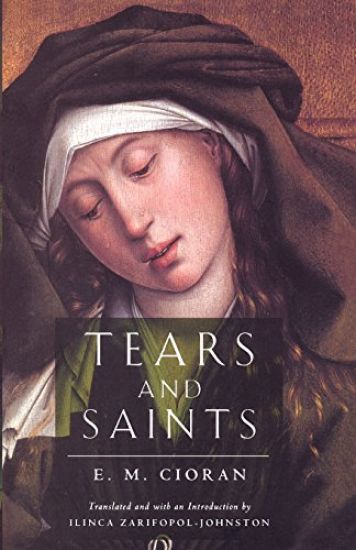
Tears and Saints

Tears and Saints

E. M. Cioran

University of Chicago Press
1998
nidottu
By the mid-1930s, Emil Cioran was already known as a leader of a new generation of politically committed Romanian intellectuals. Researching another, more radical book, Cioran was spending hours in a library poring over the lives of saints. As a modern hagiographer, Cioran "dreamt" himself "the chronicler of these saints' falls between heaven and earth, the intimate knower of the ardors in their hearts, the historian of God's insomniacs." Inspired by Nietzsche's Beyond Good and Evil, Cioran "searched for the origin of tears." He asked himself if saints could be "the sources of tears' better light.""Who can tell?" he wrote in the first paragraph of this book, first published in Romania in 1937. "To be sure, tears are their trace. Tears did not enter the world through the saints; but without them we would never have known that we cry because we long for a lost paradise." By following in their traces, "wetting the soles of one's feet in their tears," Cioran hoped to understand how a human being can renounce being human. Written in Cioran's characteristic aphoristic style, this flamboyant, bold, and provocative book is one of his most important—and revelatory—works.Cioran focuses not on martyrs or heroes but on the mystics—primarily female—famous for their keening spirituality and intimate knowledge of God. Their Christianity was anti-theological, anti-institutional, and based solely on intuition and sentiment. Many, such as Catherine of Siena, Teresa of Avila, and Saint John of the Cross, have produced classic works of mystical literature; but Cioran celebrates many more minor and unusual figures as well. Following Nietzsche, he focuses explicitly on the political element hidden in saints' lives. In his hands, however, their charitable deeds are much less interesting than their thirst for pain and their equally powerful capacity to endure it. Behind their suffering and their uncanny ability to renounce everything through ascetic practices, Cioran detects a fanatical will to power."Like Nietzsche, Cioran is an important religious thinker. His book intertwines God and music with passion and tears. . . . [Tears and Saints] has a chillingly contemporary ring that makes this translation important here and now."—Booklist