Kirjojen hintavertailu. Mukana 12 331 377 kirjaa ja 12 kauppaa.

Kirjailija

E. Merton Coulter

Kirjat ja teokset yhdessä paikassa: 19 kirjaa, julkaisuja vuosilta 1947-2026, suosituimpien joukossa William G. Brownlow. Vertaile teosten hintoja ja tarkista saatavuus suomalaisista kirjakaupoista.

Mukana myös kirjoitusasut: E Merton Coulter

19 kirjaa

Kirjojen julkaisuhaarukka 1947-2026.

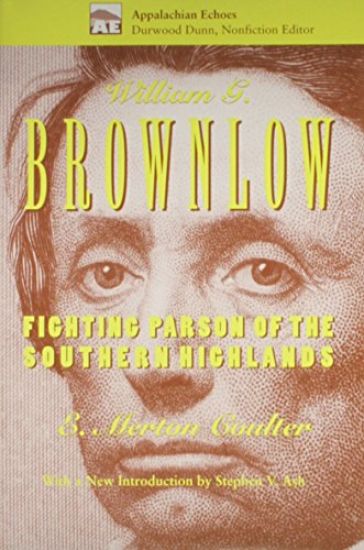
William G. Brownlow

William G. Brownlow

E. Merton Coulter

University of Tennessee Press
1999
nidottu
"The 'Fighting Parson' has endured the passage of time and changing interpretation and remains an enduring and scholarly work." —Tennessee Historical Quarterly"We should know Parson Brownlow. The successes and failures of his radicalism can instruct us in more constructive ways for our own time." —Knoxville News-SentinelTennessee has had its share of outrageous characters over the years but none more outrageous than William G. Brownlow. A legend in his own time and a myth in times after, Parson Brownlow was a circuit-riding Methodist minister, upstart journalist, and political activist who wielded a vitriolic tongue and pen in defense of both slavery and the Union.E. Merton Coulter's 1937 biography of Brownlow remains the standard account of the Parson and his times. It traces his religious, journalistic, and political career and shows that wherever he went, Brownlow created a storm, becoming a hero to his admirers and the devil incarnate to his enemies. "If I have any talent in the world," he once wrote, "it is that talent which consists in piling up one epithet upon another."Coulter drew on a wide range of sources and his own knowledge of Southern history to bring Parson Brownlow to life, and his lively prose captures the exaggerated rhetoric with which Brownlow assaulted all enemies—democrats, abolitionists, Presbyterians, and finally Rebels. Although Coulter's interpretations were biased by racism, his vision of the American South included Appalachian inhabitants and African Americans at a time when most of his contemporaries ignored those groups.Stephen V. Ash's introduction brings Coulter's biography in step with recent scholarship, noting discrepancies between Brownlow's personal life and rhetoric and pointing out some of the limitations in Coulter's account. The reputations of author and subject have made this book a milestone in Southern history, and this new edition conveys the passion of both men to a new generation of readers.The Author: E. Merton Coulter was Regents Professor Emeritus of history at the University of Georgia and editor of the Georgia Historical Quarterly. He was the first president of the Southern Historical Association and the author or editor of nearly thirty books.Stephen V. Ash is associate professor of history at the University of Tennessee and editor of the Journal of East Tennessee History.

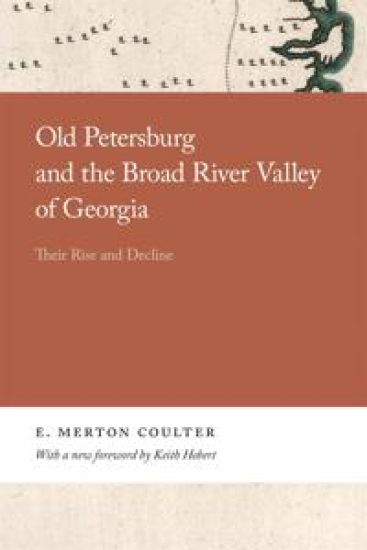
Old Petersburg and the Broad River Valley of Georgia

Old Petersburg and the Broad River Valley of Georgia

E. Merton Coulter; Keith Hebert

UNIVERSITY OF GEORGIA PRESS
2021
pokkari
Old Petersburg and the Broad River Valley of Georgia details colonial life at Petersburg, Georgia, at the junction of Broad and Savannah Rivers. A town that grew, flourished, and eventually disappeared, Petersburg was once a valuable and unique outlet for river trade. This volume highlights various aspects of this river town, including its founding, politics, businesses, and religious practices.The Georgia Open History Library has been made possible in part by a major grant from the National Endowment for the Humanities: Democracy demands wisdom. Any views, findings, conclusions, or recommendations expressed in this collection, do not necessarily represent those of the National Endowment for the Humanities.
Old Petersburg and the Broad River Valley of Georgia

Old Petersburg and the Broad River Valley of Georgia

E. Merton Coulter; Keith Hebert

UNIVERSITY OF GEORGIA PRESS
2021
sidottu
Old Petersburg and the Broad River Valley of Georgia details colonial life at Petersburg, Georgia, at the junction of Broad and Savannah Rivers. A town that grew, flourished, and eventually disappeared, Petersburg was once a valuable and unique outlet for river trade. This volume highlights various aspects of this river town, including its founding, politics, businesses, and religious practices.The Georgia Open History Library has been made possible in part by a major grant from the National Endowment for the Humanities: Democracy demands wisdom. Any views, findings, conclusions, or recommendations expressed in this collection, do not necessarily represent those of the National Endowment for the Humanities.
Early Settlers of Georgia, a List of The.

Early Settlers of Georgia, a List of The.

E. Merton Coulter; Albert B. Saye

Southern Historical Press
2018
nidottu
By: E. Merton Coulter and Albert B. Saye, Pub. 1949, Reprinted 2018, 126 pages, ISBN #0-89308-943-5.This book is a list of the early settlers of Georgia but more importantly a list of the FIRST SETTLERS of Georgia. It is considered a complete list of all those who were sent by the Trustees for establishing the Colony know as Georgia. This book is broken into three parts. Part one is a list in alphabetical order of perons who went from Europe to Georgia at the Trustees' Charge. Part two is a list in alphabetical order of persons who went from Europe to Georgia on their own Account. Giving such information as: Name, Name of Spouse, Age, Marital status, date left Europe, date arriving in Georgia, final destination heading to, Name of Trustees, occupation and etc... And part three, is a list in alphbetical order of the first Shipload of Georgia Settlers
Confederate Receipt Book: A Compilation of Over One Hundred Receipts, Adapted to the Times
Originally published in 1863, this little book is a compilation of "receipts" to aid Southern households beset by shortages as the War Between the States raged on."Designed to supply useful and economic directions and suggestions in cookery, housewifery . . . and for the camp," these helpful hints first appeared in newspapers and other sources. The original edition was bound in yellow, polka-dot wallpaper. Only five copies of that edition were known to exist a hundred years later."A Cheap and Quick Pudding," "Apple Pie Without Apples," "Artificial Oysters," "Spruce Beer," "Soap," "Confederate Candles," "Simple Cure for Croup," "Method of Curing Bad Butter," "To Purify River or Muddy Water," and "Hints for the Ladies" on "freshening" a dress to the new style--these are all included, over a hundred "receipts" to get by in hard times."Confederate Receipts" has as much sentimental appeal to modern readers as it had practical value to a previous generation.
Confederate Receipt Book: A Compilation of Over One Hundred Receipts, Adapted to the Times
Originally published in 1863, this little book is a compilation of "receipts" to aid Southern households beset by shortages as the War Between the States raged on."Designed to supply useful and economic directions and suggestions in cookery, housewifery . . . and for the camp," these helpful hints first appeared in newspapers and other sources. The original edition was bound in yellow, polka-dot wallpaper. Only five copies of that edition were known to exist a hundred years later."A Cheap and Quick Pudding," "Apple Pie Without Apples," "Artificial Oysters," "Spruce Beer," "Soap," "Confederate Candles," "Simple Cure for Croup," "Method of Curing Bad Butter," "To Purify River or Muddy Water," and "Hints for the Ladies" on "freshening" a dress to the new style--these are all included, over a hundred "receipts" to get by in hard times."Confederate Receipts" has as much sentimental appeal to modern readers as it had practical value to a previous generation.
A True and Historical Narrative of the Colony of Georgia

A True and Historical Narrative of the Colony of Georgia

Pat Tailfer; Clarence L. Ver Steeg; E. Merton Coulter

Literary Licensing, LLC
2011
sidottu
""A True and Historical Narrative of the Colony of Georgia"" is a book written by Pat Tailfer that provides an in-depth look at the early days of the Georgia Colony. The book covers the period from the founding of the colony in 1732 to the early 1740s, and provides a detailed account of the challenges faced by the settlers as they attempted to establish a new community in the wilderness.The book covers a wide range of topics, including the early days of the colony, the struggles of the settlers to establish a new way of life, the conflicts with Native American tribes, and the political and economic challenges faced by the colony. It also provides a detailed look at the social and cultural life of the colony, including the role of religion, the development of the arts, and the growth of the economy.Overall, ""A True and Historical Narrative of the Colony of Georgia"" is a fascinating and informative book that provides a unique perspective on the early days of the Georgia Colony. It is a must-read for anyone interested in the history of the American South, and provides a valuable resource for scholars and researchers studying this important period in American history.This scarce antiquarian book is a facsimile reprint of the old original and may contain some imperfections such as library marks and notations. Because we believe this work is culturally important, we have made it available as part of our commitment for protecting, preserving, and promoting the world's literature in affordable, high quality, modern editions, that are true to their original work.
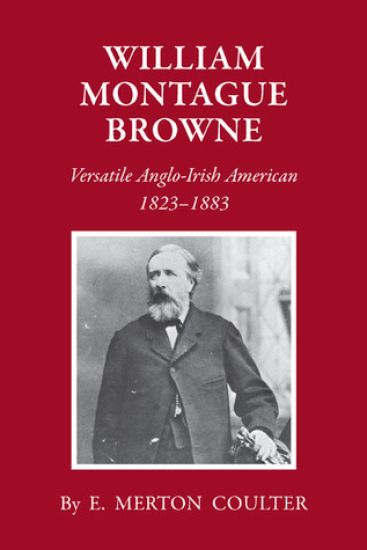
William Montague Browne

William Montague Browne

E. Merton Coulter

University of Georgia Press
2010
pokkari
E. Merton Coulter’s biography of William Montague Browne portrays the life of an Irish journalist living in the north who moved south to adopt the Confederate cause. Born in County Mayo, Ireland, Browne moved to the U. S. in 1852 to be an editor at the New York Journal of Commerce. In 1859 he moved to Washington, D.C., where he edited and owned the Washington Constitution. As a journalist, Browne was an ardent champion of the southern cause and when Georgia seceded he moved south. During the Civil War he served as Director of Conscription in Georgia, aide-de-camp to President Davis, and brigadier general. Browne also took part in the defense of Savannah.After the war, Browne moved to Athens, Georgia, where he edited the Southern Banner, studied law, was admitted to the Georgia bar, and tried farming on a plantation in Oglethorpe County. Later he founded and edited the Southern Farm and Home and became secretary of the Carolina Life Insurance Co., of which Jefferson Davis was president. After the failure of this company, Browne returned to Athens and was elected the first Professor of History and Political Science at the University of Georgia.
Toombs Oak, the Tree That Owned Itself, and Other Chapters of Georgia History
These nine essays originally appeared in the Georgia Historical Quarterly and range in subject from a group of Arcadians expelled from Nova Scotia that settled in colonial Georgia to the origins of the University of Georgia. Other essays examine the Woolfolk murder case that attracted national attention; Henry M. Turner, a black legislator during the Reconstruction; and John Howard Payne, the author of "Home, Sweet Home."
Joseph Vallence Bevan

Joseph Vallence Bevan

E. Merton Coulter

University of Georgia Press
2010
pokkari
Published in 1964, this biography of Joseph Vallence Bevan tells the story of Georgia’s first official historian. Born in Ireland, Bevan moved with his family to Georgia at a young age. He attended the University of Georgia and the College of South Carolina before continuing his education in England. There he met William Godwin, an influential political philosopher, journalist, and novelist, who wrote Letter of Advice To a Young American: On the Course of Studies It Might Be Most Advantageous for Him To Pursue for Bevan.Back in the U.S., Bevan edited the Augusta Chronicle & Georgia Gazette, studied law, served on the Georgia legislature, and became coeditor and owner of the Savannah Georgian. In 1824, by recommendation of Governor George M. Troup, the legislature appointed Bevan as the first official historian of Georgia. His main duties were to arrange the state archives, publish selections from the archives, and to write a history of the state. Bevan was unable to complete a history of Georgia before his death in 1830 at the young age of thirty-two. However, he paved the road for future historians making important acquisitions of transcripts from Great Britain which describe the colonial history of Georgia.
Daniel Lee, Agriculturist

Daniel Lee, Agriculturist

E. Merton Coulter

University of Georgia Press
2010
pokkari
Published in 1972, this biographical study examines Daniel Lee (1802–1890), an agriculturist who is considered to be a forefather to today’s scientific farming. Lee dedicated himself the advancement of farming through the diversification of crops and the use of scientific methods. He was the editor of both the Genesse Farmer and the Southern Cultivator and wrote numerous articles about agricultural chemistry. Lee was appointed the first professor of agriculture at the University of Georgia, which solidified his importance in the agricultural world.
Auraria

Auraria

E. Merton Coulter

University of Georgia Press
2009
pokkari
The first gold rush in American history occurred in north Georgia; it preceded the mining booms in the West by almost two decades. Published in 1956, Auraria tells the story of the mining town at the center of Georgia's gold frenzy. Auraria, which reached its zenith in the 1830s, eventually faded into a ghost town by the twentieth century. E. Merton Coulter gives readers more than a local study by placing Auraria's fascinating story in the context of larger regional and national developments.
College Life in the Old South

College Life in the Old South

E. Merton Coulter; Thomas G. Dyer

University of Georgia Press
2009
pokkari
First published in 1928, College Life in the Old South relates the early history of the University of Georgia from its founding in 1785 through the Reconstruction era. Not a dry compilation of facts, E. Merton Coulter's classic study portrays the struggles and accomplishments of America's first chartered state university.Coulter recounts, among other things, how Athens was chosen as the university's location; how the state tried to close the university and refused to give it a fixed allowance until long after the Civil War; the early rules and how students invariably broke them; the days when the Phi Kappa and Demosthenian literary societies ruled the campus; and the vast commencement crowds that overwhelmed Athens to feast on oratory and watermelons. Coulter's account, interspersed with delightful anecdotes, not only depicts the early university but also shows its importance in the antebellum South.
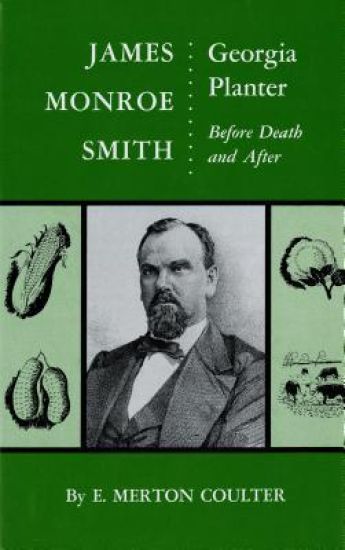
James Monroe Smith

James Monroe Smith

E. Merton Coulter

University of Georgia Press
2002
sidottu
Few men in the history of Georgia have come down to the present in hearsay and folklore as profusely and as controversially as has James Monroe Smith, who became a millionaire farmer around the turn of the twentieth century. He was born near Washington, Georgia, in 1839 and died on his plantation a few miles from Athens in 1915.Smith’s plantation “Smithonia” was measured in terms of square miles. He developed an empire of farming and allied interests, among which was a railroad to connect his plantation with other rail lines. He served terms in the state legislature in both the house and the senate, and in 1906 ran unsuccessfully for governor.The colorful career of Smith, a bachelor, did not end with his death but was kept alive in numerous claims and counter-claims in the settling of his estate. E. Merton Coulter seeks to separate fact from fiction in his account of Smith’s varied activities and the final dissolution of his wealth.
The Confederate States of America, 1861-1865

The Confederate States of America, 1861-1865

E. Merton Coulter

Louisiana State University Press
1950
sidottu
This book is the trade edition of Volume VII of A History of the South, a ten-volume series designed to present a thoroughly balanced history of all the complex aspects of the South's culture from 1607 to the present. Like its companion volumes, The Confederate States of America is written by an outstanding student of Southern history, E. Merton Coulter, who is also one of the editors of the series and the author of Volume VIII.The drama of war has led most historians to deal with the years 1861 to 1865 in terms of campaigns and generals. In this volume, however, Mr. Coulter treats the war in its perspective as an aspect of the life of a people.The attempt to build a nation strong enough to win independence naturally drew Southerners' attention to such problems as morale, money, bonds, taxes, diplomacy, manufacturing, transportation, communication, publishing, armaments, religion, labor, prices, profits, race problems, and political policy. Mr. Coulter balances these phases of the struggle in their relation to war itself, and the whole is dealt with as a period in the history of a people. And finally, Mr. Coulter deals with the ever-recurring questions: Did secession necessarily mean war? Was the South from the very beginning engaged in a hopeless struggle? And, if not, why did it lose?
The South During Reconstruction, 1865-1877

The South During Reconstruction, 1865-1877

E. Merton Coulter

Louisiana State University Press
1947
sidottu
This book is Volume VIII of A History of the South, a ten-volume series designed to present a thoroughly balanced history of all the complex aspects of the South's culture from 1607 to the present. Like its companion volumes, The South During Reconstruction is written by an outstanding student of Southern history, E. Merton Coulter, who is also one of the editors of the series.The tragic Reconstruction period still casts its long shadow over the South. In his study, Mr. Coulter looks beyond the familiar political and economic patterns into the more fundamental attitudes and activities of the people. In this dismal period of racial and political bitterness, little notice has been taken of the strivings for reorganisation of agriculture under free labor, for industrial and transportation development, for a free-school system and higher education, and for the advance of religious, literary, and other cultural interests. Mr. Coulter's book shows these things to be very real, and they are related to the Radical program, which, conceived both in good and evil, ran its course and finally collapsed.This period forms an important chapter in American history. It is an account of a region, defeated in one of the world's great wars, struggling to rebuild its social and economic structure and to win back for itself a place in the reunited nation.