Kirjojen hintavertailu. Mukana 12 657 676 kirjaa ja 12 kauppaa.
Kirjailija
E. Nesbit
Kirjat ja teokset yhdessä paikassa: 491 kirjaa, julkaisuja vuosilta 1987-2026, suosituimpien joukossa The Wonderful Garden (1911) by: E. Nesbit ( Illustrated by: H. R. Millar. ). Vertaile teosten hintoja ja tarkista saatavuus suomalaisista kirjakaupoista.
Contents I. The Book of Beasts II. Uncle James, or The Purple Stranger III. The Deliverers of Their Country IV. The Ice Dragon, or Do as You Are Told V. The Island of the Nine Whirlpools VI. The Dragon Tamers VII. The Fiery Dragon, or The Heart of Stone and the Heart of Gold VIII. Kind Little Edmund, or The Caves and the Cockatrice Edith Nesbit (married name Edith Bland; 15 August 1858 - 4 May 1924) was an English author and poet; she published her books for children under the name of E. Nesbit. She wrote or collaborated on more than 60 books of children's literature.
THE COCKATOUCAN OR GREAT AUNT WILLOUGHBY MATILDA'S ears were red and shiny. So were her cheeks. Her hands were red too. This was because Pridmore had washed her. It was not the usual washing, which makes you clean and comfortable, but the "thorough good wash," which makes you burn and smart till you wish you could be like the poor little savages who do not know anything, and run about bare in the sun, and only go into the water when they are hot. Matilda wished she could have been born in a savage tribe instead of at Brixton. "Little savages," she said, "don't have their ears washed thoroughly, and they don't have new dresses that are prickly in the insides round their arms, and cut them round the neck. Do they, Pridmore?" Edith Nesbit (married name Edith Bland; 15 August 1858 - 4 May 1924) was an English author and poet; she published her books for children under the name of E. Nesbit.She wrote or collaborated on more than 60 books of fiction for children. She was also a political activist and co-founded the Fabian Society, a socialist organisation later affiliated to the Labour Party.Biography Nesbit was born in 1858 at 38 Lower Kennington Lane in Kennington, Surrey (now part of Greater London), the daughter of an agricultural chemist, John Collis Nesbit, who died in March 1862, before her fourth birthday.Her sister Mary's ill health meant that the family travelled around for some years, living variously in Brighton, Buckinghamshire, France (Dieppe, Rouen, Paris, Tours, Poitiers, Angoul me, Bordeaux, Arcachon, Pau, Bagn res-de-Bigorre, and Dinan in Brittany), Spain and Germany, before settling for three years at Halstead Hall in Halstead in north-west Kent, a location which later inspired The Railway Children (this distinction has also been claimed by the Derbyshire town of New Mills). When Nesbit was seventeen, the family moved back to London, living in South East London at Eltham, Elswick Road in Lewisham, Grove Park and Lee. At eighteen, Nesbit met the bank clerk Hubert Bland in 1877. Seven months pregnant, she married Bland on 22 April 1880, though she did not immediately live with him, as Bland initially continued to live with his mother. Their marriage was a stormy one. Early on Nesbit discovered that another woman believed she was Hubert's fiancee and had also borne him a child. A more serious blow came later when she discovered that her good friend, Alice Hoatson, was pregnant with Hubert's child. She had previously agreed to adopt Hoatson's child and allow Hoatson to live with her as their housekeeper. After she discovered the truth, they quarrelled violently and she suggested that Hoatson and the baby should leave; her husband threatened to leave Edith if she disowned the baby and its mother. Hoatson remained with them as a housekeeper and secretary and became pregnant by Bland again 13 years later. Edith again adopted Hoatson's child. Nesbit's children were Paul Bland (1880-1940), to whom The Railway Children was dedicated; Iris Bland (1881-1950s); Fabian Bland (1885-1900); Rosamund Bland (1886-1950), to whom The Book of Dragons was dedicated; and John Bland (1898-1971) to whom The House of Arden was dedicated. Her son Fabian died aged 15 after a tonsil operation; Nesbit dedicated a number of books to him: Five Children and It and its sequels, as well as The Story of the Treasure Seekers and its sequels. Nesbit's adopted daughter Rosamund collaborated with her on the book Cat Tales.
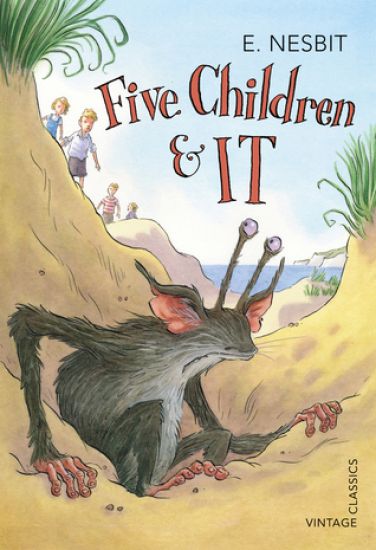
Five Children and It is a children's novel by English author E. Nesbit. It was first published as a book in 1902, having been expanded from a series of stories published in the Strand Magazine in 1900 under the general title The Psammead, or the Gifts. It is the first volume of a trilogy that includes The Phoenix and the Carpet (1904) and The Story of the Amulet (1906). The book has never been out of print since its initial publication.Like Nesbit's The Railway Children, the story begins when a group of children move from London to the countryside of Kent. The five children - Cyril, Anthea, Robert, Jane, and their baby brother, known as the Lamb - are playing in a gravel pit when they uncover a rather grumpy, ugly, and occasionally malevolent Psammead or sand-fairy, who has the ability to grant wishes. He persuades the children to take one wish each day to be shared among them, with the caveat that the wishes will turn to stone at sunset. This, apparently, used to be the rule in the Stone Age, when all that children wished for was food, the bones of which then became fossils. The five children's first wish is to be "as beautiful as the day". The wish ends at sunset and its effects simply vanish, leading the Psammead to observe that some wishes are too fanciful to be changed to stone.
Edith Nesbit (married name Edith Bland; 15 August 1858 - 4 May 1924) was an English author and poet; she published her books for children under the name of E. Nesbit. She wrote or collaborated on more than 60 books of fiction for children. She was also a political activist and co-founded the Fabian Society, a socialist organisation later affiliated to the Labour Party.Nesbit was born in 1858 at 38 Lower Kennington Lane in Kennington, Surrey (now part of Greater London), the daughter of an agricultural chemist, John Collis Nesbit, who died in March 1862, before her fourth birthday.Her sister Mary's ill health meant that the family travelled around for some years, living variously in Brighton, Buckinghamshire, France (Dieppe, Rouen, Paris, Tours, Poitiers, Angoul me, Bordeaux, Arcachon, Pau, Bagn res-de-Bigorre, and Dinan in Brittany), Spain and Germany, before settling for three years at Halstead Hall in Halstead in north-west Kent, a location which later inspired The Railway Children (this distinction has also been claimed by the Derbyshire town of New Mills). When Nesbit was seventeen, the family moved back to London, living in South East London at Eltham, Elswick Road in Lewisham, Grove Park and Lee.
The Phoenix and the Carpet is a fantasy novel for children, written by E. Nesbit and first published in 1904. It is the second in a trilogy of novels that begins with Five Children and It (1902), and follows the adventures of the same five children: Cyril, Anthea, Robert, Jane and the Lamb. Their mother buys the children a new carpet to replace one from the nursery that they have destroyed in an accidental fire. The children find an egg in the carpet, which hatches into a talking Phoenix. The Phoenix explains that the carpet is a magic one that will grant them three wishes a day. The five children go on many adventures, which eventually wears out their magic carpet. The adventures are continued and concluded in the third book of the trilogy, ... Edith Nesbit (married name Edith Bland; 15 August 1858 - 4 May 1924) was an English author and poet; she published her books for children under the name of E. Nesbit.She wrote or collaborated on more than 60 books of fiction for children. She was also a political activist and co-founded the Fabian Society, a socialist organisation later affiliated to the Labour Party.Biography Nesbit was born in 1858 at 38 Lower Kennington Lane in Kennington, Surrey (now part of Greater London), the daughter of an agricultural chemist, John Collis Nesbit, who died in March 1862, before her fourth birthday.Her sister Mary's ill health meant that the family travelled around for some years, living variously in Brighton, Buckinghamshire, France (Dieppe, Rouen, Paris, Tours, Poitiers, Angoul me, Bordeaux, Arcachon, Pau, Bagn res-de-Bigorre, and Dinan in Brittany), Spain and Germany, before settling for three years at Halstead Hall in Halstead in north-west Kent, a location which later inspired The Railway Children (this distinction has also been claimed by the Derbyshire town of New Mills). When Nesbit was seventeen, the family moved back to London, living in South East London at Eltham, Elswick Road in Lewisham, Grove Park and Lee. At eighteen, Nesbit met the bank clerk Hubert Bland in 1877. Seven months pregnant, she married Bland on 22 April 1880, though she did not immediately live with him, as Bland initially continued to live with his mother. Their marriage was a stormy one. Early on Nesbit discovered that another woman believed she was Hubert's fiancee and had also borne him a child. A more serious blow came later when she discovered that her good friend, Alice Hoatson, was pregnant with Hubert's child. She had previously agreed to adopt Hoatson's child and allow Hoatson to live with her as their housekeeper. After she discovered the truth, they quarrelled violently and she suggested that Hoatson and the baby should leave; her husband threatened to leave Edith if she disowned the baby and its mother. Hoatson remained with them as a housekeeper and secretary and became pregnant by Bland again 13 years later. Edith again adopted Hoatson's child. Nesbit's children were Paul Bland (1880-1940), to whom The Railway Children was dedicated; Iris Bland (1881-1950s); Fabian Bland (1885-1900); Rosamund Bland (1886-1950), to whom The Book of Dragons was dedicated; and John Bland (1898-1971) to whom The House of Arden was dedicated. Her son Fabian died aged 15 after a tonsil operation; Nesbit dedicated a number of books to him: Five Children and It and its sequels, as well as The Story of the Treasure Seekers and its sequels. Nesbit's adopted daughter Rosamund collaborated with her on the book Cat Tales.
'Don't you know a sand-fairy when you see one?'I dare say you have often thought about what you would do if you were granted three wishes. The five children - Cyril, Anthea, Robert, Jane, and their baby brother - had often talked about it but when they are faced with the grumpy sand-fairy they find it difficult to make up their minds. And that is just the beginning of their dilemmas.As they discover, there is nothing quite like a wish for getting you into terrible trouble.EXTRA ACTIVITIES INCLUDED: Learn about what it was like to be a child in 1902 and try some fun activities! This special edition includes fantastic extra educational resources.
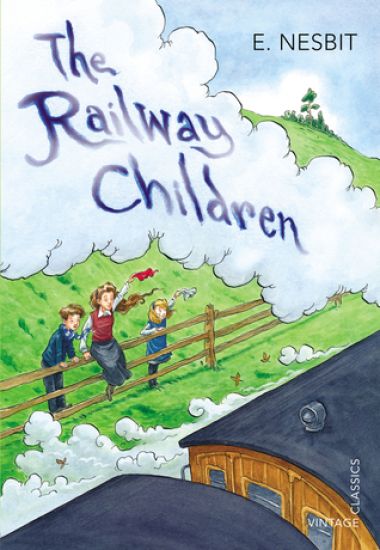
'"Stand firm'" said Peter, "and wave like mad!"' They were not railway children to begin with. When their Father mysteriously leaves home Roberta (everyone calls her Bobbie), Phyllis and Peter must move to a small cottage in the countryside with Mother. It is a bitter blow to leave their London home, but soon they discover the hills and valleys, the canal and of course, the railway. But with the thrilling rush and rattle and roar of the trains comes danger too. Will the brave trio come to the rescue? And most importantly, can they solve the disappearance of their Father?BACKSTORY: Find out all about steam trains and learn what it was really like to be a child in Edwardian times.