Kirjojen hintavertailu. Mukana 12 514 222 kirjaa ja 12 kauppaa.
Kirjailija
E. Patrick Johnson
Kirjat ja teokset yhdessä paikassa: 8 kirjaa, julkaisuja vuosilta 2003-2020, suosituimpien joukossa The Delectable Negro. Vertaile teosten hintoja ja tarkista saatavuus suomalaisista kirjakaupoista.
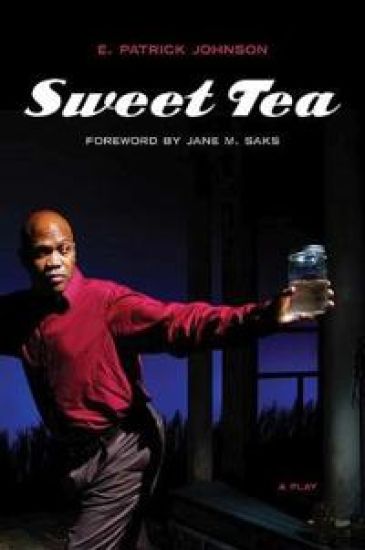
This book is the stage version of E. Patrick Johnson's Sweet Tea: Black Gay Men of the South - An Oral History, a groundbreaking text for the fields of black studies, queer studies, and Southern oral history and ethnography. Between 2004 and 2006, Johnson edited a series of narratives from black gay men who were born and raised in the South and have continued to live there. While the scholarly text of Sweet Tea has enjoyed wide circulation, Johnson knew that the stories of these individuals weren't able to come fully alive on the page. He transformed the text into a theatrical performance, which originally toured the country as Pourin' Tea: Black Gay Men of the South Tell Their Tales. The oral history has also been adapted into a documentary, Making Sweet Tea. Based on several mounted tours and individual stagings, Sweet Tea: A Play provides an opportunity for readers, students, theater practitioners, and audiences from different backgrounds to engage with the lives of these incredible characters.
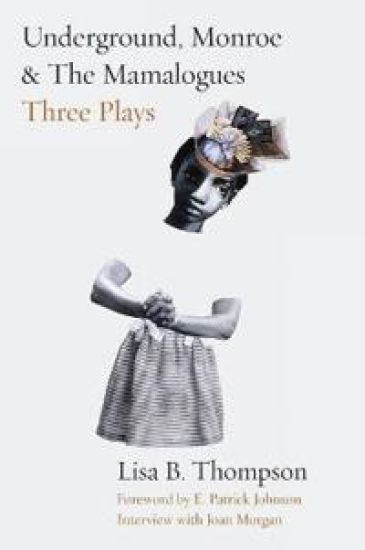
This book features new plays by Lisa B. Thompson, author of Single Black Female. In these three plays, the black feminist playwright and scholar thoughtfully explores themes such as the black family, motherhood, migration, racial violence, and trauma and its effect on black people from the early twentieth century to the present. The works showcase Thompson's subversive humour and engagement with black history and culture through the lens of the black middle class. The thriller Underground explores the challenges of radical black politics among the black middle class in the post-Obama era. Monroe, a period drama about the Great Migration, depicts the impact of a lynching on a family and community in 1940s Louisiana. The Mamalogues, a satirical comedy, focuses on three middle-class black single mothers as they lean in, stress out, and guide precocious black children from diapers to college in a dangerous world. This collection will be compelling to readers interested in African American studies; drama, theater, and performance; feminist and gender studies; popular culture and media studies; and American studies.
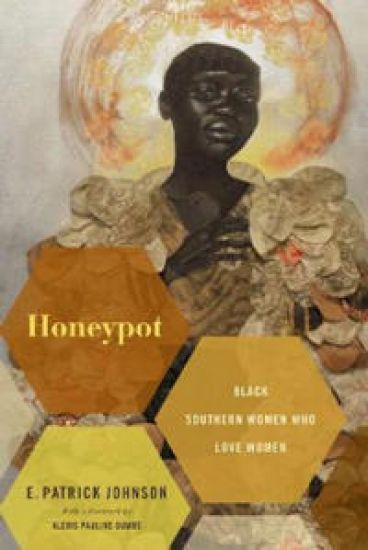
E. Patrick Johnson's Honeypot opens with the fictional trickster character Miss B. barging into the home of Dr. EPJ, informing him that he has been chosen to collect and share the stories of her people. With little explanation, she whisks the reluctant Dr. EPJ away to the women-only world of Hymen, where she serves as his tour guide as he bears witness to the real-life stories of queer Black women throughout the American South. The women he meets come from all walks of life and recount their experiences on topics ranging from coming out and falling in love to mother/daughter relationships, religion, and political activism. As Dr. EPJ hears these stories, he must grapple with his privilege as a man and as an academic, and in the process he gains insights into patriarchy, class, sex, gender, and the challenges these women face. Combining oral history with magical realism and poetry, Honeypot is an engaging and moving book that reveals the complexity of identity while offering a creative method for scholarship to represent the lives of other people in a rich and dynamic way.
E. Patrick Johnson's Honeypot opens with the fictional trickster character Miss B. barging into the home of Dr. EPJ, informing him that he has been chosen to collect and share the stories of her people. With little explanation, she whisks the reluctant Dr. EPJ away to the women-only world of Hymen, where she serves as his tour guide as he bears witness to the real-life stories of queer Black women throughout the American South. The women he meets come from all walks of life and recount their experiences on topics ranging from coming out and falling in love to mother/daughter relationships, religion, and political activism. As Dr. EPJ hears these stories, he must grapple with his privilege as a man and as an academic, and in the process he gains insights into patriarchy, class, sex, gender, and the challenges these women face. Combining oral history with magical realism and poetry, Honeypot is an engaging and moving book that reveals the complexity of identity while offering a creative method for scholarship to represent the lives of other people in a rich and dynamic way.
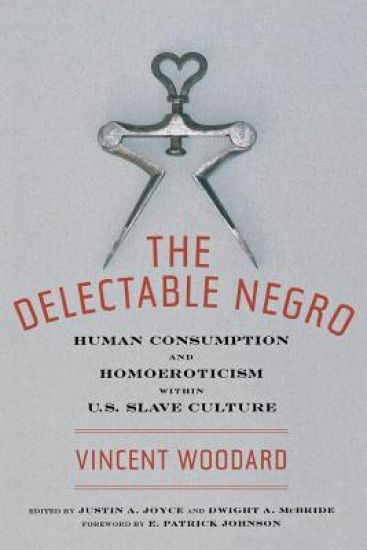
Winner of the 2015 LGBT Studies Award presented by the Lambda Literary Foundation Unearths connections between homoeroticism, cannibalism, and cultures of consumption in the context of American literature and US slave culture that has largely been ignored until now Scholars of US and transatlantic slavery have largely ignored or dismissed accusations that Black Americans were cannibalized. Vincent Woodard takes the enslaved person's claims of human consumption seriously, focusing on both the literal starvation of the slave and the tropes of cannibalism on the part of the slaveholder, and further draws attention to the ways in which Blacks experienced their consumption as a fundamentally homoerotic occurrence. The Delectable Negro explores these connections between homoeroticism, cannibalism, and cultures of consumption in the context of American literature and US slave culture. Utilizing many staples of African American literature and culture, such as the slave narratives of Olaudah Equiano, Harriet Jacobs, and Frederick Douglass, as well as other less circulated materials like James L. Smith's slave narrative, runaway slave advertisements, and numerous articles from Black newspapers published in the nineteenth century, Woodard traces the racial assumptions, political aspirations, gender codes, and philosophical frameworks that dictated both European and white American arousal towards Black males and hunger for Black male flesh. Woodard uses these texts to unpack how slaves struggled not only against social consumption, but also against endemic mechanisms of starvation and hunger designed to break them. He concludes with an examination of the controversial chain gang oral sex scene in Toni Morrison's Beloved, suggesting that even at the end of the twentieth and beginning of the twenty-first century, we are still at a loss for language with which to describe Black male hunger within a plantation culture of consumption.
Winner of the 2015 LGBT Studies Award presented by the Lambda Literary Foundation Unearths connections between homoeroticism, cannibalism, and cultures of consumption in the context of American literature and US slave culture that has largely been ignored until now Scholars of US and transatlantic slavery have largely ignored or dismissed accusations that Black Americans were cannibalized. Vincent Woodard takes the enslaved person's claims of human consumption seriously, focusing on both the literal starvation of the slave and the tropes of cannibalism on the part of the slaveholder, and further draws attention to the ways in which Blacks experienced their consumption as a fundamentally homoerotic occurrence. The Delectable Negro explores these connections between homoeroticism, cannibalism, and cultures of consumption in the context of American literature and US slave culture. Utilizing many staples of African American literature and culture, such as the slave narratives of Olaudah Equiano, Harriet Jacobs, and Frederick Douglass, as well as other less circulated materials like James L. Smith's slave narrative, runaway slave advertisements, and numerous articles from Black newspapers published in the nineteenth century, Woodard traces the racial assumptions, political aspirations, gender codes, and philosophical frameworks that dictated both European and white American arousal towards Black males and hunger for Black male flesh. Woodard uses these texts to unpack how slaves struggled not only against social consumption, but also against endemic mechanisms of starvation and hunger designed to break them. He concludes with an examination of the controversial chain gang oral sex scene in Toni Morrison's Beloved, suggesting that even at the end of the twentieth and beginning of the twenty-first century, we are still at a loss for language with which to describe Black male hunger within a plantation culture of consumption.
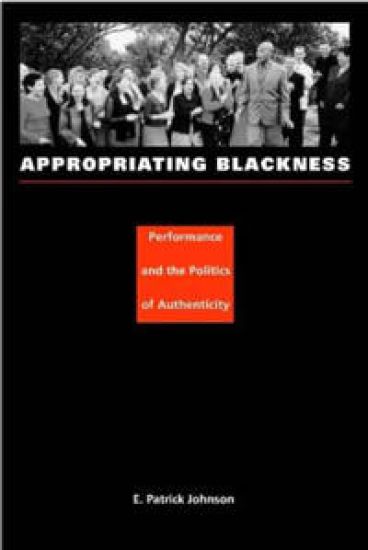
Performance artist and scholar E. Patrick Johnson’s provocative study examines how blackness is appropriated and performed-toward widely divergent ends-both within and outside African American culture. Appropriating Blackness develops from the contention that blackness in the United States is necessarily a politicized identity-avowed and disavowed, attractive and repellent, fixed and malleable. Drawing on performance theory, queer studies, literary analysis, film criticism, and ethnographic fieldwork, Johnson describes how diverse constituencies persistently try to prescribe the boundaries of "authentic" blackness and how performance highlights the futility of such enterprises.Johnson looks at various sites of performed blackness, including Marlon Riggs’s influential documentary Black Is . . . Black Ain’t and comedic routines by Eddie Murphy, David Alan Grier, and Damon Wayans. He analyzes nationalist writings by Amiri Baraka and Eldridge Cleaver, the vernacular of black gay culture, an oral history of his grandmother’s experience as a domestic worker in the South, gospel music as performed by a white Australian choir, and pedagogy in a performance studies classroom. By exploring the divergent aims and effects of these performances-ranging from resisting racism, sexism, and homophobia to excluding sexual dissidents from the black community-Johnson deftly analyzes the multiple significations of blackness and their myriad political implications. His reflexive account considers his own complicity, as ethnographer and teacher, in authenticating narratives of blackness.
Performance artist and scholar E. Patrick Johnson’s provocative study examines how blackness is appropriated and performed-toward widely divergent ends-both within and outside African American culture. Appropriating Blackness develops from the contention that blackness in the United States is necessarily a politicized identity-avowed and disavowed, attractive and repellent, fixed and malleable. Drawing on performance theory, queer studies, literary analysis, film criticism, and ethnographic fieldwork, Johnson describes how diverse constituencies persistently try to prescribe the boundaries of "authentic" blackness and how performance highlights the futility of such enterprises.Johnson looks at various sites of performed blackness, including Marlon Riggs’s influential documentary Black Is . . . Black Ain’t and comedic routines by Eddie Murphy, David Alan Grier, and Damon Wayans. He analyzes nationalist writings by Amiri Baraka and Eldridge Cleaver, the vernacular of black gay culture, an oral history of his grandmother’s experience as a domestic worker in the South, gospel music as performed by a white Australian choir, and pedagogy in a performance studies classroom. By exploring the divergent aims and effects of these performances-ranging from resisting racism, sexism, and homophobia to excluding sexual dissidents from the black community-Johnson deftly analyzes the multiple significations of blackness and their myriad political implications. His reflexive account considers his own complicity, as ethnographer and teacher, in authenticating narratives of blackness.