
Kirjailija
E.R. Hooton
Kirjat ja teokset yhdessä paikassa: 13 kirjaa, julkaisuja vuosilta 1996-2026, suosituimpien joukossa Out-Country War Volume 2. Vertaile teosten hintoja ja tarkista saatavuus suomalaisista kirjakaupoista.
Mukana myös kirjoitusasut: E. R. Hooton, E R Hooton
13 kirjaa
Kirjojen julkaisuhaarukka 1996-2026.
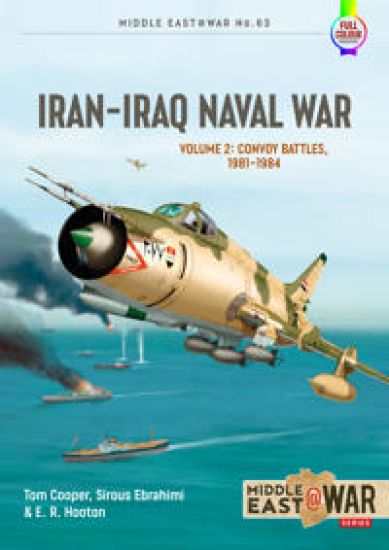
Well away from major land battlefields of the Iran-Iraq War, and curious eyes of the public, the navies of the two involved parties fought a major naval war. Ironically, the mass of their efforts remain entirely unknown until this very day. If anything was ever reported about their naval battles, then only within the frame of what the West mis-declared into the 'Tanker War'.Actually, and although best-known in the West, the portion of the Iran-Iraq War related to the Iraqi effort to prevent foreign tankers from loading the crude at Iranian oil terminals at Khark and elsewhere, was only one aspect of this naval war: indeed, 'just one brick' in an entire 'wall' that can only be described as the 'oil war' between Iran and Iraq. While the 'most spectacular', or at least attracting most of public attention, attacks by fighter-bombers of the Iraqi Air Force on tankers exporting the Iranian oil were 'barely scratching the surface': at least as often the Iraqi Navy trying exactly the same, but with help of its helicopters, fast missile craft and mines. In turn, the Islamic Republic of Iran Navy deployed its warships and helicopters - supported by interceptors and fighter-bombers of the Islamic Republic of Iran Air Force - to run a massive and convoy-protecting operation: the largest of its kind since 1945. The result were the most intensive air-sea battles of the last 75 years - all characterized by their high speed and exchanges of massive blows.The Iran-Iraq Naval War describes and illustrates the key combatants and the most intense operations of both sides. Destroyers, frigates, corvettes, and fast missile crafts are all covered in thoroughly researched text, photographs and custom-drawn color profiles, as are aircraft and helicopters supporting them. This book is thus taking the taking the reader in the middle of the action at sea and in the skies above it.
The Spanish Civil War was won and lost upon the high seas. It was won because the Nationalists had an uninterrupted flow of men and materials while Republican sea lanes were attacked by Fascist warships, submarines, and aircraft – the pirates of the title. These attacks also involved dozens of foreign merchantmen and warships, including American, as well as hundreds of men, women, and boys. The worst affected was the British merchant marine, which dominated Spanish trade – some owners used rust buckets to maximise profits in a trade, which resulted in the loss of 66 British lives. The naval element of the Spanish Civil War began with a rebellion followed by a mutiny and a massacre. Both the German and Italian navies became involved in the naval war, attacking Spanish ships and then British warships and merchantmen. A blockade in the north led to confrontations between the Royal Navy and Nationalist Navy, the mining of a British liner and tales of daring among determined British master mariners. Later in the war there were attacks by Italian surface warships, submarines, and aircraft against foreign shipping in the Mediterranean and Aegean leading to the British and French threatening pirate submarines. This is a story of exploitation, heroism, chauvinism, piracy, international inaction, and espionage which has never been told. It includes details of such things as the first aerial campaign against shipping and the first operational use of sonar against a submarine.
The Iran-Iraq War was one of the bloodiest conflicts of the 20th Century and accidentally created the current nightmare of Islamic fundamentalist terrorism. There have been many books on the conflict but this is the first detailed military history using materials from both sides, as well as materials obtained from US Intelligence circles and British Governmental archives. It provides a unique insight into a war which began through miscalculation and rapidly escalated into the longest conventional conflict in the post Second World War era. The first volume looks at the background and describes in detail how Saddam Hussein decided to invade but hamstrung the Iraqi Army to restrict its greatest success to a narrow strip of territory in Iran’s southern province of Khuzestan. This left the Iraqis unable either to advance or withdraw and exposed them to ever greater and more successful Iranian counter-strokes which drove them out in May 1982 in the ferocious Battle of Khorramshahr.
Volume 2 takes up the account after Iraq withdrew from Khuzestan and is based upon material from both sides, from US Intelligence data, British Government documents and secret Iraqi files. Iraq’s withdrawal exposed the great southern city of Basra to Iranian attack but it was shielded by fortifications based upon a huge anti-tank ditch, the so-called Fish Lake, which the Iranians tried to storm in the summer of 1982. This bloody failure left Tehran in a position where prestige prevented a withdrawal into Iran but the armed forces lacked the resources to bring the conflict to a favourable conclusion. During the next four years the Iranians tried to outflank the Fish Lake defences initially through the marshes in the north and finally through an attack on the Fao Peninsula which increased national prestige but was a strategic failure and paved the way for Iraq’s massive victories in 1988. This followed a series of successful defensive battles in which the Iranians were driven back with great loss. This account describes the battles in greater detail than before and, by examining them, provides unique insights and ends many of the myths which are repeated in many other accounts of this conflict.
Early in the morning of 2 August 1990, aircraft of the Iraqi Air Force bombed Kuwaiti air bases, and then the Iraqi Republican Guards stormed into the country. Thus began what would be called the ‘Gulf War’ – also the ‘II Gulf War’, and sometimes the ‘II Persian Gulf War’ – fought between January and March 1991. Although encountering some problems, the Iraqi forces occupied Kuwait in a matter of few days. However, when President Saddam Hussein of Iraq unleashed his military upon Kuwait, little did he know what kind of reaction he would provoke from the Western superpowers, and what kind of devastation his country would suffer in return. Concerned about the possibility of Iraq continuing its advance into Saudi Arabia, the USA – in coordination with Great Britain, France, and several local allies – reacted by deploying large contingents of their air-, land- and naval forces to the Middle East. Months of fruitless negotiations and the continuous military build-up – Operation Desert Shield – followed, as tensions continued to increase. Determined to retain Kuwait, and despite multiple warnings from his own generals, Saddam Hussein rejected all demands to withdraw. The USA and its allies, ‘the Coalition’, were as determined to drive out the invader and restore Kuwaiti independence. Gradually, they agreed this would have to be by force. Following an authorisation from the United Nations, the Coalition launched the Operation Desert Storm, on 17 January 1991, opening one of the most intensive air campaigns in history. The last conventional war of the 20th Century saw the large, but essentially traditional, Iraqi Army overwhelmed by forces trained and equipped to exploit the latest technologies. Desert Storm reveals the whole war fought between Iraq and an international coalition, from the start of this campaign to its very end. Largely based on data released from official archives, spiced with numerous interviews, and illustrated with over 100 photographs, 18 colour profiles and maps, it offers a refreshing insight into this unique conflict.
Spain in Arms is a new military history of the Spanish Civil War. It examines how the Spanish Civil War conflict developed on the battlefield through the prism of eight campaigns between 1937-1939 and shows how many accounts of military operations during this conflict are based upon half-truths and propaganda. The book is based upon nearly 60 years of extensive research into the Spanish Civil War, augmented by information from specialised German, Italian and Russian works. The Italian campaign against the Basques on the Northern Front in 1937 was one of the most spectacular Nationalist successes of the Civil War, with 60,000 prisoners taken. This is also the first book to quote secret data about Italian air operations intercepted by the British. The figures intercepted by the British show the Italians flew 1,215 sorties and dropped 231 tons of bombs during the campaign, whilst also suffering the heaviest losses. It also demonstrates how the Nationalists won not simply by benefitting from a cornucopia of modern arms from the Fascist powers but by using its limited resources to maximum effect. Spain in Arms reveals the Nationalist battlefield superiority in terms of training and overall command, and the Republic's corresponding weaknesses in the same fields. The Republican Brunete and Belchite offensives of 1937 are described in detail, from the weapons they carried and the tactics they employed to the dynamic Nationalist response and reaction of the generals. This book also explores how the extent of foreign intervention on both sides has been greatly exaggerated throughout history and provides the first accurate information on this military intervention, using British and French archives to produce a radically different but more accurate account of the battles and the factors and men who shaped them. Hooton finally gives the historical context and operational implications of the battlefield events to provide a link between the First and Second World Wars.
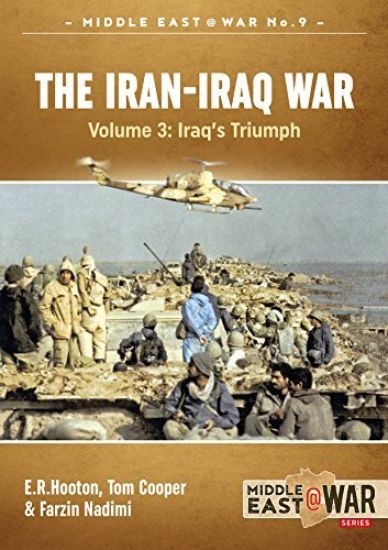
The Iran-Iraq War was one of the bloodiest conflicts of the 20th Century and accidentally created the current nightmare of Islamic fundamentalist terrorism. There have been many books on the conflict but this is the first detailed military history using materials from both sides, as well as materials obtained from US Intelligence circles and British Governmental archives. It provides a unique insight into a war which began through miscalculation and rapidly escalated into the longest conventional conflict in the post-Second World War era. The third volume covers the last two years of the war on the Southern front, where Iranians made their last supreme effort to break through Iraqi lines during the winter of 1986-1987. Iraqi defences just about held. For a year, there was an ominous silence, but then Iraq launched a series of devastating blows that recovered the Faw Peninsula, pulverised weakly-occupied Iranian positions, and drove the frontlines back to the international border. Iran was left with no option but to sue for peace.
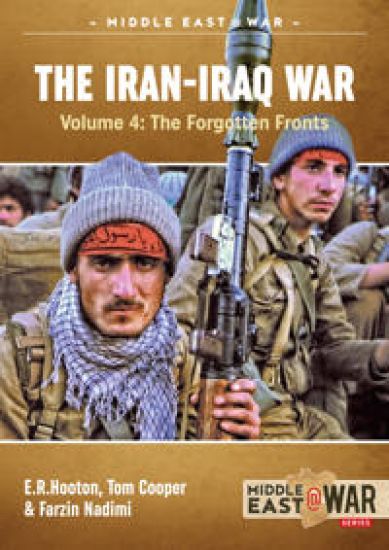
The Iran-Iraq War was one of the bloodiest conflicts of the 20th Century and accidentally created the current nightmare of Islamic fundamentalist terrorism. There have been many books on the conflict but this is the first detailed military history using materials from both sides, as well as materials obtained from US Intelligence circles and British Governmental archives. It provides a unique insight into a war which began through miscalculation and rapidly escalated into the longest conventional conflict in the post-Second World War era. Part 4 in this mini-series coversthe warfare between Iran and Iraq on the Central and Northern Fronts. Difficult terrain made it problematic for either side to assemble overwhelming superiority. Following initial Iraqi attacks that seized some territory, the Iranians began gradually nibbling back until achieving some success in the centre, in 1982. Subsequently, the Central Front saw only minor conventional battles until Iraq launched several major blows in 1988. In the north, fighting primarily revolved around several Kurdish insurgencies in northern Iraq, and culminated in the horror of the Halabcheh gas attack. The final campaign of the war saw Iraq-supported Iranian émigrés launching a spectacular, but also a swiftly-crushed, invasion of their homeland.
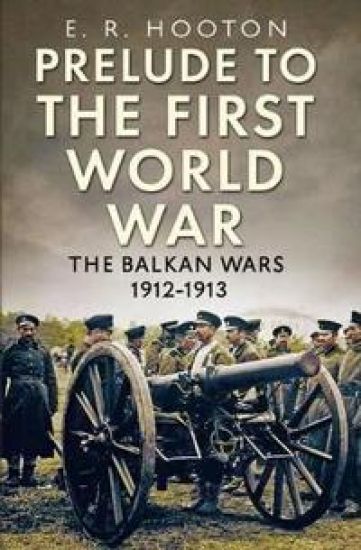
The fuse to the First World War was lit in the Balkans where simmering hatreds exploded into violence. Like a string of firecrackers, these hatreds had been fuelled by attacks on the Turkish Ottoman Empire in the previous few years. From 1911-1912, Italy seized Libya. In 1912, the Balkan states united to drive Turkey out of Europe in the First Balkans War, and in the following year in the Second Balkans War, turned on each other in a division of the spoils which allowed Turkey to retain a foothold in Europe. This was a war of land campaigns, sea battles and amphibious operations in which the new military technology was first used. Submarine and aircraft attacked ships, aircraft made reconnaissance flights and bombed troops while even electronic warfare was used. It also saw mirror images of the events in the First World War; Bulgarians driven from Salonika where an Allied army would later be contained and Turkish troops held back in the Dardanelles, their guns driving off a naval task force. These now forgotten wars were the overture to the First World War and yet they have overtones a century later.The First World War saw echoes of these campaigns in Salonika and especially in the Dardanelles, while the ethnic tensions would erupt into further bloodshed after the Cold War ended as Yugoslavia collapsed during the 1990s.
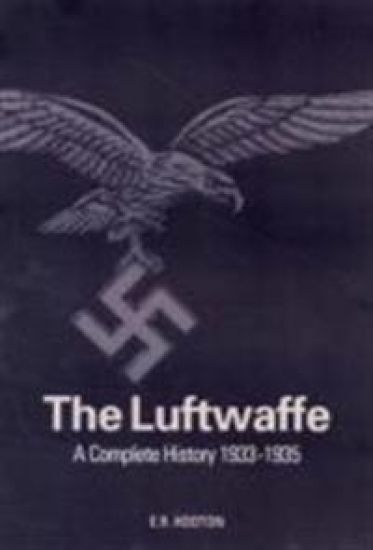
There has not been an in-depth history of the Luftwaffe published for many years and this scholarly one-volume survey of the history of the Luftwaffe will become the leading reference work on the subject. The author is a well-respected military, aviation, and naval historian who has been researching this subject for many years in order to bring the latest information on and analysis of the Luftwaffe together in this work of reference. The book covers the history, campaigns, strategies, commanders, and personalities of the Luftwaffe in depth, as well as looking at the aircraft, although it does not cover aircraft types in detail. Among the specific areas covered are the prewar development of the Luftwaffe from its beginnings in the early 1930s, the attack on Poland in 1939, the campaigns in the west in 1940, the Battle of Britain, and the Mediterranean and North African campaigns up to 1942 and 1943.

During the Iran-Iraq war, hundreds of merchant vessels were attacked, more than 400 seamen killed and millions of dollars' worth of damages were suffered by owners, charterers and insurers. In the most sustained assault on merchant shipping since the Second World War, the control of shipping routes, destruction of enemy and enemy-allied ships, and the protection of oil exports, were key objectives. These campaigns touched the economic and security interests of the Gulf states by threatening their exports and highlighting their political and military vulnerability. The ripples of the tanker wars extended well beyond the region with attacks on vessels with foreign flags which invoked international concern and drew in foreign naval forces.