Kirjailija
E. Scott Geller
Kirjat ja teokset yhdessä paikassa: 18 kirjaa, julkaisuja vuosilta 1983-2026, suosituimpien joukossa The Courage to Actively Care. Vertaile teosten hintoja ja tarkista saatavuus suomalaisista kirjakaupoista.
18 kirjaa
Kirjojen julkaisuhaarukka 1983-2026.
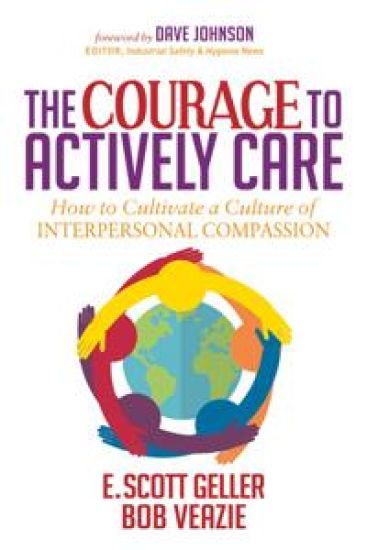
The lead character in this realistic story, a safety professional for a large manufacturing company, is bullied by her boss, and she searches to find the courage to confront him. In her search she learns from Dr. Pitz ("Doc") the five person-states that influence one’s propensity to actively care for the safety, health, or welfare of other people. With her coworker, Jeff, Joanne entertains ways to enhance these five person- states: self-esteem, self-efficacy, optimism, belongingness, and personal control. With this profound knowledge she eventually confronts her boss and teaches him how to be an actively caring for people leader.
The Human Dynamics of Achieving an Injury-Free Workplace
E. Scott Geller; Krista S. Geller
TAYLOR FRANCIS LTD
2026
sidottu
Creating an injury-free workplace demands more than policies and procedures since it requires the engagement of every employee to actively care for their own safety and that of their colleagues. This research-based, teaching and learning workbook addresses the critical human dynamics that determine whether safety and health initiatives succeed or fail. Drawing from decades of psychological science, the authors present a systematic approach to building an actively-caring-for-people (AC4P) work culture that transforms safety from a compliance-driven requirement into an interdependent shared commitment. This teaching/learning resource provides the scientific foundation and practical guidance necessary to achieve lasting safety improvements through interpersonal human dynamics. It contains ten distinct safety objectives, each supported by six evidence-based behavioral directives that readers can immediately implement in their workplace. These directives span multiple domains of psychological science, from behavioral principles of reinforcement and feedback to humanistic concepts of empathy and systems thinking. Each chapter includes explanatory text, practical illustrations, thought-provoking discussion questions, and relevant research references, covering essential topics such as behavior-based safety coaching, incident analysis, social influence strategies, stress management, and the cultivation of a Total Safety Culture. Readers will gain the knowledge and tools needed to optimize both individual and interpersonal dynamics for occupational health and safety. The Human Dynamics of Achieving an Injury-Free Workplace: Safety Directives from Psychological Science is for safety professionals, managers, supervisors, team leaders, and anyone responsible for workplace safety and health. It is equally valuable for safety committees, training facilitators conducting workshops, and individual practitioners seeking to enhance their understanding of safety-related psychology.

The Human Dynamics of Achieving an Injury-Free Workplace
E. Scott Geller; Krista S. Geller
TAYLOR FRANCIS LTD
2026
nidottu
Creating an injury-free workplace demands more than policies and procedures since it requires the engagement of every employee to actively care for their own safety and that of their colleagues. This research-based, teaching and learning workbook addresses the critical human dynamics that determine whether safety and health initiatives succeed or fail. Drawing from decades of psychological science, the authors present a systematic approach to building an actively-caring-for-people (AC4P) work culture that transforms safety from a compliance-driven requirement into an interdependent shared commitment. This teaching/learning resource provides the scientific foundation and practical guidance necessary to achieve lasting safety improvements through interpersonal human dynamics. It contains ten distinct safety objectives, each supported by six evidence-based behavioral directives that readers can immediately implement in their workplace. These directives span multiple domains of psychological science, from behavioral principles of reinforcement and feedback to humanistic concepts of empathy and systems thinking. Each chapter includes explanatory text, practical illustrations, thought-provoking discussion questions, and relevant research references, covering essential topics such as behavior-based safety coaching, incident analysis, social influence strategies, stress management, and the cultivation of a Total Safety Culture. Readers will gain the knowledge and tools needed to optimize both individual and interpersonal dynamics for occupational health and safety. The Human Dynamics of Achieving an Injury-Free Workplace: Safety Directives from Psychological Science is for safety professionals, managers, supervisors, team leaders, and anyone responsible for workplace safety and health. It is equally valuable for safety committees, training facilitators conducting workshops, and individual practitioners seeking to enhance their understanding of safety-related psychology.
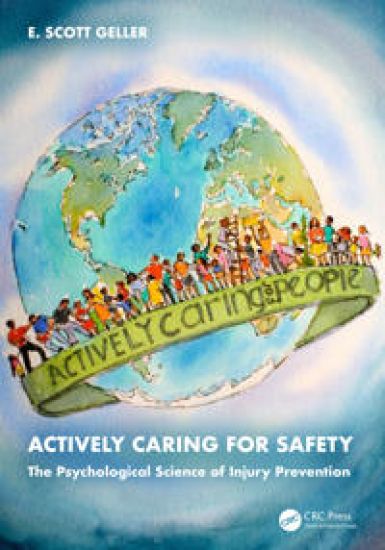
Actively Caring for Safety: The Psychological Science of Injury Prevention outlines proactive applications of applied behavioural science and humanism (i.e., humanistic behaviourism) for improving health and safety. This text provides evidence-based principles for customizing effective processes for improving the human dynamics of safety and health in various locations—from home to the workplace, and throughout a community. World-renowned health/safety researcher, teacher, and consultant E. Scott Geller combines theory and principles in practical step-by-step procedures with behavioral science methods capable of enhancing safety awareness, reducing at-risk behavior, and facilitating ongoing participation in safety-related activities. Drawing upon his bestselling works Working Safe and The Psychology of Safety Handbook, this book presents a science-based and practical approach to improving attitudes and behavior for achieving an injury-free work environment. The text has been improved and updated throughout and includes additional material on a rationale for language to replace common safety-related words that stifle human engagement. Plus, critical safety-relevant information is provided on empathy, emotional intelligence, self-motivation, positive psychology, psychological safety, the dramatic benefits of promoting perceptions of personal choice, and critical distinctions between leadership and management for optimizing workplace safety and productivity.Written in an enjoyable, anecdotal, and engaging style, this is an essential read for any student, academic, researcher, or professional of health and safety.
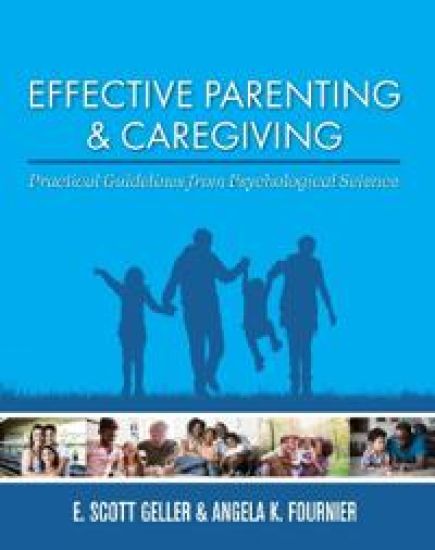
Effective Parenting and Caregiving: Practical Guidelines from Psychological Science equips readers with education and training to help them care most effectively for children—from infants to toddlers and grade schoolers, and on to adolescents. This scholarship teaches seven evidence-based life lessons—principles of human dynamics, which when practiced regularly, help children become healthier, happier, and more successful.Readers learn how to employ positive consequences to effectively influence behavior and apply the power of observational learning. They discover how to become a successful behavior-improvement coach with supportive and corrective feedback. They also learn how to practice empathy, manage behavior as a servant leader, and create an environment of mutual respect, interdependence, and interpersonal gratitude, all helping children achieve self-actualization—the application of personal capabilities for optimal accomplishment. Beyond this achievement is self-transcendence—the most valuable person-state for individuals and their social-support system. Readers learn how to reach that ultimate vision and help others do the same.Effective Parenting and Caregiving is an exceptional textbook for courses within the behavioral and social sciences, especially applied psychology and human development. It is also a valuable guidebook for parents, caregivers, or any individual who wants to optimize the quality of care for others at home, school, work, or throughout the community at large.

Effective Parenting and Caregiving: Practical Guidelines from Psychological Science
E. Scott Geller; Angela Fournier
Cognella Academic Publishing
2020
sidottu
Effective Parenting and Caregiving: Practical Guidelines from Psychological Science equips readers with education and training to help them care most effectively for children--from infants to toddlers and grade schoolers, and on to adolescents. This scholarship teaches seven evidence-based life lessons--principles of human dynamics, which when practiced regularly, help children become healthier, happier, and more successful. Readers learn how to employ positive consequences to effectively influence behavior and apply the power of observational learning. They discover how to become a successful behavior-improvement coach with supportive and corrective feedback. They also learn how to practice empathy, manage behavior as a servant leader, and create an environment of mutual respect, interdependence, and interpersonal gratitude, all helping children achieve self-actualization--the application of personal capabilities for optimal accomplishment. Beyond this achievement is self-transcendence--the most valuable person-state for individuals and their social-support system. Readers learn how to reach that ultimate vision and help others do the same. Effective Parenting and Caregiving is an exceptional textbook for courses within the behavioral and social sciences, especially applied psychology and human development. It is also a valuable guidebook for parents, caregivers, or any individual who wants to optimize the quality of care for others at home, school, work, or throughout the community at large.E. Scott Geller, Ph.D. is an Alumni Distinguished Professor in the Department of Psychology at Virginia Tech, Cofounder of GellerAC4P, Inc., and Senior Partner of Safety Performance Solutions, Inc. For 50 years, he has taught and conducted research at Virginia Tech. Dr. Geller has authored, coauthored, or edited numerous books, book chapters, training manuals, magazine articles, and research articles addressing the development and evaluation of behavior-focused interventions to improve human welfare and life satisfaction. The College of Wooster awarded Dr. Geller an honorary Doctor of Humane Letters. He has received lifetime achievement awards from the International Organizational Behavior Management Network and the American Psychological Foundation.Angela K. Fournier, Ph.D. is a Professor in the Department of Psychology at Bemidji State University, where she serves as Director of the Human-Animal Interaction Laboratory.

Life Lessons from Psychological Science: Understanding and Improving Interpersonal Dynamics provides students with a primer for developing self-awareness and insight through interpersonal conversation. The text focuses on human behavior in various situations—from educational settings to the workplace and the home—in order to help readers understand, appreciate, and enrich the human dynamics of their everyday lives.This book features 50 life lessons grounded in contemporary research and relevant to improving interpersonal dynamics. Several life lessons reflect the behavioral science principles of positive versus negative reinforcement, observational learning, and behavior-based feedback. Other life lessons are founded on humanism, including empathy, interdependence, systems thinking, and self-transcendence. Still others are derived from social psychology, including six principles of social influence, the dynamics of group decision-making, and critical distinctions between discrimination and stereotyping. Domains of psychology such as sensation and perception, personality, health and stress, learning, and motivation are the foundation of other life lessons. The lessons are complemented by instructive and entertaining illustrations and discussion questions to initiate lively dialogue.A dynamic, contemporary, and personal text, Life Lessons from Psychological Science is an ideal resource for introductory psychology courses.

Life Lessons from Psychological Science: Understanding and Improving Interpersonal Dynamics
E. Scott Geller
Cognella Academic Publishing
2019
sidottu
Life Lessons from Psychological Science: Understanding and Improving Interpersonal Dynamics provides students with a primer for developing self-awareness and insight through interpersonal conversation. The text focuses on human behavior in various situations--from educational settings to the workplace and the home--in order to help readers understand, appreciate, and enrich the human dynamics of their everyday lives. This book features 50 life lessons grou

The Motivation to Actively Care
E. Scott Geller; Bob Veazie
Morgan James Publishing llc
2017
pokkari
This refreshing teaching/learning narrative, based on actual life events and research-supported principles, begins with the lead character (Joanne Cruse) losing her job as the Safety Director for a large manufacturing company. Subsequently, her former psychology professor, Dr. Pitz ("Doc"), invites her to try out for a position as leadership consultant with his firm, Make-A-Difference, Inc. (MAD) that helps companies cultivate a self-motivated and personally-engaged workforce. Throughout her probationary period, Joanne travels with the top consultant at MAD (Mickey Vasquez) to visit a number of organizations struggling with various occupational issues related to the human dynamics of self-motivation (i.e., working to accomplish an organization's milestone from a self-directed or self-accountability mindset). The interpersonal and group interactions Joanne experiences at diverse organizations, accompanied by Mickey’s professional coaching, reveal twenty practical and profound leadership lessons to nurture an actively caring for people work culture in which employees put forth their best efforts on behalf of their company's mission.

Seven research-based lessons from psychology—the science of human experience—inspire the development of an actively caring for people (AC4P) culture. The education/training purpose: to enhance long-term positive and sustainable relations between teachers, students, school administrators, and SROs, and in turn cultivate an optimal teaching/learning climate and prevent interpersonal conflict and bullying behavior. Both education and training are provided. Each research-based principle for AC4P intervention is explained and followed by questions or scenarios to facilitate group discussion. Behavioral exercises are given to practice each principle and receive supportive and corrective feedback for continuous improvement.

Actively Caring for People Policing
E. Scott Geller; Bobby Kipper
Morgan James Publishing llc
2017
pokkari
Throughout the years experts have struggled to define the term “police culture.” For most this label means a reactive approach to keeping people safe by using punitive consequences to punish or detain the perpetrators. The result: More attention is given to the negative reactive side of policing than a positive proactive approach to preventing crime by cultivating an interdependent culture of residents looking out for the safety, health, and well-being of each other. We believe police officers can play a critical and integral role in achieving such a community of compassion---an Actively Caring for People (AC4P) culture. An AC4P culture can be fueled by AC4P Policing, and involves a paradigm shift regarding the role and impact of “consequences." With AC4P Policing, consequences are used to increase the quantity and improve the quality of desired behavior. Police officers are educated about the rationale behind using more positive than negative consequences to manage behavior, and then they are trained on how to deliver positive consequences in ways that help to cultivate interpersonal trust and AC4P behavior among police officers and the citizens they serve. This teaching/learning process is founded on seven research-based lessons from psychology---the science of human experience. The first three lessons reflect the critical behavior-management fundamentals of positive reinforcement, observational learning, and behavior-based feedback. The subsequent four lessons are derived from humanism, but behaviorism or ABS is essential for bringing these humanistic principles to life. The result: humanistic behaviorism to enhance long-term positive relations between police officers and the citizens they serve, thereby preventing interpersonal conflict, violence, and harm.

This volume demonstrates how readers can become more effective parents, teachers, students, coaches, managers, or work supervisors, while also gaining practical skills to enhance their self-motivation, communication skills, and intervention acumen. The first eight chapters explain evidence-based principles from applied behavioral science (ABS) that can be used to improve the human dynamics of any situation involving behavior. Fundamentals from humanism are integrated strategically to show how an ABS intervention can be more acceptable, influential, and sustainable. The following twelve chapters detail the deployment of ABS interventions to optimize performance in a wide variety of fields, including occupational and transportation safety, quantity and quality of organizational work behavior, healthcare, athletic coaching, parenting, pre-school and college education, environmental sustainability, and the control of obesity and alcohol abuse. Applied Psychology provides a thorough review of the latest research in relation to these domains and explores issues for future investigation.
Many companies have taken steps to improve awareness and management of safety systems, yet safety directors continue to report high injury rates. In Keeping People Safe: The Human Dynamics of Injury Prevention, author Josh Williams provides safety leaders with information they can use to further reduce injuries and improve workplace safety. This book addresses five integral components of workplace safety: Systems/Conditions, Leadership, Behaviors, People-Factors, and Communication. It recommends strategies for every aspect of safety management from organizational commitment and safety culture to improving managerial behavior and working with union members. These recommendations are based on years of practical experience, empirical research on the human dynamics of safety, and seminal studies in social psychology on authority and conformity. Utilizing the hugely influential and widely practiced model of Behavior Based Safety, Williams provides the safety manager with all the tools needed to lower injury rates and improve safety. Numerous charts and tables, a checklist for improving safety performance, and a foreword by world-renowned safety leader E. Scott Geller complement the text.
This book provides a collection of 28 writings from Scott Geller's regular column in "Industrial Safety and Hygiene News," from Geller's associates at Safety Performance Solutions, and from the American Society of Safety Engineers' annual conferences. Organized into seven chapters, these writings examine real-world examples of successful behavior-based safety programs. Readers will discover tips on how to measure safety performance, how to get workers to care about safety, and how to better assess and coach safety performance using specific behavior-based tools. Readers will also find in-depth discussions on achieving a Total Safety Culture using such tools and techniques as actively caring, self-management, behavior-based observation and feedback, improved communication skills, measured safety performance, increased safety leadership, and maximized behavior-based safety efforts.

Written in an easy-to-read conversational tone, Beyond Safety Accountability explains how to develop an organizational culture that encourages people to be accountable for their work practices and to embrace a higher sense of personal responsibility. The author begins by thoroughly explaining the difference between safety accountability and safety responsibility. He then examines the need of organizations to improve safety performance, discusses why such performance improvement can be achieved through a continuous safety process, as distinguished from a safety program, and provides the practical tools you can use to build personal responsibility in your workplace.

You cannot improve your organization's safety performance to enviable levels without addressing human behavior and attitude effectively. The only comprehensive reference on the psychology of the human dynamics of safety, The Psychology of Safety Handbook shows you how to apply psychology to improve safety and health in your organization. Dr. Geller provides theory, procedures, and tools to guide your organization's long-term continuous improvement. Based on Dr. Geller's bestselling The Psychology of Safety, this new and expanded Handbook gives you everything you need to decrease the frequency and severity of accidental injuries in your organization. He covers all areas of psychology directly relevant to understanding and influencing safety-related behaviors. Engineering interventions and government policy have made their mark on injury reduction. Now it is time to work with the human dynamics of injury prevention. The cause of most injuries can be attributed to at-risk behavior or insufficient safe behavior. The Psychology of Safety Handbook not only teaches principles and practical procedures for improving safety-related behaviors, but also illustrates how to increase people's willingness to use these techniques to create a Total Safety Culture. For more than three decades, Professor E. Scott Geller has taught and conducted research as a faculty member of Virginia Tech's Department of Psychology. In this capacity he has authored more than 250 research articles and over 50 books or chapters addressing the development and evaluation of behavior-change interventions to improve quality of life. He has authored seven books on managing behaviors and attitudes for occupational health and safety, including The Psychology of Safety and Working Safe. Dr. Geller is Senior Partner of Safety Performance Solutions, a leading training and consulting firm helping companies empower their employees to achieve a Total Safety Culture. He has been awarded Fellow status by the American Psychological Association, the American Psychological Society, and the World Academy of Productivity and Quality. Moreover, Scott Geller has been honored with three university-wide teaching awards - every one offered by Virginia Tech.