Kirjojen hintavertailu. Mukana 12 152 606 kirjaa ja 12 kauppaa.

Kirjailija

E. W. Hornung

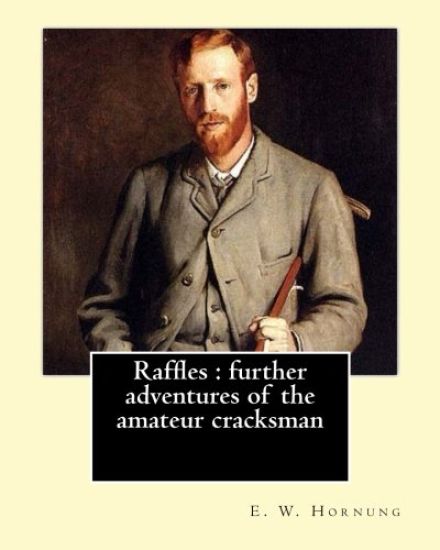
Kirjat ja teokset yhdessä paikassa: 340 kirjaa, julkaisuja vuosilta 2002-2026, suosituimpien joukossa Raffles: further adventures of the amateur cracksman By: E. W. Hornung, illustrated By: F.(Frederick) C. Yohn (February 8, 1875. Vertaile teosten hintoja ja tarkista saatavuus suomalaisista kirjakaupoista.

Mukana myös kirjoitusasut: E W Hornung, E. W Hornung

340 kirjaa

Kirjojen julkaisuhaarukka 2002-2026.

Raffles: further adventures of the amateur cracksman By: E. W. Hornung, illustrated By: F.(Frederick) C. Yohn (February 8, 1875
Ernest William Hornung (7 June 1866 - 22 March 1921) was an English author and poet known for writing the A. J. Raffles series of stories about a gentleman thief in late 19th-century London. Hornung was educated at Uppingham School; as a result of poor health he left the school in December 1883 to travel to Sydney, where he stayed for two years. He drew on his Australian experiences as a background when he began writing, initially short stories and later novels. In 1898 he wrote "In the Chains of Crime", which introduced Raffles and his sidekick, Bunny Manders; the characters were based partly on his friends Oscar Wilde and his lover, Lord Alfred Douglas, and also on the characters of Sherlock Holmes and Dr. Watson, created by his brother-in-law, Arthur Conan Doyle. The series of Raffles short stories were collected for sale in book form in 1899, and two further books of Raffles short stories followed, as well as a poorly received novel. Aside from his Raffles stories, Hornung was a prodigious writer of fiction, publishing numerous books from 1890, with A Bride from the Bush to his 1914 novel The Crime Doctor. The First World War brought an end to Hornung's fictional output. His son, Oscar, was killed at the Second Battle of Ypres in July 1915. Hornung joined the YMCA, initially in England, then in France, where he helped run a canteen and library. He published two collections of poetry during the war, and then, afterwards, one further volume of verse and an account of his time spent in France, Notes of a Camp-Follower on the Western Front. Hornung's fragile constitution was further weakened by the stress of his war work. To aid his recuperation, he and his wife visited the south of France in 1921. He fell ill from influenza on the journey, and died on 22 March 1921, aged 54. Although much of Hornung's work has fallen into obscurity, his Raffles stories continued to be popular, and have formed numerous film and television adaptations. Hornung's stories dealt with a wider range of themes than crime: he examined scientific and medical developments, guilt, class and the unequal role played by women in society. Two threads that run through a sizeable proportion of his books are Australia and cricket; the latter was also a lifelong passion. Frederick Coffay Yohn (February 8, 1875 - June 6, 1933), often recognized only by his initials, F. C. Yohn, was an artist and magazine illustrator.
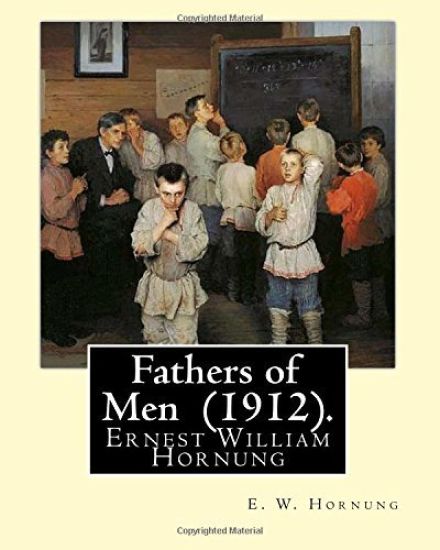
Fathers of Men (1912). By: E. W. Hornung: Novel (World's classic's)

Fathers of Men (1912). By: E. W. Hornung: Novel (World's classic's)

E. W. Hornung

Createspace Independent Publishing Platform
2017
nidottu
Fathers of Men is a story of boarding school life by E.W. Hornung, the author best remembered for his series of short stories about Raffles, the amateur cracksman. A coming of age story, it was written in 1912, long after Hornung's fondly remembered boyhood days, and follows the trials, tribulations and cricket matches of the boys of Heriot's house. Ernest William Hornung (7 June 1866 - 22 March 1921) was an English author and poet known for writing the A. J. Raffles series of stories about a gentleman thief in late 19th-century London. Hornung was educated at Uppingham School; as a result of poor health he left the school in December 1883 to travel to Sydney, where he stayed for two years. He drew on his Australian experiences as a background when he began writing, initially short stories and later novels. In 1898 he wrote "In the Chains of Crime", which introduced Raffles and his sidekick, Bunny Manders; the characters were based partly on his friends Oscar Wilde and his lover, Lord Alfred Douglas, and also on the characters of Sherlock Holmes and Dr. Watson, created by his brother-in-law, Arthur Conan Doyle. The series of Raffles short stories were collected for sale in book form in 1899, and two further books of Raffles short stories followed, as well as a poorly received novel. Aside from his Raffles stories, Hornung was a prodigious writer of fiction, publishing numerous books from 1890, with A Bride from the Bush to his 1914 novel The Crime Doctor. The First World War brought an end to Hornung's fictional output. His son, Oscar, was killed at the Second Battle of Ypres in July 1915. Hornung joined the YMCA, initially in England, then in France, where he helped run a canteen and library. He published two collections of poetry during the war, and then, afterwards, one further volume of verse and an account of his time spent in France, Notes of a Camp-Follower on the Western Front. Hornung's fragile constitution was further weakened by the stress of his war work. To aid his recuperation, he and his wife visited the south of France in 1921. He fell ill from influenza on the journey, and died on 22 March 1921, aged 54. Although much of Hornung's work has fallen into obscurity, his Raffles stories continued to be popular, and have formed numerous film and television adaptations. Hornung's stories dealt with a wider range of themes than crime: he examined scientific and medical developments, guilt, class and the unequal role played by women in society. Two threads that run through a sizeable proportion of his books are Australia and cricket; the latter was also a lifelong passion......
Young Blood (1913). By: E. W. Hornung: Novel

Young Blood (1913). By: E. W. Hornung: Novel

E. W. Hornung

Createspace Independent Publishing Platform
2017
nidottu
Ernest William Hornung (7 June 1866 - 22 March 1921) was an English author and poet known for writing the A. J. Raffles series of stories about a gentleman thief in late 19th-century London. Hornung was educated at Uppingham School; as a result of poor health he left the school in December 1883 to travel to Sydney, where he stayed for two years. He drew on his Australian experiences as a background when he began writing, initially short stories and later novels. In 1898 he wrote "In the Chains of Crime", which introduced Raffles and his sidekick, Bunny Manders; the characters were based partly on his friends Oscar Wilde and his lover, Lord Alfred Douglas, and also on the characters of Sherlock Holmes and Dr. Watson, created by his brother-in-law, Arthur Conan Doyle. The series of Raffles short stories were collected for sale in book form in 1899, and two further books of Raffles short stories followed, as well as a poorly received novel. Aside from his Raffles stories, Hornung was a prodigious writer of fiction, publishing numerous books from 1890, with A Bride from the Bush to his 1914 novel The Crime Doctor. The First World War brought an end to Hornung's fictional output. His son, Oscar, was killed at the Second Battle of Ypres in July 1915. Hornung joined the YMCA, initially in England, then in France, where he helped run a canteen and library. He published two collections of poetry during the war, and then, afterwards, one further volume of verse and an account of his time spent in France, Notes of a Camp-Follower on the Western Front. Hornung's fragile constitution was further weakened by the stress of his war work. To aid his recuperation, he and his wife visited the south of France in 1921. He fell ill from influenza on the journey, and died on 22 March 1921, aged 54. Although much of Hornung's work has fallen into obscurity, his Raffles stories continued to be popular, and have formed numerous film and television adaptations. Hornung's stories dealt with a wider range of themes than crime: he examined scientific and medical developments, guilt, class and the unequal role played by women in society. Two threads that run through a sizeable proportion of his books are Australia and cricket; the latter was also a lifelong passion.......
Witching Hill (1913). By: E. W. Hornung, illustrated By: F. C. Yohn: Novel (illustrated).Frederick Coffay Yohn (February 8, 1875 - June 6, 1933)
Ernest William Hornung (7 June 1866 - 22 March 1921) was an English author and poet known for writing the A. J. Raffles series of stories about a gentleman thief in late 19th-century London. Hornung was educated at Uppingham School; as a result of poor health he left the school in December 1883 to travel to Sydney, where he stayed for two years. He drew on his Australian experiences as a background when he began writing, initially short stories and later novels. In 1898 he wrote "In the Chains of Crime", which introduced Raffles and his sidekick, Bunny Manders; the characters were based partly on his friends Oscar Wilde and his lover, Lord Alfred Douglas, and also on the characters of Sherlock Holmes and Dr. Watson, created by his brother-in-law, Arthur Conan Doyle. The series of Raffles short stories were collected for sale in book form in 1899, and two further books of Raffles short stories followed, as well as a poorly received novel. Aside from his Raffles stories, Hornung was a prodigious writer of fiction, publishing numerous books from 1890, with A Bride from the Bush to his 1914 novel The Crime Doctor. The First World War brought an end to Hornung's fictional output. His son, Oscar, was killed at the Second Battle of Ypres in July 1915. Hornung joined the YMCA, initially in England, then in France, where he helped run a canteen and library. He published two collections of poetry during the war, and then, afterwards, one further volume of verse and an account of his time spent in France, Notes of a Camp-Follower on the Western Front. Hornung's fragile constitution was further weakened by the stress of his war work. To aid his recuperation, he and his wife visited the south of France in 1921. He fell ill from influenza on the journey, and died on 22 March 1921, aged 54. Although much of Hornung's work has fallen into obscurity, his Raffles stories continued to be popular, and have formed numerous film and television adaptations. Hornung's stories dealt with a wider range of themes than crime: he examined scientific and medical developments, guilt, class and the unequal role played by women in society. Two threads that run through a sizeable proportion of his books are Australia and cricket; the latter was also a lifelong passion..... Frederick Coffay Yohn (February 8, 1875 - June 6, 1933), often recognized only by his initials, F. C. Yohn, was an artist and magazine illustrator.
The Amateur Cracksman. By: E. W. Hornung and F. C.Yohn

The Amateur Cracksman. By: E. W. Hornung and F. C.Yohn

E. W. Hornung

Createspace Independent Publishing Platform
2017
nidottu
The Amateur Cracksman was the original short story collection by E. W. Hornung featuring his most famous character, A. J. Raffles, a gentleman thief in late Victorian Great Britain. It was first published in 1899. The book was very well received and spawned three follow-ups: two more short story collections, The Black Mask (1901) and A Thief in the Night (1904), as well as a full-length novel, Mr. Justice Raffles in 1909. Arthur Raffles is a prominent member of London society, and a national sporting hero. As a cricketer he regularly represents England in Test matches. He uses this as a chance to commit a number of burglaries, primarily stealing valuable jewelry from his hosts. In this he is assisted by his friend, the younger, idealistic Bunny Manders. Both men are constantly under the surveillance of Inspector Mackenzie of Scotland Yard who is always thwarted in his attempts to pin the crimes on Raffles. In the final story, "The Gift of the Emperor", Raffles is called into service on behalf of the Foreign Office who wish to recover a valuable pearl from a German diplomat staying in England. However, this is only in the TV adaptation; in the book he is working entirely for his own profit.
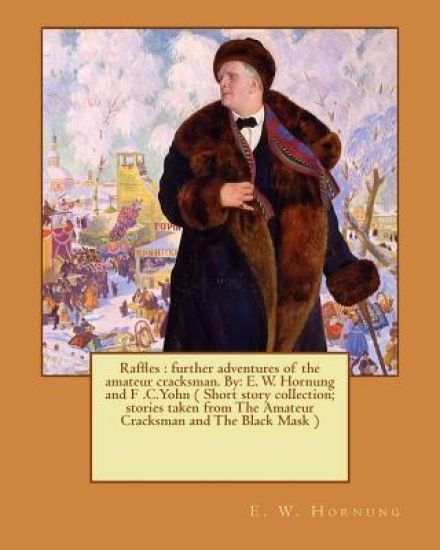
Raffles: further adventures of the amateur cracksman. By: E. W. Hornung and F .C.Yohn ( Short story collection; stories taken f
Ernest William Hornung (professionally known as E. W. Hornung; 1866-1921), was an English poet and writer. From a Hungarian background, Hornung was educated at Uppingham School; as a result of poor health he left the school in December 1883 to travel to Sydney, where he stayed for two years. He returned in early 1886 when his father was dying and bankrupt, and began writing professionally shortly afterwards. Hornung had his first work published in 1887-the short story "Stroke of Five" in Belgravia magazine. His first novel, A Bride from the Bush, was published in 1890, and Hornung used his Australian experiences as a backdrop to the story. He went on to use Australia as a setting or plot element in a further seven novels and two collections of short stories. In 1899 The Amateur Cracksman was published, a series of short stories that introduced A. J. Raffles, a gentleman thief in late-Victorian Britain. Hornung dedicated the book to his friend, the writer Arthur Conan Doyle: "To A.C.D. This form of flattery", and the narrative form is similar to Doyle's Sherlock Holmes stories, with Raffles and his partner Bunny Manders being the criminal counterparts to Holmes and Dr. Watson. Two further short story collections and a novel followed, as did a play, Raffles, The Amateur Cracksman, first shown at the Princess Theatre, New York in 1903. It is for the character of Raffles that Hornung is best remembered. In 1893 Hornung married Constance Doyle (1868-1924), the sister of Arthur Conan Doyle and in 1895 their son, Arthur Oscar, was born. 1] Oscar was killed at the Second Battle of Ypres in July 1915. It marked the end of Hornung's work in fiction, and after that point he published three works of poetry-two of which were first published in The Times-and two volumes of non-fiction: a biography of his son and an account of his time working at the front line as ambulance driver, rest-station attendant and for the YMCA. Hornung's fragile constitution was further weakened by the stress of his war work. To aid his recuperation, he and his wife visited the South of France in 1921. He fell ill from influenza on the journey, and died on 22 March 1922, aged 54.
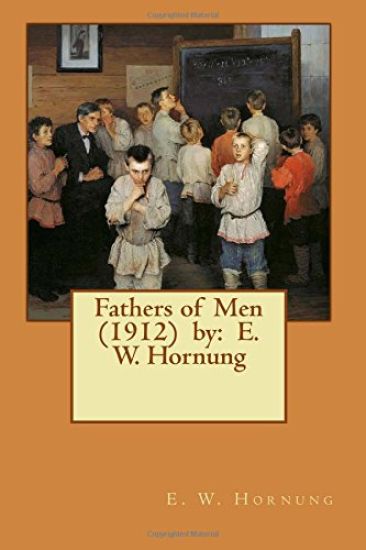
Fathers of Men (1912) by: E. W. Hornung

Fathers of Men (1912) by: E. W. Hornung

E. W. Hornung

Createspace Independent Publishing Platform
2017
nidottu
A boarding school tale which Hornung considered his finest work. Jan Rutter, a stable boy, is admitted to a public school, wrong accent and all. Unknown to him, Heriot, the house master, knows the secret which Rutter is desperate to keep, half-inclined as he is to run away. Their first meeting leaves Heriot and his sister in a quiet discussion. "But you admit the public school is a crucible," she argued. "And what's a crucible but a melting-pot?" " A melting-pot for characteristics, but not for character " he cried. "Take the two boys upstairs: in four or five years one will have more to say for himself, I hope, and the other will leave more unsaid; but the self that each expresses will be the same self, even though we have turned a first-rate groom into a second-rate gentleman. 'The Child, ' remember, and not the school, 'is father of the Man
Raffles, Gentleman Thief

Raffles, Gentleman Thief

E. W. Hornung

PENGUIN BOOKS LTD
2026
pokkari
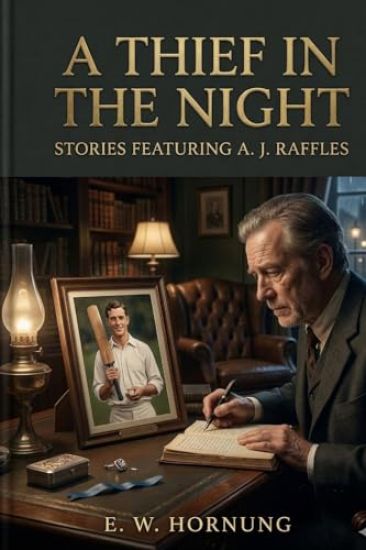
A selection of the best classic crime stories featuring the much-loved rogue, Raffles ‘Why should I work when I could steal? Why settle down to some humdrum uncongenial billet, when excitement, romance, danger, and a decent living were all going begging together? Of course, it’s very wrong, but we can’t all be moralists’ Dashing man about town, first-class cricketer and master burglar: Raffles is the ultimate gentleman thief. Here we find the debonair rogue cracking a jeweller’s safe on Bond Street, stealing from the nouveau riche, spiriting away a priceless pearl, outwitting the law at every turn – and, of course, bowling like a demon – all with the assistance of his plucky sidekick Bunny Manders. This new selection of Ernest Hornung’s much-loved crime stories is taken from his three Raffles collections, The Amateur Cracksman, The Black Mask and A Thief in the Night.
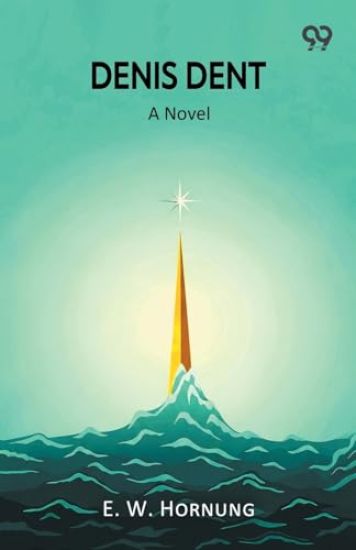
Denis DentA Novel (Edition1)

Denis DentA Novel (Edition1)

E W Hornung

Double 9 Books LLP
2025
nidottu
Denis Dent: A novel centers on the journey of an officer aboard a ship facing perilous conditions at sea. The story begins with a maritime disaster that challenges the protagonist's courage, resilience, and sense of duty. Born into humble circumstances, the young officer dreams of rising above his origins while navigating the harsh realities of life on the water. His bravery is tested when he rescues a young woman during the shipwreck, sparking a complex relationship marked by social differences and emotional intensity. The narrative explores themes of survival, ambition, and love, set against the backdrop of the unforgiving sea. Early scenes vividly portray the chaos and danger of the disaster, highlighting the protagonist's determination and strength of character. As the story unfolds, the tension between personal desire and societal expectations becomes more pronounced, offering a rich examination of human nature in extreme situations. Through vivid descriptions and emotional depth, the novel captures the struggles of self-discovery and the enduring power of compassion amid adversity.
The Shadow of the Rope (Esprios Classics)
Ernest William Hornung (1866 - 1921) was an English author and poet known for writing the A. J. Raffles series of stories about a gentleman thief in late 19th-century London. Hornung was educated at Uppingham School; as a result of poor health he left the school in December 1883 to travel to Sydney, where he stayed for two years. He drew on his Australian experiences as a background when he began writing, initially short stories and later novels. Aside from his Raffles stories, Hornung was a prodigious writer of fiction, publishing numerous books from 1890, with A Bride from the Bush to his 1914 novel The Crime Doctor.