Kirjojen hintavertailu. Mukana 12 595 353 kirjaa ja 12 kauppaa.
Kirjailija
E. W. Kemble
Kirjat ja teokset yhdessä paikassa: 13 kirjaa, julkaisuja vuosilta 2005-2020, suosituimpien joukossa The Heart Of Happy Hollow: A Collection Of Stories By: Paul Laurence Dunbar ( sixteen short stories ). Vertaile teosten hintoja ja tarkista saatavuus suomalaisista kirjakaupoista.
Edward Windsor Kemble (January 18, 1861 - September 19, 1933), usually cited as E. W. Kemble, was an American illustrator. He is known best for illustrating the first edition of Adventures of Huckleberry Finn and for his cartoons of African Americans... Paul Laurence Dunbar (June 27, 1872 - February 9, 1906) was an American poet, novelist, and playwright of the late 19th and early 20th centuries. Born in Dayton, Ohio, to parents who had been enslaved in Kentucky before the American Civil War, Dunbar began to write stories and verse when still a child; he was president of his high school's literary society. He published his first poems at the age of 16 in a Dayton newspaper. Much of Dunbar's more popular work in his lifetime was written in the Negro dialect associated with the antebellum South, though he also used the Midwestern regional dialect of James Whitcomb Riley. Dunbar's work was praised by William Dean Howells, a leading editor associated with the Harper's Weekly, and Dunbar was one of the first African-American writers to establish an international reputation. He wrote the lyrics for the musical comedy In Dahomey (1903), the first all-African-American musical produced on Broadway in New York. The musical later toured in the United States and the United Kingdom. Dunbar also wrote in conventional English in other poetry and novels. Since the late 20th century, scholars have become more interested in these other works. Suffering from tuberculosis, which then had no cure, Dunbar died in Dayton at the age of 33. Early life: Paul Laurence Dunbar was born at 311 Howard Street in Dayton, Ohio, on June 27, 1872, to parents who had been enslaved in Kentucky before the American Civil War. After being emancipated, his mother Matilda had moved to Dayton with other family members, including her two sons Robert and William from her first marriage. Dunbar's father Joshua had escaped from slavery in Kentucky before the war ended. He traveled to Massachusetts and volunteered for the 55th Massachusetts Infantry Regiment, one of the first two black units to serve in the war. The senior Dunbar also served in the 5th Massachusetts Cavalry Regiment. Paul Dunbar was born six months after Joshua and Matilda married on Christmas Eve, 1871. The marriage of Dunbar's parents was troubled and Dunbar's mother left Joshua soon after having their second child, a daughter.Joshua died on August 16, 1885; Paul was then 12 years old. Dunbar wrote his first poem at the age of six and gave his first public recital at the age of nine. His mother assisted him in his schooling, having learned to read expressly for that purpose. She often read the Bible with him, and thought he might become a minister in the African Methodist Episcopal Church. It was the first independent black denomination in America, founded in Philadelphia in the early 19th century. Dunbar was the only African-American student during his years at Central High School in Dayton; Orville Wright was a classmate and friend. Well-accepted, he was elected as president of the school's literary society, and became the editor of the school newspaper and a member of the debate club...............
Edward Windsor Kemble (January 18, 1861 - September 19, 1933), usually cited as E. W. Kemble, was an American illustrator. He is known best for illustrating the first edition of Adventures of Huckleberry Finn and for his cartoons of African Americans.......... Paul Laurence Dunbar (June 27, 1872 - February 9, 1906) was an American poet, novelist, and playwright of the late 19th and early 20th centuries. Born in Dayton, Ohio, to parents who had been enslaved in Kentucky before the American Civil War, Dunbar began to write stories and verse when still a child; he was president of his high school's literary society. He published his first poems at the age of 16 in a Dayton newspaper. Much of Dunbar's more popular work in his lifetime was written in the Negro dialect associated with the antebellum South, though he also used the Midwestern regional dialect of James Whitcomb Riley. Dunbar's work was praised by William Dean Howells, a leading editor associated with the Harper's Weekly, and Dunbar was one of the first African-American writers to establish an international reputation. He wrote the lyrics for the musical comedy In Dahomey (1903), the first all-African-American musical produced on Broadway in New York. The musical later toured in the United States and the United Kingdom. Dunbar also wrote in conventional English in other poetry and novels. Since the late 20th century, scholars have become more interested in these other works. Suffering from tuberculosis, which then had no cure, Dunbar died in Dayton at the age of 33. Early life: Paul Laurence Dunbar was born at 311 Howard Street in Dayton, Ohio, on June 27, 1872, to parents who had been enslaved in Kentucky before the American Civil War. After being emancipated, his mother Matilda had moved to Dayton with other family members, including her two sons Robert and William from her first marriage. Dunbar's father Joshua had escaped from slavery in Kentucky before the war ended. He traveled to Massachusetts and volunteered for the 55th Massachusetts Infantry Regiment, one of the first two black units to serve in the war. The senior Dunbar also served in the 5th Massachusetts Cavalry Regiment. Paul Dunbar was born six months after Joshua and Matilda married on Christmas Eve, 1871. The marriage of Dunbar's parents was troubled and Dunbar's mother left Joshua soon after having their second child, a daughter.Joshua died on August 16, 1885; Paul was then 12 years old. Dunbar wrote his first poem at the age of six and gave his first public recital at the age of nine. His mother assisted him in his schooling, having learned to read expressly for that purpose. She often read the Bible with him, and thought he might become a minister in the African Methodist Episcopal Church. It was the first independent black denomination in America, founded in Philadelphia in the early 19th century. Dunbar was the only African-American student during his years at Central High School in Dayton; Orville Wright was a classmate and friend. Well-accepted, he was elected as president of the school's literary society, and became the editor of the school newspaper and a member of the debate club........
Edward Windsor Kemble (January 18, 1861 - September 19, 1933), usually cited as E. W. Kemble, was an American illustrator. He is known best for illustrating the first edition of Adventures of Huckleberry Finn and for his cartoons of African Americans.... Paul Laurence Dunbar (June 27, 1872 - February 9, 1906) was an American poet, novelist, and playwright of the late 19th and early 20th centuries. Born in Dayton, Ohio, to parents who had been enslaved in Kentucky before the American Civil War, Dunbar began to write stories and verse when still a child; he was president of his high school's literary society. He published his first poems at the age of 16 in a Dayton newspaper. Much of Dunbar's more popular work in his lifetime was written in the Negro dialect associated with the antebellum South, though he also used the Midwestern regional dialect of James Whitcomb Riley. Dunbar's work was praised by William Dean Howells, a leading editor associated with the Harper's Weekly, and Dunbar was one of the first African-American writers to establish an international reputation. He wrote the lyrics for the musical comedy In Dahomey (1903), the first all-African-American musical produced on Broadway in New York. The musical later toured in the United States and the United Kingdom. Dunbar also wrote in conventional English in other poetry and novels. Since the late 20th century, scholars have become more interested in these other works. Suffering from tuberculosis, which then had no cure, Dunbar died in Dayton at the age of 33. Early life: Paul Laurence Dunbar was born at 311 Howard Street in Dayton, Ohio, on June 27, 1872, to parents who had been enslaved in Kentucky before the American Civil War. After being emancipated, his mother Matilda had moved to Dayton with other family members, including her two sons Robert and William from her first marriage. Dunbar's father Joshua had escaped from slavery in Kentucky before the war ended. He traveled to Massachusetts and volunteered for the 55th Massachusetts Infantry Regiment, one of the first two black units to serve in the war. The senior Dunbar also served in the 5th Massachusetts Cavalry Regiment. Paul Dunbar was born six months after Joshua and Matilda married on Christmas Eve, 1871. The marriage of Dunbar's parents was troubled and Dunbar's mother left Joshua soon after having their second child, a daughter.Joshua died on August 16, 1885; Paul was then 12 years old. Dunbar wrote his first poem at the age of six and gave his first public recital at the age of nine. His mother assisted him in his schooling, having learned to read expressly for that purpose. She often read the Bible with him, and thought he might become a minister in the African Methodist Episcopal Church. It was the first independent black denomination in America, founded in Philadelphia in the early 19th century. Dunbar was the only African-American student during his years at Central High School in Dayton; Orville Wright was a classmate and friend. Well-accepted, he was elected as president of the school's literary society, and became the editor of the school newspaper and a member of the debate club.,,
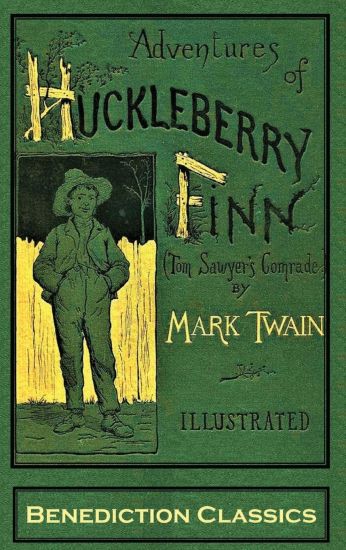
Adventures of Huckleberry Finn (or, in more recent editions, The Adventures of Huckleberry Finn) is a novel by Mark Twain, first published in the United Kingdom in December 1884 and in the United States in February 1885. Commonly named among the Great American Novels, the work is among the first in major American literature to be written throughout in vernacular English, characterized by local color regionalism. It is told in the first person by Huckleberry "Huck" Finn, a friend of Tom Sawyer and narrator of two other Twain novels (Tom Sawyer Abroad and Tom Sawyer, Detective). It is a direct sequel to The Adventures of Tom Sawyer.The book is noted for its colorful description of people and places along the Mississippi River. Set in a Southern antebellum society that had ceased to exist about 20 years before the work was published, Adventures of Huckleberry Finn is an often scathing satire on entrenched attitudes, particularly racism. Perennially popular with readers, Adventures of Huckleberry Finn has also been the continued object of study by literary critics since its publication. It was criticized upon release because of its coarse language and became even more controversial in the 20th century because of its perceived use of racial stereotypes and because of its frequent use of the racial slur "nigger", despite strong arguments that the protagonist and the tenor of the book are anti-racist.... Samuel Langhorne Clemens (November 30, 1835 - April 21, 1910), better known by his pen name Mark Twain, was an American writer, entrepreneur, publisher and lecturer. Among his novels are The Adventures of Tom Sawyer (1876) and its sequel, Adventures of Huckleberry Finn (1885), the latter often called "The Great American Novel". Twain was raised in Hannibal, Missouri, which later provided the setting for Tom Sawyer and Huckleberry Finn. After an apprenticeship with a printer, Twain worked as a typesetter and contributed articles to the newspaper of his older brother, Orion Clemens. He later became a riverboat pilot on the Mississippi River before heading west to join Orion in Nevada. He referred humorously to his lack of success at mining, turning to journalism for the Virginia City Territorial Enterprise.In 1865, his humorous story "The Celebrated Jumping Frog of Calaveras County" was published, based on a story he heard at Angels Hotel in Angels Camp, California, where he had spent some time as a miner. The short story brought international attention, and was even translated into classic Greek. His wit and satire, in prose and in speech, earned praise from critics and peers, and he was a friend to presidents, artists, industrialists, and European royalty... Edward Windsor Kemble (January 18, 1861 - September 19, 1933) was an American illustrator. He is known best for illustrating the first edition of Adventures of Huckleberry Finn and for his cartoons of African Americans.
Donald Robert Perry Marquis July 29, 1878 in Walnut, Illinois - December 29, 1937 in New York City) was a humorist, journalist, and author. He was variously a novelist, poet, newspaper columnist, and playwright. He is remembered best for creating the characters "Archy" and "Mehitabel", supposed authors of humorous verse. During his lifetime he was equally famous for creating another fictitious character, "the Old Soak," who was the subject of two books, a hit Broadway play (1922-23), a silent movie (1926) and a talkie (1937).Marquis grew up in Walnut, Illinois. His brother David died in 1892 at the age of 20; his father James died in 1897. After graduating from Walnut High School in 1894, he attended Knox Academy, a now-defunct preparatory program run by Knox College, in 1896, but left after three months. From 1902 to 1907 he served on the editorial board of the Atlanta Journal where he wrote many editorials during the heated election between his publisher Hoke Smith and future Pulitzer Prize winner, Clark Howell (Smith was the victor). In 1909, Marquis married Reina Melcher, with whom he had a son, Robert (1915-1921) and a daughter, Barbara (1918-1931). Reina died on December 2, 1923. Three years later Marquis married the actress Marjorie Potts Vonnegut, whose first husband, actor Walter Vonnegut, was a cousin of American author, playwright and satirist Kurt Vonnegut Jr. She died in her sleep on October 25, 1936. Marquis died of a stroke after suffering three other strokes that partly disabled him. On August 23, 1943, the United States Navy christened a Liberty ship, the USS Don Marquis (IX-215), in his memory. Marquis began work for the New York newspaper The Evening Sun in 1912 and edited for the next eleven years a daily column, "The Sun Dial". During 1922 he left The Evening Sun (shortened to The Sun in 1920) for the New York Tribune (renamed the New York Herald Tribune in 1924), where his daily column, "The Tower" (later "The Lantern") was a great success. He regularly contributed columns and short stories to the Saturday Evening Post, Collier's and American magazines and also appeared in Harper's, Scribner's, Golden Book, and Cosmopolitan. Marquis's best-known creation was Archy, a fictional cockroach (developed as a character during 1916) who had been a free-verse poet in a previous life, and who supposedly left poems on Marquis's typewriter by jumping on the keys. Archy usually typed only lower-case letters, without punctuation, because he could not operate the shift key. His verses were a type of social satire, and were used by Marquis in his newspaper columns titled "archy and mehitabel"; mehitabel was an alley cat, occasional companion of archy and the subject of some of archy's verses. The archy and mehitabel pieces were illustrated by cartoonist George Herriman, better known to posterity as the author of the newspaper comic Krazy Kat. Other characters developed by Marquis included Pete the Pup, Clarence the ghost, and an egomaniacal toad named Warty Bliggins. Marquis was the author of about 35 books. He co-wrote (or contributed posthumously) to the films The Sports Pages, Shinbone Alley, The Good Old Soak and Skippy. The 1926 film The Cruise of the Jasper B was supposedly based on his 1916 novel of the same name, although the plots have little in common. Edward Windsor Kemble (January 18, 1861 - September 19, 1933) was an American illustrator. He is known best for illustrating the first edition of Adventures of Huckleberry Finn and for his cartoons of African Americans.
Joel Chandler Harris's The Tar Baby has been one of the most beloved characters in all of American children's literature. Originally published in 1904 and featuring the art of acclaimed illustrators A. B. Frost and E. W. Kemble, this edition is a favorite of collectors.