Kirjojen hintavertailu. Mukana 12 595 353 kirjaa ja 12 kauppaa.

Kirjailija

Earl J. Hess

Kirjat ja teokset yhdessä paikassa: 34 kirjaa, julkaisuja vuosilta 1997-2026, suosituimpien joukossa July 22. Vertaile teosten hintoja ja tarkista saatavuus suomalaisista kirjakaupoista.

34 kirjaa

Kirjojen julkaisuhaarukka 1997-2026.

Civil War Supply and Strategy

Civil War Supply and Strategy

Earl J. Hess

Louisiana State University Press
2020
sidottu
Civil War Supply and Strategy stands as a sweeping examination of the decisive link between the distribution of provisions to soldiers and the strategic movement of armies during the Civil War. Award-winning historian Earl J. Hess reveals how that dynamic served as the key to success, especially for the Union army as it undertook bold offensives striking far behind Confederate lines. How generals and their subordinates organized military resources to provide food for both men and animals under their command, he argues, proved essential to Union victory.The Union army developed a powerful logistical capability that enabled it to penetrate deep into Confederate territory and exert control over select regions of the South. Logistics and supply empowered Union offensive strategy but limited it as well; heavily dependent on supply lines, road systems, preexisting railroad lines, and natural waterways, Union strategy worked far better in the more developed Upper South. Union commanders encountered unique problems in the Deep South, where needed infrastructure was more scarce. While the Mississippi River allowed Northern armies to access the region along a narrow corridor and capture key cities and towns along its banks, the dearth of rail lines nearly stymied William T. Sherman's advance to Atlanta. In other parts of the Deep South, the Union army relied on massive strategic raids to destroy resources and propel its military might into the heart of the Confederacy. As Hess's study shows, from the perspective of maintaining food supply and moving armies, there existed two main theaters of operation, north and south, that proved just as important as the three conventional eastern, western, and Trans-Mississippi theaters. Indeed, the conflict in the Upper South proved so different from that in the Deep South that the ability of Federal officials to negotiate the logistical complications associated with army mobility played a crucial role in determining the outcome of the war.
My Dear Nelly

My Dear Nelly

Earl J. Hess

Kent State University Press
2020
sidottu
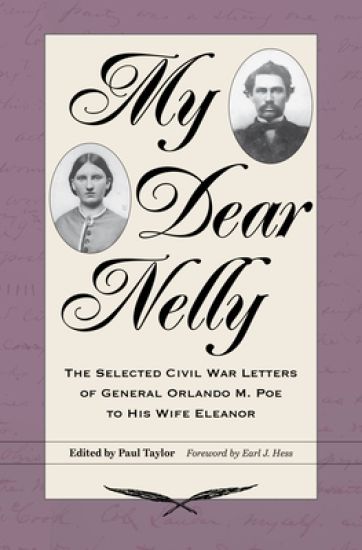
An epistolary chronicle of love and reflection from the Civil War front.More than 150 years after the end of the Civil War, West Point engineer and Brevet Brigadier General Orlando M. Poe (1832–1895) remains one of the Union's most unsung heroes. He served the Union in uniform from day one of the conflict until the Confederate surrender in North Carolina in late April 1865, and he used his unparalleled ability to predict Confederate movements to lead multiple successful campaigns that turned the tide of the war. Accordingly, the roar of battle permeates this collection of 241 highly literate and previously unpublished wartime letters to his wife, Eleanor Brent Poe.Yet readers will discover more than just Poe's battlefield experiences. His observations to his wife regarding sense of duty, marital responsibilities, societal issues, and broader home front matters also provide a unique window into the nature of husband-wife relationships in the mid-19th century. The raw intimacy of these letters, coupled with Poe's strong sense of social awareness, illustrates the contrasting forces of "manliness" and domesticity during this time period, exemplified by vivid descriptions of both the dynamics between a soldier and his wife and between the home front and the battlefield.This collection of letters from the front lines offers a bird's-eye view of some of the Civil War's most hard-fought military campaigns. Coupled with Paul Taylor's insightful editorial notes and annotations, Poe's private Civil War letters are set firmly within the broader context of the war and the home front, revealing unique and moving insights into America's bloodiest war.
The Battle of Peach Tree Creek

The Battle of Peach Tree Creek

Earl J. Hess

The University of North Carolina Press
2020
nidottu
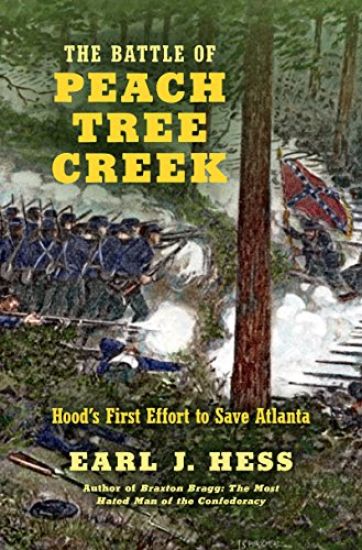
On July 20, 1864, the Civil War struggle for Atlanta reached a pivotal moment. As William T. Sherman's Union forces came ever nearer the city, the defending Confederate Army of Tennessee replaced its commanding general, removing Joseph E. Johnston and elevating John Bell Hood. This decision stunned and demoralized Confederate troops just when Hood was compelled to take the offensive against the approaching Federals. Attacking northward from Atlanta's defenses, Hood's men struck George H. Thomas's Army of the Cumberland just after it crossed Peach Tree Creek on July 20. Initially taken by surprise, the Federals fought back with spirit and nullified all the advantages the Confederates first enjoyed. As a result, the Federals achieved a remarkable defensive victory. Offering new and definitive interpretations of the battle's place within the Atlanta campaign, Earl J. Hess describes how several Confederate regiments and brigades made a pretense of advancing but then stopped partway to the objective and took cover for the rest of the afternoon on July 20. Hess shows that morale played an unusually important role in determining the outcome at Peach Tree Creek--a soured mood among the Confederates and overwhelming confidence among the Federals spelled disaster for one side and victory for the other.
Fighting for Atlanta

Fighting for Atlanta

Earl J. Hess

The University of North Carolina Press
2020
nidottu
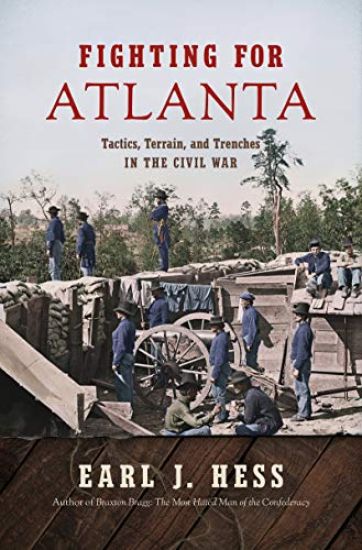
As William T. Sherman's Union troops began their campaign for Atlanta in the spring of 1864, they encountered Confederate forces employing field fortifications located to take advantage of rugged terrain. While the Confederates consistently acted on the defensive, digging eighteen lines of earthworks from May to September, the Federals used fieldworks both defensively and offensively. With 160,000 troops engaged on both sides and hundreds of miles of trenches dug, fortifications became a defining factor in the Atlanta campaign battles. These engagements took place on topography ranging from Appalachian foothills to the clay fields of Georgia's piedmont.Leading military historian Earl J. Hess examines how commanders adapted their operations to the physical environment, how the environment in turn affected their movements, and how Civil War armies altered the terrain through the science of field fortification. He also illuminates the impact of fighting and living in ditches for four months on the everyday lives of both Union and Confederate soldiers. The Atlanta campaign represents one of the best examples of a prolonged Union invasion deep into southern territory, and, as Hess reveals, it marked another important transition in the conduct of war from open field battles to fighting from improvised field fortifications.
Civil War Logistics

Civil War Logistics

Earl J. Hess

Louisiana State University Press
2017
sidottu
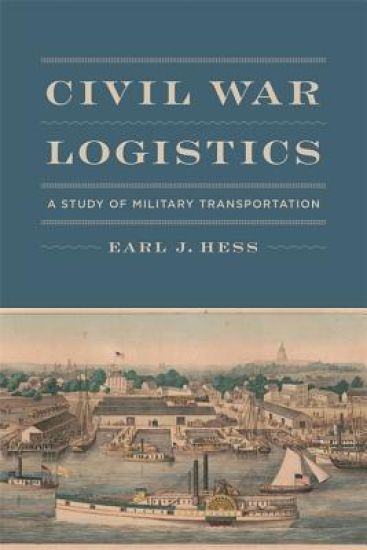
During the Civil War, neither the Union nor the Confederate army could have operated without effective transportation systems. Moving men, supplies, and equipment required coordination on a massive scale, and Earl J. Hess's Civil War Logistics offers the first comprehensive analysis of this vital process. Utilizing an enormous array of reports, dispatches, and personal accounts by quartermasters involved in transporting war materials, Hess reveals how each conveyance system operated as well as the degree to which both armies accomplished their logistical goals.In a society just realizing the benefits of modern travel technology, both sides of the conflict faced challenges in maintaining national and regional lines of transportation. Union and Confederate quartermasters used riverboats, steamers, coastal shipping, railroads, wagon trains, pack trains, cattle herds, and their soldiers in the long and complicated chain that supported the military operations of their forces. Soldiers in blue and gray alike tried to destroy the transportation facilities of their enemy, firing on river boats and dismantling rails to disrupt opposing supply lines while defending their own means of transport.According to Hess, Union logistical efforts proved far more successful than Confederate attempts to move and supply its fighting forces, due mainly to the North's superior administrative management and willingness to seize transportation resources when needed. As the war went on, the Union's protean system grew in complexity, size, and efficiency, while that of the Confederates steadily declined in size and effectiveness until it hardly met the needs of its army. Indeed, Hess concludes that in its use of all types of military transportation, the Federal government far surpassed its opponent and thus laid the foundation for Union victory in the Civil War.
In the Trenches at Petersburg

In the Trenches at Petersburg

Earl J. Hess

The University of North Carolina Press
2013
nidottu
In the Trenches at Petersburg , the final volume of Earl J. Hess's trilogy of works on the fortifications of the Civil War, recounts the strategic and tactical operations around Petersburg during the last ten months of the Civil War. Hess covers all aspects of the Petersburg campaign, from important engagements that punctuated the long months of siege to mining and countermining operations, the fashioning of wire entanglements and the laying of torpedo fields to impede attacks, and the construction of underground shelters to protect the men manning the works. In the Trenches at Petersburg humanizes the experience of the soldiers working in the fortifications and reveals the human cost of trench warfare in the waning days of the struggle. |In the Trenches at Petersburg, the final volume of Earl J. Hess's trilogy of works on the fortifications of the Civil War, recounts the strategic and tactical operations around Petersburg during the last ten months of the Civil War. Hess covers all aspects of the Petersburg campaign, from important engagements that punctuated the long months of siege to mining and countermining operations, the fashioning of wire entanglements and the laying of torpedo fields to impede attacks, and the construction of underground shelters to protect the men manning the works. In the Trenches at Petersburg humanizes the experience of the soldiers working in the fortifications and reveals the human cost of trench warfare in the waning days of the struggle.
Field Armies and Fortifications in the Civil War

Field Armies and Fortifications in the Civil War

Earl J. Hess

The University of North Carolina Press
2013
nidottu
Earl J. Hess provides a narrative history of the use of fortifications--particularly trenches and other semi-permanent earthworks--used by Confederate and Union field armies at all major battle sites in the eastern theater of the Civil War. Hess moves beyond the technical aspects of construction to demonstrate the crucial role these earthworks played in the success or failure of field armies. A comprehensive study which draws on research and fieldwork from 300 battle sites, Field Armies and Fortifications in the Civil War is an indispensable reference for Civil War buffs and historians. |Earl J. Hess provides a narrative history of the use of fortifications--particularly trenches and other semi-permanent earthworks--used by Confederate and Union field armies at all major battle sites in the eastern theater of the Civil War. Hess moves beyond the technical aspects of construction to demonstrate the crucial role these earthworks played in the success or failure of field armies. A comprehensive study which draws on research and fieldwork from 300 battle sites, Field Armies and Fortifications in the Civil War is an indispensable reference for Civil War buffs and historians.
Trench Warfare under Grant and Lee

Trench Warfare under Grant and Lee

Earl J. Hess

The University of North Carolina Press
2013
nidottu
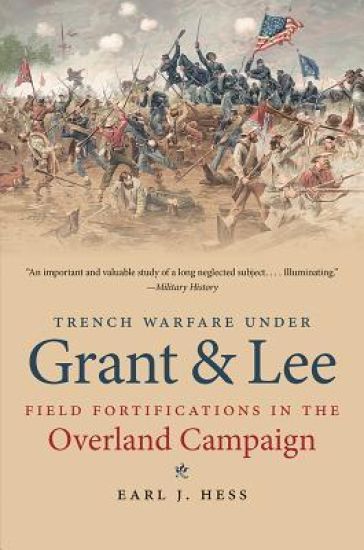
Earl J.Hess's study of armies and fortifications turns to the 1864 Overland Campaign to cover battles from the Wilderness to Cold Harbor. Drawing on meticulous research in primary sources and careful examination of battlefields at the Wilderness, Spotsylvania, North Anna, Bermuda Hundred, and Cold Harbor, , Hess analyzes Union and Confederate movements and tactics and the new way Grant and Lee employed entrenchments in an evolving style of battle. Hess argues that Grant's relentless and pressing attacks kept the armies always within striking distance, compelling soldiers to dig in for protection. |Earl J.Hess's study of armies and fortifications turns to the 1864 Overland Campaign to cover battles from the Wilderness to Cold Harbor. Drawing on meticulous research in primary sources and careful examination of battlefields at the Wilderness, Spotsylvania, North Anna, Bermuda Hundred, and Cold Harbor, Hess analyzes Union and Confederate movements and tactics and the new way Grant and Lee employed entrenchments in an evolving style of battle. Hess argues that Grant's relentless and pressing attacks kept the armies always within striking distance, compelling soldiers to dig in for protection.
The Knoxville Campaign

The Knoxville Campaign

Earl J. Hess

University of Tennessee Press
2013
nidottu
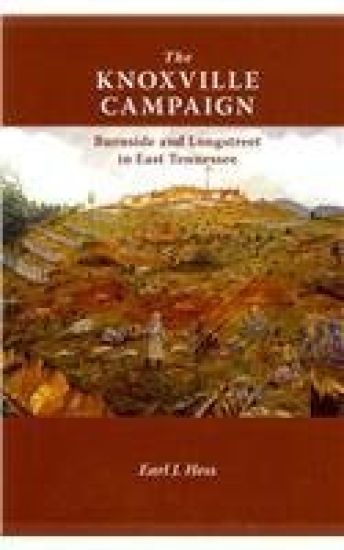
In the fall and winter of 1863, Union General Ambrose Burnside and Confederate General James Longstreet vied for control of the city of Knoxville and with it the railroad that linked the Confederacy east and west. The generals and their men competed, too, for the hearts and minds of the people of East Tennessee. Often overshadowed by the fighting at Chickamauga and Chattanooga, this important campaign has never received a full scholarly treatment. In this landmark book, award-winning historian Earl J. Hess fills a gap in Civil War scholarship—a timely contribution that coincides with and commemorates the sesquicentennial of the Civil WarThe East Tennessee campaign was an important part of the war in the West. It brought the conflict to Knoxville in a devastating way, forcing the Union defenders to endure two weeks of siege in worsening winter conditions. The besieging Confederates suffered equally from supply shortages, while the civilian population was caught in the middle and the town itself suffered widespread destruction. The campaign culminated in the famed attack on Fort Sanders early on the morning of November 29, 1863. The bloody repulse of Longstreet’s veterans that morning contributed significantly to the unraveling of Confederate hopes in the Western theater of operations.Hess’s compelling account is filled with numerous maps and images that enhance the reader’s understanding of this vital campaign that tested the heart of East Tennessee. The author’s narrative and analysis will appeal to a broad audience, including general readers, seasoned scholars, and new students of Tennessee and Civil War history. The Knoxville Campaign will thoroughly reorient our view of the war as it played out in the mountains and valleys of East Tennessee.
Into the Crater

Into the Crater

Earl J. Hess

University of South Carolina Press
2010
sidottu
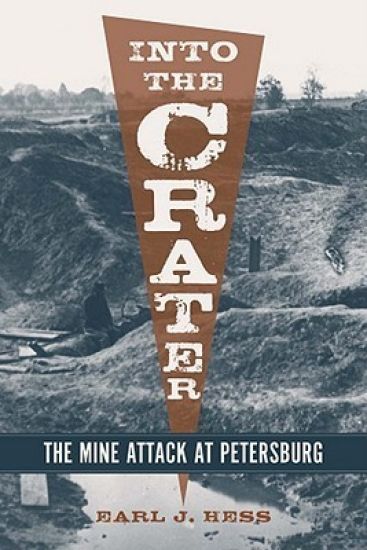
The battle of the Crater on July 30, 1864, was the defining event in the 292-day campaign around Petersburg, Virginia, in the Civil War and one of the most famous engagements in American military history. Although the bloody combat of that ""horrid pit"" has been recently revisited as the centerpiece of the novel and film versions of Charles Frazier's Cold Mountain, the battle has yet to receive a definitive historical study. Distinguished Civil War historian Earl J. Hess fills that gap in the literature of the Civil War with Into the Crater. The Crater was central in Ulysses S. Grant's third offensive at Petersburg and required digging of a five-hundred-foot mine shaft under enemy lines and detonating of four tons of gunpowder to destroy a Confederate battery emplacement. The resulting infantry attack through the breach in Robert E. Lee's line failed terribly, costing Grant nearly four thousand troops, among them many black soldiers fighting in their first battle. The outnumbered defenders of the breach saved Confederate Petersburg and inspired their comrades with renewed hope in the lengthening campaign to possess this important rail center. In this narrative account of the Crater and its aftermath, Hess identifies the most reliable evidence to be found in hundreds of published and unpublished eyewitness accounts, official reports, and historic photographs. Archaeological studies and field research on the ground itself, now preserved within the Petersburg National Battlefield, complement the archival and published sources. Hess re-creates the battle in lively prose saturated with the sights and sounds of combat at the Crater in moment-by-moment descriptions that bring modern readers into the chaos of close range combat. Hess discusses field fortifications as well as the leadership of Union generals Grant, George Meade, and Ambrose Burnside, and of Confederate generals Lee, P. G. T. Beauregard, and A. P. Hill. He also chronicles the atrocities committed against captured black soldiers, both in the heat of battle and afterward, and the efforts of some Confederate officers to halt this vicious conduct. With fresh insights, adroit research in all manner of sources, and previously unpublished photographs and field maps, Hess takes readers into the Crater once more so that we might better understand the magnitude of this historical event, which Grant deemed ""the saddest affair I have witnessed in the War.
Wilson's Creek, Pea Ridge, and Prairie Grove

Wilson's Creek, Pea Ridge, and Prairie Grove

Earl J. Hess; Richard W. Hatcher; William Garrett Piston; William L. Shea

Bison Books
2006
pokkari
Wilson's Creek, Pea Ridge, and Prairie Grove were three of the most important battles fought west of the Mississippi River during the Civil War. They influenced the course of the first half of the war in that region by shaping Union military efforts while significantly contributing to Confederate defeat. Wilson's Creek, Pea Ridge, and Prairie Grove, the first book to provide a detailed guide to these battlefields, takes the visitor step-by-step through the major sites of each engagement. With numerous maps and illustrations that enhance the authors' descriptions of what happened at each stop, the book also includes analytical accounts explaining tactical problems associated with each battle as well as vignettes evoking for readers the personal experience of those who fought there. An indispensable companion for the battlefield visitor, this guide offers not only touring information and driving tours of sites associated with the campaigns that led to the battles, but also a brief history of each battle and an overview of the larger strategy and tactics of the military action in which these battles figured.
Liberty, Virtue, and Progress

Liberty, Virtue, and Progress

Earl J. Hess

Fordham University Press
1997
sidottu
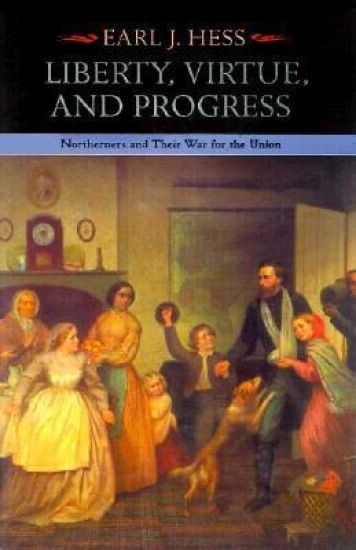
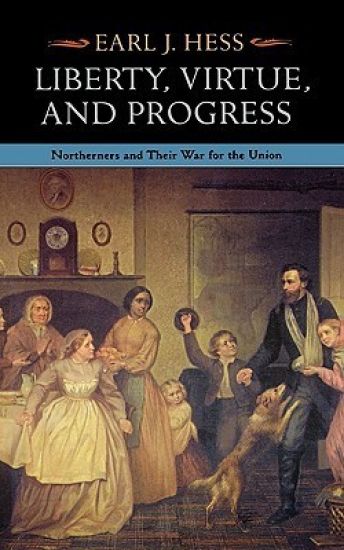
Concentrating on ideology and cultural values, Liberty, Virtue, and Progress explores the motivations that casued Northerners to fight America's Civil War. Arguing for the primary significance of ideals and cultural values in defining a war, the book examines the opinions of both the Northern soldier and civilian about the meaning of the Civil War in terms of defining American nationalism, the character of the American people, and the future of free government. The book addresses the intellectual and social elites of Northern society, but gives a new emphasis to the opinions of the common man on the subject and ideology of the war. In addition to identifying and discussing the ideas and cultural values that played a role in motivation, Hess looks at how the experience of war (battlefield death and suffering) interacted with that ideology. Contrary to the commonly held belief that war is disruptive to pre-war ideals, Hess argues that Northern soldiers and civilians made a conscious effort to use ideology as a tool with which to retain their faith in ideas. Liberty, Virtue, and Progress is based on extensive research in both published and unpublished sources.
Liberty, Virtue, and Progress

Liberty, Virtue, and Progress

Earl J. Hess

Fordham University Press
1997
pokkari
Concentrating on ideology and cultural values, Liberty, Virtue, and Progress explores the motivations that casued Northerners to fight America's Civil War. Arguing for the primary significance of ideals and cultural values in defining a war, the book examines the opinions of both the Northern soldier and civilian about the meaning of the Civil War in terms of defining American nationalism, the character of the American people, and the future of free government. The book addresses the intellectual and social elites of Northern society, but gives a new emphasis to the opinions of the common man on the subject and ideology of the war. In addition to identifying and discussing the ideas and cultural values that played a role in motivation, Hess looks at how the experience of war (battlefield death and suffering) interacted with that ideology. Contrary to the commonly held belief that war is disruptive to pre-war ideals, Hess argues that Northern soldiers and civilians made a conscious effort to use ideology as a tool with which to retain their faith in ideas. Liberty, Virtue, and Progress is based on extensive research in both published and unpublished sources.