Kirjojen hintavertailu. Mukana 12 595 353 kirjaa ja 12 kauppaa.

Kirjailija

Eberhard Arnold

Kirjat ja teokset yhdessä paikassa: 30 kirjaa, julkaisuja vuosilta 2014-2026, suosituimpien joukossa Called to Community. Vertaile teosten hintoja ja tarkista saatavuus suomalaisista kirjakaupoista.

30 kirjaa

Kirjojen julkaisuhaarukka 2014-2026.

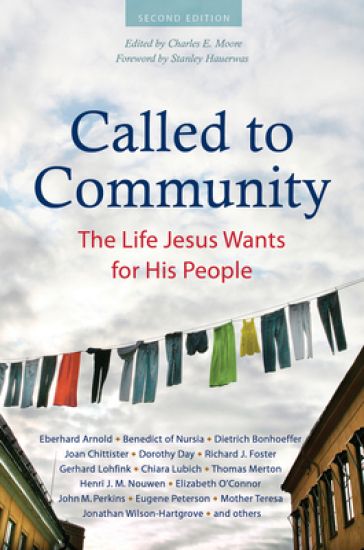
Called to Community

Called to Community

Eberhard Arnold; Dietrich Bonhoeffer; Joan Chittister; Dorothy Day; Fyodor Dostoyevsky; Richard J. Foster; Jonathan Wilson-Hartgrove; David Janzen; Søren Kierkegaard; C. S. Lewis; Chiara Lubich; Thomas Merton; Henri J. M. Nouwen; John M. Perkins; Eugene H. Peterson; Christine D. Pohl; Howard A. Snyder; Mother Teresa; Saint Benedict; Jeremiah Barker; Amy Carmichael; Hans Denck; Andreas Ehrenpreis; Thomas R Kelly; Penelope Lawson; Juan Mateos; Kathleen Norris; Thomas E Powers; Peter Riedemann; Christopher C Smith; Ulrich Stadler

PLOUGH PUBLISHING HOUSE
2024
pokkari
Fifty-two readings on living in intentional Christian community to spark group discussion.Gold Medal Winner, 2017 Illumination Book Awards, Christian LivingSilver Medal Winner, 2017 Benjamin Franklin Award in Religion, Independent Book Publishers AssociationWhy, in an age of connectivity, are our lives more isolated and fragmented than ever? And what can be done about it? The answer lies in the hands of God’s people. Increasingly, today’s Christians want to be the church, to follow Christ together in daily life. From every corner of society, they are daring to step away from the status quo and respond to Christ’s call to share their lives more fully with one another and with others. As they take the plunge, they are discovering the rich, meaningful life that Jesus has in mind for all people, and pointing the church back to its original calling: to be a gathered, united community that demonstrates the transforming love of God.Of course, such a life together with others isn’t easy. The selections in this volume are, by and large, written by practitioners—people who have pioneered life in intentional community and have discovered in the nitty-gritty of daily life what it takes to establish, nurture, and sustain a Christian community over the long haul.Whether you have just begun thinking about communal living, are already embarking on sharing life with others, or have been part of a community for many years, the pieces in this collection will encourage, challenge, and strengthen you. The book’s fifty-two chapters can be read one a week to ignite meaningful group discussion.Contributors include: John F. Alexander, Eberhard Arnold, J. Heinrich Arnold, Johann Christoph Arnold, Alden Bass, Benedict of Nursia, Christoph Friedrich Blumhardt, Leonardo Boff, Dietrich Bonhoeffer, Joan Chittister, Stephen B. Clark, Andy Crouch, Dorothy Day, Anthony de Mello, Elizabeth Dede, Catherine de Hueck Doherty, Fyodor Dostoyevsky, Jenny Duckworth, Friedrich Foerster, Richard J. Foster, Jodi Garbison, Arthur G. Gish, Helmut Gollwitzer, Adele J Gonzalez, Stanley Hauerwas, Joseph H. Hellerman, Roy Hession, David Janzen, Rufus Jones, Emmanuel Katongole, Arthur Katz, Søren Kierkegaard, C. Norman Kraus, C.S. Lewis, Gerhard Lohfink, Ed Loring, Chiara Lubich, George MacDonald, Thomas Merton, Hal Miller, José P. Miranda, Jürgen Moltmann, Charles E. Moore, Henri J. M. Nouwen, Elizabeth O’Connor, John M. Perkins, Eugene H.Peterson, Christine D. Pohl, Chris Rice, Basilea Schlink, Howard A. Snyder, Mother Teresa, Thomas à Kempis, Elton Trueblood, and Jonathan Wilson-Hartgrove.
Plough Quarterly No. 1

Plough Quarterly No. 1

Russell D. Moore; Cardinal Donald Wuerl; Jrgen Moltmann; Johann Christoph Arnold; C. Christopher Smith; Patrizia Cavalli; Duane Stoltzfus; Eberhard Arnold; Manfred Kyber; Kthe Kollwitz; Henri J. M. Nouwen; Sren Kierkegaard; Dorothy Day

Plough Publishing House
2014
pokkari
How close do we dare to get to Jesus’ Sermon on the Mount? It’s widely considered the key to understanding who Jesus was and what mission he strove to fulfill. For two millennia, countless people have wrestled to apply it, from Augustine to Luther to Tolstoy to Gandhi. Alongside much wisdom, there has been much evasion, prompting Jewish theologian Pinchas Lapide’s tart comment: “The history of the impact of the Sermon on the Mount can largely be described in terms of an attempt to domesticate everything in it that is shocking, demanding, and uncompromising, and render it harmless.” There’s good reason for this: Jesus’ teaching is deeply disruptive. It demands a top-to-bottom reordering of life, work, and social relations, starting with radical economic sharing, nonresistance and love of enemies, lifelong marriage, and unconditional forgiveness. This issue of Plough Quarterly focuses on people willing to get their hands dirty living out the Sermon on the Mount. Their ranks include Dorothy Day, Dietrich Bonhoeffer, John Wesley, Henri Nouwen, Mother Teresa, and others you’ll meet in these pages. Their insights are not to be consumed passively. Rather, they should inspire and equip each of us to roll up our sleeves and get to work. Bold, hope-filled, and down-to-earth, Plough Quarterly features thought-provoking articles, commentary, interviews, short fiction, book reviews, poetry and artwork to inspire everyday faith and action. Each issue brings together essential voices from many traditions to give you fresh insights on a core theme such as peacemaking, biblical justice, children and family, building community, man and woman, nature and the environment, nonviolence, or simple living. Starting from the conviction that the teachings and example of Jesus can transform and renew our world, it aims to apply them to all aspects of life, seeking common ground with all people of goodwill regardless of creed.
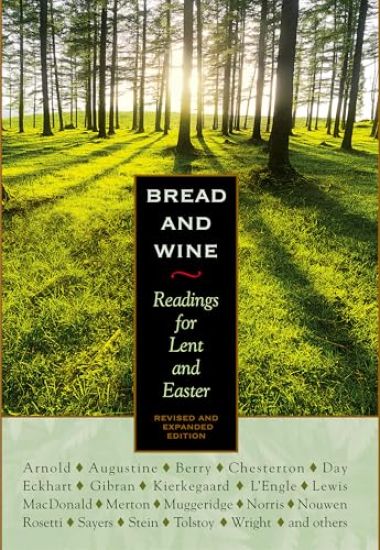
Bread and Wine

Bread and Wine

C. S. Lewis; Eberhard Arnold; Wendell Berry; Dietrich Bonhoeffer; Dorothy Day; Khalil Gibran; Clarence Jordan; Soren Kierkegaard; Thomas Merton; Kathleen Norris; Henri Nouwen; Christina Rosetti; Edith Stein; Dorothy Sayers; Fleming Rutledge; Simone Weil; Toyohiko Kagawa; Madeleine L’Engle; John Donne; Oscar Wilde

PLOUGH PUBLISHING HOUSE
2026
sidottu
Easter is the high point of the year for millions of Christians around the world. And for most of them, there can be no Easter without Lent, the season that leads up to it. A time for self-denial, soul-searching, and spiritual preparation, Lent makes time for daily reading and reflection. This time-tested collection of devotions will deepen and stretch your faith, and can be returned to year after year. Culled from the wealth of twenty centuries, the selections are ecumenical in scope, representing the best classic and contemporary Christian writers. This expanded second edition adds dozens of voices, new and old, and takes the reader all the way through Eastertide to Pentecost. Includes ninety-six Lenten and Easter readings, plus seven chapter-opening poems, by Eberhard Arnold, Saint Augustine, Wendell Berry, Christoph Friedrich Blumhardt, Dietrich Bonhoeffer, G. K. Chesterton, Dorothy Day, Meister Eckhart, Khalil Gibran, Clarence Jordan, Soren Kierkegaard, Madeleine L'Engle, C. S. Lewis, George MacDonald, Thomas Merton, Malcolm Muggeridge, Kathleen Norris, Henri Nouwen, Christina Rosetti, Fleming Rutledge, Dorothy Sayers, Edith Stein, Mother Teresa, Leo Tolstoy, N. T. Wright, Alfred Kazin, Amy Carmichael, Barbara Brown Taylor, Barbara Cawthorne Crafton, Blaise Pascal, Brennan Manning, Dag Hammarskjöld, Dorothee Soelle, Dylan Thomas, E. Stanley Jones, Emil Brunner, Frederick Buechner, Fyodor Dostoevsky, Geoffrey Hill, Henry Drummond, J. Heinrich Arnold, Jean-Pierre de Caussade, Johann Christoph Arnold, John Dear, John Donne, John Masefield, John Stott, John Updike, Jürgen Moltmann, Karl Barth, Madeleine L’Engle, Martin Luther, Oscar Wilde, Oswald Chambers, Paul Tillich, Peter Kreeft, Philip Berrigan, Philip Yancey, Romano Guardini, Sadhu Sundar Singh , Saint Augustine, Simone Weil, Thomas à Kempis, Toyohiko Kagawa, Walter J. Ciszek, Walter Wangerin, Watchman Nee, William Willimon and others.
Plough Quarterly No. 9

Plough Quarterly No. 9

Stanley Hauerwas; Rick Warren; Leonardo Boff; Chiara Lubich; C. S. Lewis; Jean Vanier; Henri J. M. Nouwen; Eberhard Arnold; D. L. Mayfield

Plough Publishing House
2016
pokkari
With the concept of socialism back in mainstream conversations and increasing numbers of Christians unhappy with “Sunday Christianity,” it’s time to give the lifestyle of Jesus’ first followers another look. This issue of Plough Quarterly does just that, profiling intentional Christian communities past and present and gleaning wisdom on the daily practicalities and pitfalls of communal living from those with years of experience in following Jesus together. Hear from Stanley Hauerwas, Rick Warren, Leonardo Boff, Chiara Lubich, C. S. Lewis, Jean Vanier, Henri J. M. Nouwen, Eberhard Arnold, and D. L. Mayfield. Then there’s new poetry, book reviews, a children’s story by Kwon Jong-saeng, and world-class art by Salvador Dali, Wassily Kandinsky, Juan Rizi, Marianne Stokes, Francisco de Zurbarán, Dong-Sung Kim, Christian Schussele, Gustave Caillebotte. Plough Quarterly features stories, ideas, and culture for people eager to put their faith into action. Each issue brings you in-depth articles, interviews, poetry, book reviews, and art to help you put Jesus’ message into practice and find common cause with others.
Plough Quarterly No. 13 - Save Our Souls

Plough Quarterly No. 13 - Save Our Souls

Eberhard Arnold; Stephanie Saldaa; Ross Douthat; Dana Gioia; Simone Weil; Rod Dreher; Pawel Kuczynski; Meister Eckhart; Isaac Penington; Gerard Manley Hopkins; Jacqueline C. Rivers

Plough Publishing House
2017
pokkari
In an age of distraction, this issue of Plough Quarterly looks at inwardness – how sustainable human community and social activism must be rooted in the spiritual life. How much of your day is spent in reality, and how much in a fake world? We’ve learned that screen time is bad for you, too much media consumption damages your heart, and Facebook can make you mentally ill. We’re aware of the mind-altering power of advertising, the dehumanizing passions of our polarized politics, and the fact that millions of us have learned to multitask while watching footage of refugees drowning. But what are we to do about it? If this fake world is invading our souls, it’s in our souls that we must find the cure. Only a return to inwardness can bring distracted moderns back to Jesus and to constructive work for his kingdom. Here activists may object: Isn’t it the height of selfishness to retreat into our interior life when we ought to be out saving starving children? Yet Christians through the ages have insisted that inwardness is crucial to the life of discipleship. It’s what keeps us from falling for demagogues and false gospels, from wasting life on superficialities, and from ignoring our neighbor. In fact, throughout history it has often been the mystics who were most active in serving others. In true Plough fashion, this issue brings together a colorful cast of examples: from medieval Beguines and Benedictines to Gerard Manley Hopkins, Simone Weil, and Fannie Lou Hamer, to contemporary voices like Robert Cardinal Sarah, Johann Christoph Arnold, and three persecuted Syrian priests. These lives offer us glimpses of the real world from which our fake world seeks to distract us, and can guide us in our own refusal to conform. Also in this issue: • Poetry from Gerard Manley Hopkins and Malcolm Guite • Insights on inwardness from Meister Eckhart, Eberhard Arnold, Marguerite Porete, Simone Weil, and Isaac Penington • A forum on the Benedict Option with Rod Dreher, Ross Douthat, Jacqueline C. Rivers, and Randall Gauger • Artwork by Jason Landsel, Bruce Herman, Jane Chapin, Graham Berry, Fra Angelico, Francisco de Zurbarán, Eleanor Fortescue-Brickdale, Matthew J. Cutter, John August Swanson, Vittorio Matteo Corcos, and Leon Dabo Plough Quarterly features stories, ideas, and culture for people eager to put their faith into action. Each issue brings you in-depth articles, interviews, poetry, book reviews, and art to help you put Jesus’ message into practice and find common cause with others.
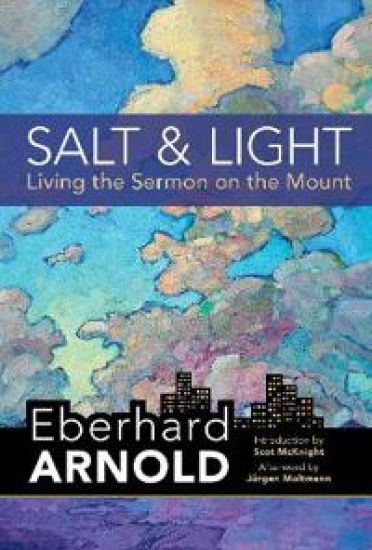
Salt and Light

Salt and Light

Eberhard Arnold; Jürgen Moltmann

PLOUGH PUBLISHING HOUSE
2025
sidottu
Arnold calls us to build up a just, peaceable society motivated by love.In the Sermon on the Mount, Jesus puts aside his usual parables and speaks plainly in language anyone can understand. Like Francis of Assisi and others, Arnold chose to live out Jesus’ teachings by embracing their self- sacrificing demands. In this collection of talks and essays, he calls us to live for the Sermon’s ultimate goal: the overturning of the prevailing order of injustice. In its place, Arnold writes, we must build up a just, peaceable society motivated by love.
Eberhard Arnold

Eberhard Arnold

Eberhard Arnold

PLOUGH PUBLISHING HOUSE
2024
nidottu
A concise introduction to the thought and vision of Eberhard Arnold, the founder of the Bruderhof community. Eberhard Arnold was one of the most remarkable Christian figures of the twentieth century. In the years after World War I he abandoned his career ambitions to live by the radical teachings of Jesus’ Sermon on the Mount. With his family and a small circle of friends he founded the Bruderhof, an international pacifist community rooted in the Anabaptist tradition, which soon brought him into conflict with the Nazi state.Whether you’ve never read Eberhard Arnold before, or have already been profoundly affected by one of his books, this introductory selection from many of his important works will give insight into of his thought on a wide range of topics, including justice, peacemaking, work, economic sharing, communal living, human nature, family, the Holy Spirit, the Bible, and the church. A biographical introduction by his grandson Johann Christoph Arnold puts the selections in context.
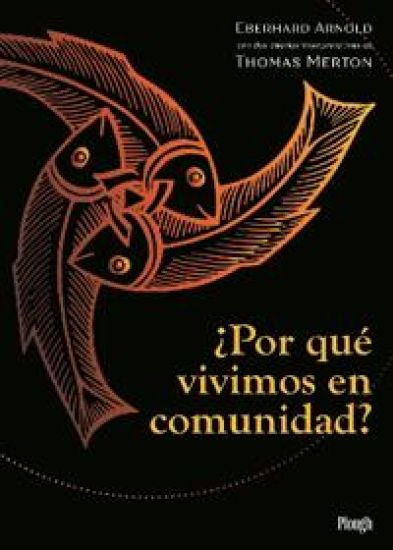
¿Por qué vivimos en comunidad? / Why We Live in Community

¿Por qué vivimos en comunidad? / Why We Live in Community

Eberhard Arnold; Thomas Merton

PLOUGH PUBLISHING HOUSE
2023
pokkari
Hoy en día, todos están hablando de “comunidad”. Según Arnold y Merton, se puede vivirla también.En este manifiesto, Arnold y Merton plantean la posibilidad de la vida comunitaria intencional y examinan sus rasgos más destacados: amor, alegría, unidad y la gran aventura de fe, compartidos con otros en el camino. No describen ni prescriben la vida en comunidad; en cambio, ofrecen un ideal para guiar la búsqueda, y un llamado a renovar el compromiso y profundizar la fe. [Description in English]: Everyone’s talking about “community” these days. Arnold and Merton say it can be lived, too. In this time-honored manifesto, Arnold and Merton add their voices to the vital discussion of what real community is all about: love, joy, unity, and the great “adventure of faith” shared with others along the way. Neither writer describes (or prescribes) community here, but they do provide a vision to guide our search. For both the uninitiated seeker and the veteran, this book offers guidance – and a disarming call to a renewed commitment and a deepened faith.
Inner Land: A Guide into the Heart of the Gospel (Complete Boxed Set)
Find the clarity of vision needed to win the daily battle that is life, and the inner anchor without which we lose our moorings.It is hard to exaggerate the significance of Inner Land, either for Eberhard Arnold or his readers. It absorbed his energies off and on for most of his adult life – from World War I, when he published the first chapter under the title War: A Call to Inwardness, to 1935, the last year of his life.Packed in metal boxes and buried at night for safekeeping from the Nazis, who raided the author’s study a year before his death (and again a year after it), Inner Land was not openly critical of Hitler’s regime. Nevertheless, it attacked the spirits that animated German society: its murderous strains of racism and bigotry, its heady nationalistic fervor, its mindless mass hysteria, and its vulgar materialism. In this sense Innerland stands as starkly opposed to the zeitgeist of our own day as to that of the author’s.At a glance, the focus of Inner Land seems to be the cultivation of the spiritual life as an end in itself. Nothing could be more misleading. In fact, to Eberhard Arnold the very thought of encouraging the sort of selfish solitude whereby people seek their own private peace by shutting out the noise and rush of public life around them is anathema. He writes in The Inner Life: “These are times of distress. We cannot retreat, willfully blind to the overwhelming urgency of the tasks pressing on society. We cannot look for inner detachment in an inner and outer isolation...The only justification for withdrawing into the inner self to escape today's confusing, hectic whirl would be that fruitfulness is enriched by it. It is a question of gaining within, through unity with eternal powers, a strength of character ready to be tested in the stream of the world.”Inner Land, then, calls us not to passivity, but to action. It invites us to discover the abundance of a life lived for God. It opens our eyes to the possibilities of that “inner land of the invisible where our spirit can find the roots of its strength and thus enable us to press on to the mastery of life we are called to by God.” Only there, says Eberhard Arnold, can our life be placed under the illuminating light of the eternal and seen for what it is. Only there will we find the clarity of vision we need to win the daily battle that is life, and the inner anchor without which we will lose our moorings.
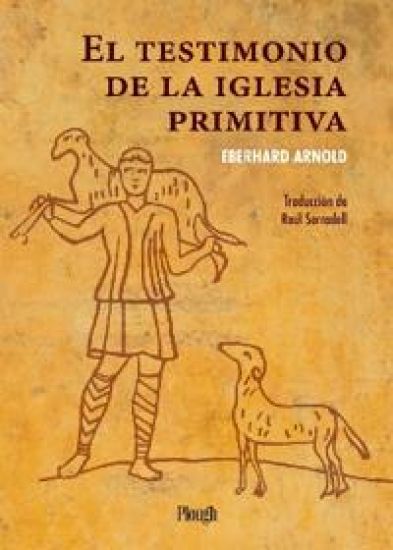
El testimonio de la iglesia primitiva

El testimonio de la iglesia primitiva

Eberhard Arnold

PLOUGH PUBLISHING HOUSE
2022
pokkari
Eberhard Arnold describe la vida de la iglesia primitiva, proporciona el contexto religioso e histórico y analiza la vitalidad de una fe primitiva y espiritual. En este libro breve, Eberhard Arnold describe la vida de la iglesia primitiva. Proporciona el contexto religioso e histórico, analiza la vitalidad de una fe primitiva y espiritual a la luz de su inspiración —las enseñanzas de Cristo y sus apóstoles— y la contrasta con la religión institucionalizada de los siglos posteriores. El cuadro que Arnold presenta refleja una fe y un modo de vida que arden con fervor y devoción. Esos hombres y mujeres mostraron una firme lealtad hacia el reino de Dios y una voluntad de sacrificar todo por su causa.
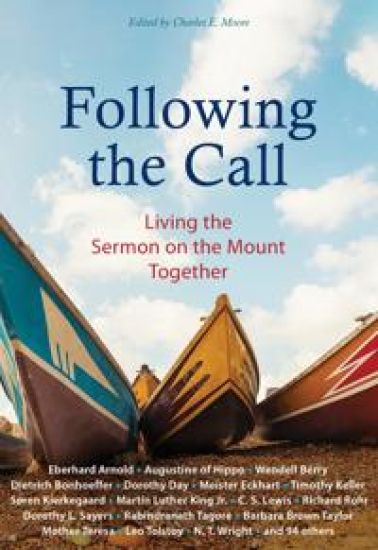
Following the Call

Following the Call

Eberhard Arnold; Dietrich Bonhoeffer; Martin Luther King; C. S. Lewis; Wendell Berry; Dorothy Day; Leo Tolstoy; N. T. Wright; Richard Rohr; Madeleine L'Engle; Thomas Merton

Plough Publishing House
2021
pokkari
Fifty-two readings to spark weekly group discussion on putting Jesus’ most central teachings into practice.Jesus’ most famous teaching, the Sermon on the Mount, possesses an irresistible quality. Who hasn’t felt stirred and unsettled after reading these words, which get to the root of the human condition? This follow-up to the acclaimed collection Called to Community: The Life Jesus Wants for His People taps an even broader array of sources, bringing together prophetic voices from every era and a range of traditions to consider the repercussions of these essential words. More than a commentary or devotional, this book is designed to be read together with others, to inspire communities of faith to discuss what it might look like to put Jesus’ teachings into practice today.
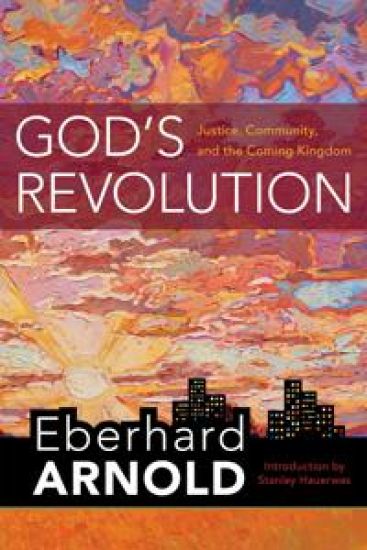
God's Revolution

God's Revolution

Eberhard Arnold

Plough Publishing House
2021
sidottu
A radical vision for a society transformed by the teachings and spirit of Jesus. Do you feel powerless to change the injustice at every level of society? Are you tired of answers that ignore the root causes of human suffering? This selection of writings by Eberhard Arnold, who left a career and the established church in order to live out the gospel, calls us to a completely different way. Be warned: Arnold doesn’t approach discipleship as the route to some benign religious fulfillment, but as a revolution—a transformation that begins within and spreads outward to encompass every aspect of life. Arnold writes in the same tradition of radical obedience to the gospel as his contemporaries Karl Barth and Dietrich Bonhoeffer.
The Living Word

The Living Word

Eberhard Arnold

Plough Publishing House
2021
sidottu
What makes the Bible more than ink on paper? The living word, Eberhard Arnold writes, is greater than the words of the Bible, which even the devil used to tempt Jesus. The scriptures on their own can never produce the righteousness, mercy, and faithfulness that count before God. But when the Holy Spirit speaks this living word into the hearts of those who have set out on the way of discipleship to Christ, the deepest meaning of the scriptures are opened up to them. Those who have accepted this living word, which never contradicts the Bible, also agree with one another. Transformed from within, they receive the strength, clarity, and unity they need to carry out the task God has given them – to make God’s kingdom a reality on earth. The final volume of five in Inner Land, The Living Word includes a preface by Eberhard Arnold’s son J. Heinrich Arnold, who has written elsewhere: “My father not only believed that Inner Land was the most important book he had written; he also believed and told me that he included in this book everything in his life he had ever experienced of Christ, of the suffering of humankind, of the murderous spirit of mammon, of human life and divine life altogether.” About Innerland: It is hard to exaggerate the significance of Innerland, either for Eberhard Arnold or his readers. It absorbed his energies off and on for most of his adult life – from World War I, when he published the first chapter under the title War: A Call to Inwardness, to 1935, the last year of his life. Packed in metal boxes and buried at night for safekeeping from the Nazis, who raided the author’s study a year before his death (and again a year after it), Innerland was not openly critical of Hitler’s regime. Nevertheless, it attacked the spirits that animated German society: its murderous strains of racism and bigotry, its heady nationalistic fervor, its mindless mass hysteria, and its vulgar materialism. In this sense Innerland stands as starkly opposed to the zeitgeist of our own day as to that of the author’s. At a glance, the focus of Innerland seems to be the cultivation of the spiritual life as an end in itself. Nothing could be more misleading. In fact, to Eberhard Arnold the very thought of encouraging the sort of selfish solitude whereby people seek their own private peace by shutting out the noise and rush of public life around them is anathema. He writes in The Inner Life: “These are times of distress. We cannot retreat, willfully blind to the overwhelming urgency of the tasks pressing on society. We cannot look for inner detachment in an inner and outer isolation...The only justification for withdrawing into the inner self to escape today's confusing, hectic whirl would be that fruitfulness is enriched by it. It is a question of gaining within, through unity with eternal powers, a strength of character ready to be tested in the stream of the world.” Innerland, then, calls us not to passivity, but to action. It invites us to discover the abundance of a life lived for God. It opens our eyes to the possibilities of that “inner land of the invisible where our spirit can find the roots of its strength and thus enable us to press on to the mastery of life we are called to by God.” Only there, says Eberhard Arnold, can our life be placed under the illuminating light of the eternal and seen for what it is. Only there will we find the clarity of vision we need to win the daily battle that is life, and the inner anchor without which we will lose our moorings.
Plough Quarterly No. 27 – The Violence of Love

Plough Quarterly No. 27 – The Violence of Love

Anthony M. Barr; Gracy Olmstead; Stanley Hauerwas; Zito Madu; Rachel Pieh Jones; Springs Toledo; Patrick Tomassi; Scott Beauchamp; Andrea Grosso Ciponte; Eberhard Arnold; Catherine Tufariello

Plough Publishing House
2021
pokkari
How did violence become OK? And is there any way back? At some point between George Floyd’s killing on May 25 and the invasion of the US Capitol on January 6, America’s consensus against political violence crumbled. Before 2020, almost everyone agreed that it should be out of bounds. Now, many are ready to justify such violence – at least when it is their side breaking windows or battling police officers. Something significant seems to have slipped. Is there any way back? As Christians, we need to consider what guilt we bear, with the rise of a decidedly unchristian “Christian nationalism” that historically has deep roots in American Christian culture. But shouldn’t we also be asking ourselves what a truly Christian stance might look like, one that reflects Jesus’ blessings on the peacemakers, the merciful, and the meek? Oscar Romero, when accused of preaching revolutionary violence, responded: “We have never preached violence, except the violence of love, which left Christ nailed to a cross.” If we take Jesus’ example and his call to nonviolence at face value, we’re left with all kinds of interesting questions: What about policing? What about the military? What about participating in government? This issue of Plough addresses some of these questions and explores what a life lived according to love rather than violence might look like. In this issue: - Anthony M. Barr revisits James Baldwin’s advice about undoing racism. - Gracy Olmstead describes welcoming the baby she did not expect during a pandemic. - Patrick Tomassi debates nonviolence with Portland’s anarchists and Proud Boys. - Scott Beauchamp advises on what not to ask war veterans. - Rachel Pieh Jones reveals what Muslims have taught her about prayer. - Eberhard Arnold argues that Christian nonviolence is more than pacifism. - Stanley Hauerwas presents a vision of church you’ve never seen in practice. - Andrea Grosso Ciponte graphically portrays the White Rose student resistance to Nazism. - Zito Madu illuminates rap’s role in escaping the violence of poverty. - Springs Toledo recounts his boxing match with an undefeated professional. You’ll also find: - An interview with poet Rhina P. Espaillat - New poems by Catherine Tufariello - Profiles of Anabaptist leader Felix Manz and community founder Lore Weber - Reviews of Marly Youmans’s Charis in the World of Wonders, Judith D. Schwartz’s The Reindeer Chronicles, Chris Lombardi’s I Ain’t Marching Anymore, and Martín Espada’s Floaters Plough Quarterly features stories, ideas, and culture for people eager to put their faith into action. Each issue brings you in-depth articles, interviews, poetry, book reviews, and art to help you put Jesus’ message into practice and find common cause with others.
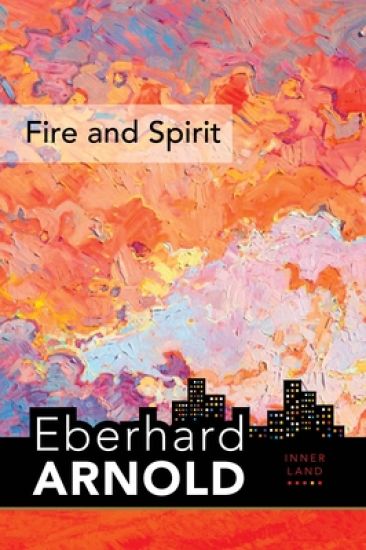
Fire and Spirit

Fire and Spirit

Eberhard Arnold

Plough Publishing House
2020
sidottu
Lightning and forest fires could strike terror in primitive humans, yet they also cherished fire as a life-giving gift from the gods. Eberhard Arnold surveys the symbolism of light and fire in the Bible, literature, and history to illuminate our love/fear relationship with God. The Holy Spirit, like fire, is a two-edged sword: it brings the blazing wrath of God’s judgment, consuming all that is dead and cold in us, but also the radiant warmth of his love, mercy, and redemption. Though Inner Land was not explicitly critical of the Nazi regime, it nevertheless attacked the spirits that animated German society at the time: racism and bigotry, nationalistic fervor, mass hysteria, and materialism. The chapter “Light and Fire,” in particular, was a deliberate public statement at a decisive moment of Germany’s history. Eberhard Arnold sent Hitler a copy on November 9, 1933. A week later the Gestapo raided the community and ransacked the author’s study. After this first raid, Eberhard Arnold asked two friends to pack the already printed signatures of Inner Land in watertight metal boxes and bury them at night for safekeeping. They later dug up Inner Land and smuggled it out of the country, publishing it in Lichtenstein after Eberhard Arnold’s death. The fourth volume of five in Inner Land, Fire and Spirit contains two chapters, “Light and Fire” and “The Holy Spirit.” About Innerland: It is hard to exaggerate the significance of Innerland, either for Eberhard Arnold or his readers. It absorbed his energies off and on for most of his adult life – from World War I, when he published the first chapter under the title War: A Call to Inwardness, to 1935, the last year of his life. Packed in metal boxes and buried at night for safekeeping from the Nazis, who raided the author’s study a year before his death (and again a year after it), Innerland was not openly critical of Hitler’s regime. Nevertheless, it attacked the spirits that animated German society: its murderous strains of racism and bigotry, its heady nationalistic fervor, its mindless mass hysteria, and its vulgar materialism. In this sense Innerland stands as starkly opposed to the zeitgeist of our own day as to that of the author’s. At a glance, the focus of Innerland seems to be the cultivation of the spiritual life as an end in itself. Nothing could be more misleading. In fact, to Eberhard Arnold the very thought of encouraging the sort of selfish solitude whereby people seek their own private peace by shutting out the noise and rush of public life around them is anathema. He writes in The Inner Life: “These are times of distress. We cannot retreat, willfully blind to the overwhelming urgency of the tasks pressing on society. We cannot look for inner detachment in an inner and outer isolation...The only justification for withdrawing into the inner self to escape today's confusing, hectic whirl would be that fruitfulness is enriched by it. It is a question of gaining within, through unity with eternal powers, a strength of character ready to be tested in the stream of the world.” Innerland, then, calls us not to passivity, but to action. It invites us to discover the abundance of a life lived for God. It opens our eyes to the possibilities of that “inner land of the invisible where our spirit can find the roots of its strength and thus enable us to press on to the mastery of life we are called to by God.” Only there, says Eberhard Arnold, can our life be placed under the illuminating light of the eternal and seen for what it is. Only there will we find the clarity of vision we need to win the daily battle that is life, and the inner anchor without which we will lose our moorings.
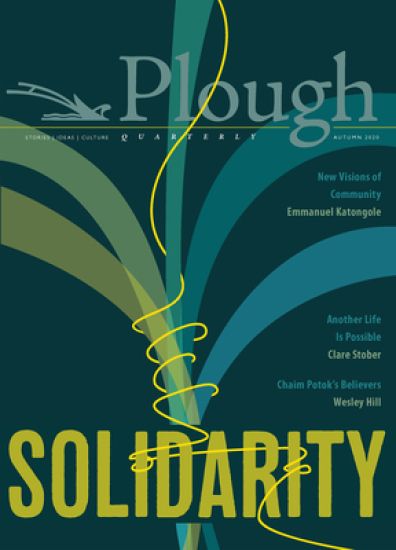
Plough Quarterly No. 25 – Solidarity

Plough Quarterly No. 25 – Solidarity

James Gurney; Emmanuel Katongole; Rabbi Jonathan Sacks; Sally Thomas; Wesley Hill; Karen Swallow Prior; Jacaueline C. Rivers; Noah Van Niel; Ashley Lucas; James Crews; Nathan Beacom; Antje Vollmer; Eberhard Arnold

Plough Publishing House
2020
pokkari
The summer of 2020 has shown us how much we all depend on one another. Whatever else they do, pandemics show us we are not alone. Covid-19 is proof that, yes, there is such a thing as society; the disease has spread precisely because we aren’t autonomous individuals disconnected from each other, but rather all belong to one great body of humanity. The pain inflicted by the pandemic is far from equally distributed. Yet it reveals ever more clearly how much we all depend on one another, and how urgently necessary it is for us to bear one another’s burdens. It’s a good time, then, to talk about solidarity. The more so because it’s a theme that’s also raised by this year’s other major development, the international protests for racial justice following George Floyd’s death. The protests, too, raised the question of solidarity in guilt, even guilt across generations. By taking up our common guilt with all humanity, we come into solidarity with the one who bears it and redeems it all. In Christ, sins are forgiven, guilt abolished, and a new way of living together becomes possible. This solidarity in forgiveness gives rise to a life of love. This issue of Plough explores what solidarity means, and what it looks like to live it out today, whether in Uganda, Bolivia, or South Korea, in an urban church, a Bruderhof, or a convent.
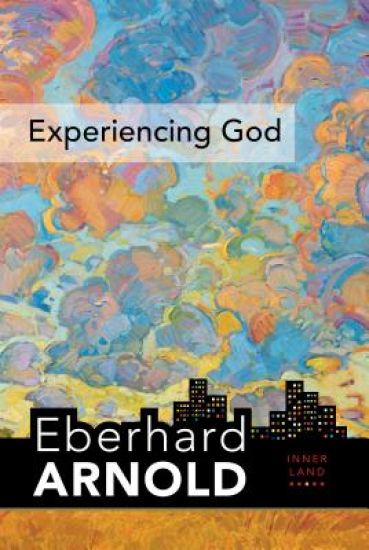
Experiencing God

Experiencing God

Eberhard Arnold

Plough Publishing House
2020
sidottu
What happens when we let the living God into our practical lives? Everyone is looking for deeper meaning in their lives and for personal peace as well as peace for all. But are we ready for what can happen when we invite the living God to rule our personal lives and transform us and our society? Where religion, self-help, and the political ideologies of left and right have failed us, God enters with power to break the grip of money, violence, and tribalism and bring about a new life of justice and fellowship. This book is not for those who look to spirituality as an escape from reality. But for those who hunger for change that is genuine and tangible, for a personal peace of heart that is inseparable from justice and peace between nations, Arnold’s words will be a rousing encouragement to expect more than you ever dared hope. Experiencing God is the third volume in Inner Land: A Guide into the Heart of the Gospel
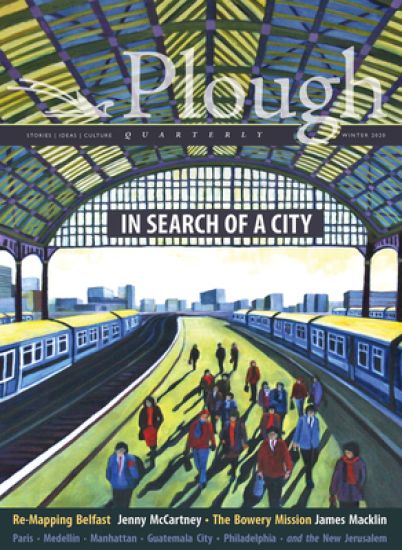
Plough Quarterly No. 23 - In Search of a City

Plough Quarterly No. 23 - In Search of a City

Jenny McCartney; Adriano Cirino; Clare Coffey; Joseph Bottum; Brandon McGinley; N.T. Wright; José Corpas; John Thornton; Jane Jacobs; Julian Peters; Eberhard Arnold

Plough Publishing House
2019
pokkari
The future of humanity is urban. It might seem a bad move for a magazine named after a farm tool to bring out an issue on cities. Especially if that magazine is published by an Anabaptist community that originated in a back-to-the-land movement and still has the whiff of hayfield and woodlot to it. Why not stick to what you’re good at? Why jump lanes? Because the future of humanity, pretty clearly, is urban. Urbanization is arguably the biggest change of habitat our species has ever undergone. For anyone who cares about the common good of humanity, then, cities need to matter. The modern city is an electrifying concentration of creativity, energy, and cultural dynamism. It’s also still the “cauldron of unholy loves” that Saint Augustine discovered in Carthage one and a half millennia ago. It’s the place where the cruelties of mammon, the hubris of power, and the perversions of lust manifest themselves most crassly. But cities have also given birth to culture and community and to remarkable movements of revival and renewal. In this issue, visit: - Belfast with Jenny McCartney - New York City with James Macklin - Medellín with Adriano Cirino - Pittsburgh with Brandon McGinley - Guatemala City with José Corpas - Philadelphia with Clare Coffey - Chicago with John Thornton Jr. - Paris with Jason Landsel You’ll also find: - Insights on cities from Jane Jacobs, Eberhard Arnold, Augustine, and Philip Britts - reviews of books by Jonathan Foiles, Bethany McKinney Fox, J. Malcolm Garcia, Tatiana Schlossberg, Tim Gautreaux, Philip Bess, and Frederic Morton - art by Gail Brodholt, Michelangelo Buonarroti, Ben Ibebe, Brian Peterson, Chota, Raphael, Gertrude Hermes, Valentino Belloni, Tony Taj, and Aristarkh Lentulov Plough Quarterly features stories, ideas, and culture for people eager to put their faith into action. Each issue brings you in-depth articles, interviews, poetry, book reviews, and art to help you put Jesus’ message into practice and find common cause with others.
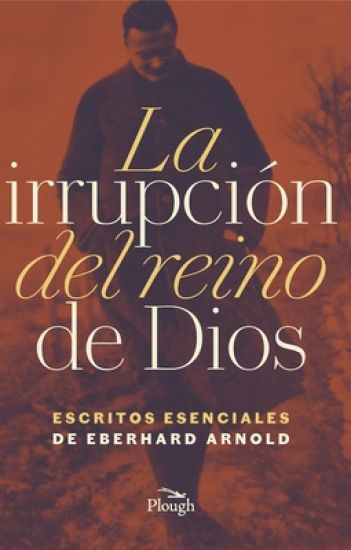
La Irrupcion del reino de Dios

La Irrupcion del reino de Dios

Eberhard Arnold

Plough Publishing House
2019
pokkari
Eberhard Arnold (1883–1935) fue una de las figuras cristianas más notables del siglo XX. En los años posteriores a la primera guerra mundial, abandonó su carrera como teólogo universitario para vivir el espíritu radical del Sermón del monte. Con su familia y un pequeño círculo de amigos fundó el Bruderhof, una comunidad arraigada en la tradición anabautista. En sus escritos, preocupados por la búsqueda de la paz, la comunidad y el llamamiento a una rev¬olución del espíritu, se escucha el reto evangélico que invita a vivir comprometidamente desde la autenticidad personal. Menos conocido en el mundo hispanohablante, este libro brinda la oportunidad de leer una selección de escritos que permiten escuchar su voz profética.
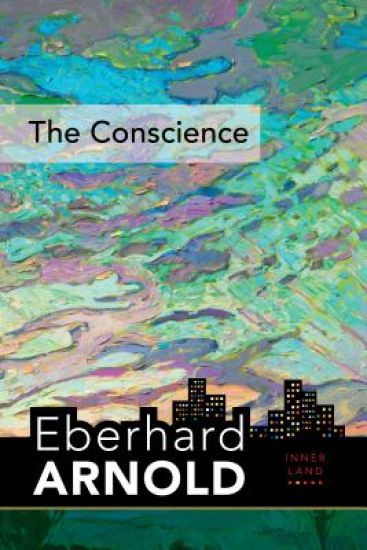
The Conscience

The Conscience

Eberhard Arnold

Plough Publishing House
2019
sidottu
When troubled consciences find healing they become a force for good. The conscience, our inner moral compass, is a sensitive instrument meant to warn us against all that might endanger our life and happiness. Many today despise or ignore the conscience, calling its working unhealthy repression of natural urges, or rejecting any certainty in the name of relativism. Others are tormented by its accusations. In this little book, Arnold points the way to complete healing and restoration of even the most troubled conscience. When Christ’s forgiveness sets the conscience free and floods it with his live-renewing spirit, it becomes an active force for good, giving us clarity in personal, social, and political questions and leading us to peace, joy, justice, and community. The Conscience is the second volume of five in Inner Land: A Guide into the Heart of the Gospel. About Inner Land A trusted guide into the inner realm where our spirits find strength to master life and live for God. It is hard to exaggerate the significance of Innerland, either for Eberhard Arnold or his readers. It absorbed his energies off and on for most of his adult life--from World War I, when he published the first chapter under the title War: A Call to Inwardness, to 1935, the last year of his life. Packed in metal boxes and buried at night for safekeeping from the Nazis, who raided the author’s study a year before his death (and again a year after it), Innerland was not openly critical of Hitler’s regime. Nevertheless, it attacked the spirits that animated German society: its murderous strains of racism and bigotry, its heady nationalistic fervor, its mindless mass hysteria, and its vulgar materialism. In this sense Innerland stands as starkly opposed to the zeitgeist of our own day as to that of the author’s. At a glance, the focus of Innerland seems to be the cultivation of the spiritual life as an end in itself. Nothing could be more misleading. In fact, to Eberhard Arnold the very thought of encouraging the sort of selfish solitude whereby people seek their own private peace by shutting out the noise and rush of public life around them is anathema. He writes in The Inner Life:“These are times of distress. We cannot retreat, willfully blind to the overwhelming urgency of the tasks pressing on society. We cannot look for inner detachment in an inner and outer isolation...The only justification for withdrawing into the inner self to escape today's confusing, hectic whirl would be that fruitfulness is enriched by it. It is a question of gaining within, through unity with eternal powers, a strength of character ready to be tested in the stream of the world.” Innerland, then, calls us not to passivity, but to action. It invites us to discover the abundance of a life lived for God. It opens our eyes to the possibilities of that “inner land of the invisible where our spirit can find the roots of its strength and thus enable us to press on to the mastery of life we are called to by God.” Only there, says Eberhard Arnold, can our life be placed under the illuminating light of the eternal and seen for what it is. Only there will we find the clarity of vision we need to win the daily battle that is life, and the inner anchor without which we will lose our moorings.