Kirjojen hintavertailu. Mukana 12 595 353 kirjaa ja 12 kauppaa.

Kirjailija

Eberhard Kienle

Kirjat ja teokset yhdessä paikassa: 6 kirjaa, julkaisuja vuosilta 2001-2026, suosituimpien joukossa A Grand Delusion. Vertaile teosten hintoja ja tarkista saatavuus suomalaisista kirjakaupoista.

6 kirjaa

Kirjojen julkaisuhaarukka 2001-2026.

States Under Stress

States Under Stress

Eberhard Kienle

Cambridge University Press
2026
sidottu
Unlike conventional narratives of 'state failure' and its conceptual avatars, the volume analyses the remains of states whose populations had been torn apart by prolonged and violent conflicts and whose rulers lost the monopoly over the means of coercion and the capacity to implement public policies. Focusing on Lebanon since the civil war of the 1970s and 80s, Syria since the repression of the 'Arab spring' in 2011, and Iraq since the 1991 and 2003 wars, it provides a systematic explanation of the continuous, if precarious, survival of these states which draws on international recognition, access to resources, institutional arrangements, and societal ties alongside societal cleavages. In the process, States under Stress defends a definition of the state based on claims to statehood.
States Under Stress

States Under Stress

Eberhard Kienle

Cambridge University Press
2026
nidottu
Unlike conventional narratives of 'state failure' and its conceptual avatars, the volume analyses the remains of states whose populations had been torn apart by prolonged and violent conflicts and whose rulers lost the monopoly over the means of coercion and the capacity to implement public policies. Focusing on Lebanon since the civil war of the 1970s and 80s, Syria since the repression of the 'Arab spring' in 2011, and Iraq since the 1991 and 2003 wars, it provides a systematic explanation of the continuous, if precarious, survival of these states which draws on international recognition, access to resources, institutional arrangements, and societal ties alongside societal cleavages. In the process, States under Stress defends a definition of the state based on claims to statehood.
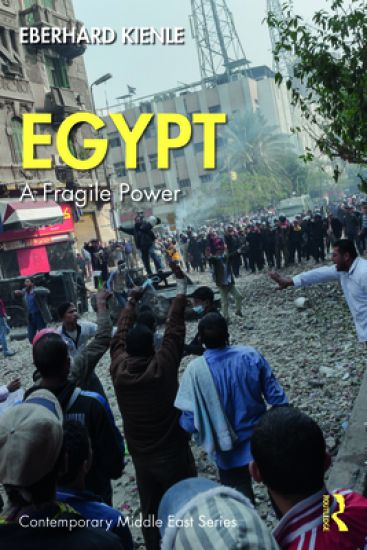
Egypt

Egypt

Eberhard Kienle

Routledge
2021
sidottu
Focusing on authoritarian rule, unresolved economic challenges, and external dependency, the volume explains the salient political and economic features of contemporary Egypt against the backdrop of its history since the beginning of the 19th century. Presenting a comprehensive account of developments, it challenges common assumptions about secularists, Islamists, and revolutionaries, as well as 'modernization', 'economic reform', and political stability.Discussing domestic politics, economic change, and external relations since 1945, the author argues that Egypt continued to draw a degree of strength from sustained state-building activities, which its pre-colonial rulers could pursue in a favourable international environment and the partly related emergence of the country as a focal point of collective identity. More consolidated than many other states in the global south, Arab and non-Arab alike, independent Egypt, despite changing economic strategies, remained a (lower) middle-income country and despite repeated political contestation, most recently in the Arab Spring, continued to suffer from autocratic rule. Such continuity reflects not only the interplay between political forces at home, dominated by the military, and inconclusive economic policies but also the external constraints under which governments and other actors in the global south have to act. Based on numerous primary and secondary sources in various languages, including Arabic, and years of fieldwork, the book is a key resource for scholars of all levels, journalists, policymakers, and diplomats interested in comparative politics and the political economy of the Middle East and Egypt.
Egypt

Egypt

Eberhard Kienle

Routledge
2021
nidottu
Focusing on authoritarian rule, unresolved economic challenges, and external dependency, the volume explains the salient political and economic features of contemporary Egypt against the backdrop of its history since the beginning of the 19th century. Presenting a comprehensive account of developments, it challenges common assumptions about secularists, Islamists, and revolutionaries, as well as 'modernization', 'economic reform', and political stability.Discussing domestic politics, economic change, and external relations since 1945, the author argues that Egypt continued to draw a degree of strength from sustained state-building activities, which its pre-colonial rulers could pursue in a favourable international environment and the partly related emergence of the country as a focal point of collective identity. More consolidated than many other states in the global south, Arab and non-Arab alike, independent Egypt, despite changing economic strategies, remained a (lower) middle-income country and despite repeated political contestation, most recently in the Arab Spring, continued to suffer from autocratic rule. Such continuity reflects not only the interplay between political forces at home, dominated by the military, and inconclusive economic policies but also the external constraints under which governments and other actors in the global south have to act. Based on numerous primary and secondary sources in various languages, including Arabic, and years of fieldwork, the book is a key resource for scholars of all levels, journalists, policymakers, and diplomats interested in comparative politics and the political economy of the Middle East and Egypt.
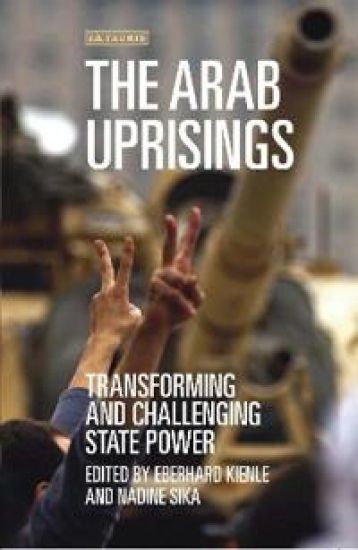
The Arab Uprisings

The Arab Uprisings

Eberhard Kienle; Nadine Sika

I.B. Tauris
2015
sidottu
The uprisings which spread across the Middle East and North Africa in late 2010 and 2011 irrevocably altered the way in which the region is now perceived. But in spite of the numerous similarities in these protests, from Tunisia and Egypt to Yemen and Bahrain, their broader political effects display important differences. This book analyses these popular uprisings, as well as other forms of protest, and the impact they had on each state. Why were Mubarak and Bin Ali ousted relatively peacefully in Egypt and Tunisia, while Qadafi in Libya and Saleh in Yemen fought violent battles against their opponents? Why do political transformations differ in countries that were able to shed their autocratic presidents? And why have other regimes, including Morocco and Saudi Arabia, experienced only limited protests or managed to repress and circumvent them? Looking at the aftermath and transitional processes across the region, this book is a vital retrospective examination of the uprisings and how they can be understood in the light of state formation and governmental dynamics.
A Grand Delusion

A Grand Delusion

Eberhard Kienle

I.B. Tauris
2001
nidottu
The author argues in this text that the much-vaunted reform and liberalisation of Egypt's economy has been partial and selective, far from beneficial to all Egyptians. While the encouragement of the private sector has indeed benefited some, it has failed to improve the standard of living of others, in particular the lower middle classes and a large part of the landless rural population. Most importantly, economic reform and liberalisation have failed to produce a greater degree of political democracy: notions of political accountability, clean elections, a genuinely free press, the containment of police powers have turned out to be a great delusion which masks restrictions on political participation and civil liberties.