Kirjojen hintavertailu. Mukana 12 319 933 kirjaa ja 12 kauppaa.

Kirjailija

Ece Özlem Atikcan

Kirjat ja teokset yhdessä paikassa: 3 kirjaa, julkaisuja vuosilta 2015-2020, suosituimpien joukossa Framing Risky Choices. Vertaile teosten hintoja ja tarkista saatavuus suomalaisista kirjakaupoista.

3 kirjaa

Kirjojen julkaisuhaarukka 2015-2020.

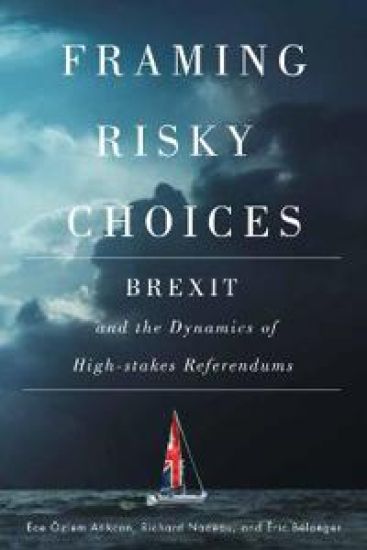
Framing Risky Choices

Framing Risky Choices

Ece Özlem Atikcan; Richard Nadeau; Éric Bélanger

McGill-Queen's University Press
2020
nidottu
The majority of policymakers, academics, and members of the general public expected British citizens to vote to remain in the European Union in the 2016 referendum. This perception was based on the well-established idea that voters don't like change or uncertainty. So why did the British public vote to take such a major economic risk? Framing Risky Choices addresses this question by placing the Brexit vote in the bigger picture of EU and Scottish independence referendums. Drawing from extensive interviews and survey data, it asserts that the framing effect – mobilizing voters by encouraging them to think along particular lines – matters, but not every argument is equally effective. Simple, evocative, and emotionally compelling frames that offer negativity are especially effective in changing people's minds. In the Brexit case, the Leave side neutralized the economic risks of Brexit and proposed other risks relating to remaining in the EU, such as losing control of immigration policy and a lack of funding for the National Health Service. These concrete, impassioned arguments struck an immediate and familiar chord with voters. Most intriguingly, the Remain side was silent on these issues, without an emotional case to present. Framing Risky Choices presents a multi-method, comparative, state-of-the-art analysis of how the Brexit campaign contributed to the outcome. Uncovering the core mechanism behind post-truth politics, it shows that the strength of an argument is not its empirical validity but its public appeal.
Framing Risky Choices

Framing Risky Choices

Ece Özlem Atikcan; Richard Nadeau; Éric Bélanger

McGill-Queen's University Press
2020
sidottu
The majority of policymakers, academics, and members of the general public expected British citizens to vote to remain in the European Union in the 2016 referendum. This perception was based on the well-established idea that voters don't like change or uncertainty. So why did the British public vote to take such a major economic risk? Framing Risky Choices addresses this question by placing the Brexit vote in the bigger picture of EU and Scottish independence referendums. Drawing from extensive interviews and survey data, it asserts that the framing effect – mobilizing voters by encouraging them to think along particular lines – matters, but not every argument is equally effective. Simple, evocative, and emotionally compelling frames that offer negativity are especially effective in changing people's minds. In the Brexit case, the Leave side neutralized the economic risks of Brexit and proposed other risks relating to remaining in the EU, such as losing control of immigration policy and a lack of funding for the National Health Service. These concrete, impassioned arguments struck an immediate and familiar chord with voters. Most intriguingly, the Remain side was silent on these issues, without an emotional case to present. Framing Risky Choices presents a multi-method, comparative, state-of-the-art analysis of how the Brexit campaign contributed to the outcome. Uncovering the core mechanism behind post-truth politics, it shows that the strength of an argument is not its empirical validity but its public appeal.
Framing the European Union

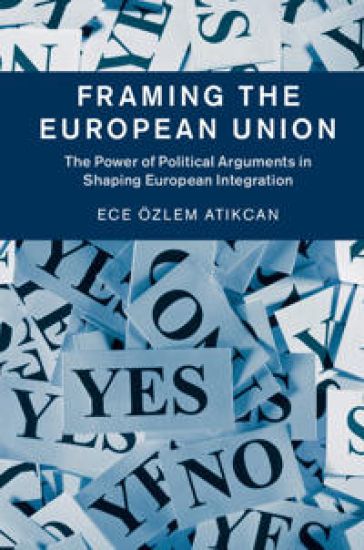
Framing the European Union

Ece Özlem Atikcan

Cambridge University Press
2015
sidottu
What is the impact of political language upon public opinion towards European integration? Based upon media analysis, public opinion data and over 140 in-depth interviews with senior officials and campaigners, Ece Özlem Atikcan examines six EU referendum votes: in Spain, France, the Netherlands and Luxembourg on the European Constitution in 2005; and in Ireland on the Lisbon Treaty in 2008 and 2009. In all instances, polls show that the voting public favored the referendum proposals before the campaigns began, yet this initially positive public opinion melted away in three of these six cases. Why did this occur? Atikcan demonstrates that the key to the puzzle lies in political campaigns, where argument strategies can, at least temporarily, reverse public opinion enough to affect referendum outcomes. Providing a critical analysis of campaign strategy and EU communication policy, this book will be essential reading for academics, policymakers, politicians and future campaigners.