Kirjailija
Eckhard J. Schnabel
Kirjat ja teokset yhdessä paikassa: 15 kirjaa, julkaisuja vuosilta 2004-2024, suosituimpien joukossa Mark. Vertaile teosten hintoja ja tarkista saatavuus suomalaisista kirjakaupoista.
Mukana myös kirjoitusasut: Eckhard J Schnabel
15 kirjaa
Kirjojen julkaisuhaarukka 2004-2024.
Mark wrote his Gospel to explain why and how Jesus is the Messiah and Son of God who fulfills God's promises as he proclaims and embodies the coming kingdom of God. Mark emphasizes Jesus' authority and also his suffering and death as God's will for his messianic mission. This Tyndale New Testament commentary from Eckhard Schnabel seeks to help today's Christian disciples communicate the significance of Jesus and the transforming power of the good news. An exegetical commentary on the Gospel of Mark, this volume will be useful for preachers, Bible teachers, and non-specialists alike.
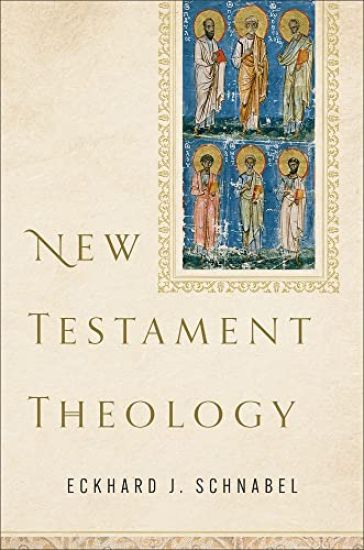
Southwestern Journal of Theology 2023 Book Award (Honorable Mention, Theological Studies)New Testament Theology is a major new contribution to New Testament scholarship by renowned scholar Eckhard Schnabel.While many New Testament theologies approach the material through a particular thematic construct (e.g., covenant), Schnabel takes a different approach. First, he focuses on Jesus Messiah and his significance for the early church. Second, he seeks to describe the theology of the New Testament as it was written and read in its historical context. This approach honors the fact that the authors and original readers of the New Testament were real people dealing with real issues in their specific ecclesiological, cultural, and missiological settings. Schnabel comprehensively combines a historical description of the New Testament's theology with a systematic reflection on the New Testament's message and the convictions of Jesus and his early followers.This valuable contribution to the field will be insightful reading for students, scholars, and pastors.
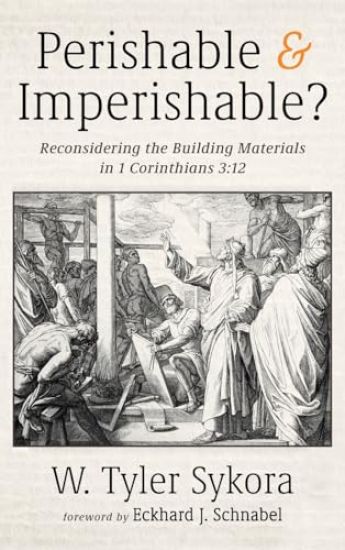
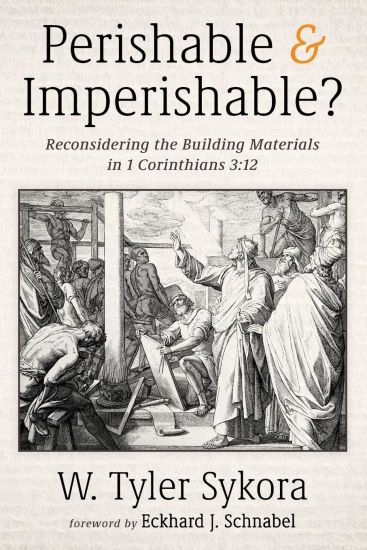
The purpose of this book is to re-examine Paul's list of building materials in 1 Cor 3:12 in order to propose that all of the materials should be understood as good and necessary for adequately building in Paul's construction metaphor (1 Cor 3:9-17). Contra the traditional interpretation, which argues that the materials should be broken into two groups of three, namely, three imperishable building materials (gold, silver, and precious stones) and three perishable building materials (wood, hay, and stubble), Paul's argument concerning the building materials listed in 1 Cor 3:12 is not focused on which materials one uses to build (perishable or imperishable), but rather how one builds (i.e., quality construction with the materials/church members one has). This reading helps the church (and its leaders) understand that all the building materials (church members) are absolutely essential to building of the church. It also emphasizes that leaders of the church must seek to build well with the "folly" of the gospel and not build their ministries upon themselves.
The purpose of this book is to re-examine Paul's list of building materials in 1 Cor 3:12 in order to propose that all of the materials should be understood as good and necessary for adequately building in Paul's construction metaphor (1 Cor 3:9-17). Contra the traditional interpretation, which argues that the materials should be broken into two groups of three, namely, three imperishable building materials (gold, silver, and precious stones) and three perishable building materials (wood, hay, and stubble), Paul's argument concerning the building materials listed in 1 Cor 3:12 is not focused on which materials one uses to build (perishable or imperishable), but rather how one builds (i.e., quality construction with the materials/church members one has). This reading helps the church (and its leaders) understand that all the building materials (church members) are absolutely essential to building of the church. It also emphasizes that leaders of the church must seek to build well with the ""folly"" of the gospel and not build their ministries upon themselves.
How is it that a first-generation Jewish messianic movement undertook a mission to the pagan world and rapidly achieved a momentum that would have a lasting impact on world history? In this monumental two-volume study, Eckhard Schnabel provides a unified and detailed picture of the rise and growth of early Christian mission. He begins with a search for a missionary impulse in the Old Testament and Second Temple Judaism and then weighs the evidence for a mission of Jesus to Gentiles. But the center of focus is the apostolic missionary activity as it is related in Acts, Paul's letters, and the rest of the New Testament.This study seeks to describe all the evidence relevant to the missionary strategy and expansion of the early church, to explain the theological dimensions of the early Christian mission, and to integrate numerous studies published in recent decades into a synthetic picture. Schnabel's detailed analysis will form a solid basis for a new understanding of the rise of Christianity and the nature of Christian mission--both then and now.
Jesus in Jerusalem
Eckhard J. Schnabel; Craig A. Evans
William B Eerdmans Publishing Co
2018
nidottu
This is the first book to describe and analyze, sequentially and in detail, all the persons, places, times, and events mentioned in the Gospel accounts of Jesus's last week in Jerusalem. Part reference guide, part theological exploration, Eckhard Schnabel's Jesus in Jerusalem uses the biblical text and recent archaeological evidence to find meaning in Jesus's final days on earth. Schnabel profiles the seventy-two people and groups and the seventeen geographic locations named in the four passion narratives. Placing the events of Jesus's last days in chronological order, he unpacks their theological significance, finding that Jesus's passion, death, and resurrection can be understood historically as well as from a faith perspective.
This volume contains seventeen essays written by Eckhard J. Schnabel, written over the past 25 years. The essays focus on the realities of the work of Jesus, Paul, John, and the early church, exploring aspects of the history, missionary expansion, and theology of the early church including lexical, ethical, and ecclesiological questions. Specific subjects discussed include Jesus' silence at his trial, the introduction of foreign deities to Athens, the understanding of Rom 12:1, Paul's ethics, the meaning of baptizein, the realities of persecution, Christian identity and mission in Revelation, and singing and instrumental music in the early church.
New exegetical commentary on the Gospel of Mark for preachers, Bible teachers, non-specialists Mark wrote his Gospel to explain why and how Jesus is the Messiah and Son of God who fulfils God's promises as he proclaims and embodies the coming kingdom of God. Mark emphasizes Jesus's authority and also his suffering and death as God's will for his messianic mission. Eckhard Schnabel's commentary seeks to help today's Christian disciples communicate the significance of Jesus and the transforming power of the good news.
The purpose of this comprehensive sourcebook by David W. Chapman and Eckhard J. Schnabel is to publish the extra-biblical primary texts that have been cited as relevant for understanding Jesus' trial and crucifixion. The texts in the first part deal with Jesus' trial and interrogation before the Sanhedrin, and the texts in the second part concern Jesus' trial before Pilate. The texts in part three represent crucifixion as a method of execution in antiquity. For each document the authors provide the original text (Hebrew, Aramaic, Greek, Latin, etc.), a translation, and commentary. The commentary describes the literary context and the purpose of each document in context before details are clarified, along with observations on the contribution of these texts to understanding Jesus' trial and crucifixion.
Law and Wisdom from Ben Sira to Paul: A Tradition Historical Enquiry Into the Relation of Law, Wisdom, and Ethics
Eckhard J. Schnabel
Wipf Stock Publishers
2011
nidottu
Eckhard Schnabel's two-volume Early Christian Mission is widely recognized as the most complete and authoritative contemporary study of the first-century Christian missionary movement. Now in Paul the Missionary Schnabel draws on his research and provides a manageable study for students of Paul as well as students and practitioners of Christian mission today. Schnabel first focuses the spotlight on Paul's missionary work - the realities he faced, and the strategies and methods he employed. Applying his grasp of the wide range of ancient sources and of contemporary scholarship, he clarifies our understanding, expands our knowledge and corrects our misconceptions of Paul the missionary. In a final chapter Schnabel shines the recovered light of Paul's missionary methods and practices on Christian mission today. Much like Roland Allen's classic Missionary Methods: St. Paul's or Ours? of nearly a century ago, Schnabel offers both praise and criticism. For those who take the time to immerse themselves in the world of Paul's missionary endeavour, this final chapter will be both rewarding and searching.
Biblical Foundations Book AwardEckhard Schnabel's two-volume Early Christian Mission is widely recognized as the most complete and authoritative contemporary study of the first-century Christian missionary movement. Now in Paul the Missionary Schnabel condenses volume two of the set, drawing on his research to provide a manageable study for students of Paul as well as students and practitioners of Christian mission today.Schnabel first focuses the spotlight on Paul's missionary work--the realities he faced, and the strategies and methods he employed. Applying his grasp of the wide range of ancient sources and of contemporary scholarship, he clarifies our understanding, expands our knowledge and corrects our misconceptions of Paul the missionary.In a final chapter Schnabel shines the recovered light of Paul's missionary methods and practices on Christian mission today. Much like Roland Allen's classic Missionary Methods: St. Paul's or Ours? of nearly a century ago, Schnabel offers both praise and criticism. For those who take the time to immerse themselves in the world of Paul's missionary endeavor, this final chapter will be both rewarding and searching.
Ground-breaking, encyclopaedic study of the first-century Christian missionary expansion, in two volumes. In 1902 Adolf von Harnack published his famous work, The Mission and Expansion of Christianity in the First Three Centuries. A century later, Eckhard Schnabel has returned to examine the first century of missionary expansion in his Early Christian Mission. Patient in its sifting of evidence, careful in its judgments and far-reaching in its scope, it is both a ground-breaking and encyclopaedic work. Here is a vast and detailed panorama of the missionary impulse, activity and strategy of the early church. How is it that a first-generation Jewish messianic movement undertook a mission to the pagan world and rapidly achieved a momentum that would have a lasting and significant impact on world history? This momentous question has surprisingly eluded the concentrated focus of historians and New Testament scholars. Perhaps it is because the story of early Christian mission encompasses so much of the history of early Christianity. And to tell that history is to traverse a broad spectrum of issues in contemporary New Testament studies, all of which have been investigated in specialized depth, though frequently unconnected to a unified picture. On the other hand, as Schnabel comments, those who have attempted to paint 'the portrait of early Christian missions' have 'often painted with brush strokes too broad'. As a result, an 'undifferentiated picture of early Christian mission' is widely held. In this monumental study, Eckhard Schnabel gives us both a unified and detailed picture of the rise and growth of early Christian mission. He begins with a search for a missionary impulse in the Old Testament and Second Temple Judaism. He then weighs the evidence for a mission of Jesus to Gentiles. But the centre of focus is the apostolic missionary activity as it is related in Acts, Paul's letters and the rest of the New Testament. Here is a study that seeks to describe all the evidence relevant to the missionary strategy and tactics of the early church, to explain the theological dimensions of the early Christian mission, and to integrate the numerous studies published in the last decades into a synthetic overall picture. Schnabel's detailed and immensely informed analysis will reward careful reading and reflection, and form a solid basis for a new understanding of the rise of Christianity and the nature of Christian mission - both then and now.