Kirjojen hintavertailu. Mukana 12 595 353 kirjaa ja 12 kauppaa.

Kirjailija

Ed Frauenheim

Kirjat ja teokset yhdessä paikassa: 4 kirjaa, julkaisuja vuosilta 2011-2020, suosituimpien joukossa Organized Innovation. Vertaile teosten hintoja ja tarkista saatavuus suomalaisista kirjakaupoista.

4 kirjaa

Kirjojen julkaisuhaarukka 2011-2020.

Organized Innovation

Organized Innovation

Steven C. Currall; Ed Frauenheim; Sara Jansen Perry; Emily M. Hunter

Oxford University Press Inc
2014
sidottu
An innovation gap has emerged as American universities have focused on basic research and industry has concentrated on incremental product development. This gap has widened in recent decades, and the country has failed to close the gap in large part because of three myths-that innovation is about lone geniuses, the free market, and serendipity. It is time to embrace a new solution. In Organized Innovation: How Universities Can Join Forces with Business and Government to Renew America's Prosperity, Currall, Frauenheim, Perry, and Hunter provide a framework for optimizing the way America creates, develops, and commercializes technology breakthroughs. A blueprint for leaders in universities, business, and government, Organized Innovation addresses the innovation gap before us, builds upon the collaborative, brokered way that innovation happens best, and explains how these new discoveries can be most effectively put into practice today to the benefit of both our country and the world. The Organized Innovation framework is grounded in the authors' nearly decade-long study of lessons from a little-known but highly successful federal research program. Over the past quarter-century, the Engineering Research Center program has returned to the U.S. economy 10 times the funding invested in it. Detailed cases from the ERCs are used to bring to life the elements of the Organized Innovation framework.
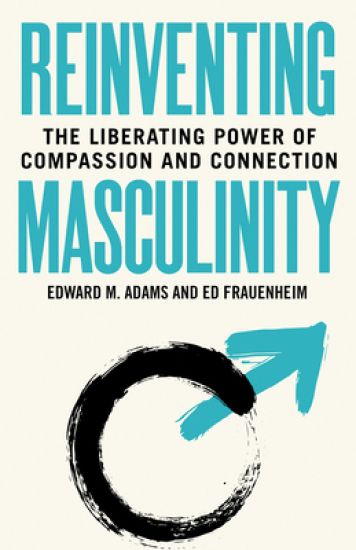
Reinventing Masculinity

Reinventing Masculinity

Edward M. Adams; Ed Frauenheim

Berrett-Koehler Publishers
2020
nidottu
"A wonderful book for thinking about how to release ourselves from crippling processes. It's time for men--and for all of us--to stand up and say, 'Give us back our full humanity, give us back our dignity.'"--Paul Gilbert, PhD, author of The Compassionate Mind In a recent FiveThirtyEight poll, 60 percent of men surveyed said society puts pressure on men to behave in a way that is unhealthy or bad. Men account for 80 percent of suicides in the United States, and three in ten American men have suffered from depression. Ed Adams and Ed Frauenheim say a big part of the problem is a model of masculinity that's become outmoded and even dangerous, to both men and women. The conventional notion of what it means to be a man--what Adams and Frauenheim call "Confined Masculinity"--traps men in an emotional straitjacket; steers them toward selfishness, misogyny, and violence; and severely limits their possibilities. As an antidote, they propose a new paradigm: Liberating Masculinity. It builds on traditional masculine roles like the protector and provider, expanding men's options to include caring, collaboration, emotional expressivity, an inclusive spirit, and environmental stewardship. Through hopeful stories of men who have freed themselves from the strictures of Confined Masculinity, interviews with both leaders and everyday men, and practical exercises, this book shows the power of a masculinity defined by what the authors call the five Cs: curiosity, courage, compassion, connection, and commitment. Men will discover a way of being that fosters healthy, harmonious relationships at home, at work, and in the world.
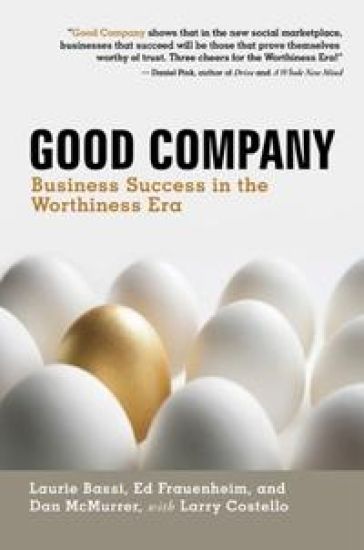
Good Company: Business Success in the Worthiness Era

Good Company: Business Success in the Worthiness Era

Laurie Bassi; Ed Frauenheim; Dan McMurrer; Larry Costello

Berrett-Koehler
2011
sidottu
In recent decades, corporate PR departments and business books like Good to Great promised a new era of value-based leadership, but as recent events have shown, actual corporate behavior still follows the old "whatever you can get away with" standard. But Laurie Bassi and her co-authors have news: the "bad boy" days are over. As a result of a convergence of forces, ranging from the explosion of online information-sharing to the emergence of the ethical consumer and arrival of civic-minded Millennials, we're in a new era, which they dub "the Worthiness Era." To succeed, businesses must now prove to consumers, employees, and investors that they have earned their respect-that they are good company.For the first time, Bassi, a noted economist, has the research to prove that good behavior is good business. The authors have compiled a groundbreaking "Good Company Index" that directly ties business results to stakeholder relationships. Not only do the authors have the hard evidence to prove that good behavior pays, they have used the principles of the index at their own investment firm to delivery market-beating results. Finally, the authors provide senior executives with the principles and tools to adapt to the new road rules for business.