Kirjojen hintavertailu. Mukana 12 390 323 kirjaa ja 12 kauppaa.

Kirjailija

Ed Yong

Kirjat ja teokset yhdessä paikassa: 13 kirjaa, julkaisuja vuosilta 2016-2025, suosituimpien joukossa Jag och mina mikrober : en storslagen berättelse om våra minsta medhjälpare. Vertaile teosten hintoja ja tarkista saatavuus suomalaisista kirjakaupoista.

13 kirjaa

Kirjojen julkaisuhaarukka 2016-2025.

How to Be Disabled in a Pandemic

How to Be Disabled in a Pandemic

Judith Heumann; Ed Yong

NEW YORK UNIVERSITY PRESS
2025
pokkari
A chronicle of ableism and disability activism in New York City during the COVID-19 pandemic How to Be Disabled in a Pandemic documents the pivotal experiences of disabled people living in an early epicenter of COVID-19: New York City. Among those hardest hit by the pandemic, disability communities across the five boroughs have been disproportionately impacted by city and national policies, work and housing conditions, stigma, racism, and violence—as much as by the virus itself. Disabled and chronically-ill activists have protested plans for medical rationing and refuted the eugenic logic of mainstream politicians and journalists who "reassure" audiences that only older people and those with disabilities continue to die from COVID-19. At the same time, as exemplified by the viral hashtag #DisabledPeopleToldYou, disability expertise has become widely recognized in practices such as accessible remote work and education, quarantine, and distributed networks of support and mutual aid. This edited volume charts the legacies of this "mass disabling event" for uncertain viral futures, exploring the dialectic between disproportionate risk and the creativity of a disability justice response. How to Be Disabled in a Pandemic includes contributions by wide-ranging disability scholars, writers, and activists whose research and lived experiences chronicle the pandemic's impacts in prisons, migrant detention centers, Chinatown senior centers, hospitals in Queens and the Bronx, subways, schools, housing shelters, social media, and other locations of public and private life. By focusing on New York City over the course of three years, the book reveals key themes of the pandemic, including hierarchies of disability "vulnerability," the deployment of disability as a tool of population management, and innovative crip pandemic cultural production. How to Be Disabled in a Pandemic honors those lost, as well as those who survived, by calling for just policies and caring infrastructures, not only in times of crisis but for the long haul.
Jag och mina mikrober : en storslagen berättelse om våra minsta medhjälpare
Jag och mina mikrober är en ögonöppnande och lustfylld resa in i mikroorganismernas värld. Ed Yong visar hur människor och djur inte bara är individer, utan i sig själva hela ekosystem. Våra kroppar är hem för tiotals miljarder mikrober. Var och en av oss är en hel värld, en koloni full av liv. Detta myller av mikroorganismer formar vårt inre, skyddar oss från sjukdomar och påverkar vårt beteende. De kan också hjälpa oss att förstå hur livet på Jorden uppstod och utvecklades. Ed Yong är vetenskapsjournalist och skriver för The Atlantic. Han är av många ansedd som världens bästa vetenskapsjournalist, och har även medverkat i Wired, New York Times, Nature, BBC och Guardian. Jag och mina mikrober är hans första bok.
Immense World, An

Immense World, An

Ed Yong; Rebecca Mills

RANDOM HOUSE USA INC
2025
sidottu
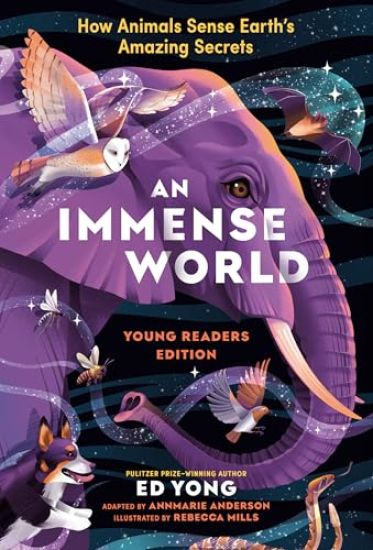
The New York Times bestseller now available with beautiful full-color illustrations for young readers Explore the amazing ways animals see, hear, and feel the world, with Pulitzer Prize winner Ed Yong. Did you know that there are turtles who can track the Earth's magnetic fields? That some fish use electricity to talk to each other? Or that giant squids evolved their enormous eyeballs to look out for whales? The world is so much BIGGER and more "immense" than we humans experience it. We can only see so many colors, we can only feel so many sensations, and there are some senses we can't access at all. Exploring the amazing ways animals perceive the world is an excellent way to help understand the world itself. And this young readers adaptation of the mega-bestseller AN IMMENSE WORLD is perfect for curious kids and their families. Sure to capture young readers' interest it is filled amazing animal facts and stunning full-color illustrations. Along the way are tons of amazing animals facts: Did you know that leopard pee smells like popcorn? That there is a special kind of shrimp whose punches are faster than a bullet? That it's important to take your dog for dedicated "smell walks?" Want to know the real reason zebras have stripes? (hint: it's not for camouflage)? Pick up this enthralling and enormously entertaining book to find out A Junior Library Guild Gold Standard Selection
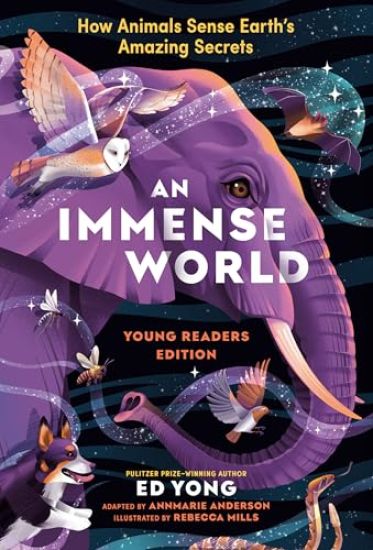
An Immense World (Young Readers Edition): How Animals Sense Earth's Amazing Secrets
The New York Times bestseller now available with beautiful full-color illustrations for young readers Explore the amazing ways animals see, hear, and feel the world, with Pulitzer Prize winner Ed Yong. Did you know that there are turtles who can track the Earth's magnetic fields? That some fish use electricity to talk to each other? Or that giant squids evolved their enormous eyeballs to look out for whales? The world is so much BIGGER and more "immense" than we humans experience it. We can only see so many colors, we can only feel so many sensations, and there are some senses we can't access at all. Exploring the amazing ways animals perceive the world is an excellent way to help understand the world itself. And this young readers adaptation of the mega-bestseller AN IMMENSE WORLD is perfect for curious kids and their families. Sure to capture young readers' interest it is filled amazing animal facts and stunning full-color illustrations. Along the way are tons of amazing animals facts: Did you know that leopard pee smells like popcorn? That there is a special kind of shrimp whose punches are faster than a bullet? That it's important to take your dog for dedicated "smell walks?" Want to know the real reason zebras have stripes? (hint: it's not for camouflage)? Pick up this enthralling and enormously entertaining book to find out A Junior Library Guild Gold Standard Selection
How to Be Disabled in a Pandemic

How to Be Disabled in a Pandemic

Judith Heumann; Ed Yong

NEW YORK UNIVERSITY PRESS
2025
sidottu
A chronicle of ableism and disability activism in New York City during the COVID-19 pandemic How to Be Disabled in a Pandemic documents the pivotal experiences of disabled people living in an early epicenter of COVID-19: New York City. Among those hardest hit by the pandemic, disability communities across the five boroughs have been disproportionately impacted by city and national policies, work and housing conditions, stigma, racism, and violence—as much as by the virus itself. Disabled and chronically-ill activists have protested plans for medical rationing and refuted the eugenic logic of mainstream politicians and journalists who "reassure" audiences that only older people and those with disabilities continue to die from COVID-19. At the same time, as exemplified by the viral hashtag #DisabledPeopleToldYou, disability expertise has become widely recognized in practices such as accessible remote work and education, quarantine, and distributed networks of support and mutual aid. This edited volume charts the legacies of this "mass disabling event" for uncertain viral futures, exploring the dialectic between disproportionate risk and the creativity of a disability justice response. How to Be Disabled in a Pandemic includes contributions by wide-ranging disability scholars, writers, and activists whose research and lived experiences chronicle the pandemic's impacts in prisons, migrant detention centers, Chinatown senior centers, hospitals in Queens and the Bronx, subways, schools, housing shelters, social media, and other locations of public and private life. By focusing on New York City over the course of three years, the book reveals key themes of the pandemic, including hierarchies of disability "vulnerability," the deployment of disability as a tool of population management, and innovative crip pandemic cultural production. How to Be Disabled in a Pandemic honors those lost, as well as those who survived, by calling for just policies and caring infrastructures, not only in times of crisis but for the long haul.
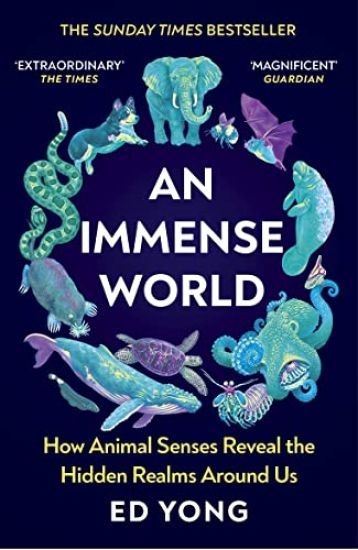
An Immense World: How Animal Senses Reveal the Hidden Realms Around Us
NEW YORK TIMES BESTSELLER - A "thrilling" (The New York Times), "dazzling" (The Wall Street Journal) tour of the radically different ways that animals perceive the world that will fill you with wonder and forever alter your perspective, by Pulitzer Prize-winning science journalist Ed Yong "One of this year's finest works of narrative nonfiction."--Oprah Daily ONE OF THE TEN BEST BOOKS OF THE YEAR: The Wall Street Journal, The New York Times, Time, People, The Philadelphia Inquirer, Slate, Reader's Digest, Chicago Public Library, Outside, Publishers Weekly, BookPageONE OF THE BEST BOOKS OF THE YEAR: Oprah Daily, The New Yorker, The Washington Post, The Guardian, The Economist, Smithsonian Magazine, Prospect (UK), Globe & Mail, Esquire, Mental Floss, Marginalian, She Reads, Kirkus Reviews, Library Journal A KIRKUS REVIEWS BEST NONFICTION BOOK OF THE CENTURY The Earth teems with sights and textures, sounds and vibrations, smells and tastes, electric and magnetic fields. But every kind of animal, including humans, is enclosed within its own unique sensory bubble, perceiving but a tiny sliver of our immense world. In An Immense World, Ed Yong coaxes us beyond the confines of our own senses, allowing us to perceive the skeins of scent, waves of electromagnetism, and pulses of pressure that surround us. We encounter beetles that are drawn to fires, turtles that can track the Earth's magnetic fields, fish that fill rivers with electrical messages, and even humans who wield sonar like bats. We discover that a crocodile's scaly face is as sensitive as a lover's fingertips, that the eyes of a giant squid evolved to see sparkling whales, that plants thrum with the inaudible songs of courting bugs, and that even simple scallops have complex vision. We learn what bees see in flowers, what songbirds hear in their tunes, and what dogs smell on the street. We listen to stories of pivotal discoveries in the field, while looking ahead at the many mysteries that remain unsolved. Funny, rigorous, and suffused with the joy of discovery, An Immense World takes us on what Marcel Proust called "the only true voyage . . . not to visit strange lands, but to possess other eyes."WINNER OF THE ANDREW CARNEGIE MEDAL - FINALIST FOR THE KIRKUS PRIZE - FINALIST FOR THE NATIONAL BOOK CRITICS CIRCLE AWARD - LONGLISTED FOR THE PEN/E.O. WILSON AWARD
An Immense World: How Animal Senses Reveal the Hidden Realms Around Us
NEW YORK TIMES BESTSELLER - A "thrilling" (The New York Times), "dazzling" (The Wall Street Journal) tour of the radically different ways that animals perceive the world that will fill you with wonder and forever alter your perspective, by Pulitzer Prize-winning science journalist Ed Yong "One of this year's finest works of narrative nonfiction."--Oprah Daily ONE OF THE TEN BEST BOOKS OF THE YEAR: The Wall Street Journal, The New York Times, Time, People, The Philadelphia Inquirer, Slate, Reader's Digest, Chicago Public Library, Outside, Publishers Weekly, BookPageONE OF THE BEST BOOKS OF THE YEAR: Oprah Daily, The New Yorker, The Washington Post, The Guardian, The Economist, Smithsonian Magazine, Prospect (UK), Globe & Mail, Esquire, Mental Floss, Marginalian, She Reads, Kirkus Reviews, Library Journal A KIRKUS REVIEWS BEST NONFICTION BOOK OF THE CENTURY The Earth teems with sights and textures, sounds and vibrations, smells and tastes, electric and magnetic fields. But every kind of animal, including humans, is enclosed within its own unique sensory bubble, perceiving but a tiny sliver of our immense world. In An Immense World, Ed Yong coaxes us beyond the confines of our own senses, allowing us to perceive the skeins of scent, waves of electromagnetism, and pulses of pressure that surround us. We encounter beetles that are drawn to fires, turtles that can track the Earth's magnetic fields, fish that fill rivers with electrical messages, and even humans who wield sonar like bats. We discover that a crocodile's scaly face is as sensitive as a lover's fingertips, that the eyes of a giant squid evolved to see sparkling whales, that plants thrum with the inaudible songs of courting bugs, and that even simple scallops have complex vision. We learn what bees see in flowers, what songbirds hear in their tunes, and what dogs smell on the street. We listen to stories of pivotal discoveries in the field, while looking ahead at the many mysteries that remain unsolved. Funny, rigorous, and suffused with the joy of discovery, An Immense World takes us on what Marcel Proust called "the only true voyage . . . not to visit strange lands, but to possess other eyes."WINNER OF THE ANDREW CARNEGIE MEDAL - FINALIST FOR THE KIRKUS PRIZE - FINALIST FOR THE NATIONAL BOOK CRITICS CIRCLE AWARD - LONGLISTED FOR THE PEN/E.O. WILSON AWARD
The Best American Science and Nature Writing 2021

The Best American Science and Nature Writing 2021

Ed Yong; Jaime Green

Mariner Books
2021
nidottu
New York Times best-selling author and renowned science journalist Ed Yong compiles the best science and nature writing published in 2020. "The stories I have chosen reflect where I feel the field of science and nature writing has landed, and where it could go," Ed Yong writes in his introduction. "They are often full of tragedy, sometimes laced with wonder, but always deeply aware that science does not exist in a social vacuum. They are beautiful, whether in their clarity of ideas, the elegance of their prose, or often both." The essays in this year's Best American Science and Nature Writing brought clarity to the complexity and bewilderment of 2020 and delivered us necessary information during a global pandemic. From an in-depth look at the moment of the virus's outbreak, to a harrowing personal account of lingering Covid symptoms, to a thoughtful analysis on how the pandemic will impact the environment, these essays, as Yong says, "synthesize, evaluate, dig, unveil, and challenge," imbuing a pivotal moment in history with lucidity and elegance. THE BEST AMERICAN SCIENCE AND NATURE WRITING 2021 INCLUDES - SUSAN ORLEAN - EMILY RABOTEAU - ZEYNEP TUFEKCI - HELEN OUYANG - HEATHER HOGAN BROOKE JARVIS - SARAH ZHANG and others
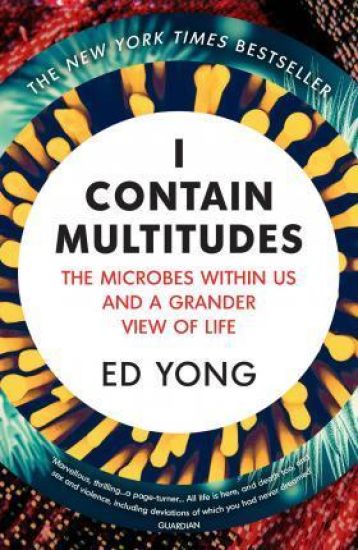
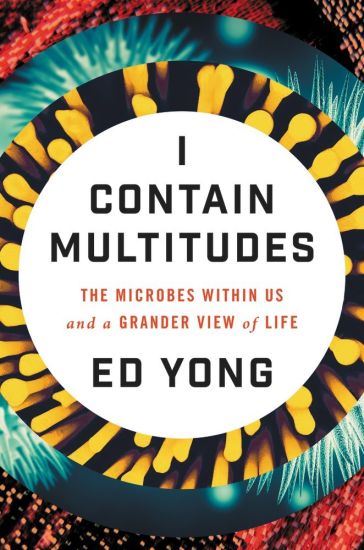
I Contain Multitudes: The Microbes Within Us and a Grander View of Life
New York Times BestsellerNew York Times Notable Book of 2016 - NPR Great Read of 2016 - Named a Best Book of 2016 by The Economist, Smithsonian, NPR's Science Friday, MPR, Minnesota Star Tribune, Kirkus Reviews, Publishers Weekly, The Guardian, Times (London)From Pulitzer Prize winner Ed Yong, a groundbreaking, wondrously informative, and vastly entertaining examination of the most significant revolution in biology since Darwin--a "microbe's-eye view" of the world that reveals a marvelous, radically reconceived picture of life on earth.Every animal, whether human, squid, or wasp, is home to millions of bacteria and other microbes. Pulitzer Prize-winning author Ed Yong, whose humor is as evident as his erudition, prompts us to look at ourselves and our animal companions in a new light--less as individuals and more as the interconnected, interdependent multitudes we assuredly are.The microbes in our bodies are part of our immune systems and protect us from disease. In the deep oceans, mysterious creatures without mouths or guts depend on microbes for all their energy. Bacteria provide squid with invisibility cloaks, help beetles to bring down forests, and allow worms to cause diseases that afflict millions of people.Many people think of microbes as germs to be eradicated, but those that live with us--the microbiome--build our bodies, protect our health, shape our identities, and grant us incredible abilities. In this astonishing book, Ed Yong takes us on a grand tour through our microbial partners, and introduces us to the scientists on the front lines of discovery. It will change both our view of nature and our sense of where we belong in it.