Kirjojen hintavertailu. Mukana 12 390 323 kirjaa ja 12 kauppaa.

Kirjailija

Eddie Chambers

Kirjat ja teokset yhdessä paikassa: 10 kirjaa, julkaisuja vuosilta 2012-2024, suosituimpien joukossa Roots & Culture. Vertaile teosten hintoja ja tarkista saatavuus suomalaisista kirjakaupoista.

10 kirjaa

Kirjojen julkaisuhaarukka 2012-2024.

Everlyn Nicodemus

Everlyn Nicodemus

Everlyn Nicodemus; Perrin Lathrop; Catherine Zegher; Eddie Chambers

NATIONAL GALLERIES OF SCOTLAND
2024
nidottu
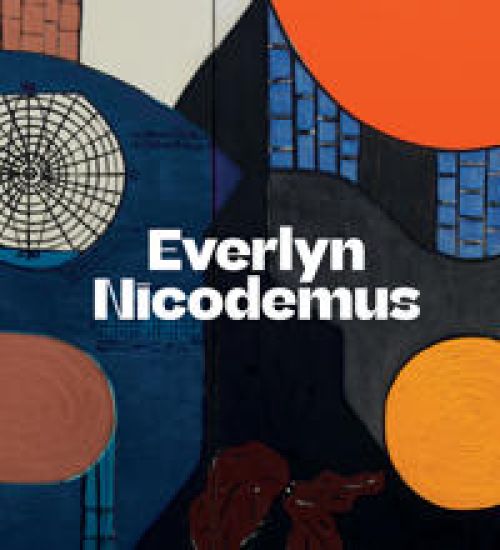
"Prepare to be inspired at National Galleries Scotland: Modern One, as Everlyn Nicodemus opens her first retrospective this Saturday" — The NEN "Experience Everlyn’s joyful, defiant and searingly honest artworks, with over 80 drawings, collages, paintings and textiles from over 40 years of her career, from 1980 through to the present day." — Art Daily This is the first major publication on the artist Everlyn Nicodemus and accompanies the first ever retrospective of her 40-year career. It offers a fascinating introduction to her life, career and art. This book introduces readers to Nicodemus’s practice – from the very first work she painted to newly commissioned oil paintings. Many of Nicodemus’s drawings, collages, paintings and textiles are published here for the first time. Nicodemus engages with complex subject matters, unflinchingly addressing human suffering and societal responsibility. While her works convey and process traumatic experiences, they are ultimately hopeful, focusing on healing and the power of creativity. This publication will reveal the scope and ambition of this astonishing artist’s practice. Expert contributors offer new insights into Nicodemus’s practice, including a new interview with the artist. Exhibition curator Stephanie Straine explains and contextualises the rich pages of artworks, drawing on extensive primary research with the artist and her archives.
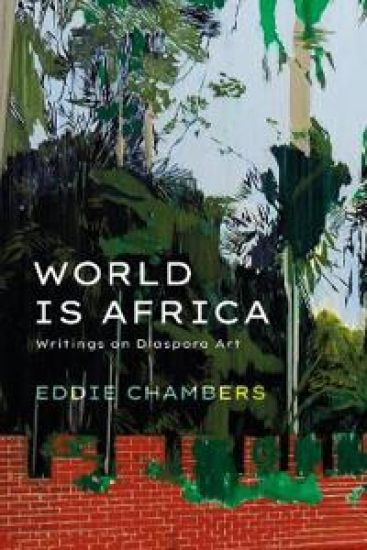
World is Africa

World is Africa

Eddie Chambers

Bloomsbury Visual Arts
2021
sidottu
Longlisted for the Historians of British Art (HBA) Book Prize 2023World is Africa brings together more than 30 important texts by Eddie Chambers, who for several decades has been an original and a critical voice within the field of African diaspora art history. The texts range from book chapters and catalogue essays, to shorter texts. Chambers focuses on contemporary artists and their practices, from a range of international locations, who for the most part are identified with the African diaspora. None of the texts are available online and none have been available outside of the original publication in which they first appeared.The volume contains several new pieces of writing, including a consideration of the art world 'fetishization' of the 1980s, as the manifestation of a reluctance to accept the majority of Black British artists as valid individual practitioners, choosing instead to shackle them to exhibitions that took place three decades ago. Another new text re-examines the ‘map paintings’ of Frank Bowling, the Guyana-born artist who was the subject of a major retrospective at Tate Britain in 2019. The third introduces the little-known record sleeve illustrations of Charles White, the American artist who was the subject of a major retrospective in 2018 at major galleries across the US. Among the other new texts is a critical reflection on the patronage the Greater London Council extended to Black artists in 1980s London. World is Africa makes a valuable contribution to the emerging discipline of black British art history, the field of African diaspora studies and African diaspora art history.
World is Africa

World is Africa

Eddie Chambers

Bloomsbury Visual Arts
2021
nidottu
Longlisted for the Historians of British Art (HBA) Book Prize 2023World is Africa brings together more than 30 important texts by Eddie Chambers, who for several decades has been an original and a critical voice within the field of African diaspora art history. The texts range from book chapters and catalogue essays, to shorter texts. Chambers focuses on contemporary artists and their practices, from a range of international locations, who for the most part are identified with the African diaspora. None of the texts are available online and none have been available outside of the original publication in which they first appeared.The volume contains several new pieces of writing, including a consideration of the art world 'fetishization' of the 1980s, as the manifestation of a reluctance to accept the majority of Black British artists as valid individual practitioners, choosing instead to shackle them to exhibitions that took place three decades ago. Another new text re-examines the ‘map paintings’ of Frank Bowling, the Guyana-born artist who was the subject of a major retrospective at Tate Britain in 2019. The third introduces the little-known record sleeve illustrations of Charles White, the American artist who was the subject of a major retrospective in 2018 at major galleries across the US. Among the other new texts is a critical reflection on the patronage the Greater London Council extended to Black artists in 1980s London. World is Africa makes a valuable contribution to the emerging discipline of black British art history, the field of African diaspora studies and African diaspora art history.
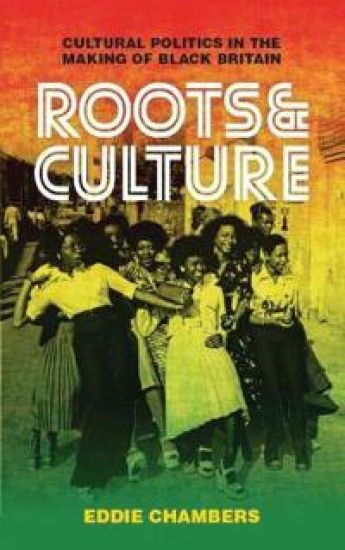
Roots & Culture

Roots & Culture

Eddie Chambers

Bloomsbury Visual Arts
2019
nidottu
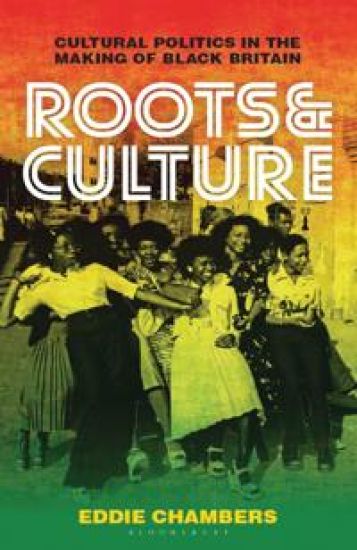
How did a distinct and powerful Black British identity emerge? In the 1950s, when many Caribbean migrants came to Britain, there was no such recognised entity as "Black Britain." Yet by the 1980s, the cultural landscape had radically changed, and a remarkable array of creative practices such as theatre, poetry, literature, music and the visual arts gave voice to striking new articulations of Black-British identity. This new book chronicles the extraordinary blend of social, political and cultural influences from the mid-1950s to late 1970s that gave rise to new heights of Black-British artistic expression in the 1980s. Eddie Chambers relates how and why during these decades "West Indians" became "Afro-Caribbeans," and how in turn "Afro-Caribbeans" became "Black-British" - and the centrality of the arts to this important narrative. The British Empire, migration, Rastafari, the Anti-Apartheid struggle, reggae music, dub poetry, the ascendance of the West Indies cricket team and the coming of Margaret Thatcher - all of these factors, and others, have had a part to play in the compelling story of how the African Diaspora transformed itself to give rise to Black Britain.
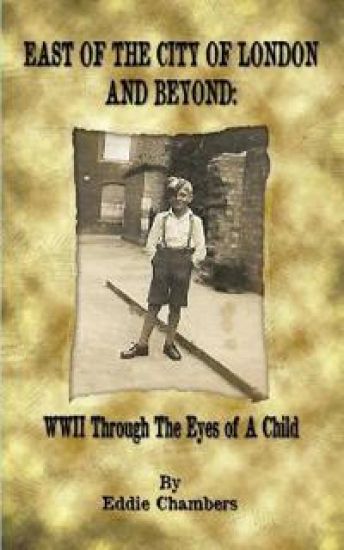
East of the City of London and Beyond: WWII Through the Eyes of A Child
21st October 1940 - A day that forever changed a little boy's life. This was the night during the Blitz of London when the bomb dropped. It landed on the very spot where the boy on the cover is standing just two years later.This book chronicles the first 18 years of his life, recounted through collected memories, conversations with family and extensive research that are detailed in these pages.From the injuries received on that night, through a turbulent childhood amidst the greatest war the world had ever seen, to the coming of age and serving as part of the Royal Air Force for his country. An emotional tale filled with insight to what life was like for a child in such times and a truly humbling sense of what tests that life can dispense.
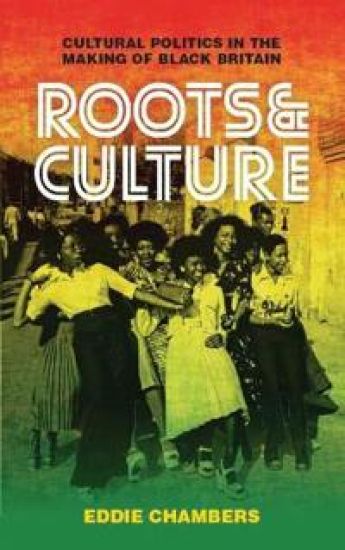
Roots & Culture

Roots & Culture

Eddie Chambers

I.B. Tauris
2017
nidottu
How did a distinct and powerful Black British identity emerge? In the 1950s, when many Caribbean migrants came to Britain, there was no such recognised entity as "Black Britain." Yet by the 1980s, the cultural landscape had radically changed, and a remarkable array of creative practices such as theatre, poetry, literature, music and the visual arts gave voice to striking new articulations of Black-British identity. This new book chronicles the extraordinary blend of social, political and cultural influences from the mid-1950s to late 1970s that gave rise to new heights of Black-British artistic expression in the 1980s. Eddie Chambers relates how and why during these decades "West Indians" became "Afro-Caribbeans," and how in turn "Afro-Caribbeans" became "Black-British" - and the centrality of the arts to this important narrative. The British Empire, migration, Rastafari, the Anti-Apartheid struggle, reggae music, dub poetry, the ascendance of the West Indies cricket team and the coming of Margaret Thatcher - all of these factors, and others, have had a part to play in the compelling story of how the African Diaspora transformed itself to give rise to Black Britain.
Roots & Culture

Roots & Culture

Eddie Chambers

I.B. Tauris
2017
sidottu
How did a distinct and powerful Black British identity emerge? In the 1950s, when many Caribbean migrants came to Britain, there was no such recognised entity as "Black Britain." Yet by the 1980s, the cultural landscape had radically changed, and a remarkable array of creative practices such as theatre, poetry, literature, music and the visual arts gave voice to striking new articulations of Black-British identity. This new book chronicles the extraordinary blend of social, political and cultural influences from the mid-1950s to late 1970s that gave rise to new heights of Black-British artistic expression in the 1980s. Eddie Chambers relates how and why during these decades "West Indians" became "Afro-Caribbeans," and how in turn "Afro-Caribbeans" became "Black-British" - and the centrality of the arts to this important narrative. The British Empire, migration, Rastafari, the Anti-Apartheid struggle, reggae music, dub poetry, the ascendance of the West Indies cricket team and the coming of Margaret Thatcher - all of these factors, and others, have had a part to play in the compelling story of how the African Diaspora transformed itself to give rise to Black Britain.
Black Artists in British Art

Black Artists in British Art

Eddie Chambers

I.B. Tauris
2014
nidottu
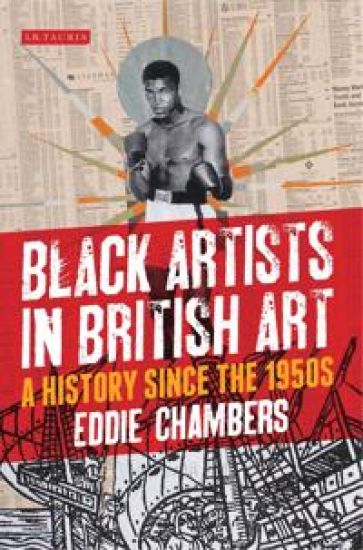
Black artists have been making major contributions to the British art scene for decades, since at least the mid-twentieth century. Sometimes these artists were regarded and embraced as practitioners of note. At other times they faced challenges of visibility - and in response they collaborated and made their own exhibitions and gallery spaces. In this book, Eddie Chambers tells the story of these artists from the 1950s onwards, including recent developments and successes. Black Artists in British Art makes a major contribution to British art history. Beginning with discussions of the pioneering generation of artists such as Ronald Moody, Aubrey Williams and Frank Bowling, Chambers candidly discusses the problems and progression of several generations, including contemporary artists such as Steve McQueen, Chris Ofili and Yinka Shonibare. Meticulously researched, this important book tells the fascinating story of practitioners who have frequently been overlooked in the dominant history of twentieth-century British art.
Things Done Change

Things Done Change

Eddie Chambers

Editions Rodopi B.V.
2012
sidottu
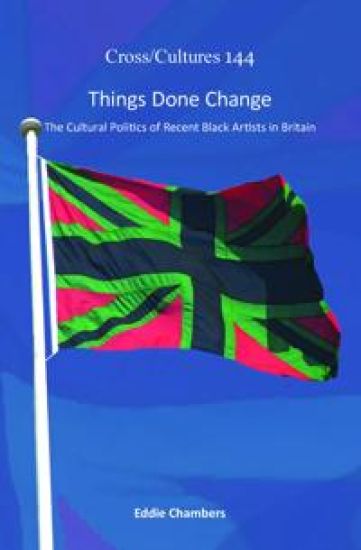
1980s Britain witnessed the brassy, multifaceted emergence of a new generation of young, Black-British artists. Practitioners such as Sonia Boyce and Keith Piper were exhibited in galleries up and down the country and reviewed approvingly. But as the 1980s generation gradually but noticeably fell out of favour, the 1990s produced an intriguing new type of Black-British artist. Ambitious, media-savvy, successful artists such as Steve McQueen, Chris Ofili, and Yinka Shonibare made extensive use of the Black image (or, at least, images of Black peo¬ple, and visuals evocative of Africa), but did so in ways that set them apart from earlier Black artists. Not only did these artists occupy the curatorial and gallery spaces nominally reserved for a slightly older generation but, with aplomb, audacity, and purpose, they also claimed previously unimaginable new spaces. Their successes dwarfed those of any previous Black artists in Britain. Back-to-back Turner Prize victories, critically acclaimed Fourth Plinth commissions, and no end of adulatory media attention set them apart. What happened to Black-British artists during the 1990s is the chronicle around which Things Done Change is built. The extraordinary changes that the profile of Black-British artists went through are dis¬cussed in a lively, authoritative, and detailed narrative. In the evolving history of Black-British artists, many factors have played their part. The art world’s turning away from work judged to be overly ‘political’ and ‘issue-based’; the ascendancy of Blair’s New Labour government, determined to locate a bright and friendly type of ‘diversity’ at the heart of its identity; the emergence of the precocious and hegemonic yBa grouping; governmental shenanigans; the tragic murder of Black Londoner Stephen Lawrence – all these factors and many others underpin the telling of this fascinating story. Things Done Change represents a timely and important contribution to the building of more credible, inclusive, and nuanced art histories. The book avoids treating and discussing Black artists as practitioners wholly separate and distinct from their counterparts. Nor does the book seek to present a rosy and varnished account of Black-British artists. With its multiple references to Black music, in its title, several of its chapter headings, and citations evoked by artists themselves, Things Done Change makes a singular and compelling narrative that reflects, as well as draws on, wider cultural mani¬festations and events in the socio-political arena.