Kirjojen hintavertailu. Mukana 12 595 353 kirjaa ja 12 kauppaa.

Kirjailija

Edhem Eldem

Kirjat ja teokset yhdessä paikassa: 6 kirjaa, julkaisuja vuosilta 1999-2025, suosituimpien joukossa Architecture in Dialogue. Vertaile teosten hintoja ja tarkista saatavuus suomalaisista kirjakaupoista.

6 kirjaa

Kirjojen julkaisuhaarukka 1999-2025.

Architecture in Dialogue

Architecture in Dialogue

Farrokh Derakhshani; David Adjaye; Mohammad al-Asad; Emre Arolat; Francesco Bandarin; Meisa Batayneh; Anthony Kwame Appiah; David Chipperfield; Nondita Correa Mehrotra; Elizabeth Diller; Edhem Eldem; Mona Fawaz; Kareem Ibrahim; Hanif Kara; Ali M. Malkawi; Azim Nanji; Nasser Rabbat; Brigitte Shim; Marina Tabassum

ArchiTangle GmbH
2019
sidottu
Aga Khan Award for Architecture 2019 The Aga Khan Award for Architecture is one of the most prestigious and renowned awards for architecture worldwide. Since 1980 the Award has been given every three years to projects that combine social and ecological aspects and translate them into innovative and exemplary design. The Award seeks to identify and encourage building concepts that successfully address the needs and aspirations of societies across the world, in which Muslims have a significant presence. This publication presents the shortlist of the 2017–2019 award cycle. From a group of almost 400, 20 projects have been shortlisted by the Master Jury and evaluated by an expert group of technical reviewers. Some of these projects have been honoured with the Aga Khan Award. In addition to detailed descriptions of all projects, this book gathers a series of personal statements from the members of the Steering Committee and the Award’s Master Jury on key issues that were crucial in the discussions for the final selection and assignment of the award recipients. Assembled together, this book presents a selection of the outstanding examples of sustainable and socially relevant architecture in the world today and opens up fundamental perspectives for the planning of the future.
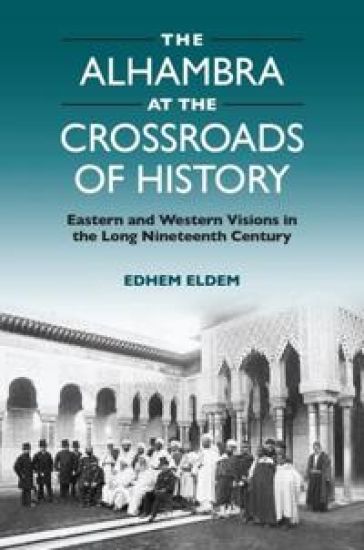
The Alhambra at the Crossroads of History

The Alhambra at the Crossroads of History

Edhem Eldem

EDINBURGH UNIVERSITY PRESS
2025
nidottu
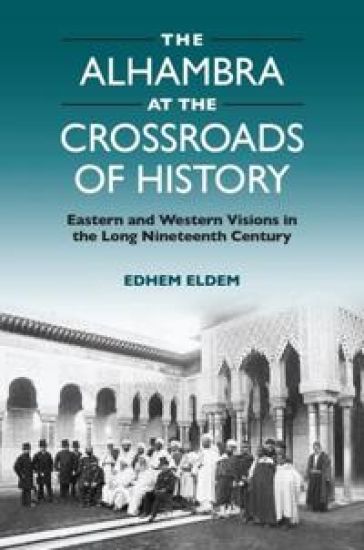
A growing flow of visitors in the 19th century turned the Alhambra into a touristic destination and a major trope of Orientalism, created by Western authors and artists from Francois-Rene de Chateaubriand to Owen Jones and from Washington Irving to Jean-Leon Germe. Yet behind this Western infatuation lie scores of 'Oriental' observers of the monument, as revealed by its visitors' book, kept since 1829.This book uses this untapped source to analyse the perceptions of the Alhambra by multiple actors, including Westerners, Spaniards, Maghrebines, Ottoman Turks, Christian Arabs and Muslim Arabs from the Mashreq. In doing so, it reveals the existence of significant variations in both Western and Oriental perceptions of the monument, from 'Oriental Orientalism' to Arab nationalism. Examining the contemporary press, memoirs, travelogues and photographs as well as the visitors' book it uses the Alhambra to build a history of the complex and entangled relations between East and West, North and South, Islam and Christianity, centre and periphery during the heyday of Orientalism and Western hegemony.
The Alhambra at the Crossroads of History

The Alhambra at the Crossroads of History

Edhem Eldem

EDINBURGH UNIVERSITY PRESS
2024
sidottu
A growing flow of visitors in the 19th century turned the Alhambra into a touristic destination and a major trope of Orientalism, created by Western authors and artists from Francois-Rene de Chateaubriand to Owen Jones and from Washington Irving to Jean-Leon Gerome. Yet behind this Western infatuation lie scores of 'Oriental' observers of the monument, as revealed by its visitors' book, kept since 1829. This book uses this untapped source to analyse the perceptions of the Alhambra by multiple actors, including Westerners, Spaniards, Maghrebines, Ottoman Turks, Christian Arabs and Muslim Arabs from the Mashreq. In doing so, it reveals the existence of significant variations in both Western and Oriental perceptions of the monument, from 'Oriental Orientalism' to Arab nationalism. Examining the contemporary press, memoirs, travelogues and photographs as well as the visitors' book it uses the Alhambra to build a history of the complex and entangled relations between East and West, North and South, Islam and Christianity, centre and periphery during the heyday of Orientalism and Western hegemony.
L' Alhambra: a la Croisee Des Histoires

L' Alhambra: a la Croisee Des Histoires

Edhem Eldem

Les Belles Lettres
2021
nidottu
English summary: The Alhambra, a palatial complex founded in the 13th and 14th centuries by the Arab rulers of Granada, remained in obscurity for several centuries after the end of the Reconquista. The Spaniards were the first to "rediscover" the Alhambra in the 18th century, while its foreign visitors made it one of the first tourist destinations in the 19th century. Many of them left precious traces of their visit: writings, photographs and, above all, comments in the Alhambra Visitors' Book, kept since 1829. Historian Edhem Eldem has analysed this fascinating document to offer a completely new vision of the Alhambra and what it represented. From Chateaubriand to Owen Jones and from Washington Irving to Jean-Leon Gerome, Westerners have built up an image of Andalusia that is marked by romanticism and orientalism. But the Western enthusiasm should not make us forget the "Oriental" visitors to the monument: North Africans, who were numerous but not very vocal; Ottoman diplomats and travellers, who were sometimes more Orientalist than the Europeans; Arabs from the Mashreq, who were increasingly influenced by the Arab nationalism advocated by the Nahda, the "Arab renaissance". The author has reconstructed these cross-views from the register of visitors, the press of the time, memoirs and travel accounts, in order to draw up a cultural history of the relationship between East and West, North and South, Islam and Christianity, centre and periphery. Edhem Eldem is a professor at the University of Bogazici in Istanbul and holds the International Chair of Turkish and Ottoman History at the College de France. His work focuses on the social, cultural and mental history of the last century of the Ottoman Empire, with a particular emphasis on Westernization and Orientalism. French description: L'Alhambra, ensemble palatial fonde aux XIIIe et XIVe siecles par les souverains arabes de Grenade, est reste dans l'ombre pendant plusieurs siecles apres la fin de la Reconquista.Les Espagnols furent les premiers a redecouvrir l'Alhambra au XVIIIe siecle, alors que ses visiteurs etrangers en firent l'une des premieres destinations touristiques du XIXe siecle. Beaucoup ont laisse de precieuses traces de leur passage: des ecrits, des photographies et, surtout, des commentaires dans le livre des visiteurs de l'Alhambra, tenu depuis 1829. L'historien Edhem Eldem a analyse ce document fascinant pour proposer une vision tout a fait nouvelle de l'Alhambra et de ce qu'il representait. De Chateaubriand a Owen Jones et de Washington Irving a Jean-Leon Gerome, les Occidentaux ont bati une image de l'Andalousie toute empreinte de romantisme et d'orientalisme. Mais l'engouement occidental ne doit pas faire oublier les visiteurs orientaux du monument: des Maghrebins, nombreux mais peu loquaces; des diplomates et voyageurs ottomans, parfois plus orientalistes que les Europeens; des Arabes du Machrek, de plus en plus influences par le nationalisme arabe prone par la Nahda, la renaissance arabe . Autant de regards croises que le registre des visiteurs, la presse de l'epoque, les memoires et les recits de voyage ont permis a l'auteur de reconstituer pour en tirer une histoire culturelle des rapports entre Orient et Occident, Nord et Sud, islam et chretiente, centre et peripherie.
The Ottoman City between East and West

The Ottoman City between East and West

Edhem Eldem; Daniel Goffman; Bruce Masters

Cambridge University Press
2005
pokkari
Studies of early-modern Islamic cities have stressed the atypical or the idiosyncratic. This bias derives largely from orientalist presumptions that they were in some way substandard or deviant. The first purpose of this volume is to normalize Ottoman cities, to demonstrate how, on the one hand, they resembled cities generally and how, on the other, their specific histories individualized them. The second purpose is to challenge the previous literature and to negotiate an agenda for future study. By considering the narrative histories of Aleppo, Izmir and Istanbul, the book offers a departure from the piecemeal methods of previous studies, emphasizing their importance during the seventeenth and eighteenth centuries, and highlighting their essentially Ottoman character. While the essays provide an overall view, each can be approached separately. Their exploration of the sources and the agendas of those who have conditioned scholarly understanding of these cities will make them essential student reading.
The Ottoman City between East and West

The Ottoman City between East and West

Edhem Eldem; Daniel Goffman; Bruce Masters

Cambridge University Press
1999
sidottu
Studies of early-modern Islamic cities have stressed the atypical or the idiosyncratic. This bias derives largely from orientalist presumptions that they were in some way substandard or deviant. The purpose of this volume is to normalize Ottoman cities, to demonstrate how, on the one hand, they resembled cities generally and how, on the other, their specific histories individualized them. The second is to challenge the previous literature and to negotiate an agenda for future study. By considering the narrative histories of Aleppo, Izmir and Istanbul, the book offers a departure from the piecemeal methods of previous studies, emphasizing their importance during the seventeenth and eighteenth centuries, and highlighting their essentially Ottoman character. While the essays provide an overall view, each can be approached separately. Their exploration of the sources and the agendas of those who have conditioned scholarly understanding of these cities will make them essential student reading.