Kirjojen hintavertailu. Mukana 12 216 622 kirjaa ja 12 kauppaa.

Kirjailija

Edith Hall

Kirjat ja teokset yhdessä paikassa: 28 kirjaa, julkaisuja vuosilta 1991-2026, suosituimpien joukossa Aeschylus: Agamemnon. Vertaile teosten hintoja ja tarkista saatavuus suomalaisista kirjakaupoista.

28 kirjaa

Kirjojen julkaisuhaarukka 1991-2026.

Aristotle Beyond the Academy in Britain and Ireland 1660-1922

Aristotle Beyond the Academy in Britain and Ireland 1660-1922

Edith Hall; Arlene Holmes-Henderson; Rory McInnes-Gibbons; Peter Swallow

TAYLOR FRANCIS LTD
2026
nidottu
This book explores the questions of when, where, how and why Aristotle has appeared in England, Scotland, Ireland and Wales since the Restoration in 1660, through to Irish Independence in 1922. The primary focus is on ethics and politics, natural science, and rhetoric and the arts. Chapters explore the impact of specific events in the history of Aristotelian reception over this period, taking the reader thematically on a journey through Aristotle’s diverse academic interests. The authors argue that Aristotle's authority has been omnipresent but never monolithic: it has been vigorously contested. This giant of western culture has by no means been used uniformly to reinforce established authority or symbolise Catholic conservatives; he has equally been adopted by radicals and progressives. Aristotle’s authority has been invoked by apologists for absolute monarchy and by Chartist revolutionaries; by patriarchal opponents of women’s rights and by suffrage activists; by apologists for slavery and by advocates of universal suffrage; by critics of stage censorship and by its advocates; by Deists questioning God’s involvement in human affairs and Roman Catholics insisting upon it. This volume explores all these various interpretations, appropriations and adaptations of his work. This fascinating study appeals not only to students and scholars of classics and philosophy, but also to specialists in British and Irish early modern and modern history, popular culture, political and intellectual history, as well as those studying the history of science, sexuality, and rhetoric.
Odysseus

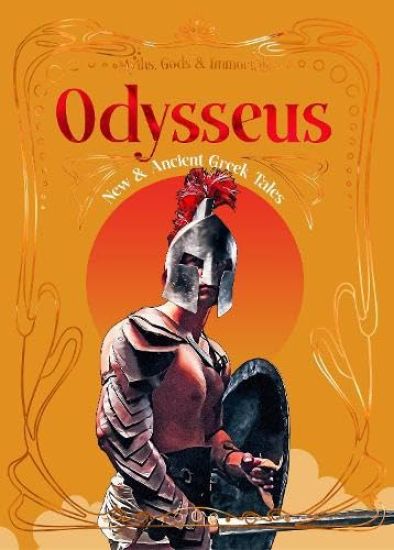
Odysseus

Edith Hall

FLAME TREE PUBLISHING
2026
sidottu
Odysseus is the cunning wanderer from the fall of Troy, breaker of oaths and teller of tales. His story is immortalised in Homer's Odyssey and will endure as long as humanity, forever capturing the imagination, not least because of the entities he meets along the way: the savage Cyclops Polyphemus, the enticing Sirens, and fearsome Scylla and Charybdis. He is considered a hero, but do we see him as the ancients did? Is he truly a hero when we know that – like many male heroes of myth – he was a killer, an adulterer, a liar and an all-round deceiver? Created through open submissions and supported by an extensive introduction examining the origins of Odysseus, this is a wonderful new book in the best tradition of Flame Tree's collectable hardcover editions. About the series: Discover the mythology of humankind through its heroes, characters, gods and immortal figures. Myths, Gods & Immortals brings together the new and the ancient, familiar stories with a fresh and imaginative twist. Each book brings back to life a legendary, mythological or folkloric figure, with new stories alongside a comprehensive introduction which tells the original tales and emphasizes ancient and modern connections, tracing history and stories across continents, cultures and peoples. New and emerging writers from open submissions reveal hidden themes, casting fresh perspectives on well known stories, complementing the specially commissioned story of the origins and the cultural background from the era. The first titles are Medusa, Odin, Circe, Anansi, Achilles, Morgana le Fay, Loki and Aphrodite.
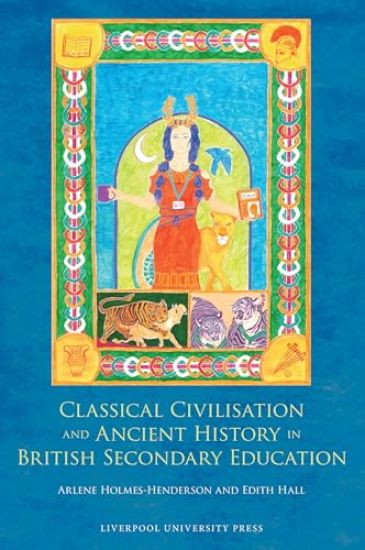
Classical Civilisation and Ancient History in British Secondary Education

Classical Civilisation and Ancient History in British Secondary Education

Edith Hall; Arlene Holmes-Henderson

LIVERPOOL UNIVERSITY PRESS
2025
nidottu
An Open Access edition will be available on publication on the Liverpool University Press website, thanks to funding from the Arts and Humanities Research Council (AHRC). In the UK A-Levels and GCSEs in Classical Civilisation and Ancient History offer exciting avenues through which to access the cultures of people who spoke ancient Greek and Latin, and their neighbours, across the ancient Mediterranean and Black Sea worlds. They are inherently interdisciplinary, offering an outstanding opportunity to study a civilisation in the round, using diverse sources from literary and philosophical texts to legal documents, inscriptions, art, architecture and archaeology. Yet many people are either unaware of the existence of these courses, or do not understand their contents. This unprecedented study, by two Classics Professors at the University of Durham with extensive experience of teaching in schools and HEIs, charts the subjects’ historical development and emergence in their current form since the mid-20th century, explaining and illustrating their contents. It describes the skills and competencies that they confer, which are valued by university admissions offices and employers alike. It presents the results of interviews with several significant participants in the story of these classical subjects and of questionnaires filled in by many additional teachers and students. It also offers practical advice on how to introduce Classical Civilisation and/or Ancient History at secondary level, with guides to bibliographical and other resources.
Schaste po Aristotelju: Kak antichnaja filosofija mozhet izmenit vashu zhizn
Slova "schaste", "schastlivyj" my slyshim na kazhdom shagu. My khotim byt schastlivymi. No chto takoe schaste? Aristotel pervym iz filosofov zanjalsja izucheniem etoj subektivnoj modeli. Avtor knigi, polnostju soglashajas s utverzhdeniem Aristotelja o tom, chto glavnyj dolg cheloveka i ego velikij dar - eto stremlenie k lichnomu schastju, pomogaet nam projti put k ego obreteniju s pomoschju nabljudenij i sovetov filosofa.Kazhdaja glava knigi daet opredelennyj filosofskij urok, illjustriruja vazhnejshie dlja nas povsednevnye problemy, takie kak prinjatie reshenij, poisk raboty, ponimanie sobstvennogo kharaktera, sokhranenie zdorovja, vybor druzej i ljubimykh, vypolnenie obschestvennogo dolga, soprotivlenie negativnym javlenijam, umenie dat otpor obstojatelstvam. Chitatel uznaet, kak vyderzhavshee proverku vremenem uchenie Aristotelja mozhet pomoch nam stat schastlivee na ljubom etape zhizni i v ljubom vozraste.
A People's History of Classics

A People's History of Classics

Edith Hall; Henry Stead

Routledge
2020
sidottu
A People’s History of Classics explores the influence of the classical past on the lives of working-class people, whose voices have been almost completely excluded from previous histories of classical scholarship and pedagogy, in Britain and Ireland from the late 17th to the early 20th century.This volume challenges the prevailing scholarly and public assumption that the intimate link between the exclusive intellectual culture of British elites and the study of the ancient Greeks and Romans and their languages meant that working-class culture was a ‘Classics-Free Zone’. Making use of diverse sources of information, both published and unpublished, in archives, museums and libraries across the United Kingdom and Ireland, Hall and Stead examine the working-class experience of classical culture from the Bill of Rights in 1689 to the outbreak of World War II. They analyse a huge volume of data, from individuals, groups, regions and activities, in a huge range of sources including memoirs, autobiographies, Trade Union collections, poetry, factory archives, artefacts and documents in regional museums. This allows a deeper understanding not only of the many examples of interaction with the Classics, but also what these cultural interactions signified to the working poor: from the promise of social advancement, to propaganda exploited by the elites, to covert and overt class war.A People’s History of Classics offers a fascinating and insightful exploration of the many and varied engagements with Greece and Rome among the working classes in Britain and Ireland, and is a must-read not only for classicists, but also for students of British and Irish social, intellectual and political history in this period. Further, it brings new historical depth and perspectives to public debates around the future of classical education, and should be read by anyone with an interest in educational policy in Britain today.
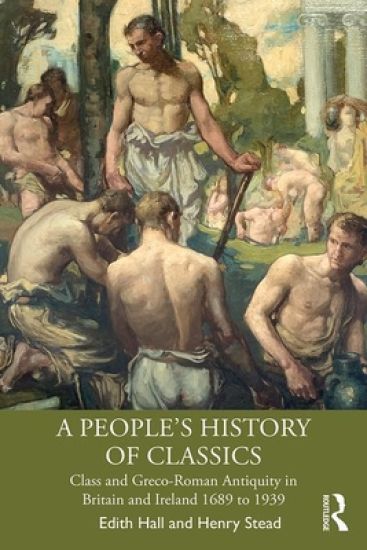
A People's History of Classics

A People's History of Classics

Edith Hall; Henry Stead

Routledge
2020
nidottu
A People’s History of Classics explores the influence of the classical past on the lives of working-class people, whose voices have been almost completely excluded from previous histories of classical scholarship and pedagogy, in Britain and Ireland from the late 17th to the early 20th century.This volume challenges the prevailing scholarly and public assumption that the intimate link between the exclusive intellectual culture of British elites and the study of the ancient Greeks and Romans and their languages meant that working-class culture was a ‘Classics-Free Zone’. Making use of diverse sources of information, both published and unpublished, in archives, museums and libraries across the United Kingdom and Ireland, Hall and Stead examine the working-class experience of classical culture from the Bill of Rights in 1689 to the outbreak of World War II. They analyse a huge volume of data, from individuals, groups, regions and activities, in a huge range of sources including memoirs, autobiographies, Trade Union collections, poetry, factory archives, artefacts and documents in regional museums. This allows a deeper understanding not only of the many examples of interaction with the Classics, but also what these cultural interactions signified to the working poor: from the promise of social advancement, to propaganda exploited by the elites, to covert and overt class war.A People’s History of Classics offers a fascinating and insightful exploration of the many and varied engagements with Greece and Rome among the working classes in Britain and Ireland, and is a must-read not only for classicists, but also for students of British and Irish social, intellectual and political history in this period. Further, it brings new historical depth and perspectives to public debates around the future of classical education, and should be read by anyone with an interest in educational policy in Britain today.
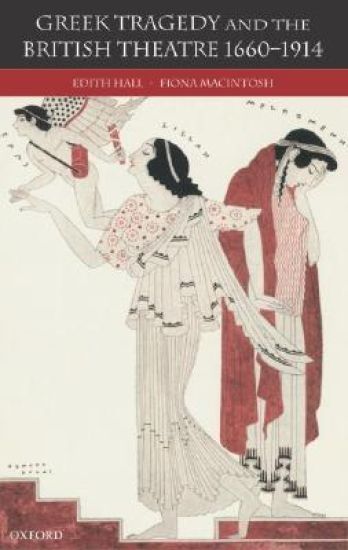
Greek Tragedy and the British Theatre 1660-1914

Greek Tragedy and the British Theatre 1660-1914

Edith Hall; Fiona Macintosh

Oxford University Press
2005
sidottu
This lavishly illustrated book offers the first full, interdisciplinary investigation of the historical evidence for the presence of ancient Greek tragedy in the post-Restoration British theatre, where it reached a much wider audience - including women - than had access to the original texts. Archival research has excavated substantial amounts of new material, both visual and literary, which is presented in chronological order. But the fundamental aim is to explain why Greek tragedy, which played an elite role in the curricula of largely conservative schools and universities, was magnetically attractive to political radicals, progressive theatre professionals, and to the aesthetic avant-garde. All Greek has been translated, and the book will be essential reading for anyone interested in Greek tragedy, the reception of ancient Greece and Rome, theatre history, British social history, English studies, or comparative literature.