Kirjojen hintavertailu. Mukana 12 595 353 kirjaa ja 12 kauppaa.

Kirjailija

Edmund De Waal

Kirjat ja teokset yhdessä paikassa: 34 kirjaa, julkaisuja vuosilta 2011-2026, suosituimpien joukossa Ben Nicholson. Vertaile teosten hintoja ja tarkista saatavuus suomalaisista kirjakaupoista.

34 kirjaa

Kirjojen julkaisuhaarukka 2011-2026.

Ben Nicholson

Ben Nicholson

Lee Beard; Louise Campbell; Simon Martin; Edmund De Waal; Louise Weller

PALLANT HOUSE GALLERY TRUST
2021
sidottu
An intimate look at Ben Nicholson's everyday inspirations Throughout his career, Ben Nicholson (1894–1982) transformed everyday homewares into extraordinary experiments in abstract art. Nicholson’s studio was filled with objects that inspired him. From patterned mocha-ware jugs and cut glass goblets to spanners, hammers and chisels, these ordinary personal possessions were a source of almost endless inspiration to the artist. This book brings together for the first time Nicholson’s paintings, reliefs, prints and drawings alongside his rarely seen personal possessions and studio tools. It traces how the artist’s style developed, from his early traditional tabletop still lifes to his later abstract works. Still life was at the heart of Nicholson’s artistic practice. Through these humble items, he began to experiment with form and color. His early works in particular owed inspiration to his father, the painter William Nicholson. The book traces the artistic and personal influences on Nicholson’s evolutionary still life style from the 1920s to the 1970s. It explores his time with Winifred Nicholson and Barbara Hepworth, as well as his encounters with other Modernist greats, Pablo Picasso and Piet Mondrian. Distributed for Pallant House Gallery
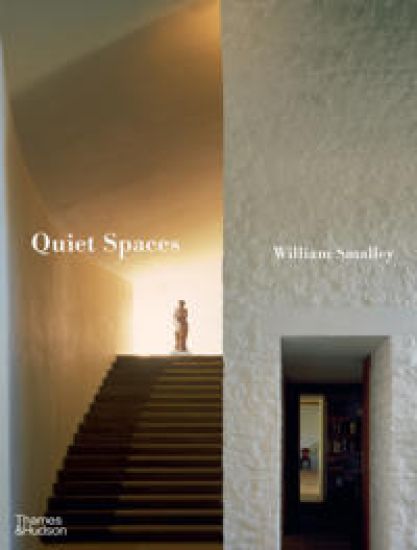
Quiet Spaces

Quiet Spaces

William Smalley; Edmund de Waal

THAMES HUDSON LTD
2023
sidottu
An elegant presentation of interiors for introverts, placing the memorable work of London architect William Smalley alongside buildings around the world that have inspired his practice. Quiet Spaces places the work of architect William Smalley alongside spaces that have inspired him. Places of private contemplation – calm spaces to read a book or listen to music in, to walk through or simply be in – they are spaces that achieve a rare sense of repose and peace. From his own Bloomsbury Apartment and projects in the UK, France and New York, the book expands to include the work of other architects: a sixteenth-century villa by Palladio, houses in Mexico and Sri Lanka and the Secular Retreat in Devon by Swiss master architect Peter Zumthor. There are also places of making and displaying art: simplicity in Barbara Hepworth’s garden and studio in Cornwall, and intimacy in Kettle’s Yard gallery in Cambridge. Specially commissioned photography by Harry Crowder conveys the atmosphere of the spaces. A foreword by acclaimed potter and writer Edmund de Waal records the small, unspoken ways in which we relate to buildings and how they come to have meaning for us.
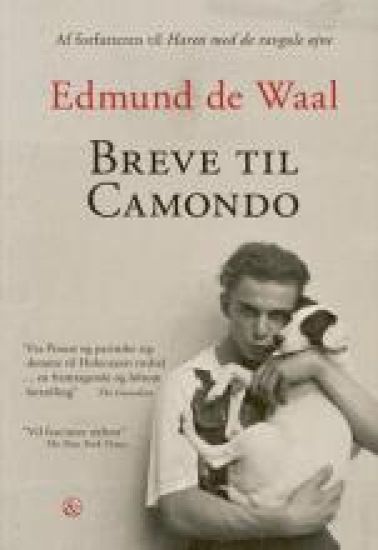
Breve til Camondo

Breve til Camondo

Edmund de Waal

Jensen og Dalgaard
2023
nidottu
Ny bog af forfatteren til Haren med de ravgule øjne “Fra Proust og parisiske rigdomme til Holocausts rædsler … en fremragende og følsom fortælling” The Guardian Den jødiske familie Camondo fra Konstantinopel etablerede sig 1870’erne i Paris som bankfolk, filantroper og kunstsamlere, en fast bestanddel af belle époque-kultureliten, men blev med tiden mål for voldsom antisemitisme – ligesom Edmund de Waals slægtninge, familien Ephrussi, der boede i samme gade. Grev Moïse de Camondo skabte et spektakulært hus og fyldte det med kunst. Efter sønnen Nissims død i Første Verdenskrig blev huset testamenteret til den franske stat som museum for Nissim. Og så rykkede nazisterne ind. Da den verdenskendte britiske keramiker Edmund de Waal blev inviteret til at skabe en udstilling i Musée Nissim de Camondo, begyndte han at skrive breve til den afdøde greve: 58 breve med dybt personlige overvejelser om assimilation, melankoli, familie, kunst, historiens omskiftelser, skønhed og værdien af erindring.
Brev til Camondo

Brev til Camondo

Edmund de Waal

Forlaget Press
2023
pokkari
Familien Camondo bodde bare noen hus bortenfor Edmund de Waals slektninger i rue de Monceaux. Som de Waals forfedre, hørte de hjemme i de øverste sirkler i Paris fra slutten av 1800-tallet og frem til annen verdenskrig. Som jødiske innvandrere med store formuer var begge familiene i årtier målskiver for regelmessig sjikane i den antisemittiske pressen. Grev Moïse de Camondo kom fra en bankfamilie i Konstantinopel, men skapte seg et liv i Paris som assimilert fransk patriot og kunstsamler. Han bygde et hus til gjenstandene han samlet, som sønnen skulle arve. Da sønnen Nissim døde i fransk tjeneste i 1. verdenskrig, ble det i stedet testamentert til den franske stat. Hundre år senere utforsker Edmund de Waal det vakre huset med den overdådige samlingen av kunst, møbler og gjenstander fra la belle époque. Og i en serie lavmælte og gripende brev til greven, forteller han oss historien om hva som skjedde.
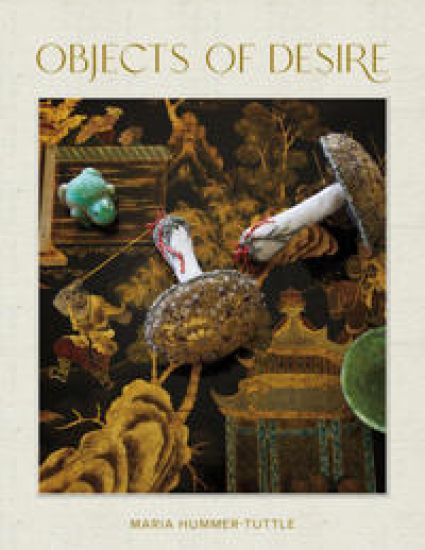
Objects of Desire

Objects of Desire

Maria Hummer-Tuttle; Edmund de Waal

Vendome Press
2022
sidottu
Our home is an expression of ourselves in many ways, largely through the objects we accumulate. For Maria Hummer Tuttle, the objects she has collected over the years, from the priceless to the flea market finds, are precious not only for their beauty, uniqueness, and craftsmanship but also for their connection to the past and the future, for their resonance with one another. In this exquisitely illustrated book, she serves as our guide through her three homes—a house on a hill overlooking Los Angeles, a pied à terre in New York, and a beach house in a tiny town north of Los Angeles—focusing our attention on objects ranging from an ancient Chinese horse sculpture to a Louis XV clock, a Wiener Werkstätte goblet to a Willem de Kooning painting, a 19 century silver lemon squeezer to late 20th century furniture by Italian designer Ettore Sottsass. With a foreword by master ceramist and acclaimed author Edmund de Waal and featuring two lavish gatefolds, Objects of Desire is a feast for the eyes and a cherished object in its own right.
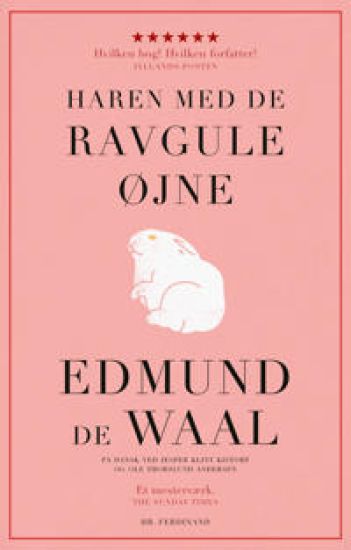
Haren med de ravgule øjne

Haren med de ravgule øjne

Edmund de Waal

Politikens Forlag
2022
pokkari
I Haren med de ravgule øjne bruges 264 bittesmå, udskårne, japanske figurer – såkaldte netsuke – til at fortælle en usædvanlig og skæbnesvanger historie om den jødiske Ephrussi-familie, som levede et turbulent liv i Paris og Wien fra slutningen af 1800-tallet og frem gennem Anden Verdenskrig. Ephrussi-familien stammer fra Odessa, den jødiske by ved Sortehavet. Det var en af Europas rigeste og mest magtfulde familier. De ejede banker, rederier, store ejendomme og kontrollerede distribution og salg af korn i hele Europa. Bogen begynder i Japan, hvor De Waal arver en usædvanlig smuk samling af netsuke af sin onkel. Samlingen har fulgt familien i mere end et århundrede. De Wall beslutter sig for at tage af sted på en mission med det formål efterforske og afdække historien bag de små netsuke-figurer og dermed også historien bag sin egen slægt. Romanen vandt den prestigefulde COSTA AWARD 2011. Haren med de ravgule øjne er Edmund de Waals debutroman. Han er en af verdens mest kendte keramikere.
Brev til Camondo

Brev til Camondo

Edmund de Waal

Forlaget Press
2022
sidottu
Familien Camondo bodde bare noen hus bortenfor Edmund de Waals slektninger i rue de Monceaux. Som de Waals forfedre, hørte de hjemme i de øverste sirkler i Paris fra slutten av 1800-tallet og frem til annen verdenskrig. Som jødiske innvandrere med store formuer var begge familiene i årtier målskiver for regelmessig sjikane i den antisemittiske pressen. Grev Moïse de Camondo kom fra en bankfamilie i Konstantinopel, men skapte seg et liv i Paris som assimilert fransk patriot og kunstsamler. Han bygde et hus til gjenstandene han samlet, som sønnen skulle arve. Da sønnen Nissim døde i fransk tjeneste i 1. verdenskrig, ble det i stedet testamentert til den franske stat. Hundre år senere utforsker Edmund de Waal det vakre huset med den overdådige samlingen av kunst, møbler og gjenstander fra la belle époque. Og i en serie lavmælte og gripende brev til greven, forteller han oss historien om hva som skjedde. «Jeg vet at du krever klare svar, så jeg vil fortelle deg nøyaktig hva som skjedde», skriver de Waal i sitt 49. brev. Porselensmakeren de Waal hugger sannheten i stein: Slekten er utryddet. Kun tingene står. «Tingene gråter». - Bjørn Bredal, Politiken (seks hjerter)
Letters to Camondo

Letters to Camondo

Edmund de Waal

Vintage Publishing
2022
nidottu
From the author of the bestselling phenomenon The Hare with Amber EyesAs you may have guessed by now, I am not in your house by accident. I know your street rather well. The Camondos lived just a few doors away from Edmund de Waal's forebears. Like de Waal's family, they were part of belle époque high society. They were also targets of anti-Semitism.Count Moïse de Camondo created a spectacular house filled with art for his son to inherit. Over a century later, de Waal explores the lavish rooms and detailed archives and, in a haunting series of letters addressed to Camondo, he tells us what happened next.'Illuminating... A wonderful tribute to a family and to an idea' Guardian'Letters to Camondo immerses you in another age... Dazzling' Financial Times
Letters to Camondo

Letters to Camondo

Edmund de Waal

Picador USA
2022
nidottu
A tragic family history told in a collection of imaginary letters to a famed collector, Mo se de Camondo. 63 rue de Monceau, ParisDear friend, As you may have guessed by now, I am not in your house by accident. I know your street rather well. Count Mo se de Camondo lived a few doors away from Edmund de Waal's forebears, the Ephrussi, first encountered in his bestselling memoir, The Hare with Amber Eyes. Like the Ephrussi, the Camondos were part of belle epoque high society. They were also targets of antisemitism. Camondo created a spectacular house and filled it with the greatest private collection of French eighteenth-century art for his son, Nissim, to inherit. But when Nissim was killed in the First World War, it became a memorial and, upon the Count's death, was bequeathed to France. The Mus e Nissim de Camondo has remained unchanged since 1936. De Waal explores the lavish rooms and detailed archives and uncovers new layers to the family story. In a series of haunting letters addressed to the Count, he tells us what happened next.
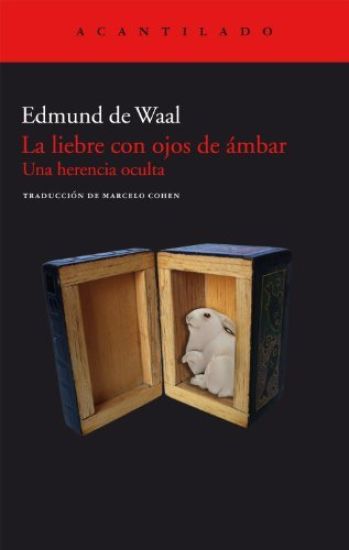
The Hare with Amber Eyes: A Hidden Inheritance
A New York Times BestsellerAn Economist Book of the Year Costa Book Award Winner for Biography Galaxy National Book Award Winner (New Writer of the Year Award) Edmund de Waal is a world-famous ceramicist. Having spent thirty years making beautiful pots--which are then sold, collected, and handed on--he has a particular sense of the secret lives of objects. When he inherited a collection of 264 tiny Japanese wood and ivory carvings, called netsuke, he wanted to know who had touched and held them, and how the collection had managed to survive. And so begins The Hare with Amber Eyes, this extraordinarily moving memoir and detective story as de Waal discovers both the story of the netsuke and of his family, the Ephrussis, over five generations. A nineteenth-century banking dynasty in Paris and Vienna, the Ephrussis were as rich and respected as the Rothchilds. Yet by the end of the World War II, when the netsuke were hidden from the Nazis in Vienna, this collection of very small carvings was all that remained of their vast empire.
Edmund de Waal

Edmund de Waal

Edmund de Waal; Elif Shafak; Hartwig Fischer

British Museum Press
2020
sidottu
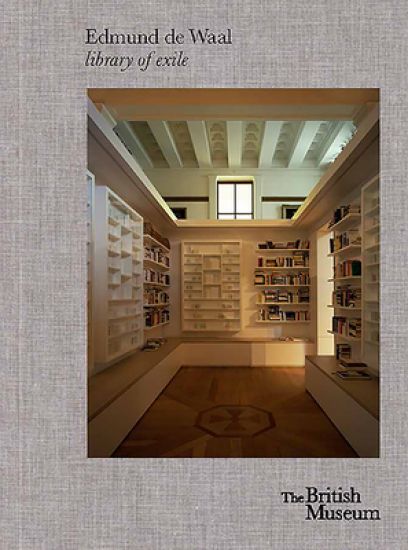
Published to mark the display of library of exile at the British Museum, this beautifully produced new book reflects on the themes raised by de Waal’s thought-provoking work of art. The introduction from Hartwig Fischer, Director of the British Museum, positions the artwork within the wider context of the Museum’s collection, highlighting the dialogue between objects from across time and throughout history and the contemporary. Finally, de Waal concentrates on the work itself, its journey to the British Museum via Venice and Dresden, and its future role in the foundation of the New University Library in Mosul. The library contains 2,000 books written by authors in exile in numerous languages from antiquity to the present day. The exterior walls, washed with porcelain over sheets of gold are inscribed with the names of libraries from history – from Nineveh and Alexandria to those lost more recently including Timbuktu, Aleppo and Mosul. Displayed inside the structure are four vitrines of porcelain vessels inspired by Daniel Bomberg’s Renaissance printing of the Jewish scripture, the Talmud. Visitors are invited to contemplate and respond to the books by writing notes on the ex libris bookplate inserted into each edition. First shown as part of the Venice Biennale in 2019, the library travelled to Dresden before its installation at the British Museum in London in 2020. From here the library will form part of the New University Library in Mosul.
Japanese Netsuke

Japanese Netsuke

Julia Hutt; Edmund De Waal

V A Publishing
2019
nidottu
'You will have a moment of quiet delight and a mood of introspection to carry you away.' Edmund de Waal. Prized by collectors from East to West, Japanese netsuke are tiny objects of wonder that originated as utilitarian accessories for traditional Japanese dress. Over the centuries these small carved toggles, designed to hook over the top of the kimono sash, evolved into high-fashion depictions of all aspects of Japanese life. In this richly illustrated and highly accessible book, Julia Hutt draws on the V&A's world-famous netsuke collection to explore the origins and techniques of this captivating art form.