Kirjojen hintavertailu. Mukana 12 226 326 kirjaa ja 12 kauppaa.

Kirjailija

Edmund Morris

Kirjat ja teokset yhdessä paikassa: 32 kirjaa, julkaisuja vuosilta 2000-2025, suosituimpien joukossa Dutch. Vertaile teosten hintoja ja tarkista saatavuus suomalaisista kirjakaupoista.

32 kirjaa

Kirjojen julkaisuhaarukka 2000-2025.

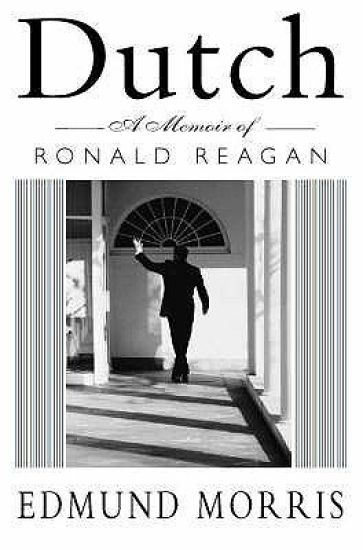
Dutch

Dutch

Edmund Morris

HARPERCOLLINS PUBLISHERS
2000
nidottu
The authorized life of Ronald Reagan written by America’s most innovative and Pulitzer Prize-winning political biographer. This unprecedented book breaks through all conventional definitions of biography. ‘Poor dear. There’s nothing between his ears.’ So Margaret Thatcher described Ronald Reagan. But the Iron Lady, when in the ‘poor dear’s’ presence, giggled like a schoolgirl. ‘One could not talk to him for more than a few minutes without being aware of the ordinariness of his mind,’ says Helmut Schmidt. But Mikhail Gorbachev, deconstructor of communism, is now despised by his people, while the most popular boys’ name in the former USSR is Ronald. Indisputably Ronald Reagan the everyday person was opaque, pedestrian, ignorant, a hollow man – now incapacitated by Alzheimers. Yet, as President–Governor–Actor–Announcer – Lifeguard Ronald Reagan became a creature of the American folk imagination with the power to tap into vast resources of nostalgia in the American people. He is a myth; the sum total of all American fantasies. It is this Reagan that is the subject of Edmund Morris’s book. Morris has been working on the authorized biography of Ronald Reagan since 1985. He has become intimate with Reagan himself, Nancy and their children, and has had unrestricted access to all Reagan’s private papers. This would be enough to ensure a significant and lasting biography of this extraordinary American. However, Morris combines these benefits with enormous powers of scholarship and a literary imagination beyond compare. The result is a book truly revolutionary in form. Reagan’s biography is written with a biographical doppelganger following Reagan through each phase of his life, showing how the life of Reagan integrates with his times, and explaining the great and so-far elusive mystery of the extraordinarily potent link between Reagan and the American people. This book succeeds in making literature out of the life of America’s Actor-President. There has been nothing like it before.
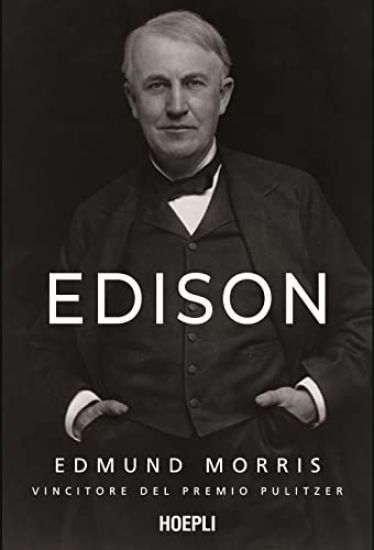
Edison

Edison

Edmund Morris

Random House Trade Paperbacks
2020
nidottu
NEW YORK TIMES BESTSELLER - From Pulitzer Prize-winning author Edmund Morris comes a revelatory new biography of Thomas Alva Edison, the most prolific genius in American history. NAMED ONE OF THE BEST BOOKS OF THE YEAR BY Time - Publishers Weekly - Kirkus Reviews Although Thomas Alva Edison was the most famous American of his time, and remains an international name today, he is mostly remembered only for the gift of universal electric light. His invention of the first practical incandescent lamp 140 years ago so dazzled the world--already reeling from his invention of the phonograph and dozens of other revolutionary devices--that it cast a shadow over his later achievements. In all, this near-deaf genius ("I haven't heard a bird sing since I was twelve years old") patented 1,093 inventions, not including others, such as the X-ray fluoroscope, that he left unlicensed for the benefit of medicine. One of the achievements of this staggering new biography, the first major life of Edison in more than twenty years, is that it portrays the unknown Edison--the philosopher, the futurist, the chemist, the botanist, the wartime defense adviser, the founder of nearly 250 companies--as fully as it deconstructs the Edison of mythological memory. Edmund Morris, winner of the Pulitzer Prize and the National Book Award, brings to the task all the interpretive acuity and literary elegance that distinguished his previous biographies of Theodore Roosevelt, Ronald Reagan, and Ludwig van Beethoven. A trained musician, Morris is especially well equipped to recount Edison's fifty-year obsession with recording technology and his pioneering advances in the synchronization of movies and sound. Morris sweeps aside conspiratorial theories positing an enmity between Edison and Nikola Tesla and presents proof of their mutually admiring, if wary, relationship. Enlightened by seven years of research among the five million pages of original documents preserved in Edison's huge laboratory at West Orange, New Jersey, and privileged access to family papers still held in trust, Morris is also able to bring his subject to life on the page--the adored yet autocratic and often neglectful husband of two wives and father of six children. If the great man who emerges from it is less a sentimental hero than an overwhelming force of nature, driven onward by compulsive creativity, then Edison is at last getting his biographical due.
The Rise of Theodore Roosevelt

The Rise of Theodore Roosevelt

Edmund Morris

Random House Inc
2010
sidottu
Selected by the Modern Library as one of the 100 best nonfiction books of all time Thirty years ago, The Rise of Theodore Roosevelt won both the Pulitzer Prize and the National Book Award. A collector's item in its original edition, it has never been out of print as a paperback. This classic book is now reissued in hardcover, along with Theodore Rex, to coincide with the publication of Colonel Roosevelt, the third and concluding volume of Edmund Morris's definitive trilogy on the life of the twenty-sixth President. Although Theodore Rex fully recounts TR's years in the White House (1901-1909), The Rise of Theodore Roosevelt begins with a brilliant Prologue describing the President at the apex of his international prestige. That was on New Year's Day, 1907, when TR, who had just won the Nobel Peace Prize, threw open the doors of the White House to the American people and shook 8,150 hands, more than any man before him. Morris re-creates the reception with such authentic detail that the reader gets almost as vivid an impression of TR as those who attended. One visitor remarked afterward, "You go to the White House, you shake hands with Roosevelt and hear him talk--and then you go home to wring the personality out of your clothes." The rest of this book tells the story of TR's irresistible rise to power. (He himself compared his trajectory to that of a rocket.) It is, in effect, the biography of seven men--a naturalist, a writer, a lover, a hunter, a ranchman, a soldier, and a politician--who merged at age forty-two to become the youngest President in our history. Rarely has any public figure exercised such a charismatic hold on the popular imagination. Edith Wharton likened TR's vitality to radium. H. G. Wells said that he was "a very symbol of the creative will in man." Walter Lippmann characterized him simply as our only "lovable" chief executive. During the years 1858-1901, Theodore Roosevelt, the son of a wealthy Yankee father and a plantation-bred southern belle, transformed himself from a frail, asthmatic boy into a full-blooded man. Fresh out of Harvard, he simultaneously published a distinguished work of naval history and became the fist-swinging leader of a Republican insurgency in the New York State Assembly. He had a youthful romance as lyrical--and tragic--as any in Victorian fiction. He chased thieves across the Badlands of North Dakota with a copy of Anna Karenina in one hand and a Winchester rifle in the other. Married to his childhood sweetheart in 1886, he became the country squire of Sagamore Hill on Long Island, a flamboyant civil service reformer in Washington, D.C., and a night-stalking police commissioner in New York City. As assistant secretary of the navy under President McKinley, he almost single-handedly brought about the Spanish-American War. After leading "Roosevelt's Rough Riders" in the famous charge up San Juan Hill, Cuba, he returned home a military hero, and was rewarded with the governorship of New York. In what he called his "spare hours" he fathered six children and wrote fourteen books. By 1901, the man Senator Mark Hanna called "that damned cowboy" was vice president of the United States. Seven months later, an assassin's bullet gave TR the national leadership he had always craved. His is a story so prodigal in its variety, so surprising in its turns of fate, that previous biographers have treated it as a series of haphazard episodes. This book, the only full study of TR's pre-presidential years, shows that he was an inevitable chief executive, and recognized as such in his early teens. His apparently random adventures were precipitated and linked by various aspects of his character, not least an overwhelming will. "It was as if he were subconsciously aware that he was a man of many selves," the author writes, "and set about developing each one in turn, knowing that one day he would be President of all the people."
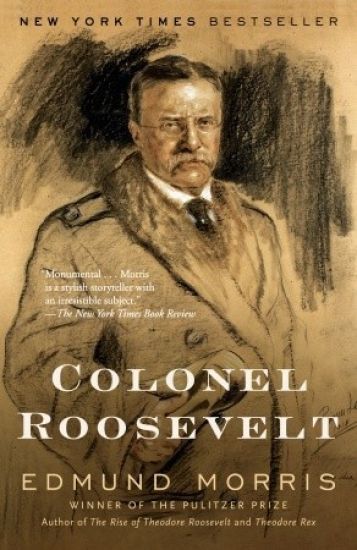
Colonel Roosevelt

Colonel Roosevelt

Edmund Morris

Random House Inc
2010
sidottu
Of all our great presidents, Theodore Roosevelt is the only one whose greatness increased out of office. When he toured Europe in 1910 as plain "Colonel Roosevelt," he was hailed as the most famous man in the world. Crowned heads vied to put him up in their palaces. "If I see another king," he joked, "I think I shall bite him." Had TR won his historic "Bull Moose" campaign in 1912 (when he outpolled the sitting president, William Howard Taft), he might have averted World War I, so great was his international influence. Had he not died in 1919, at the early age of sixty, he would unquestionably have been reelected to a third term in the White House and completed the work he began in 1901 of establishing the United States as a model democracy, militarily strong and socially just. This biography by Edmund Morris, the Pulitzer Prize and National Book Award-winning author of The Rise of Theodore Roosevelt and Theodore Rex, is itself the completion of a trilogy sure to stand as definitive. Packed with more adventure, variety, drama, humor, and tragedy than a big novel, yet documented down to the smallest fact, it recounts the last decade of perhaps the most amazing life in American history. What other president has written forty books, hunted lions, founded a third political party, survived an assassin's bullet, and explored an unknown river longer than the Rhine? Colonel Roosevelt begins with a prologue recounting what TR called his "journey into the Pleistocene"--a yearlong safari through East Africa, collecting specimens for the Smithsonian. Some readers will be repulsed by TR's bloodlust, which this book does not prettify, yet there can be no denying that the Colonel passionately loved and understood every living thing that came his way: The text is rich in quotations from his marvelous nature writing. Although TR intended to remain out of politics when he returned home in 1910, a fateful decision that spring drew him back into public life. By the end of the summer, in his famous "New Nationalism" speech, he was the guiding spirit of the Progressive movement, which inspired much of the social agenda of the future New Deal. (TR's fifth cousin Franklin Delano Roosevelt acknowledged that debt, adding that the Colonel "was the greatest man I ever knew.") Then follows a detailed account of TR's reluctant yet almost successful campaign for the White House in 1912. But unlike other biographers, Edmund Morris does not treat TR mainly as a politician. This volume gives as much consideration to TR's literary achievements and epic expedition to Brazil in 1913-1914 as to his fatherhood of six astonishingly different children, his spiritual and aesthetic beliefs, and his eager embrace of other cultures--from Arab and Magyar to German and American Indian. It is impossible to read Colonel Roosevelt and not be awed by the man's universality. The Colonel himself remarked, "I have enjoyed life as much as any nine men I know." Morris does not hesitate, however, to show how pathologically TR turned upon those who inherited the power he craved--the hapless Taft, the adroit Woodrow Wilson. When Wilson declined to bring the United States into World War I in 1915 and 1916, the Colonel blasted him with some of the worst abuse ever uttered by a former chief executive. Yet even Wilson had to admit that behind the Rooseveltian will to rule lay a winning idealism and decency. "He is just like a big boy--there is a sweetness about him that you can't resist." That makes the story of TR's last year, when the "boy" in him died, all the sadder in the telling: the conclusion of a life of Aristotelian grandeur.
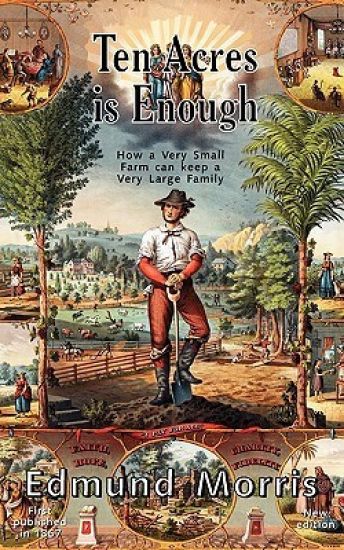
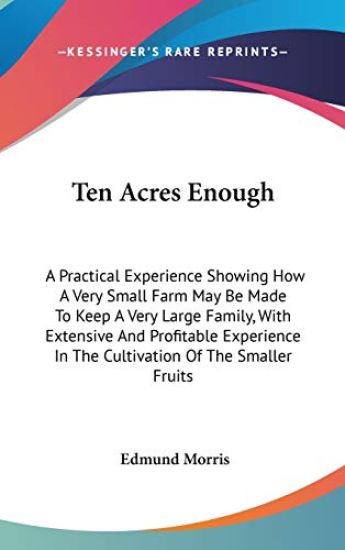
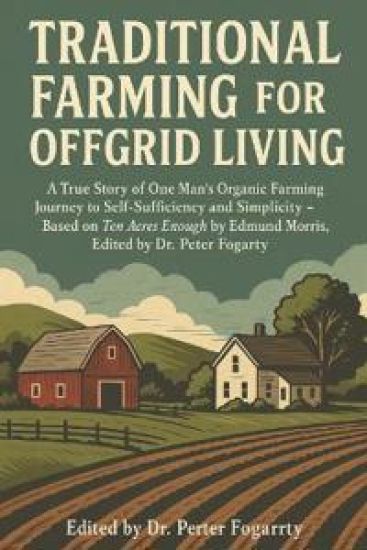
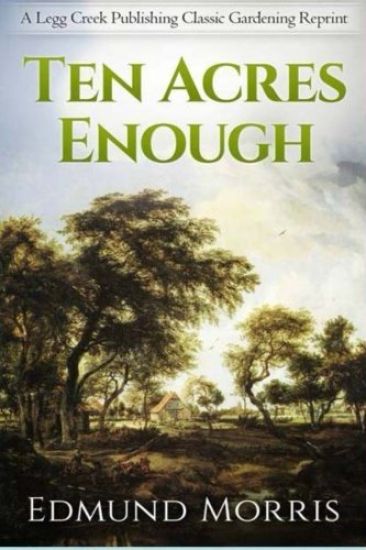
Ten Acres is Enough

Ten Acres is Enough

Edmund Morris

New York University Press
2009
pokkari
"Recently we have seen a great back-to-the-land movement, with many young professional people returning to small scale farming; thus it is great fun to read about someone who did exactly the same thing in 1864. In that year, Mr. Edmund Morris gave up his business and city life for a farm of ten acres, made a go of mixed farming and then wrote a book about it. Mr. Morris proves Abraham Lincoln's prediction: 'The greatest fine art of the future will be the making of a comfortable living from a small piece of land.' Kudos to the publisher for resurrecting this fascinating treasure."; - Sally Fallon Morell, President, The Weston A. Price FoundationReviews"This book may be old but it's one of the best I have read with regards to starting a small farm. Definitely a book any small farmer who does things the right way can appreciate.""I rated this book with 5 stars because I enjoyed it a lot. Even though it describes farming processes about 150 years old, the information it offers is applicable to today's small truck farmer. I loved reading how he cleverly learned how to increase his crop quantity and quality. A lot of his ideas could be put to used by just about any vegetable and fruit grower. It was also amusing and educational to see the costs and earnings then and realize how much our dollar has depreciated.""...excellent book. Amazed it was written almost 150 years ago. Farming principles in the book still apply to any small farm today.""This book has been a great inspiration for me. It is a demonstration of a philosophy worked out a highly productive manner. I recommend this book to friends and think of it often as I work in my garden."DESPITE THE FACT THAT IT WAS FIRST PUBLISHED IN 1867 - or perhaps because of it - this book has something for everyone; for the small farmer, the home gardener, the city dweller who wonders whether there might not be a better life in the country -- and for anyone who has an idea, and needs just a spark of courage and inspiration to make it happen. This book may be about farming and homesteading, and indeed it is a delightfully readable autobiography of a farmer in the America of the 1860s, but it also about much, much more. The challenges that faced the author are timeless, as are his courage, commitment, and ingenuity. There are insights for anyone, farmer or not, in this book.Contents1. City Experiences Moderate Expectations 2. Practical Views Safety of Investments in Land 3. Resolved to Go Escape from Business Choosing a Location 4. Buying a Farm A Long Search Anxiety to Sell Forced to Quit 5. Making a Purchase First Impressions 6. Planting a Peach orchard How to preserve peach trees 7. Planting Raspberries and Strawberries Tricks of the Nursery 8. Blackberries A Remarkable Coincidence 9. The Garden Female Management Comforts and Profits 10. Cheated in a Cow A Good and a Bad One The Saint of the Barnyard 11. A Cloud of Weeds Great Sales of Plants 12. Pigs and Poultry Luck and Ill Luck 13. City and Country Life Contrasted 14. Two Acres in Truck Revolution in Agriculture 15. Birds and the Services they Render 16. Close of my First Year Its Loss and Gain 17. My Second Year Trenching the Garden Strawberry Profits 18. Raspberries The Lawtons 19. Liquid Manures An Illustration 20. My Third Year Liquid Manure Three Years' Results 21. A Barnyard Manufactory Land Enough Faith in Manure 22. Profits of Fruit-growing The Trade in Berries 23. Gentleman Farming Establishing a Home 24. Unsuccessful Men Rebellion not Ruinous to Northern Agriculture 25. Where to Locate - East or West
The Rise of Theodore Roosevelt

The Rise of Theodore Roosevelt

Edmund Morris

Modern Library Inc
2001
pokkari
Selected by the Modern Library as one of the 100 best nonfiction books of all time Described by the Chicago Tribune as "a classic," The Rise of Theodore Roosevelt stands as one of the greatest biographies of our time. The publication of The Rise of Theodore Roosevelt on September 14th, 2001 marks the 100th anniversary of Theodore Roosevelt becoming president.
Theodore Rex

Theodore Rex

Edmund Morris

Random House USA Inc
2001
sidottu
The most eagerly awaited presidential biography in years, Theodore Rex is a sequel to Edmund Morris's classic bestseller The Rise of Theodore Roosevelt. It begins by following the new President (still the youngest in American history) as he comes down from Mount Marcy, New York, to take his emergency oath of office in Buffalo, one hundred years ago. A detailed prologue describes TR's assumption of power and journey to Washington, with the assassinated President McKinley riding behind him like a ghost of the nineteenth century. (Trains rumble throughout this irresistibly moving narrative, as TR crosses and recrosses the nation.) Traveling south through a succession of haunting landscapes, TR encounters harbingers of all the major issues of the new century-Imperialism, Industrialism, Conservation, Immigration, Labor, Race-plus the overall challenge that intimidated McKinley: how to harness America's new power as the world's richest nation. Theodore Rex (the title is taken from a quip by Henry James) tells the story of the following seven and a half years-years in which TR entertains, infuriates, amuses, strong-arms, and seduces the body politic into a state of almost total subservience to his will. It is not always a pretty story: one of the revelations here is that TR was hated and feared by a substantial minority of his fellow citizens. Wall Street, the white South, Western lumber barons, even his own Republican leadership in Congress strive to harness his steadily increasing power. Within weeks of arrival in Washington, TR causes a nationwide sensation by becoming the first President to invite a black man to dinner in the White House. Next, he launches his famous prosecution of the Northern Securities Company, and follows up with landmark antitrust legislation. He liberates Cuba, determines the route of the Panama Canal, mediates the great Anthracite Strike, and resolves the Venezuela Crisis of 1902-1903 with such masterful secrecy that the world at large is unaware how near the United States and Germany have come to war. During an epic national tour in the spring of 1903, TR's conservation philosophy (his single greatest gift to posterity) comes into full flower. He also bestows on countless Americans the richness of a personality without parallel-evangelical and passionate, yet lusty and funny; adroitly political, winningly natural, intellectually overwhelming. The most famous father of his time, he is adored by his six children (although beautiful, willful "Princess" Alice rebelled against him) and accepted as an honorary member of the White House Gang of seditious small boys. Theodore Rex, full of cinematic detail, moves with the exhilarating pace of a novel, yet it rides on a granite base of scholarship. TR's own voice is constantly heard, as the President was a gifted letter writer and raconteur. Also heard are the many witticisms, sometimes mocking, yet always affectionate, of such Roosevelt intimates as Henry Adams, John Hay, and Elihu Root. ("Theodore is never sober," said Adams, "only he is drunk with himself and not with rum.") TR's speed of thought and action, and his total command of all aspects of presidential leadership, from bureaucratic subterfuge to manipulation of the press, make him all but invincible in 1904, when he wins a second term by a historic landslide. Surprisingly, this victory transforms him from a patrician conservative to a progressive, responsible between 1905 and 1908 for a raft of enlightened legislation, including the Pure Food and Employer Liability acts. Even more surprising, to critics who have caricatured TR as a swinger of the Big Stick, is his emergence as a diplomat. He wins the Nobel Peace Prize for bringing about an end to the Russo-Japanese War in 1905. Interspersed with many stories of Rooseveltian triumphs are some bitter episodes-notably a devastating lynching-that remind us of America's deep prejudices and fears. Theodore Rex does not attempt to justify TR's notorious action following the Brownsville Incident of 1906-his worst mistake as President-but neither does this resolutely honest biography indulge in the easy wisdom of hindsight. It is written throughout in real time, reflecting the world as TR saw it. By the final chapter, as the great "Teddy" prepares to quit the White House in 1909, it will be a hard-hearted reader who does not share the sentiment of Henry Adams: "The old house will seem dull and sad when my Theodore has gone."
Ten Acres Enough: How a very small farm can provide for a very large family by the cultivation of smaller fruits
After years of struggling to eke out a living in the city of Philadelphia, through all types of financial turmoil, Edmund Morris finally achieved his life-long dream of owning a farm in the country. During this era railroads were beginning to tie the country together, it was becoming possible for farmers to earn a living shipping fresh produce to distant cities within one day of harvest. This changed everything for the farmers, and Edmund knew he could make 10 acres enough to support his large family. His wife stood by his side and was essential to his success, and he is not remiss in giving her the credit she deserves. With wit and humor, and an abundance of thorough details, Morris describes his adventures while achieving his lifelong dream, and encourages folks to follow his example. He makes it clear that with hard work, intelligence and a willingness to change with the times, owning rural property can be both enjoyable and profitable.
Beethoven

Beethoven

Edmund Morris

HarperCollins
2010
pokkari
In "Beethoven", Edmund Morris, the author of three bestselling presidential biographies and a lifelong devotee of the great composer, brings him to life as a man of astonishing complexity and overpowering intelligence. A gigantic, compulsively creative personality unable to tolerate constraints, he was not so much a social rebel as an astute manipulator of the most powerful and privileged aristocrats in Germany and Austria, at a time when their world was threatened by the rise of Napoleon Bonaparte. But Beethoven's achievement rests in his immortal music. Struggling against progressive, incurable deafness (which he desperately tried to keep secret), he nonetheless produced towering masterpieces, such as his iconic Fifth and Ninth symphonies. With sensitivity and insight, Edmund Morris illuminates Beethoven's life, including his interactions with the women he privately lusted for but held at bay, and his work, whose grandeur and beauty were conceived 'on the other side of silence.'