Kirjojen hintavertailu. Mukana 12 199 566 kirjaa ja 12 kauppaa.

Kirjailija

Edmundo Werna

Kirjat ja teokset yhdessä paikassa: 7 kirjaa, julkaisuja vuosilta 1998-2020, suosituimpien joukossa Pluralism in Housing Provision in Developing Countries. Vertaile teosten hintoja ja tarkista saatavuus suomalaisista kirjakaupoista.

7 kirjaa

Kirjojen julkaisuhaarukka 1998-2020.

Implementing the Habit Agenda

Implementing the Habit Agenda

Edmundo Werna; André Dzikus; Lynette Ochola; Mano Kumarasuriyar

Routledge
2020
nidottu
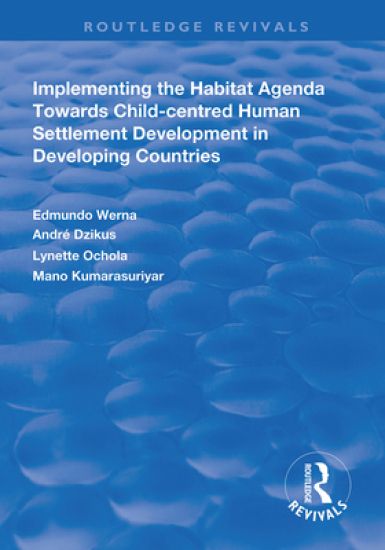
Published in 1999, this text provides a comprehensive view of the problematique of urban children in developing countries. It starts by demonstrating why it is important to address housing and settlement-related problems faced by the children in developing countries. The book emphasizes that the problematique under scrutiny is so vast that one could face strong difficulties in trying to implement a multitude of isolated/parallel projects and programmes to address a vast number of particular issues. The book demonstrates the existence of strong linkages between the particular issues analyzed. It suggests that a child-centred integrated approach constitutes a good priority for intervention. In terms of evaluation, one could also face difficulties if trying to devise an all-inclusive method for the whole developing world. The book therefore suggests that a simple set of general indicators for evaluation which have international approval should be used in conjunction with locally-constructed indicators.
Implementing the Habit Agenda

Implementing the Habit Agenda

Edmundo Werna; André Dzikus; Lynette Ochola; Mano Kumarasuriyar

Routledge
2019
sidottu
Published in 1999, this text provides a comprehensive view of the problematique of urban children in developing countries. It starts by demonstrating why it is important to address housing and settlement-related problems faced by the children in developing countries. The book emphasizes that the problematique under scrutiny is so vast that one could face strong difficulties in trying to implement a multitude of isolated/parallel projects and programmes to address a vast number of particular issues. The book demonstrates the existence of strong linkages between the particular issues analyzed. It suggests that a child-centred integrated approach constitutes a good priority for intervention. In terms of evaluation, one could also face difficulties if trying to devise an all-inclusive method for the whole developing world. The book therefore suggests that a simple set of general indicators for evaluation which have international approval should be used in conjunction with locally-constructed indicators.
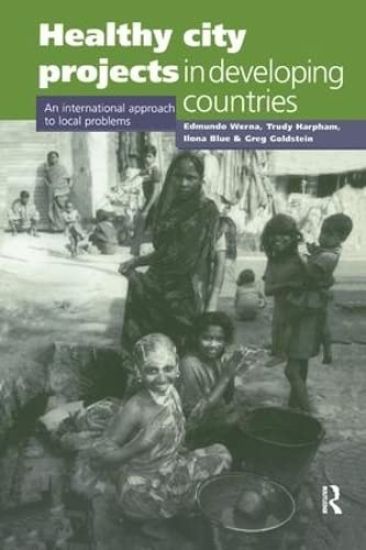
Healthy City Projects in Developing Countries
With the growth of cities and towns throughout the developing world have come significant health problems. The urban poor are particularly affected, faced with the worst of both worlds: urban problems such as pollution and stress, combined with infectious diseases common in both rural and urban areas. The Healthy City Project shows how to put health high on the agenda of urban officials, integrating it into all other planning and development decisions. Healthy City Projects in Developing Countries presents a comprehensive account of this very important and increasingly influential initiative. Drawing on experience in a range of cities it shows how to design, implement and evaluate the integration of public health into urban management. The results will be very significant to all those making and implementing urban policies, as well as those working in and on public health, urban development and environmental issues.
Labour Conditions for Construction

Labour Conditions for Construction

Roderick Lawrence; Edmundo Werna

Wiley-Blackwell (an imprint of John Wiley Sons Ltd)
2009
sidottu
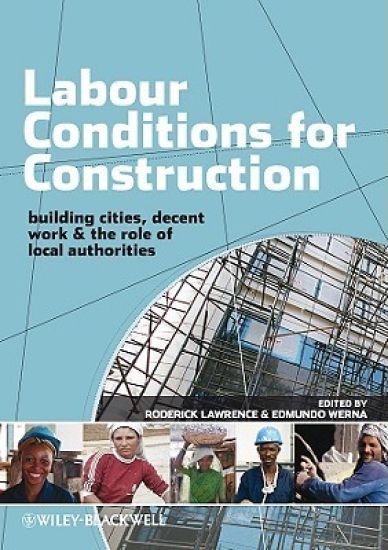
This authoritative guide promotes safe, healthy and non-exploitative working conditions for the construction industry. It combines theoretical analysis and case-studies from around the world, offering recommendations for best practice. The book results from a project funded by the Geneva International Academic Network, with staff from the International Labour Office and the University of Geneva. It presents and discusses the challenges and potential of local authorities to promote decent work in construction. Existing literature on decent work focuses mainly on the roles and responsibilities of actors in the private sector but the contribution of the public sector should not be ignored. Local authorities play a crucial role in economic development through a range of policies and programmes in the construction sector and related services. Labour Conditions for Construction: decent work, building cities & the role of local authorities includes a methodology that combines quantitative and qualitative information. It defines and validates a set of criteria to evaluate the capacity of local authorities, combining criteria about decent work, the construction sector and the policies and programmes of the local authority in each case study city. The book fills an important gap in focussing on the role of local authorities in creating and promoting decent work and will be of interest to managers and policy-makers in construction, health and safety and labour relations as well as to researchers and students in construction management.
Pluralism in Housing Provision in Developing Countries

Pluralism in Housing Provision in Developing Countries

Ramin Keivani; Alex Abiko; Edmundo Werna

Nova Biomedical
2004
sidottu
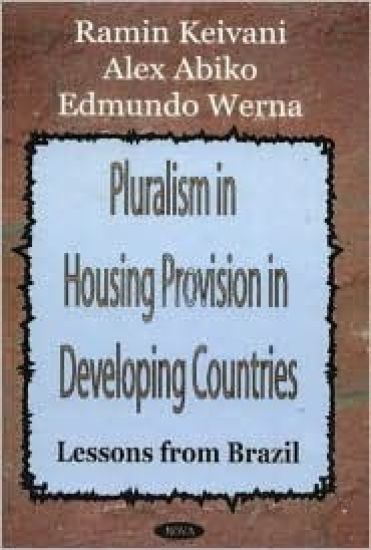
In the past decades the role of the State has undergone major alterations regarding supply of goods and services in general, particularly housing supply. There is a clear trend towards less direct intervention of the public agents in the supply process, encouraging participation of non-public agents, such as the private sector, NGO's (non-governmental organisations, with a volunteer character), and communities that receive goods and services -- in this case, housing. This is certainly a global trend encompassing both industrially advanced and developing countries. The mechanism of supplying housing or other goods and services consists of several elements, such as planning, financing, management, production, monitoring and supervision. The general supply pattern is defined by how these elements are distributed among public and non-public agents. The following questions are essential in this context: how are these elements distributed? What is the appropriate relation for a certain context? This book approaches these questions by means of a comparative analyses of different modes of housing provision emphasising the relations between public and non-public agents. To this end it uses case studies in Sao Paulo, Brazil where the fieldwork for the research was conducted. Nevertheless, the findings of the book have much wider implications for housing policy formulation and market development in developing countries as a whole.
Combating Urban Inequalities

Combating Urban Inequalities

Edmundo Werna

Edward Elgar Publishing Ltd
2000
sidottu
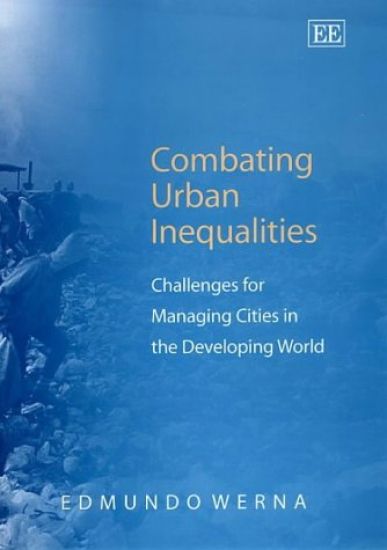
This book analyses the relationship between urban management and the unequal pattern of provision of urban services in developing countries. It starts from the premise that socio-economic inequalities constitute a significant development problem. The book shows how the existence of inequalities may in distinct ways enhance the inadequate living conditions of the poor - either in psychological and/or material terms.Inequalities in developing countries are more intense in urban areas, and the supply of urban services plays a fundamental role in this context. Edmundo Werna analyses this issue with particular attention to the increasing diversity of supply due to economic liberalization. The analysis reveals the existence of varied types of interaction between the government and suppliers of urban services, with significant implications for addressing inequalities. The book argues that local authorities play a crucial role in managing such diversity, and need considerably more support than the present status-quo allows. Using evidence from three cities (Nairobi, Chittagong and Sao Paulo) Combating Urban Inequalities will be of interest to scholars within development, urban, public administration, public health and government studies. The book will also appeal to practitioners and policymakers, as it contains policy analysis and recommendations.
Healthy City Projects in Developing Countries
With the growth of cities and towns throughout the developing world have come significant health problems. The urban poor are particularly affected, faced with the worst of both worlds: urban problems such as pollution and stress, combined with infectious diseases common in both rural and urban areas. The Healthy City Project shows how to put health high on the agenda of urban officials, integrating it into all other planning and development decisions. Healthy City Projects in Developing Countries presents a comprehensive account of this very important and increasingly influential initiative. Drawing on experience in a range of cities it shows how to design, implement and evaluate the integration of public health into urban management. The results will be very significant to all those making and implementing urban policies, as well as those working in and on public health, urban development and environmental issues.