Kirjailija
Édouard Glissant
Kirjat ja teokset yhdessä paikassa: 19 kirjaa, julkaisuja vuosilta 1991-2025, suosituimpien joukossa The Collected Poems of Édouard Glissant. Vertaile teosten hintoja ja tarkista saatavuus suomalaisista kirjakaupoista.
Mukana myös kirjoitusasut: Edouard Glissant
19 kirjaa
Kirjojen julkaisuhaarukka 1991-2025.

The complete poems of the two-time finalist for the Nobel Prize in Literature, available in English for the first time This volume collects and translates-most for the first time-the nine volumes of poetry published by Édouard Glissant, a poet, novelist, and critic increasingly recognized as one of the great writers of the twentieth century. The poems bring to life what Glissant calls “an archipelago-like reality,” partaking of the exchanges between Europe and its former colonies, between humans and their geographies, between the poet and the natural world. Reciting and re-creating histories of the African diaspora, Columbus’s “discovery” of the New World, the slave trade, and the West Indies, Glissant underscores the role of poetic language in changing both past and present irrevocably. As translator Jeff Humphries writes in his introduction, Glissant’s poetry embraces the aesthetic creed of the French symbolists MallarmÉ and Rimbaud (“The poet must make himself into a seer”) and aims at nothing less than a hallucinatory experience of imagination in which the differences among poem, reader, and subject dissolve into one immediate present.Born in Martinique in 1928, influenced by the controversial Martinican poet/politician AimÉ CÉsaire, and educated at the Sorbonne in Paris, Édouard Glissant has emerged as one of the most influential postcolonial theorists, novelists, playwrights, and poets not only in the Caribbean but also in contemporary French letters. He has twice been a finalist for the Nobel Prize in Literature as well as the recipient of both the Prix Renaudot and the Prix Charles Veillon in France. His works include Poetics of Relation, Caribbean Discourse, Faulkner Mississippi, and the novel The Ripening. He currently serves as Distinguished Professor of French at City University of New York, Graduate Center.
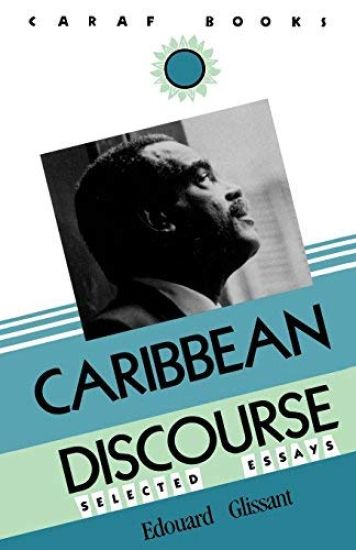
Selected essays from the rich and complex collection of Edouard Glissant, one of the most prominent writers and intellectuals of the Caribbean, examine the psychological, sociological, and philosophical implications of cultural dependency.Edouard Glissant's Caribbean Discourse is an unflaggingly ambitious attempt to read the Caribbean and the New World experience, not as a response to fixed, univocal meaning imposed by the past, but as an infinitely varied, dauntingly inexhaustible text.
The collected manifestos of douard Glissant and Patrick Chamoiseau: for a postcolonial response to planetary crisis. Manifestos brings together for the first time in English the manifestos written by douard Glissant and Patrick Chamoiseau between 2000 and 2009. Composed in part in the aftermath of Barack Obama's election in 2008, the texts resonate with the current context of divided identities and criticisms of multiculturalism. The individual texts grapple with concrete historical and political moments in France, the Caribbean, and North America. Across the manifestos, as well as two collectively signed op-eds, the authors engage with socio-political aspects of climate catastrophe, resource extraction, toxicity, and neocolonialism. Throughout the collection, Glissant and Chamoiseau engage with key themes articulated through their poetic vocabulary, including Relation, globalization, globality (mondialit ), anti-universalism, m tissage, the tout-monde ("whole-world") and the tout-vivant ("all-living," including the relationship of humans to each other and "nature"), cr olit and the creolization of the world, and the liberation from community assignations in response to individualism and neoliberal societies. Translated as the first volume in the Planetarities series with Goldsmiths Press, the themes of Manifestos resonate with the planetary as they work in response to contemporary forms of (economic) globalization, western capitalism, identity politics, and urban, digital and cosmic ecosystems, as well as the role of the poet-writer. A distinguishing feature of this publication is its interventional aspect, which prioritizes engaged scholarship and practice while demonstrating the relevance of the poetic in response to the urgencies of planetary crisis.


A New York Times New and Noteworthy Book Édouard Glissant’s novels, closely tied to the theories he developed in PoÉtique de la Relation (Poetics of relation), are rich explorations of a deported and colonized people’s loss of their own history and the ever-evolving social and political effects this sense of groundlessness has caused in Martinique. In Mahagony Glissant identifies both the malaise of and the potential within Martinican society through a powerful collective narrative of geographic identity explored through multiple narrators. These characters’ lives are viewed back and forth over centuries of time and through tales of resistance, linked always by the now-ancient mahogany tree. Attempting to untangle the collective memory of Martinique, Mathieu, the contemporary narrator, creates a conscious history of these people in that place-a record that unearths the mechanics of misrepresentation to get at the fundamental, enduring truths of that history, perhaps as only the mahogany tree knows it.
Soleil de la Conscience (Sun of Consciousness) was Martinican philosopher Édouard Glissant’s first published work, and opened the Poétique (Poetics) strain of his oeuvre. This book-length essay, which is characterized by its exploratory, intimate character, announces Glissants concerns with créolisation (creolization), mondialité (worldliness, as against globalization), or opacité (opacity) and inscribes in this work a refusal of colonialism and of inverted exoticism. The sense of estrangement experienced by the author who arrives as a “foreigner” in a country to which he is bound by “the first page of his passport” is the author’s principal preoccupation. By positioning himself as both different and same, Glissant opens a space for the writing of a(nother) history: that of the Caribbean.
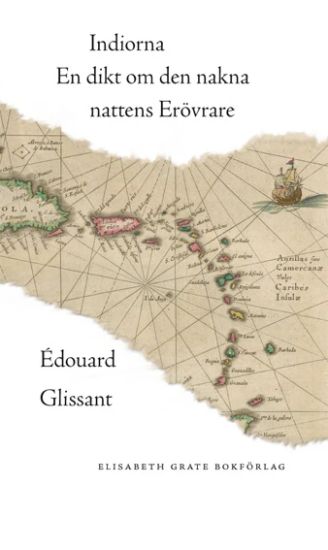
Indiorna : en dikt om den nakna nattens erövrare
Édouard Glissant
Elisabeth Grate Bokförlag
2012
nidottu
Édouard Glissant (19282011) räknas som en av det franskspråkiga Karibiens främsta författare. Även om hans verk till stor del handlar om hemön Martinique, sträcker sig hans tankar långt utanför Antillerna och står i nära samklang med aktuell debatt inom estetik, politik, filosofi och litteratur. För hela sitt verk har Glissant tilldelats ett flertal litterära priser och många internationella konferenser har ägnats honom på olika platser i världen. I hans mäktiga diktcykel Indiorna (Les Indes, 1955) är en av utgångspunkterna den slavhandel som från Afrika gick såväl till öarna i Indiska oceanen som till den västindiska övärld som Columbus, när han upptäckte den, trodde var Indien. Översättning av Magdalena Sørensen & Catherine Delpech-Hellsten.

Relationens filosofi blev det sista stora verket i Édouard Glissants långa och eklektiska författarskap. Boken utgör den andra delen i den estetikserie som inleddes med Une nouvelle région du monde och dess titel återspeglar tredje delen i den föregående poetikserien, Poétique de la relation. I Glissants värld är poetiken, estetiken och filosofin sammanvävda, men övergången dem emellan sker ändå inte obemärkt. Att kulmen kom att nås inom det filosofiska, i Relationens filosofi, är inte endast en slump utan vittnar också om författarens ansats att samla och syntetisera tankar ur hela sitt livsverk. I Relationens filosofi ryms alla de viktigaste begreppen i Glissants tankevärld; termer som kreolisering, arkipelagiskt tänkande, opacitet, relation, spår och kringflackande utvecklas och relateras till varandra. Snarare än att försöka återföra begreppen till någon förment ursprunglig definition och låsa fast dem i ett system, låter Glissant ordens och tankens rotlöshet bli en förutsättning för en filosofi i fullkomligt vardande. Det sällsamma tänkande som här växer fram hämtar ytterst sin kraft ur erfarenheterna från de karibiska öarna: det koloniala arvet och den kreolska kulturen. I den bemärkelsen är den poetiska och estetiska Relationens filosofi även omedelbart politisk. Det rör sig om en filosofi som varken förtränger eller söker försoning med den smärtsamma historien de sjunkna slavskeppen och de tystade ursprungen utan som istället gör den till sitt eget predikament och i kraft därav förmår driva vidare in i framtiden. Édouard Glissant föddes på Martinique 1928 och var en av det franskspråkiga Karibiens största och mest säregna poeter och filosofer. När han avled i februari i år lämnade han ett oerhört rikt och omfattande verk efter sig, ett verk vars inflytande över samtida teori och skönlitteratur ännu är oöverskådligt. Under sin livstid hann Glissant skriva femton essäsamlingar, åtta romaner, lika många diktsamlingar och en pjäs. Han är översatt till fler än tio språk, har tilldelats en rad litterära priser och hans verk har varit föremål för ett flertal internationella konferenser. Relationens filosofi är det första av Glissants filosofiska verk som ges ut på svenska.
With Édouard Glissant's The Fourth Century, the Village Voice observed, "we get the full effect of his overarching project: a literary exorcism of Martinique's scarred psyche and past, a lingering cry against the 'black hole of time and forgetting.'" Glissant, "one of the most significant figures in Caribbean literature" (Washington Post), continues that project in The Overseer's Cabin, conjuring in one woman's story centuries knotted together by unknown blood, voiceless suffering, and death without echo. Beginning with the birth in 1928 of Mycea, the last of the intertwining ancestral families introduced in The Fourth Century, and ending with her release from an asylum in 1978, the novel moves back and forth across a framework that weaves the story of Mycea's family against the legacy of Martinique as an island whose history and indigenous people have all but been erased. From the beginnings of Mycea's family in the tale of two blood brothers, both named Odono, to its ending with the fate of her two sons, the novel encapsulates the island's destiny in one Martinican woman's plight. With the past irretrievable and the future in doubt, Mycea journeys inward, finding in her connection to the land of Martinique, and to the seafloor littered with drowned slaves, a reality, and a possibility, uncolonized by others' history.

This marks the publication of the first English-language translation of Poetic Intention, Glissant's classic meditation on poetry and art. In this wide-ranging book, Glissant discusses poets, including Stéphane Mallarmé and Saint-John Perse, and visual artists, such as the Surrealist painters Matta and Wilfredo Lam, arguing for the importance of the global position of art. He states that a poem, in its intention, must never deny the "way of the world." Capacious, inventive, and unique, Glissant's Poetic Intention creates a new landscape for understanding the relationship between aesthetics and politics.
Forfatteren ble født på Martinique i 1928. I denne diktsamlingen maler han frem Martiniques fargerike og dramatiske historie. Samlingen tar sitt utgangspunkt i Columbus sin reise over havet og hans oppdagelse av Amerika.
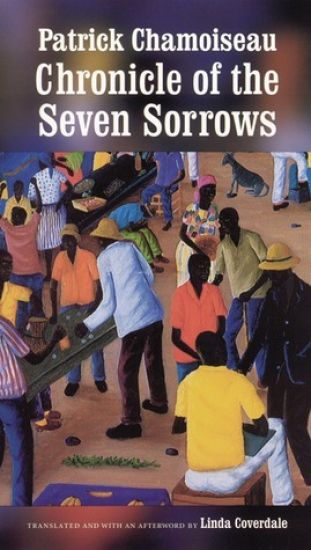
Chronicle of the Seven Sorrows
Patrick Chamoiseau; Linda Coverdale; Édouard Glissant
University of Nebraska Press
2003
pokkari
Chronicle of the Seven Sorrows traces the rise and fall of Pipi Soleil, "king of the wheelbarrow" at the vegetable market of Fort-de-France, in a tale as lively and magical as the marketplace itself. In a Martinique where creatures from folklore walk the land and cultural traditions cling tenuously to life, Patrick Chamoiseau's characters confront the crippling heritage of colonialism and the overwhelming advance of modernization with touching dignity, hilarious resourcefulness, and truly courageous joie de vivre.

The Fourth Century tells of the quest by young Mathieu Béluse to discover the lost history of his country, Martinique. Aware that the officially recorded version he learned in school omits and distorts, he turns to a quimboiseur named Papa Longoué. This old man of the forest, a healer, seer, and storyteller, knows the oral tradition and its relation to the powers of the land and the forces of nature. He tells of the love-hate relationship between the Longoué and Béluse families, whose ancestors were brought as slaves to Martinique. Upon arrival, Longoué immediately escaped and went to live in the hills as a maroon. Béluse remained in slavery. The intense relationship that had formed between the two men in Africa continued and came to encompass the relations between their masters, or, in the case of Longoué, his would-be master, and their descendants. The Fourth Century closes the gap between the families as Papa Longoué, last of his line, conveys the history to Mathieu Béluse, who becomes his heir.

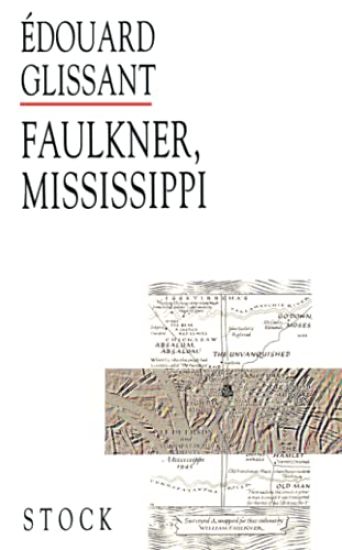
In 1989, the Caribbean writer Edouard Glissant visited Rowan Oak, William Faulkner's home in Oxford, Mississippi. His visit spurred him to write a revelatory book about the work of one of our greatest but still least-understood American writers."A fascinating way to read Faulkner. . . .[Glissant's] case is nothing less than that, no matter how Faulkner's personal Furies twisted his public speech, Faulkner was a great, world-beating multiculturalist."—Jonathan Levi, Los Angeles Times Book Review"A sharp, challenging, and wholly unique tour of Yoknapatawpha County." —Kirkus Reviews"Passionate. . . . Glissant's prose sometimes vies with Faulkner's for intricacy and evocative nuance." —Scott McLemee, Newsday"Glissant tries to engage Faulkner on many fronts simultaneously, positioning himself as a critic, a fellow artist and as a descendant of slaves. . . He makes a convincing case that Faulkner is not just another 'dead white male author.'"—Scott Yarbrough, Raleigh News & Observer"[An] ambitious and, at times, rambunctious expedition into Yoknapatawpha County." —Christine Schwartz Hartley, New York Times Book Review
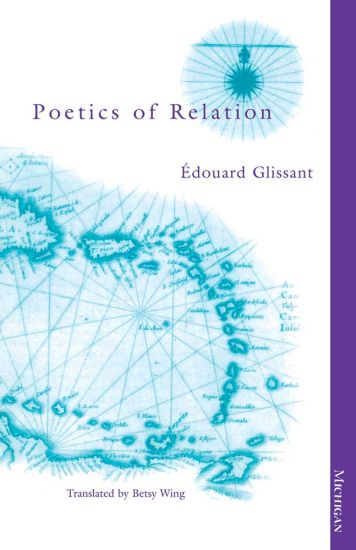
Édouard Glissant, long recognized in the French and francophone world as one of the greatest writers and thinkers of our times, is increasingly attracting attention from English-speaking readers. Born in Martinique in 1928, Glissant earned a doctorate from the Sorbonne. When he returned to his native land in the mid-sixties, his writing began to focus on the idea of a "relational poetics," which laid the groundwork for the "créolité" movement, fueled by the understanding that Caribbean culture and identity are the positive products of a complex and multiple set of local historical circumstances. Some of the metaphors of local identity Glissant favored—the hinterland (or lack of it), the maroon (or runaway slave), the creole language—proved lasting and influential. In Poetics of Relation, Glissant turns the concrete particulars of Caribbean reality into a complex, energetic vision of a world in transformation. He sees the Antilles as enduring suffering imposed by history, yet as a place whose unique interactions will one day produce an emerging global consensus. Arguing that the writer alone can tap the unconscious of a people and apprehend its multiform culture to provide forms of memory capable of transcending "nonhistory," Glissant defines his "poetics of relation"—both aesthetic and political—as a transformative mode of history, capable of enunciating and making concrete a French-Caribbean reality with a self-defined past and future. Glissant's notions of identity as constructed in relation and not in isolation are germane not only to discussions of Caribbean creolization but also to our understanding of U.S. multiculturalism. In Glissant's view, we come to see that relation in all its senses—telling, listening, connecting, and the parallel consciousness of self and surroundings—is the key to transforming mentalities and reshaping societies.This translation of Glissant's work preserves the resonating quality of his prose and makes the richness and ambiguities of his voice accessible to readers in English.