Kirjailija
Eduardo Salas
Kirjat ja teokset yhdessä paikassa: 13 kirjaa, julkaisuja vuosilta 1989-2023, suosituimpien joukossa Applications of Human Performance Models to System Design. Vertaile teosten hintoja ja tarkista saatavuus suomalaisista kirjakaupoista.
13 kirjaa
Kirjojen julkaisuhaarukka 1989-2023.
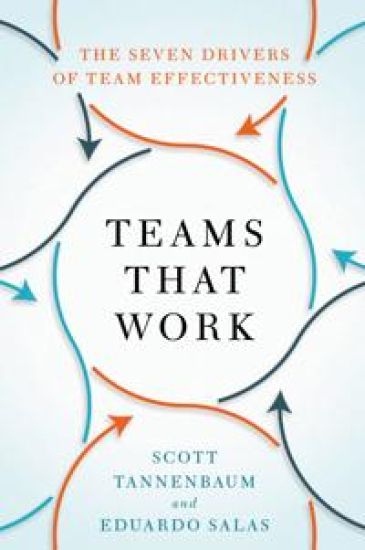
Why do some teams thrive, while others struggle? In the modern workplace, employees collaborate. Managers are expected to be effective team leaders and employees are expected to be valued teammates. But many teams struggle. Being part of a struggling team can be unpleasant, but it can also hurt your career and waste company resources. In Teams That Work, Scott Tannenbaum and Eduardo Salas present the seven drivers of team effectiveness and the clearest recommendations on what really makes teams great. Applying the lessons they've learned from working with high-stakes, high-risk team situations to any kind of organization, they will dispel some of the most enduring myths (e.g., can you be both a star and a great team player?), feature the most useful psychological research, and share real-world illustrations of effective teams in action. Readers will find actionable, evidence-based tips for being an effective team leader, a great team member, a supportive senior leader, or an impactful consultant.
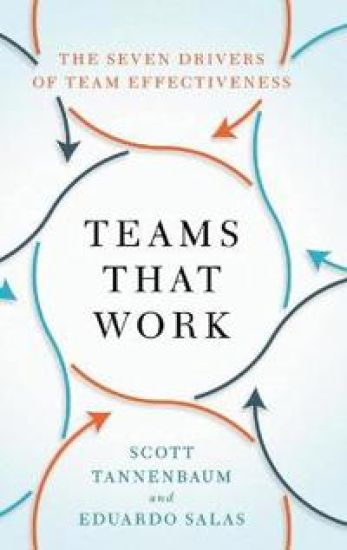
In the modern workplace, employees collaborate. Managers are expected to be effective team leaders and employees are expected to be valued teammates. But many teams struggle. Being part of a struggling team can be unpleasant, but it can also hurt your career and waste company resources. In Teams That Work, Scott Tannenbaum and Eduardo Salas present the seven drivers of team effectiveness and the clearest recommendations on what really makes teams great. Applying the lessons they've learned from working with high-stakes, high-risk team situations to any kind of organization, they will dispel some of the most enduring myths (e.g., can you be both a star and a great team player?), feature the most useful psychological research, and share real-world illustrations of effective teams in action. Readers will find actionable, evidence-based tips for being an effective team leader, a great team member, a supportive senior leader, or an impactful consultant.
Team Training Essentials succinctly outlines best practices for team training, as based in the latest organizational psychology research. Organized into 5 ‘pillars,’ this clear, accessible guide covers all aspects of team training, from design and delivery to evaluation, transfer, and sustainment methods. Useful for anyone studying team dynamics and performance as well as group training, this book will also be of interest to professionals looking to apply team training practices in real business settings.
Applications of Human Performance Models to System Design
Grant R. McMillan; David Beevis; Eduardo Salas
Springer-Verlag New York Inc.
2013
nidottu
The human factors profession is currently attempting to take a more proactive role in the design of man-machine systems than has been character istic of its past. Realizing that human engineering contributions are needed well before the experimental evaluation of prototypes or operational systems, there is a concerted effort to develop tools that predict how humans will interact with proposed designs. This volume provides an over view of one category of such tools: mathematical models of human performance. It represents a collection of invited papers from a 1988 NATO Workshop. The Workshop was conceived and organized by NATO Research Study Group 9 (RSG.9) on "Modelling of Human Operator Behaviour in Weapon Systems". It represented the culmination of over five years of effort, and was attended by 139 persons from Europe, Canada, and the United States. RSG.9 was established in 1982 by Panel 8 of the Defence Research Group to accomplish the following objectives: * Determine the utility and state of the art of human performance modelling. * Encourage international research and the exchange of ideas. * Foster the practical application of modelling research. * Provide a bridge between the models and approaches adopted by engineers and behavioral scientists. * Present the findings in an international symposium.
Team Effectiveness In Complex Organizations
Eduardo Salas; Gerald F. Goodwin; C. Shawn Burke
Routledge
2013
nidottu
Over the past 40 years, there has been a growing trend toward the utilization of teams for accomplishing work in organizations. Project teams, self-managed work teams and top management teams, among others have become a regular element in the corporation or military. This volume is intended to provide an overview of the current state of the art research on team effectiveness.
Improving Patient Safety Through Teamwork and Team Training
Eduardo Salas; Karen Frush
Oxford University Press Inc
2012
nidottu
Team training has become a tradition in healthcare, where it has helped produce significantly positive results in patient safety. It is widely acknowledged that medical teamwork is essential, yet the coordination, communication, and cooperation behind it has never been carefully examined. This book provides a comprehensive study of the science behind improving team performance in the delivery of clinical care. Leaders in the field, Eduardo Salas and Karen Frush, have assembled scholars, practitioners, and professionals to offer a combination of practical advice and insight as well as a look into the scientific foundation of teamwork. Chapters offer helpful guidelines and lessons on how to improve performance in the team setting, including how to measure success, how to monitor training, pitfalls and challenges, and how the different needs of various clinical situations.
This practical resource includes perspectives from the point of view of both plaintiff and defendant for cases involving questions of race, gender, disability, and age. In addition, it offers an overview of the process by which complaints are filed, the statutes under which they are filed, and the authority represented by various case law. Employment Discrimination Litigation will illuminate myriad issues such as Daubert motions, class certification issues, the setting of cut scores that will withstand challenge, common statistical analyses of adverse impact, and merit-based issues. Employment Discrimination Litigation also Presents a temporal description of a typical employment discrimination case from start to finishOutlines the major guidelines that are often invoked in employment litigation—the A.P.A. Standards, Uniform Guidelines, and SIOP PrinciplesReviews litigation related to the Fair Labor Standards ActReferences written judicial opinions that relate the activities and devices most often employed by industrial and organizational psychologists
Team Effectiveness In Complex Organizations
Eduardo Salas; Gerald F. Goodwin; C. Shawn Burke
Routledge Member of the Taylor and Francis Group
2008
sidottu
Over the past 40 years, there has been a growing trend toward the utilization of teams for accomplishing work in organizations. Project teams, self-managed work teams and top management teams, among others have become a regular element in the corporation or military. This volume is intended to provide an overview of the current state of the art research on team effectiveness.
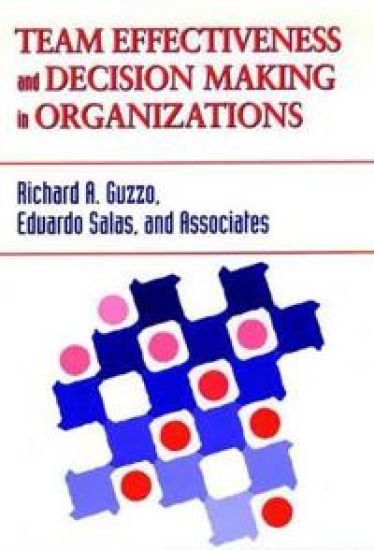
Team Effectiveness and Decision Making in Organizations
Richard A. Guzzo; Eduardo Salas
Jossey-Bass Inc.,U.S.
1995
sidottu
The seventh book in the Frontiers of Industrial and OrganizationalPsychology Series, sponsored by the Society for Industrial andOrganizational Psychology, a division of the American PsychologicalAssociation. Get the latest perspective on teams from leading professionals inmanagement and social, industrial, and organization psychology.You'll get the latest research perspective on teams and theirnature, function, effectiveness, decision-making process, and theirability to change the face of organizational life. This research-based resource: * Explores the ins and outs of staffing teams, emphasizing thenecessity for the right mix of skills, talents, job functions, andpersonalities * Examines diversity and its effect on the group process * Provides the latest findings on accurate measurement of teamperformance * Shows the results of using information technology to help teamsget work done and reshape the way individuals work together Plus, you'll get tested models and methods for improving teameffectiveness in any organizational context. Use it as a handbookon team dynamics and as a guide to a better understanding of theeffect of teams on organizational design.
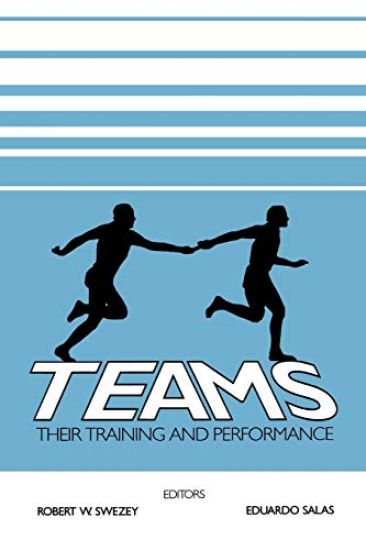
This book compiles state-of-the-art commentary on teamwork, team training, and team performance. It provides both practical and down-to-earth information on what we currently know about these topics from a research-based perspective, and foward-looking, theoretical views on where the field is going. The book focuses on three major topics: how teams are organized and function, the empirical research base, and applications of teamwork skills. This volume also discusses team taxonomic issues, the performance of individual team members, team performance evaluation, mathematical models, Petri nets, teamwork guidelines, and both military and civilian teamwork applications.
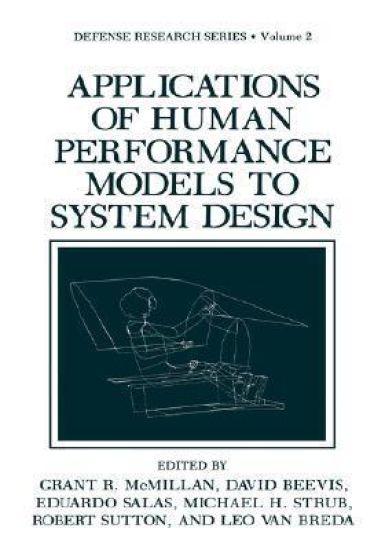
Applications of Human Performance Models to System Design
Grant R. McMillan; David Beevis; Eduardo Salas
Kluwer Academic/Plenum Publishers
1989
sidottu
The human factors profession is currently attempting to take a more proactive role in the design of man-machine systems than has been character istic of its past. Realizing that human engineering contributions are needed well before the experimental evaluation of prototypes or operational systems, there is a concerted effort to develop tools that predict how humans will interact with proposed designs. This volume provides an over view of one category of such tools: mathematical models of human performance. It represents a collection of invited papers from a 1988 NATO Workshop. The Workshop was conceived and organized by NATO Research Study Group 9 (RSG.9) on "Modelling of Human Operator Behaviour in Weapon Systems". It represented the culmination of over five years of effort, and was attended by 139 persons from Europe, Canada, and the United States. RSG.9 was established in 1982 by Panel 8 of the Defence Research Group to accomplish the following objectives: * Determine the utility and state of the art of human performance modelling. * Encourage international research and the exchange of ideas. * Foster the practical application of modelling research. * Provide a bridge between the models and approaches adopted by engineers and behavioral scientists. * Present the findings in an international symposium.