Kirjojen hintavertailu. Mukana 12 390 323 kirjaa ja 12 kauppaa.

Kirjailija

Eduardo Viveiros de Castro

Kirjat ja teokset yhdessä paikassa: 9 kirjaa, julkaisuja vuosilta 1992-2024, suosituimpien joukossa The Ends of the World. Vertaile teosten hintoja ja tarkista saatavuus suomalaisista kirjakaupoista.

9 kirjaa

Kirjojen julkaisuhaarukka 1992-2024.

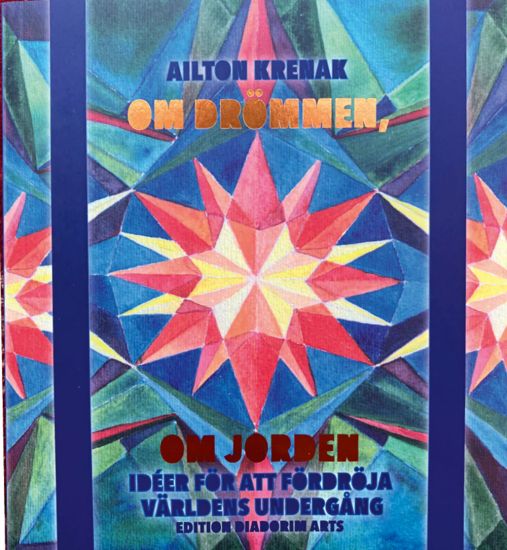
Om drömmen, om Jorden

Om drömmen, om Jorden

Ailton Krenak; Eduardo Viveiros de Castro; Ulla M. Gabrielsson

Edition Diadorim
2024
nidottu
Ailton Krenak (född 1953) är författare och filosof från ursprungsfolket krenak i Brasilien. ”Om drömmen, om Jorden” är hans passionerade vittnesmål om hoten mot planetens berg, skogar och floder. I hans by fortsätter floden Watu, Rio Doce, att sjunga dag som natt medan järnmalmstågen från gruvorna dundrar förbi. På sin väg mot Atlanten förenas Watu med andra floder i en konfluens, ett sammanflöde av strida strömmar. Men vem lyssnar till flodernas röster i en värld som visar sig som en avgrund mellan natur och kultur? ”Jag kan inte föreställa mig något som inte är natur”, säger Ailton Krenak. ”Det finns ett berg på motsatta sidan av floden Rio Doce som vakar över byn där vi bor. I morse var berget insvept i drivande dimmoln, sedan föll regnet och nu rör sig molnen högt över krönet. Det räcker att betrakta berget en stund för att känna hur ens egen smärta lindras. Livet färdas genom allt, färdas genom klipporna, genom ozonskiktet, genom isen. Livet färdas från oceanerna mot fastlandet, från norr till söder, som en vind i alla riktningar. Istället för att tänka oss Jorden som en organism som andas, vilket är mycket svårt, kan vi tänka oss att livet migrerar genom berg, dalgångar, floder, skogar. Vi har gjort livet så banalt att människor tror att ”liv” bara är ett ord. Eftersom det finns ord som ”vind”, ”eld”, ”vatten”, tror många att det finns ett ord för ”liv”, men så är det inte. Liv är transcendens, liv existerar bortom ordboken, liv kan inte definieras.” Ailton Krenak var den som 1987 ledde urfolkens rörelse i den brasilianska kongressen som ledde till att deras rätt till sina landområden fick ett särskilt kapitel i Brasiliens nya grundlag 1988. Detta har idag en stor betydelse för att skydda de återstående skogarna och floderna i Amazonas mot invasioner och rovdrift.
Om verdens ende

Om verdens ende

Déborah Danowski; Eduardo Viveiros de Castro

Existenz forlag
2022
nidottu
Om verdens ende kom ut på portugisisk i 2014 og har siden blitt oversatt til en rekke språk. Verket er enestående i sin kombinasjon av miljøfilosofi og radikal antropologi. Den globale miljøkrisen gjør det nødvendig å stille spørsmålet om hvorvidt verden kommer til å gå under. Déborah Danowski og Eduardo Viveiros de Castro diskuterer hva en verden egentlig er og hva verdens «ende» kan tenkes å innebære, både som forestilling og erfaring. Sett fra kolonitidens ofre sitt perspektiv, særlig regnskogsindianerne i Brasil, som bokstavelig talt har mistet sin verden - skogen - er verdens ende en reell historisk erfaring. Déborah Danowski (f. 1958) er professor i filosofi ved Pontifícia Universidade Católica i Rio de Janeiro. Hun er særlig opptatt av vår tids økologiske kollaps og har vært en pådriver for et globalt teoretisk og aktivistisk samarbeid knyttet til miljørettferdighet og økologisk politikk. Eduardo Viveiros de Castro (f. 1951) er professor i antropologi ved Universidade Federal i Rio de Janeiro. Han er særlig kjent for boka Metafísicas canibais (Kannibalmetafysikk), hvor han presenterer en radikal tolkning av livsopplevelsen og ontologien til amerindiske folkeslag.
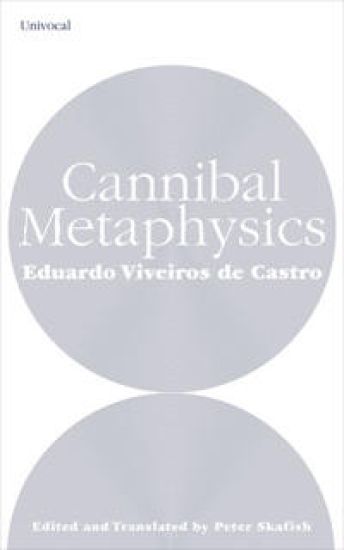
Cannibal Metaphysics

Cannibal Metaphysics

Eduardo Viveiros de Castro

University of Minnesota Press
2017
nidottu
The iconoclastic Brazilian anthropologist and theoretician Eduardo Viveiros de Castro, well known in his discipline for helping initiate its “ontological turn,” offers a vision of anthropology as “the practice of the permanent decolonization of thought.” After showing that Amazonian and other Amerindian groups inhabit a radically different conceptual universe than ours-in which nature and culture, human and nonhuman, subject and object are conceived in terms that reverse our own-he presents the case for anthropology as the study of such “other” metaphysical schemes, and as the corresponding critique of the concepts imposed on them by the human sciences. Along the way, he spells out the consequences of this anthropology for thinking in general via a major reassessment of the work of Claude LÉvi-Strauss, arguments for the continued relevance of Deleuze and Guattari, dialogues with the work of Philippe Descola, Bruno Latour, and Marilyn Strathern, and inventive treatments of problems of ontology, translation, and transformation. Bold, unexpected, and profound, Cannibal Metaphysics is one of the chief works marking anthropology’s current return to the theoretical center stage.
The Ends of the World

The Ends of the World

Déborah Danowski; Eduardo Viveiros de Castro

Polity Press
2016
sidottu
The end of the world is a seemingly interminable topic Ð at least, of course, until it happens. Environmental catastrophe and planetary apocalypse are subjects of enduring fascination and, as ethnographic studies show, human cultures have approached them in very different ways. Indeed, in the face of the growing perception of the dire effects of global warming, some of these visions have been given a new lease on life. Information and analyses concerning the human causes and the catastrophic consequences of the planetary ‘crisis’ have been accumulating at an ever-increasing rate, mobilising popular opinion as well as academic reflection. In this book, philosopher Déborah Danowski and anthropologist Eduardo Viveiros de Castro offer a bold overview and interpretation of these current discourses on ‘the end of the world’, reading them as thought experiments on the decline of the West’s anthropological adventure Ð that is, as attempts, though not necessarily intentional ones, at inventing a mythology that is adequate to the present. This work has important implications for the future development of ecological practices and it will appeal to a broad audience interested in contemporary anthropology, philosophy, and environmentalism.
The Ends of the World

The Ends of the World

Déborah Danowski; Eduardo Viveiros de Castro

Polity Press
2016
nidottu
The end of the world is a seemingly interminable topic Ð at least, of course, until it happens. Environmental catastrophe and planetary apocalypse are subjects of enduring fascination and, as ethnographic studies show, human cultures have approached them in very different ways. Indeed, in the face of the growing perception of the dire effects of global warming, some of these visions have been given a new lease on life. Information and analyses concerning the human causes and the catastrophic consequences of the planetary ‘crisis’ have been accumulating at an ever-increasing rate, mobilising popular opinion as well as academic reflection. In this book, philosopher Déborah Danowski and anthropologist Eduardo Viveiros de Castro offer a bold overview and interpretation of these current discourses on ‘the end of the world’, reading them as thought experiments on the decline of the West’s anthropological adventure Ð that is, as attempts, though not necessarily intentional ones, at inventing a mythology that is adequate to the present. This work has important implications for the future development of ecological practices and it will appeal to a broad audience interested in contemporary anthropology, philosophy, and environmentalism.
From the Enemy's Point of View

From the Enemy's Point of View

Eduardo Viveiros de Castro

University of Chicago Press
1992
nidottu
The Araweté are one of the few Amazonian peoples who have maintained their cultural integrity in the face of the destructive forces of European imperialism. In this landmark study, anthropologist Eduardo Viveiros de Castro explains this phenomenon in terms of Araweté social cosmology and ritual order. His analysis of the social and religious life of the Araweté—a Tupi-Guarani people of Eastern Amazonia—focuses on their concepts of personhood, death, and divinity. Building upon ethnographic description and interpretation, Viveiros de Castro addresses the central aspect of the Arawete's concept of divinity—consumption—showing how its cannibalistic expression differs radically from traditional representations of other Amazonian societies. He situates the Araweté in contemporary anthropology as a people whose vision of the world is complex, tragic, and dynamic, and whose society commands our attention for its extraordinary openness to exteriority and transformation. For the Araweté the person is always in transition, an outlook expressed in the mythology of their gods, whose cannibalistic ways they imitate. From the Enemy's Point of View argues that current concepts of society as a discrete, bounded entity which maintains a difference between "interior" and "exterior" are wholly inappropriate in this and in many other Amazonian societies.
From the Enemy's Point of View

From the Enemy's Point of View

Eduardo Viveiros de Castro

University of Chicago Press
1992
sidottu
The Araweté are one of the few Amazonian peoples who have maintained their cultural integrity in the face of the destructive forces of European imperialism. In this landmark study, anthropologist Eduardo Viveiros de Castro explains this phenomenon in terms of Araweté social cosmology and ritual order. His analysis of the social and religious life of the Araweté--a Tupi-Guarani people of Eastern Amazonia--focuses on their concepts of personhood, death, and divinity. Building upon ethnographic description and interpretation, Viveiros de Castro addresses the central aspect of the Arawete's concept of divinity--consumption--showing how its cannibalistic expression differs radically from traditional representations of other Amazonian societies. He situates the Araweté in contemporary anthropology as a people whose vision of the world is complex, tragic, and dynamic, and whose society commands our attention for its extraordinary openness to exteriority and transformation. For the Araweté the person is always in transition, an outlook expressed in the mythology of their gods, whose cannibalistic ways they imitate. From the Enemy's Point of View argues that current concepts of society as a discrete, bounded entity which maintains a difference between "interior" and "exterior" are wholly inappropriate in this and in many other Amazonian societies.