Kirjojen hintavertailu. Mukana 12 390 323 kirjaa ja 12 kauppaa.

Kirjailija

Edward A. Vazquez

Kirjat ja teokset yhdessä paikassa: 2 kirjaa, julkaisuja vuosilta 2018-2023, suosituimpien joukossa Alfredo Jaar. Vertaile teosten hintoja ja tarkista saatavuus suomalaisista kirjakaupoista.

2 kirjaa

Kirjojen julkaisuhaarukka 2018-2023.

Alfredo Jaar

Alfredo Jaar

Edward A. Vazquez

AFTERALL PUBLISHING
2023
nidottu
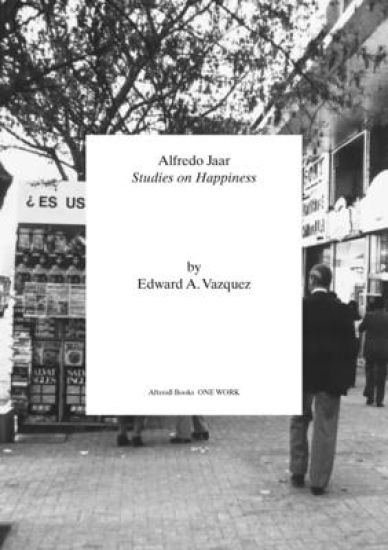
A richly illustrated survey of Alfredo Jaar's Studies on Happiness (1979-1981) and its deep political stakes in the historical context of Chile's neoliberal transition. Between 1979 and 1981, a young artist and architecture school dropout named Alfredo Jaar asked Chileans the deceptively simple question: "Are you happy?" Including private interviews, sidewalk polls, and video-recorded forums, among other interventions, Jaar's two-year and seven-phase project, Studies on Happiness, addressed a country in transition, as a newly adopted constitution remade Chile through privatization and other neoliberal reforms. Jaar's first major artwork has been imprecisely discussed in the monographic literature on the artist and rarely mentioned in studies of Chilean art after 1973. Edward Vazquez contextualizes Jaar's Studies on Happiness within his early production and places his practice within the Chilean art world, thus reinstating the project's historical embeddedness and the deep political stakes of its sociality. The work's marginality is a strength: its minor status in the period and in Jaar's oeuvre allow it an historical freedom in engaging Chilean culture under Augusto Pinochet and provides a wedge to realign current interpretations of Chilean art and hemispheric conceptualism with the openness central to Jaar's project.
Aspects

Aspects

Edward A. Vazquez

University of Chicago Press
2018
sidottu
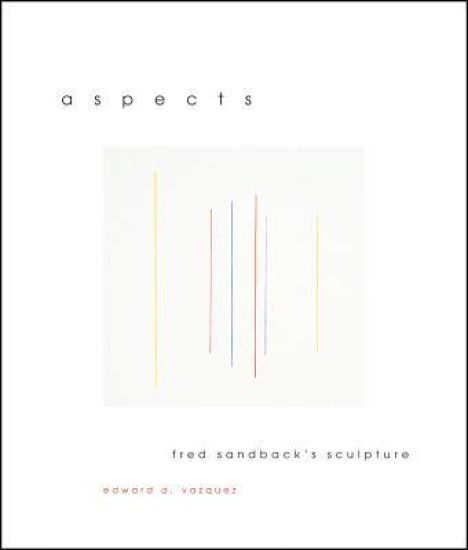
Stretching lengths of yarn across interior spaces, American artist Fred Sandback (1943 2003) created expansive works that underscore the physical presence of the viewer. This book, the first major study of Sandback, explores the full range of his art, which not only disrupts traditional conceptions of material presence, but also stages an ethics of interaction between object and observer. Drawing on Sandback's substantial archive, Edward A. Vazquez demonstrates that the artist's work with all its physical slightness and attentiveness to place, as well as its relationship to minimal and conceptual art of the 1960s creates a link between viewers and space that is best understood as sculptural even as it almost surpasses physical form. At the same time, the economy of Sandback's site-determined practice draws viewers' focus to their connection to space and others sharing it. As Vazquez shows, Sandback's art aims for nothing less than a total recalibration of the senses, as the spectator is caught on neither one side nor the other of an object or space, but powerfully within it.