

Kirjailija
Edward Bernays
Kirjat ja teokset yhdessä paikassa: 31 kirjaa, julkaisuja vuosilta 2004-2026, suosituimpien joukossa Propaganda (Deluxe Edition). Vertaile teosten hintoja ja tarkista saatavuus suomalaisista kirjakaupoista.
31 kirjaa
Kirjojen julkaisuhaarukka 2004-2026.

Edvard Bernejs (1891-1995) - plemjannik Zigmunda Frejda, "otets piara" i pervootkryvatel nauchnoj tekhniki formirovanija i upravlenija obschestvennym mneniem. Kazhdyj iz nas mnogo raz za den stalkivaetsja s propagandoj dazhe ne ponimaja, chto javljaetsja ee mishenju. Zakhodja v magazin, kakie produkty vy vybiraete? Prosmatrivaja teleafishu, na imenakh kakikh aktjorov ostanavlivaete vzgljad? Ot kogo zavisit vash vybor? Vy uvereny, chto ot vas?! Po mneniju Bernejsa propaganda stroitsja na tom, chto novye idei pronikajut v obschestvo cherez aktivno mysljaschee menshinstvo. Obschestvennoe mnenie javljaetsja nepremennym usloviem uspekha ljuboj dejatelnosti monarkhicheskogo, konstitutsionnogo, demokraticheskogo ili kommunisticheskogo pravitelstva - po suti, ono i pravitelstvom-to javljaetsja iskljuchitelno s soglasija mass. Bernejs - sozdatel sovremennoj propagandistskoj mashiny, pioner ispolzovanija v PR-industrii psikhologii i drugikh sotsialnykh nauk. Etot nauchnyj metod sozdanija obschestvennogo mnenija on nazval "inzhiniring soglasija", i v svoej knige raskryvaet ideju ob ispolzovanii propagandy dlja upravlenija kollektivnym razumom v razlichnykh oblastjakh, politike, iskusstve, nauke i obrazovanii.Perevodchik: Malkova Irina Iosifovna
Edward Bernays, famed as The Father of Public Relations, pioneered the technique of working to change attitudes rather than just selling products. In this 1923 classic, he describes how public opinion is created and shaped, including the use of surveys and endorsements from opinion leaders, celebrities, and experts. These methods formed the principles that corporations and governments have employed for the past century to influence social attitudes.


"Crystallizing Public Opinion" is Edward Bernays' pioneering work on the topic of public relations. Published in 1923, this groundbreaking book laid the foundation for the modern method of mass persuasion through media and advertising. Sometimes referred to as father of public relations, Bernays was one of the most influential Americans of the 20th century. He aimed his insightful advice at governments and corporations who wished to build support or spread a particular message. Bernays related his own experiences as a public relations counsel to numerous organizations, such as helping Lithuania bolster its national identity by spreading positive information about Lithuania to intellectuals, sports fans, and politicians, who in turn would influence others. Bernays recognized the increasing importance of public perception as a matter of interest to both official organizations and private companies. He combined a study of individual human psychology and group identity with an understanding of symbolism and media. Bernays was the first to recognize that to effectively guide public opinion, organizations must control and carefully time the dissemination of their news rather than merely reacting to what is being said by others. "Crystallizing Public Opinion" remains a fascinating and hugely important work in understanding public perception and opinion. This edition is printed on premium acid-free paper.

You may not know Edward Bernays, but Edward Bernays knows YOU. As the era of mass media unfolded after the first World War, many people became interested in the new opportunities for mass manipulation. Bernays made a study of the different ways to use propaganda. "Crystallizing Public Opinion" was his first book on how to manipulate the masses.

You may not know Edward Bernays, but Edward Bernays knows YOU. As the era of mass media unfolded after the first World War, many people became interested in the new opportunities for mass manipulation. Bernays made a study of the different ways to use propaganda. "Crystallizing Public Opinion" was his first book on how to manipulate the masses.

Edward Bernays (1891-1995) gilt als Vater der Public Relations.Mit seinem Buch Propaganda aus dem Jahr 1928 schuf er die bis heute gültige Grundlage für modernes Kommunikationsmanagement. Der in Wien geborene Bernays war ein Neffe Sigmund Freuds, der sich dessen Erkenntnisse der modernen Seele zunutze machte und sie in den Dienst von Regierungen und Konzernen stellte. Propaganda ist Bernays Hauptwerk.In Propaganda (ein Begriff, den er später selbst in ?PublicRelations? umbenannte) beschreibt Bernays alle wesentlichen Techniken der Meinungsbeeinflussung wie z. B. den Einsatz von ?neutralen Experten?, um eine Aussage glaubhaft erscheinen zu lassen. Für den US-Präsidenten Wilson promotete er den Ersten Weltkrieg, mit den ?Fackeln der Freiheit? machte er Zigaretten zum Symbol der weiblichen Emanzipation und brachte die amerikanischen Frauen zum Rauchen. Er arbeitete für Edison und Ford, aber auch für die CIA: Sie alle ließen sich von Bernays ihr Image aufpolieren oder die Marktchancen ihrer Produkte verbessern.Bernays steht in einer Reihe mit den Strategie-KlassikernMachiavelli und Clausewitz. Knapp 80 Jahre nach demErscheinen von Propaganda und knapp ein Jahrhundertnach Entstehen der PR-Industrie erscheint dieses Buchnun erstmals auf Deutsch.
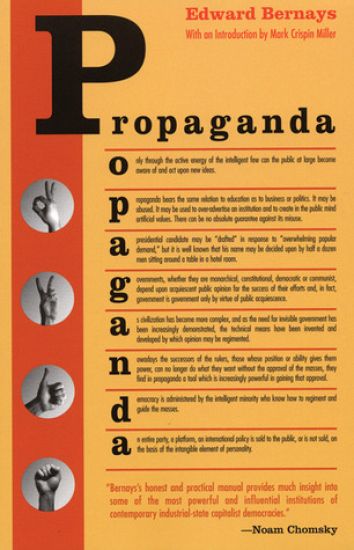
"Bernays' honest and practical manual provides much insight into some of the most powerful and influential institutions of contemporary industrial state capitalist democracies."--Noam Chomsky"The conscious and intelligent manipulation of the organized habits and opinions of the masses is an important element in democratic society. Those who manipulate this unseen mechanism of society constitute an invisible government which is the true ruling power of our country."--Edward Bernays, PropagandaA seminal and controversial figure in the history of political thought and public relations, Edward Bernays (1891-1995), pioneered the scientific technique of shaping and manipulating public opinion, which he famously dubbed "engineering of consent." During World War I, he was an integral part of the U.S. Committee on Public Information (CPI), a powerful propaganda apparatus that was mobilized to package, advertise and sell the war to the American people as one that would "Make the World Safe for Democracy." The CPI would become the blueprint in which marketing strategies for future wars would be based upon.Bernays applied the techniques he had learned in the CPI and, incorporating some of the ideas of Walter Lipmann, became an outspoken proponent of propaganda as a tool for democratic and corporate manipulation of the population. His 1928 bombshell Propaganda lays out his eerily prescient vision for using propaganda to regiment the collective mind in a variety of areas, including government, politics, art, science and education. To read this book today is to frightfully comprehend what our contemporary institutions of government and business have become in regards to organized manipulation of the masses.This is the first reprint of Propaganda in over 30 years and features an introduction by Mark Crispin Miller, author of The Bush Dyslexicon: Observations on a National Disorder.