Kirjojen hintavertailu. Mukana 12 152 606 kirjaa ja 12 kauppaa.

Kirjailija

Edward Gonzalez

Kirjat ja teokset yhdessä paikassa: 6 kirjaa, julkaisuja vuosilta 2002-2025, suosituimpien joukossa Understanding Near Crises and Escalation in World Politics. Vertaile teosten hintoja ja tarkista saatavuus suomalaisista kirjakaupoista.

6 kirjaa

Kirjojen julkaisuhaarukka 2002-2025.

Understanding Near Crises and Escalation in World Politics

Understanding Near Crises and Escalation in World Politics

Steven E. Lobell; Patrick James; Scott A. Silverstone; Victor Asal; Kyle Beardsley; Edward Gonzalez; Norrin M. Ripsman

TAYLOR FRANCIS LTD
2025
nidottu
This book introduces the near crisis phase of conflict and escalation. These time-sensitive disputes between states, and even with violent non-state actors, do not involve significant risk of military escalation, at least in the moment. Investigating how and why some near crises escalate, while others do not, requires an explanation of the different dynamics of international disputes and the policy tools that states and international institutions can employ. We ask an expanded set of questions about specific cases and general patterns of conflict behavior, such as: why did Israeli leaders respond to Hezbollah’s 2006 cross-border raid with escalation, resulting in the Second Lebanon War, while in previous instances the Israelis limited their retaliation? Why didn’t the 2015 Iranian Ballistic Missile Test or the 1995 Norwegian Black Brant Missile Launch escalate, while the 2009 North Korea Missile Movement and the 1995 Taiwan Straits dispute tipped into a full-blown crisis, and why did the 2008 Russia-Georgia conflict escalate from near crisis to war? We use primary sources and newly created data on near crises to answer these questions and others. The overall conclusion is that an ounce of prevention at the near crisis phase is worth a pound of cure in averting a full-blown crisis or war.This book will be of great interest to students of security studies, conflict studies, foreign policy, and international relations.
Understanding Near Crises and Escalation in World Politics

Understanding Near Crises and Escalation in World Politics

Steven E. Lobell; Patrick James; Scott A. Silverstone; Victor Asal; Kyle Beardsley; Edward Gonzalez; Norrin M. Ripsman

TAYLOR FRANCIS LTD
2025
sidottu
This book introduces the near crisis phase of conflict and escalation. These time-sensitive disputes between states, and even with violent non-state actors, do not involve significant risk of military escalation, at least in the moment. Investigating how and why some near crises escalate, while others do not, requires an explanation of the different dynamics of international disputes and the policy tools that states and international institutions can employ. We ask an expanded set of questions about specific cases and general patterns of conflict behavior, such as: why did Israeli leaders respond to Hezbollah’s 2006 cross-border raid with escalation, resulting in the Second Lebanon War, while in previous instances the Israelis limited their retaliation? Why didn’t the 2015 Iranian Ballistic Missile Test or the 1995 Norwegian Black Brant Missile Launch escalate, while the 2009 North Korea Missile Movement and the 1995 Taiwan Straits dispute tipped into a full-blown crisis, and why did the 2008 Russia-Georgia conflict escalate from near crisis to war? We use primary sources and newly created data on near crises to answer these questions and others. The overall conclusion is that an ounce of prevention at the near crisis phase is worth a pound of cure in averting a full-blown crisis or war.This book will be of great interest to students of security studies, conflict studies, foreign policy, and international relations.
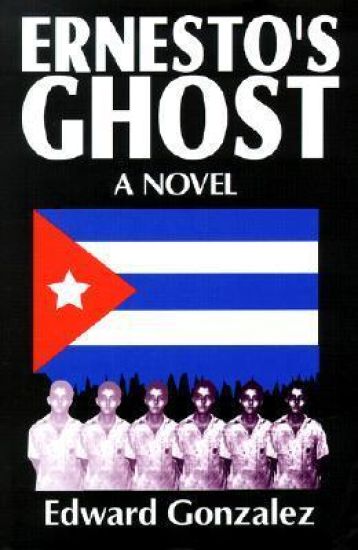
Ernesto's Ghost

Ernesto's Ghost

Edward Gonzalez

Transaction Publishers
2002
sidottu
Set against a backdrop of real people and events, Ernesto's Ghost is more than an espionage thriller or historical novel about Cuba. It is about moral choices-the moral choices made by the novel's central character, Professor David Diamond, when he discovers the dark side of the revolution, and the choices made by the other principal characters regarding their revolutionary commitment, their loved ones, and their professionalism. The time is 1974. A possible rapprochement between the United States and Cuba is in the offing following Nixon's resignation. But Henry Kissinger and the State Department are receiving mixed signals from Havana. On the eve of his trip to Cuba, the CIA tries to enlist Diamond in sorting out Fidel Castro's real intentions. The novel follows Diamond in Cuba as he begins to doubt the revolution only to fall in love with the stunning Catalina Cruz. It traces Catalina's own struggle in getting over the death of her beloved Ernesto, the epitome of Cuba's new man, and in ultimately questioning her government's policies. And it is a tale of the two lovers fending off Cuba's all-powerful state and the Comandante himself. On still other levels Ernesto's Ghost follows the dedication and courage of two intelligence officers-the CIA's Rudy Garcya and Joaquyn Acosta of Cuba's State Security-who are guided more by their own moral compasses than by the dictates of their governments. It is also about a revolution gone astray and the conceit of idealism that blinded so many of its followers. Finally, Ernesto's Ghost takes the reader through a labyrinth of political intrigue, with its concluding chapters full of unexpected twists and revelations, with mounting tension and suspense. It will appeal to those who enjoy popular fiction, as well as those interested in learning more about international politics and a major political phenomenon of our times.
Ernesto's Ghost

Ernesto's Ghost

Edward Gonzalez

Routledge
2018
nidottu
Set against a backdrop of real people and events, Ernesto's Ghost is more than an espionage thriller or historical novel about Cuba. It is about moral choices-the moral choices made by the novel's central character, Professor David Diamond, when he discovers the dark side of the revolution, and the choices made by the other principal characters regarding their revolutionary commitment, their loved ones, and their professionalism. The time is 1974. A possible rapprochement between the United States and Cuba is in the offing following Nixon's resignation. But Henry Kissinger and the State Department are receiving mixed signals from Havana. On the eve of his trip to Cuba, the CIA tries to enlist Diamond in sorting out Fidel Castro's real intentions. The novel follows Diamond in Cuba as he begins to doubt the revolution only to fall in love with the stunning Catalina Cruz. It traces Catalina's own struggle in getting over the death of her beloved Ernesto, the epitome of Cuba's new man, and in ultimately questioning her government's policies. And it is a tale of the two lovers fending off Cuba's all-powerful state and the Comandante himself. On still other levels Ernesto's Ghost follows the dedication and courage of two intelligence officers-the CIA's Rudy Garcya and Joaquyn Acosta of Cuba's State Security-who are guided more by their own moral compasses than by the dictates of their governments. It is also about a revolution gone astray and the conceit of idealism that blinded so many of its followers. Finally, Ernesto's Ghost takes the reader through a labyrinth of political intrigue, with its concluding chapters full of unexpected twists and revelations, with mounting tension and suspense. It will appeal to those who enjoy popular fiction, as well as those interested in learning more about international politics and a major political phenomenon of our times.
Cuba After Castro

Cuba After Castro

Edward Gonzalez; Kevin F. McCarthy

RAND
2004
pokkari
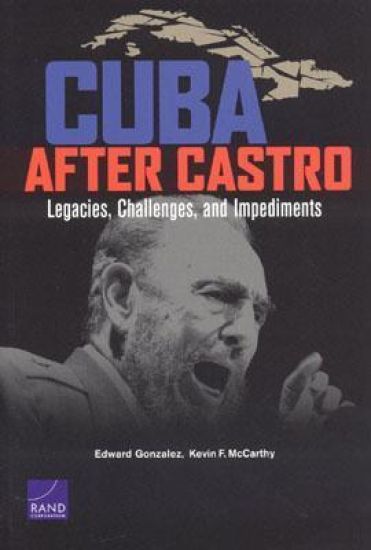
Examines the political, social, and economic challenges the Cuban government and people will likely face in a post-Castro Cuba; When the end of the Castro era arrives, the successor government and the Cuban people will need to answer certain questions: How is CastroOs more than four-decade rule likely to affect a post-Castro Cuba? What will be the political, social, and economic challenges Cuba will confront? What are the impediments to CubaOs economic development and democratic transition? The authors examine CastroOs political legacies, CubaOs generational and racial divisions, its demographic predicament, the legacy of a centralized economy, and the need for industrial restructuring.
Cuba After Castro

Cuba After Castro

Edward Gonzalez; Kevin F. McCarthy

RAND
2004
pokkari
Accompanies and supports the Cuba After Castro monograph report with more-detailed analyses of the political, social, demographic, and economic problems confronting Cuba; When the end of the Castro era arrives, the government that succeeds Fide! Castro and the Cuban people will need answers to certain questions: How is CastroOs four-decade-plus rule likely to affect a post-Castro Cuba? What are the political, social, and economic challenges Cuba will confront? What are the impediments to be surmounted if Cuba is to develop economically and embark on a democratic transition? The five appendices in this report constitute a companion volume to the RAND Corporation report Cuba After Castro: Legacies, Challenges, and Impediments (MG-111-RC, 2004).