Kirjojen hintavertailu. Mukana 12 137 287 kirjaa ja 12 kauppaa.

Kirjailija

Edward Graham

Kirjat ja teokset yhdessä paikassa: 13 kirjaa, julkaisuja vuosilta 1995-2025, suosituimpien joukossa A Mission Without Borders. Vertaile teosten hintoja ja tarkista saatavuus suomalaisista kirjakaupoista.

13 kirjaa

Kirjojen julkaisuhaarukka 1995-2025.

A Mission Without Borders

A Mission Without Borders

Chad Robichaux; Edward Graham

Thomas Nelson Publishers
2025
nidottu
USA TODAY BESTSELLERAuthor, speaker, and former Force Recon Marine Chad Robichaux offers an honest, no-holds-barred account of what has really been happening in Ukraine and shares powerful stories that are soaked in resiliency and determination, faith and sacrifice in the face of overwhelming opposition.When Russian forces invaded Ukraine on February 24, 2022, former Force Recon Marine Chad Robichaux knew that innocent people were about to be exposed to untold brutality. He also knew that God was inviting him to get involved. With little idea of the trials that would follow, Chad's response was simple and clear: "yes." As he gathered a team of elite special operations veterans, he invited his twenty-five-year-old son, Hunter--also a Marine combat veteran--to partner with him in Ukraine. Over the course of seven trips, Chad saw a change in Hunter as his confidence grew and he exceled among the team. Chad's own faith also grew as he learned to relinquish control and trust God with his son and what he witnessed in the brutality of war.A Mission Without Borders is a powerful account of the lessons we can learn whenever we say yes to God. Chad's experience will help readersunderstand what the conflict in Ukraine was like for everyday citizens beyond the political fog;discover how a bond can grow between a father and son as they face hardship together; andrealize that God doesn't just call us to go to the aid of the people we know and love, sometimes he calls us to help strangers--because it's the right thing to do. A Mission Without Borders will take readers deep into the war in Ukraine. From Russia's use of ballistic and chemical weapons on civilians, to the inspirational story of the role that the Ukrainian church has played in the war, Chad's story of courage and hope needs to be heard. It is rich in human and spiritual truth and will connect deeply with readers of all walks.
Clouds

Clouds

Edward Graham; Richard Hamblyn

PRINCETON UNIVERSITY PRESS
2025
sidottu
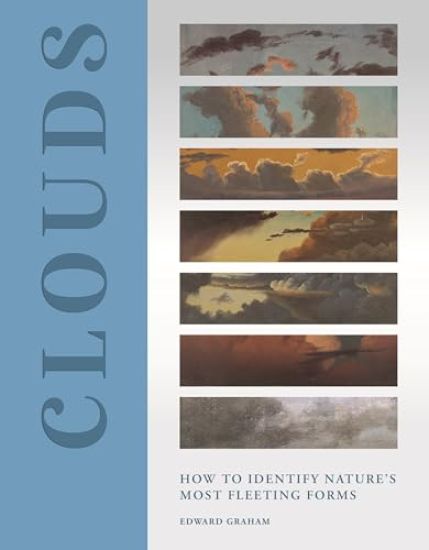
A one-of-a-kind illustrated guide to clouds, cloud formations, and the artists who painted themThe mystery of clouds has captivated scientists and artists alike. This unique book shows you how to use the meteorological techniques of nephology to identify these elusive and transmutable shapes. It curates, classifies, and measures every species—including those recently discovered—considering the height, size, texture, arrangement, modifications, and movement of their many shifting forms. Clouds blends a lively and engaging narrative by one of today’s leading meteorologists with an essay on historic cloud art, and includes a wealth of breathtaking cloud studies by some of the greatest artists ever to look skyward.Presents a “taxonomic” approach to identification, applying the basic laws of geometry to quantify and measure clouds and cloud formationsShowcases artists who painted clouds from a scientific viewpoint, such as John Constable, Frederic Edwin Church, J.M.W. Turner, and Caspar David FriedrichTells the stories of the physicists and painters who have attempted to record the many different incarnations of cloudsExplains the physics of clouds, from the basic constituents of Earth’s atmosphere to cloud formation and dissipation, the colors and shades of clouds, the development of precipitation, and the timescale evolution of cloudsDiscusses the classification and naming of cloudsServes as a user-friendly reference guide to low, midlevel, and high cloud speciesIncludes charts, infographics, and a glossary of terms
A Mission Without Borders

A Mission Without Borders

Chad Robichaux; Edward Graham

Thomas Nelson Publishers
2024
sidottu
USA TODAY BESTSELLERAuthor, speaker, and former Force Recon Marine Chad Robichaux offers an honest, no-holds-barred account of what has really been happening in Ukraine and shares powerful stories that are soaked in resiliency and determination, faith and sacrifice in the face of overwhelming opposition.When Russian forces invaded Ukraine on February 24, 2022, former Force Recon Marine Chad Robichaux knew that innocent people were about to be exposed to untold brutality. He also knew that God was inviting him to get involved. With little idea of the trials that would follow, Chad's response was simple and clear: "yes." As he gathered a team of elite special operations veterans, he invited his twenty-five-year-old son, Hunter--also a Marine combat veteran--to partner with him in Ukraine. Over the course of seven trips, Chad saw a change in Hunter as his confidence grew and he exceled among the team. Chad's own faith also grew as he learned to relinquish control and trust God with his son and what he witnessed in the brutality of war.A Mission Without Borders is a powerful account of the lessons we can learn whenever we say yes to God. Chad's experience will help readersunderstand what the conflict in Ukraine was like for everyday citizens beyond the political fog;discover how a bond can grow between a father and son as they face hardship together; andrealize that God doesn't just call us to go to the aid of the people we know and love, sometimes he calls us to help strangers--because it's the right thing to do. A Mission Without Borders will take readers deep into the war in Ukraine. From Russia's use of ballistic and chemical weapons on civilians, to the inspirational story of the role that the Ukrainian church has played in the war, Chad's story of courage and hope needs to be heard. It is rich in human and spiritual truth and will connect deeply with readers of all walks.

A Mission Without Borders

A Mission Without Borders

Chad Robichaux; Edward Graham

Thomas Nelson Publishers
2024
nidottu
The inspiring true story of US elite special operations veterans fighting for freedom in Ukraine and discovering the power of faith, sacrifice, and hope.Author, speaker, and former Force Recon Marine Chad Robichaux offers an honest, no-holds-barred account of what has really been happening in Ukraine and shares powerful stories that are soaked in resiliency and determination, faith, and sacrifice in the face of overwhelming opposition.When Russian forces invaded Ukraine on February 24, 2022, former Force Recon Marine Chad Robichaux knew that innocent people were about to be exposed to untold brutality. He also knew that God was inviting him to get involved. With little idea of the trials that would follow, Chad's response was simple and clear: "yes." As he gathered a team of elite special operations veterans, he invited his twenty-five-year-old son, Hunter--also a Marine combat veteran--to partner with him in Ukraine. Over the course of seven trips, Chad saw a change in Hunter as his confidence grew and he excelled among the team. Chad's own faith also grew as he learned to relinquish control and trust God with his son, as well as what he witnessed in the brutality of war.A Mission Without Borders is a powerful account of the lessons we can learn whenever we say yes to God. Chad's experience will help you:Understand what the conflict in Ukraine was like for everyday citizens beyond the political fog.Discover how a bond can grow between a father and son as they face hardship together.Realize that God doesn't just call us to go to the aid of the people we know and love, sometimes he calls us to help strangers--because it's the right thing to do. A Mission Without Borders will take you deep into the war in Ukraine, from Russia's use of ballistic and chemical weapons on civilians to the inspirational story of the role that the Ukrainian church has played in the war. Chad's story of courage and hope will inspire and challenge you.USA TODAY BESTSELLER
Foreign Direct Investment in the United States – Benefits, Suspicions, and Risks with Special Attention to FDI from China

Foreign Direct Investment in the United States – Benefits, Suspicions, and Risks with Special Attention to FDI from China

Edward Graham; Theodore Moran; Lindsay Oldenski; Paul Krugman

The Peterson Institute for International Economics
2012
nidottu
Americans have long been ambivalent toward foreign direct investment in the United States. Foreign multinational corporations may be a source of capital, technology, and jobs. But what are the implications for US workers, firms, communities, and consumers as the United States remains the most popular destination for foreign multinational investment? Theodore H. Moran and Lindsay Oldenski find that foreign multinational firms that invest in the United States are, alongside US-headquartered American multinationals, the most productive and highest-paying segment of the US economy. These firms conduct more research and development, provide more value added to US domestic inputs, and export more goods and services than other firms in the US economy. The superior technology and management techniques they employ spill over horizontally and vertically to improve the performance of local firms and workers. As the United States wants not only to expand employment but also create well-paying jobs that reverse the falling earnings that many US workers and middle class families have suffered in recent decades, it is more important than ever to enhance the United States as a destination for multinational investors.
U.S. National Security and Foreign Direct Investment

U.S. National Security and Foreign Direct Investment

Edward Graham; David Marchick

The Peterson Institute for International Economics
2006
nidottu
Although a vital part of the US economy, foreign direct investment (FDI) in the United States periodically raises public and congressional alarms-as witnessed during Dubai Ports World's recent bid to acquire US port operations and Chinese firm CNOOC's attempt to buy US energy firm Unocal. Drawing fire from Congress are the Exon-Florio provisions of US law, which enable the president to block a foreign acquisition that threatens national security. This important new book finds that many proposed reforms risk harming the US economy without enhancing national security. The authors propose ways to strengthen the current interagency review of deals, including an improved process for reporting to Congress.
Does Foreign Direct Investment Promote Development?

Does Foreign Direct Investment Promote Development?

Theodore Moran; Edward Graham; Magnus Blomström

The Peterson Institute for International Economics
2005
nidottu
What is the impact of foreign direct investment (FDI) on development? The answer is important for the lives of millions-if not billions-of workers, families, and communities in the developing world. The answer is crucial for policymakers in developing and developed countries, and in multilateral agencies. This volume gathers together the cutting edge of new research on FDI and host country economic performance and presents the most sophisticated critiques of current and past inquiries. It probes the limits of what can be determined from available evidence and from innovative investigative techniques. In addition, the book presents new results, concludes with an analysis of the implications for contemporary policy debates, and proposes new avenues for future research.
Reforming Korea`s Industrial Conglomerates

Reforming Korea`s Industrial Conglomerates

Edward Graham

The Peterson Institute for International Economics
2003
nidottu
When what was to become the Asian financial crisis of 1997 broke out in Thailand, few analysts predicted that this crisis would spread to South Korea. Korea, after all, had risen from poverty to become one of the "Asian miracle economies". However, the crisis did not spare Korea, and the Korean government was forced to negotiate a bailout from the International Monetary Fund in late 1997. In 1998, the Korean economy went into the deepest recession recorded in that country since the Korean War. Many of the underlying problems were homegrown. Huge amounts of debt had been amassed by Korea's large industrial conglomerates (the chaebol), and often the funds had been invested in undertakings that were not earning satisfactory rates of return. By the end of 1998, a number of smaller conglomerates had failed and one of the top five (Daewoo) was in serious trouble and eventually would fail. In this study, author Edward M. Graham examines how this situation arose, tracing its roots to the aggressive industrial policy begun by Korean strongman president Park Chung-hee during the late 1960s.Graham notes that a major failing of Korea during the "miracle-economy" years was that the financial sector in Korea remained underdeveloped and thus never was able to develop a counterweight to the economic and political power that, over time, the chaebol acquired. The crisis of 1997 can be seen as the culminating event of that asymmetry that was created by Korean industrial policy, i.e., very powerful industrial groups that operated without the countervailing power of financial institutions. Graham then looks at the efforts at reform since 1997, including reform of the financial sector and the chaebol themselves. He concludes that, while much progress has been made, the reform has been uneven and is far from complete.
Fighting the Wrong Enemy – Antiglobal Activists and Multinational Enterprises

Fighting the Wrong Enemy – Antiglobal Activists and Multinational Enterprises

Edward Graham

The Peterson Institute for International Economics
2000
nidottu
Antiglobalist forces have been gaining greater momentum in recent years in their efforts to reverse what they view as the negative effects of an integrating global economy. Their influence was felt earlier when efforts to create a Multilateral Agreement on Investment (MAI) ended in failure in 1998 after France left the bargaining table at the Organization for Economic Cooperation and Development, effectively killing the initiative. In this book, through an evaluation of the MAI itself and the issues raised by its opponents, Edward M. Graham takes a fresh look at the growing backlash against globalization. He first explores whether the MAI negotiations failed due to political maneuvering by antiglobalist nongovernmental organizations (supported by US organized labor) or because of irreconcilable differences among the negotiating parties over the substance of the issue of foreign direct investment. He then objectively and thoroughly assesses antiglobalist assertions that the activities of multinational firms have had negative effects on workers both in the home (investor) and host (recipient) nations, with a special focus on developing nations.An important finding is that multinational firms tend to pay workers in developing nations wages that are significantly above prevailing wages. Graham then examines the issue of globalized economic activity and the environment, finding that economic growth in developing nations can lead to increased environmental stress but also finding that foreign direct investment can lead to reductions in this stress. He finds that the worry of many environmentalists of a "race to the bottom" is not borne out by the evidence. The final chapters assess whether or not a negotiation to create a comprehensive agreement on investment should be included in a multilateral negotiating round at the World Trade Organization in the near future. The interests of developing nations in this agenda are given special attention. Graham indicates that, while many developing nations would accept such rules, it might nonetheless be premature to press for a comprehensive agreement at this time. Rather, a limited investment agenda might be both more feasible and more productive.
Global Competition Policy

Global Competition Policy

Edward Graham; J. David Richardson

The Peterson Institute for International Economics
1997
nidottu
There is growing consensus among international trade negotiators and policymakers that a prime area for future multilateral discussion is competition policy. Competition policy includes antitrust policy (including merger regulation and control) but is often extended to include international trade measures and other policies that affect the structure, conduct, and performance of individual industries. This study includes country studies of competition policy in Western Europe, North America, and the Far East (with a focus on Japan) in the light of increasingly globalized activities of business firms. Areas where there are major differences in philosophy, policy, or practice are identified, with emphasis on those differences that could lead to economic costs and international friction. Alternatives for eliminating these costs and frictions are discussed, including unilateral policy changes, bilateral or multilateral harmonization of policies, and creation of new international regimes to supplement or replace national or regional regimes.
Global Corporations and National Governments

Global Corporations and National Governments

Edward Graham

The Peterson Institute for International Economics
1996
nidottu
There is inherent tension between the increasingly global focus of foreign investors and the continuing national focus of governments. Countries, particularly developing ones, compete to attract investment from global corporations, and they attach performance requirements to tilt the impact of those investments in their favor. This is because the host nations expect investment to raise growth levels, efficiency, and living standards. At the same time, the home countries of such corporations worry that their firms are not accorded fair and reciprocal treatment abroad. These issues have become a source of conflict among nations, one that could escalate considerably if an agreement is not soon reached.Graham's study analyzes the nature and depth of the international investment problem and its potential impact on the world economy and on economic relations among nations. He urges that current rules on foreign direct investment be enlarged and restructured via new international rules and institutional arrangements and offers two alternatives for doing so.
Competition Policies for the Global Economy

Competition Policies for the Global Economy

Edward Graham; J. David Richardson

The Peterson Institute for International Economics
1995
nidottu
As border barriers have declined, private barriers to competition have grown more significant. More and more international trade disputes involve private business practices that allegedly block the market access of rival firms. Such disputes include high profile conflicts between Japan and the United States over semiconductors, auto parts, and photographic film, between the European Union and the United States over aerospace and defense mergers, and between Asian nations and others over access to telecommunications networks. More such disputes are inevitable, especially in sectors that have been traditionally state-controlled but that are now subject to privatization. The regulation of private business practices that restrict competition is called competition (or antitrust) policy. In this book, the authors survey national competition policies and the issues they raise for international trade and investment. The book includes detailed recommendations for international agreement on minimum standards in those competition-policy measures that affect the ability of foreign firms to contest markets.These standards could be negotiated and implemented bilaterally, regionally, and globally at the World Trade Organization. At the international level, governments might agree on certain initial steps to accomplish greater contestability: "national treatment" for foreign-controlled firms, abolition of most international cartels (including those that are now sanctioned), and establishment of mandatory consultation procedures when one government believes that private business practices in another nation foreclose exports or direct investment. There should also be premerger notification requirements for transborder or other mergers having cross-border effects. Further steps might be implemented at a future time.
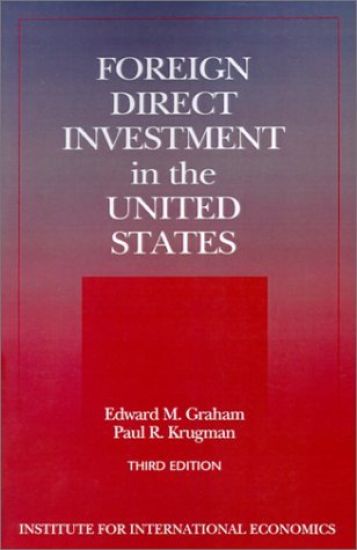
Foreign Direct Investment in the United States – Benefits, Suspicions, and Risks with Special Attention to FDI from China

Foreign Direct Investment in the United States – Benefits, Suspicions, and Risks with Special Attention to FDI from China

Edward Graham; Theodore Moran; Lindsay Oldenski; Paul Krugman

The Peterson Institute for International Economics
1995
nidottu
The share of the US economy controlled by foreign firms has tripled since the mid-1970s. The authors find that foreign firms appear to invest in the United States mainly to exploit their individual advantages in management and technology - the same reasons why American firms invest abroad - rather than because the United States is now running large deficits and has become a large debtor nation. Foreign-owned firms do not pay lower wages or shift good jobs and research and development away from the United States. Foreign-owned firms and especially Japanese firms do, however, have a marked tendency to import more of their production inputs. The authors warn that the President's new legislative authority to screen FDI on national security grounds could easily be abused, but endorse using this authority to ensure access to critical technologies or production processes including a requirement on some foreign firms to invest in the United States. They propose new international rules to minimize governmental interference and harmonize policies toward multinational firms.