Kirjojen hintavertailu. Mukana 12 390 323 kirjaa ja 12 kauppaa.

Kirjailija

Edward L. Deci

Kirjat ja teokset yhdessä paikassa: 6 kirjaa, julkaisuja vuosilta 1985-2018, suosituimpien joukossa Self-Determination Theory. Vertaile teosten hintoja ja tarkista saatavuus suomalaisista kirjakaupoista.

6 kirjaa

Kirjojen julkaisuhaarukka 1985-2018.

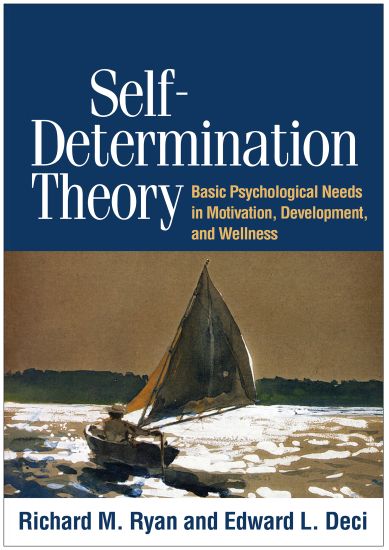
Self-Determination Theory

Self-Determination Theory

Richard M. Ryan; Edward L. Deci

Guilford Press
2018
nidottu
Self-determination theory (SDT) provides a framework for understanding the factors that promote motivation and healthy psychological and behavioral functioning. In this authoritative work, the codevelopers of the theory comprehensively examine SDT's conceptual underpinnings (including its six mini-theories), empirical evidence base, and practical applications across the lifespan. The volume synthesizes a vast body of research on how supporting--or thwarting--people's basic needs for competence, relatedness, and autonomy affects their development and well-being. Chapters cover implications for practice and policy in education, health care, psychotherapy, sport, and the workplace.
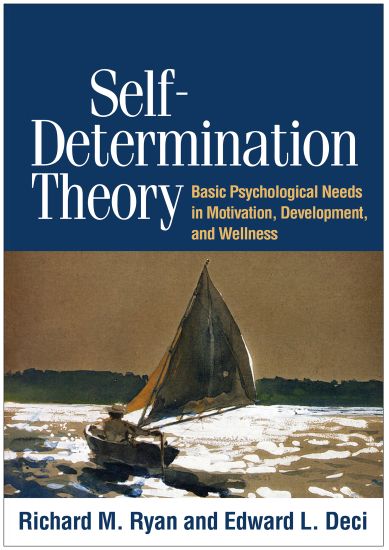
Self-Determination Theory

Self-Determination Theory

Richard M. Ryan; Edward L. Deci

Guilford Press
2017
sidottu
Self-determination theory (SDT) provides a framework for understanding the factors that promote motivation and healthy psychological and behavioral functioning. In this authoritative work, the codevelopers of the theory comprehensively examine SDT's conceptual underpinnings (including its six mini-theories), empirical evidence base, and practical applications across the lifespan. The volume synthesizes a vast body of research on how supporting--or thwarting--people's basic needs for competence, relatedness, and autonomy affects their development and well-being. Chapters cover implications for practice and policy in education, health care, psychotherapy, sport, and the workplace.
Intrinsic Motivation and Self-Determination in Human Behavior

Intrinsic Motivation and Self-Determination in Human Behavior

Edward L. Deci; Richard M. Ryan

Springer-Verlag New York Inc.
2013
nidottu
Early in this century, most empirically oriented psychologists believed that all motivation was based in the physiology of a set of non-nervous­ system tissue needs. The theories of that era reflected this belief and used it in an attempt to explain an increasing number of phenomena. It was not until the 1950s that it became irrefutably clear that much of human motivation is based not in these drives, but rather in a set of innate psychological needs. Their physiological basis is less understood; and as concepts, these needs lend themselves more easily to psycho­ logical than to physiological theorizing. The convergence of evidence from a variety of scholarly efforts suggests that there are three such needs: self-determination, competence, and interpersonal relatedness. This book is primarily about self-determination and competence (with particular emphasis on the former), and about the processes and structures that relate to these needs. The need for interpersonal relat­ edness, while no less important, remains to be explored, and the findings from those explorations will need to be integrated with the present theory to develop a broad, organismic theory of human motivation. Thus far, we have articulated self-determination theory, which is offered as a working theory-a theory in the making. To stimulate the research that will allow it to evolve further, we have stated self-determination theory in the form of minitheories that relate to more circumscribed domains, and we have developed paradigms for testing predictions from the various minitheories.
Intrinsic Motivation

Intrinsic Motivation

Edward L. Deci

Springer-Verlag New York Inc.
2011
nidottu
As I begin to write this Preface, I feel a rush of excitement. I have now finished the book; my gestalt is coming into completion. Throughout the months that I have been writing this, I have, indeed, been intrinsically motivated. Now that it is finished I feel quite competent and self-determining (see Chapter 2). Whether or not those who read the book will perceive me that way is also a concern of mine (an extrinsic one), but it is a wholly separate issue from the intrinsic rewards I have been experiencing. This book presents a theoretical perspective. It reviews an enormous amount of research which establishes unequivocally that intrinsic motivation exists. Also considered herein are various approaches to the conceptualizing of intrinsic motivation. The book concentrates on the approach which has developed out of the work of Robert White (1959), namely, that intrinsically motivated behaviors are ones which a person engages in so that he may feel competent and self-determining in relation to his environment. The book then considers the development of intrinsic motiva­ tion, how behaviors are motivated intrinsically, how they relate to and how intrinsic motivation is extrinsically motivated behaviors, affected by extrinsic rewards and controls. It also considers how changes in intrinsic motivation relate to changes in attitudes, how people attribute motivation to each other, how the attribution process is motivated, and how the process of perceiving motivation (and other internal states) in oneself relates to perceiving them in others.
Why We Do What We Do: Understanding Self-Motivation

Why We Do What We Do: Understanding Self-Motivation

Edward L. Deci; Richard Flaste

PENGUIN BOOKS
1996
nidottu
What motivates us as students, employees, and individuals? If you reward your children for doing their homework, they will usually respond by getting it done. But is this the most effective method of motivation? No, says psychologist Edward L. Deci, who challenges traditional thinking and shows that this method actually works against performance. The best way to motivate people--at school, at work, or at home--is to support their sense of autonomy. Explaining the reasons why a task is important and then allowing as much personal freedom as possible in carrying out the task will stimulate interest and commitment, and is a much more effective approach than the standard system of reward and punishment. We are all inherently interested in the world, argues Deci, so why not nurture that interest in each other? Instead of asking, "How can I motivate people?" we should be asking, "How can I create the conditions within which people will motivate themselves?""An insightful and provocative meditation on how people can become more genuinely engaged and succesful in pursuing their goals." --Publisher's Weekly
Intrinsic Motivation and Self-Determination in Human Behavior

Intrinsic Motivation and Self-Determination in Human Behavior

Edward L. Deci; Richard M. Ryan

Kluwer Academic/Plenum Publishers
1985
sidottu
Early in this century, most empirically oriented psychologists believed that all motivation was based in the physiology of a set of non-nervous­ system tissue needs. The theories of that era reflected this belief and used it in an attempt to explain an increasing number of phenomena. It was not until the 1950s that it became irrefutably clear that much of human motivation is based not in these drives, but rather in a set of innate psychological needs. Their physiological basis is less understood; and as concepts, these needs lend themselves more easily to psycho­ logical than to physiological theorizing. The convergence of evidence from a variety of scholarly efforts suggests that there are three such needs: self-determination, competence, and interpersonal relatedness. This book is primarily about self-determination and competence (with particular emphasis on the former), and about the processes and structures that relate to these needs. The need for interpersonal relat­ edness, while no less important, remains to be explored, and the findings from those explorations will need to be integrated with the present theory to develop a broad, organismic theory of human motivation. Thus far, we have articulated self-determination theory, which is offered as a working theory-a theory in the making. To stimulate the research that will allow it to evolve further, we have stated self-determination theory in the form of minitheories that relate to more circumscribed domains, and we have developed paradigms for testing predictions from the various minitheories.