Kirjojen hintavertailu. Mukana 12 390 323 kirjaa ja 12 kauppaa.
Kirjailija
Edward M. Gomez
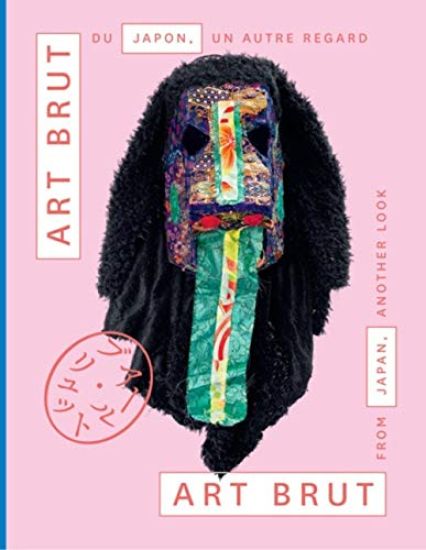
Kirjat ja teokset yhdessä paikassa: 5 kirjaa, julkaisuja vuosilta 2003-2019, suosituimpien joukossa Art Brut From Japan, Another Look. Vertaile teosten hintoja ja tarkista saatavuus suomalaisista kirjakaupoista.
This catalogue presents pieces by twenty-five new Japanese artists from different regions of Japan, whose works drawings, paintings, photographs, sculptures, and textiles - are largely unpublished.
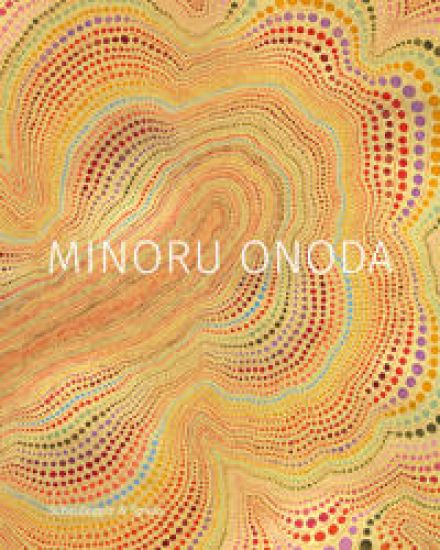
Minoru Onoda was born in Japanese-occupied Manchuria to a Japanese family in 1937. Before the outbreak of World War II, they moved to Himeji in Japan, which remained the artist's residence until his passing in 2008. Following his artistic education at the Osaka Institute of Fine Arts and at Osaka School of Art in the 1960s, Onoda joined the Gutai, Japan's first post-war radical artistic movement. Gutai challenged what the movement considered a reactionary understanding to initiate new notions of art, and redefined the relationships among body, matter, time, and space. Enchanted by concepts of repetition, Onoda produced panels with amalgamations of gradually increasing dots with relief, creating organically growing shapes, progressing to infinite circles and ultimately moving to a monochrome style in painting. When Gutai disbanded in 1972, he opted for a conceptual style in which the proliferating dots disappeared. The Western world has received Minoru Onoda's art almost exclusively in the Gutai context, for example in the 2013 exhibition Gutai: Splendid Playground at New York's Guggenheim Museum. This overdue first-ever monograph on Minoru Onoda introduces him as an artist in his own right. Apart from investigating his relations with Gutai, it explores his creative process with a particular focus on his sketchbooks.
Minoru Onoda was born in Japanese-occupied Manchuria to a Japanese family in 1937. Before the outbreak of World War II, they moved to Himeji in Japan, which remained the artist's residence until his passing in 2008. Following his artistic education at the Osaka Institute of Fine Arts and at Osaka School of Art in the 1960s, Onoda joined the Gutai, Japan's first post-war radical artistic movement. Gutai challenged what the movement considered a reactionary understanding to initiate new notions of art, and redefined the relationships among body, matter, time, and space. Enchanted by concepts of repetition, Onoda produced panels with amalgamations of gradually increasing dots with relief, creating organically growing shapes, progressing to infinite circles and ultimately moving to a monochrome style in painting. When Gutai disbanded in 1972, he opted for a conceptual style in which the proliferating dots disappeared. The Western world has received Minoru Onoda's art almost exclusively in the Gutai context, for example in the 2013 exhibition Gutai: Splendid Playground at New York's Guggenheim Museum. This overdue first-ever monograph on Minoru Onoda introduces him as an artist in his own right. Apart from investigating his relations with Gutai, it explores his creative process with a particular focus on his sketchbooks. Text in Japanese.
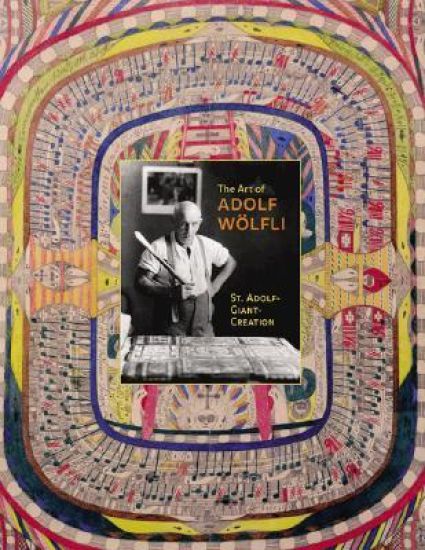
Despite being institutionalized for schizophrenia at age thirty-one, Adolf Wolfli (1864-1930) achieved artistic greatness in his cell at Waldau Mental Asylum near his native Bern, Switzerland. He has had a profound influence on modern art ever since; Andre Breton described his work as "one of the three or four most important oeuvres of the twentieth century." The Art of Adolf Wolfli offers a fresh vantage point on the artist's remarkably intricate drawings and astonishing collages, as well as his newly translated writings, which are justly celebrated for their dizzying blend of mythology and humor. Also included are illuminating essays by leading specialists on his art and life. Wolfli's youth was one of deprivation. His alcoholic father ran off when Wolfli was five, and his mother died soon after. Despite these travails, he managed to complete his education, acquiring the sophisticated literacy so evident in his later work. However, beginning at age twenty-six, his repeated attempts to molest young girls landed him first in jail and, in 1894, in the asylum. Though violent at first, by 1899 he calmed down--and began to draw. Working primarily in pencil on newsprint, Wolfli created a dense, stunningly detailed medley of wildly imaginative prose texts interwoven with poems, musical compositions, color illustrations, and collages. His five-part magnum opus, "St. Adolf-Giant-Creation," comprises 45 large volumes and 16 notebooks--25,000 pages in all--containing 1,620 drawings and 1,640 collages. Sure to be the authoritative resource for this remarkable oeuvre, this striking book represents compelling testimony that great torment does not preclude great art. EXHIBITION SCHEDULE American Folk Art Museum, New York February 25 - May 18, 2003 Milwaukee Art Museum September 18 - December 12, 2004