Kirjojen hintavertailu. Mukana 12 109 121 kirjaa ja 12 kauppaa.

Kirjailija

Edward M. Kennedy

Kirjat ja teokset yhdessä paikassa: 8 kirjaa, julkaisuja vuosilta 2003-2014, suosituimpien joukossa True Compass. Vertaile teosten hintoja ja tarkista saatavuus suomalaisista kirjakaupoista.

8 kirjaa

Kirjojen julkaisuhaarukka 2003-2014.

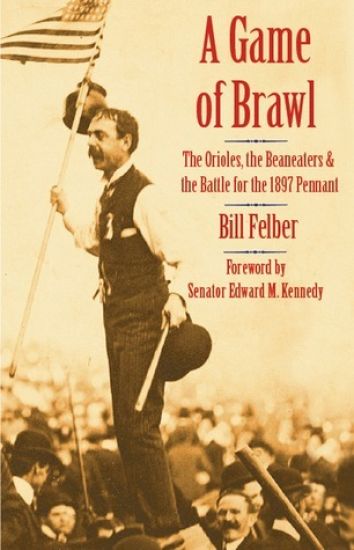
A Game of Brawl

A Game of Brawl

Bill Felber; Edward M. Kennedy

University of Nebraska Press
2014
pokkari
Not only was it probably the most cutthroat pennant race in baseball history, it was also a struggle to define how baseball would be played. A Game of Brawl re-creates the rowdy, season-long 1897 battle between the Baltimore Orioles and the Boston Beaneaters. The Orioles had acquired a reputation as the dirtiest team in baseball. Future Hall of Famers John McGraw, Wee Willie Keeler, and "Foxy" Ned Hanlon were proven winners—but their nasty tactics met with widespread disapproval among fans. So it was that their pennant race with the comparatively saintly Beaneaters took on a decidedly moralistic air. Bill Felber brings to life the most intensely watched team sporting event in the country's history to that time. His book captures the drama of the final week, as the race came down to a three-game series. And finally, it conveys the madness of the third and decisive game, when thirty thousand fans literally knocked down the gates and walls of a facility designed to hold ten thousand to watch the Beaneaters grind out a win and bring down baseball's first and most notorious evil empire.
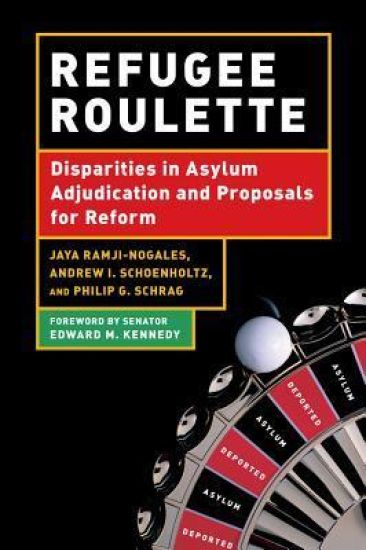
Refugee Roulette

Refugee Roulette

Philip G. Schrag; Andrew I. Schoenholtz; Jaya Ramji-Nogales; Edward M. Kennedy

New York University Press
2011
pokkari
Through the Refugee Act of 1980, the United States offers the prospect of safety to people who flee to America to escape rape, torture, and even death in their native countries. In order to be granted asylum, however, an applicant must prove to an asylum officer or immigration judge that she has a well-founded fear of persecution in her homeland. The chance of winning asylum should have little if anything to do with the personality of the official to whom a case is randomly assigned, but in a ground-breaking and shocking study, Jaya Ramji-Nogales, Andrew I. Schoenholtz, and Philip G. Schrag learned that life-or-death asylum decisions are too frequently influenced by random factors relating to the decision makers. In many cases, the most important moment in an asylum case is the instant in which a clerk randomly assigns the application to an adjudicator. The system, in its current state, is like a game of chance. Refugee Roulette is the first analysis of decisions at all four levels of the asylum adjudication process: the Department of Homeland Security, the immigration courts, the Board of Immigration Appeals, and the United States Courts of Appeals. The data reveal tremendous disparities in asylum approval rates, even when different adjudicators in the same office each considered large numbers of applications from nationals of the same country. After providing a thorough empirical analysis, the authors make recommendations for future reform. Original essays by eight scholars and policy makers then discuss the authors' research and recommendations Contributors: Bruce Einhorn, Steven Legomsky, Audrey Macklin, M. Margaret McKeown, Allegra McLeod, Carrie Menkel-Meadow, Margaret Taylor, and Robert Thomas.
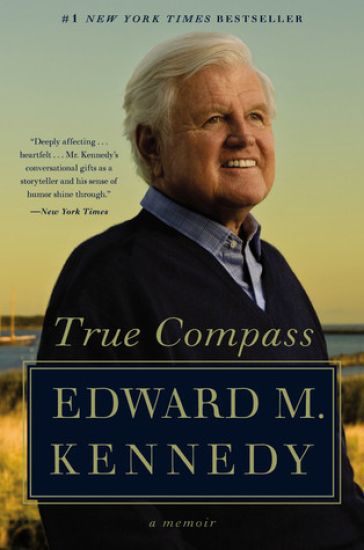
True Compass

True Compass

Edward M. Kennedy

Twelve
2011
nidottu
In this landmark autobiography, five years in the making, Senator Edward M. Kennedy tells his extraordinary personal story -- of his legendary family, politics, and fifty years at the center of national events. The youngest of nine children born to Joseph P. Kennedy and Rose Fitzgerald Kennedy, he came of age among siblings from whom much was expected. As a young man, he played a key role in the presidential campaign of his brother John F. Kennedy, recounted here in loving detail. In 1962 he was elected to the U.S. Senate, where he began a fascinating political education and became a legislator. In this historic memoir, Ted Kennedy takes us inside his family, re-creating life with his parents and brothers and explaining their profound impact on him. For the first time, he describes his heartbreak and years of struggle in the wake of their deaths. Through it all, he describes his work in the Senate on the major issues of our time -- civil rights, Vietnam, Watergate, the quest for peace in Northern Ireland -- and the cause of his life: improved health care for all Americans, a fight influenced by his own experiences in hospitals. His life has been marked by tragedy and perseverance, a love of family, and an abiding faith. There have been controversies, too, and Kennedy addresses them with unprecedented candor. At midlife, embattled and uncertain if he would ever fall in love again, he met the woman who changed his life, Victoria Reggie Kennedy. Facing a tough reelection campaign against an aggressive challenger named Mitt Romney, Kennedy found a new voice and began one of the great third acts in American politics, sponsoring major legislation, standing up for liberal principles, and making the pivotal endorsement of Barack Obama for president. Hundreds of books have been written about the Kennedys. True Compass will endure as the definitive account from a member of America's most heralded family, an inspiring legacy to readers and to history, and a deeply moving story of a life like no other.
True Compass

True Compass

Edward M. Kennedy

Abacus
2011
nidottu
A landmark autobiography and the definite account from a member of America's most heralded family.As a young man, Edward M. Kennedy played a key role in the presidential campaign of his brother, John F. Kennedy. In 1962, he was elected to the US Senate, where he learned how to become an effective legislator. His life was marked by tragedy and perseverance: he writes movingly of his brothers and his years of struggle in the wake of their deaths; his marriage to Victoria, the woman who changed his life; and his role in the major events of our time from civil rights, Vietnam and Watergate to the quest for peace in Northern Ireland.
True Compass

True Compass

Edward M. Kennedy

Hachette Audio
2009
cd
Edward M. Kennedy is widely regarded as one of the great Senators in the nation's history. He is also the patriarch of America's most heralded family. In this landmark autobiography, five years in the making, Senator Kennedy speaks with unprecedented candour about his extraordinary life. He writes movingly of his brothers and their influence on him; his marriage to the woman who changed his life, Victoria Reggie Kennedy; his role in the major events of our time (from the civil rights movement to the election of Barack Obama); and how his recent diagnosis of a malignant brain tumour has given even greater urgency to his long crusade for improved health care for all Americans. Written with warmth, wit, and grace, TRUE COMPASS is Edward M. Kennedy's inspiring legacy to readers and to history.
Refugee Roulette

Refugee Roulette

Philip G. Schrag; Andrew I. Schoenholtz; Jaya Ramji-Nogales; Edward M. Kennedy

New York University Press
2009
sidottu
Through the Refugee Act of 1980, the United States offers the prospect of safety to people who flee to America to escape rape, torture, and even death in their native countries. In order to be granted asylum, however, an applicant must prove to an asylum officer or immigration judge that she has a well-founded fear of persecution in her homeland. The chance of winning asylum should have little if anything to do with the personality of the official to whom a case is randomly assigned, but in a ground-breaking and shocking study, Jaya Ramji-Nogales, Andrew I. Schoenholtz, and Philip G. Schrag learned that life-or-death asylum decisions are too frequently influenced by random factors relating to the decision makers. In many cases, the most important moment in an asylum case is the instant in which a clerk randomly assigns the application to an adjudicator. The system, in its current state, is like a game of chance. Refugee Roulette is the first analysis of decisions at all four levels of the asylum adjudication process: the Department of Homeland Security, the immigration courts, the Board of Immigration Appeals, and the United States Courts of Appeals. The data reveal tremendous disparities in asylum approval rates, even when different adjudicators in the same office each considered large numbers of applications from nationals of the same country. After providing a thorough empirical analysis, the authors make recommendations for future reform. Original essays by eight scholars and policy makers then discuss the authors' research and recommendations Contributors: Bruce Einhorn, Steven Legomsky, Audrey Macklin, M. Margaret McKeown, Allegra McLeod, Carrie Menkel-Meadow, Margaret Taylor, and Robert Thomas.
A Game of Brawl

A Game of Brawl

Bill Felber; Edward M. Kennedy

University of Nebraska Press
2007
sidottu
Not only was it probably the most cutthroat pennant race in baseball history, it was also a struggle to define how baseball would be played. A Game of Brawl re-creates the rowdy, season-long 1897 battle between the Baltimore Orioles and the Boston Beaneaters. The Orioles had acquired a reputation as the dirtiest team in baseball. Future Hall of Famers John McGraw, Wee Willie Keeler, and "Foxy" Ned Hanlon were proven winners—but their nasty tactics met with widespread disapproval among fans. So it was that their pennant race with the comparatively saintly Beaneaters took on a decidedly moralistic air. Bill Felber brings to life the most intensely watched team sporting event in the country's history to that time. His book captures the drama of the final week, as the race came down to a three-game series. And finally, it conveys the madness of the third and decisive game, when thirty thousand fans literally knocked down the gates and walls of a facility designed to hold ten thousand to watch the Beaneaters grind out a win and bring down baseball's first and most notorious evil empire.
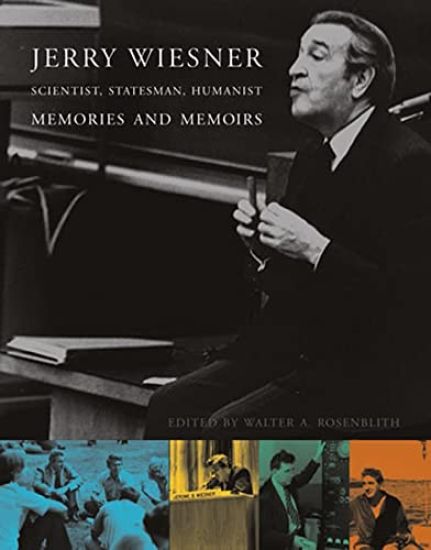
Jerry Wiesner, Scientist, Statesman, Humanist
How Jerry Wiesner, presidential science adviser and president of MIT, worked to make a better and safer world, as told by friends and colleagues and in his own autobiographical writings.The recurring theme in Jerry Wiesner's varied and distinguished career was what Senator Edward M. Kennedy calls in the foreword to this book a "passionate involvement to make a better world, and a safer world." His odyssey as a public citizen included work as an acoustician for folklorist Alan Lomax in the Library of Congress, research at MIT's Radiation Lab and at Los Alamos, service as President John F. Kennedy's Special Assistant for Science and Technology, and his years at MIT as professor, dean, provost, and president. At Los Alamos he received what he called "a valuable education on issues that were to occupy a large part of my life." The lessons learned informed his later work on nuclear disarmament; he was a pivotal adviser on both the 1963 partial Nuclear Test Ban Treaty and the 1972 ABM Treaty and an early member of the Pugwash group, an organization of scientists from both sides of the Iron Curtain. His many accomplishments as president of MIT similarly reflected his conviction that science and technology cannot be separate from society.Jerry Wiesner had long planned an autobiographical book that would combine personal experience and historical interpretation, covering the wide range of interests that he compared to "the many parts of a giant jigsaw puzzle," but the commitments of his postretirement life and a serious stroke in 1989 kept him from completing it. Jerry Wiesner, Scientist, Statesman, Humanist, conceived by Wiesner's longtime colleague and friend Walter Rosenblith, fills the gap between the unwritten autobiography and the still-to-be-written biography, assembling reminiscences of Wiesner by such friends as Alan Lomax, Theodore C. Sorensen, and John Kenneth Galbraith, and writings by Wiesner himself, including the autobiographical pieces that would have been the basis of his own book.