Kirjojen hintavertailu. Mukana 12 595 353 kirjaa ja 12 kauppaa.

Kirjailija

Edward Morgan

Kirjat ja teokset yhdessä paikassa: 11 kirjaa, julkaisuja vuosilta 1992-2026, suosituimpien joukossa Chasing Mallory's Dream. Vertaile teosten hintoja ja tarkista saatavuus suomalaisista kirjakaupoista.

11 kirjaa

Kirjojen julkaisuhaarukka 1992-2026.

Chasing Mallory's Dream

Chasing Mallory's Dream

Edward Morgan

BODLEIAN LIBRARY
2026
sidottu
When George Mallory and Andrew Irvine disappeared on Mount Everest in 1924, the British nation mourned their loss. But soon, other mountaineers focused again on the challenge of climbing Everest or another major Himalayan peak. The British were determined, but faced competition from German mountaineers, who by the 1920s were climbing at a much higher standard. Chasing Mallory’s Dream tells the story of the first British attempts on Everest and the competition with German climbers in the Himalayas. All of the mountaineers were affected by the First World War: some were veterans of the trenches, others were raised in its shadow. Both countries saw Himalayan climbing as a route to national renewal, a sentiment reinforced in Germany by the arrival of the Nazi regime, which encouraged reckless risk-taking for national glory. The attempts to realise ‘Mallory’s dream’ involve some of the most dramatic stories, poignant tragedies and fascinating characters in mountaineering history. Recounting these perilous expeditions allows us to explore the motives of the participants and their contrasting attitudes to risk, leadership and climbing style. Including striking archival photographs, this is a gripping narrative of Himalayan climbing between the wars.

SDG6 - Clean Water and Sanitation

SDG6 - Clean Water and Sanitation

Eva Kremere; Edward Morgan; Pedi Obani

Emerald Publishing Limited
2019
nidottu
Providing safe and clean water for all without damaging the environment is one of the biggest challenges of the SDGs. SDG6 is an ambitious goal which seeks to establish the framework through which environmentally responsible water resource management, sanitation and security can be achieved. Bridging academic discussion and real-world case studies, this book considers the challenge of balancing the provision of the basic human right of access to water whilst not eroding our capacity to live sustainably in a rapidly changing world. It considers the impact of climate change on the water cycle and discusses how this will increase the vulnerability of communities, including those in regions that already experience acute water challenges. The book also highlights the need for more urgent action on increasing the resilience and quality of freshwater ecosystems and how this links to sanitation practices. The book concludes with a discussion of some of the key challenges and possible solutions to meeting SDG6. Concise Guides to the United Nations Sustainable Development Goals comprises 17 short books, each examining one of the UN Sustainable Development Goals. The series provides an integrated assessment of the SDGs from economic, legal, social, environmental and cultural perspectives.
The Dragon, The Roly-Poly, The Princess and The Butterfly: Gero's Fable 1
Friendship by learning and sharing new talents is an important aspect of this fable. The Dragon, Princess, Roly-Poly and Butterfly are introduced as characters that have fun and unique talents to share with others. The situations are fictional, however, the learning is magically realistic. Have fun One objective of this children's book is to promote the gentle and kindly-intellectual aptitudes of thought within a happy story-line, fun pictures and a bit poetry. The book is intentionally written to be a fun, simple and intellectual read for an individual child, the whole classroom or as a family. Character traits of happiness and kindness are also promoted within the ongoing theme of talent sharing. Wishing you a blessed and happy day
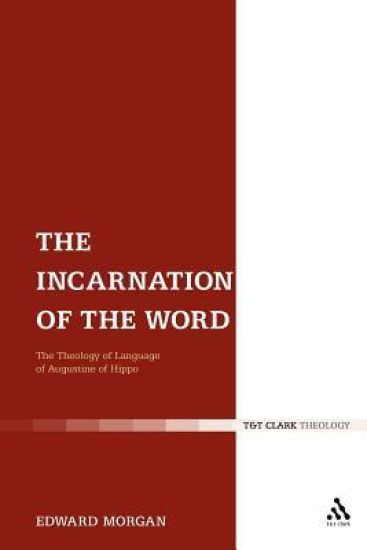
The Incarnation of the Word

The Incarnation of the Word

Edward Morgan

T. T.Clark Ltd
2011
nidottu
An exploration of three of Augustine's central texts, the De Trinitate, the De Doctrina Christiana, and the Confessions elucidate the principles of Augustine's theology of language. This is done in a systematic manner, which previous scholarship on Augustine has lacked. Augustine's principles are revealed through a close reading of these three core texts. Beginning with the De Trinitate, the book demonstrates that Augustine's inquiry into the character of the human person is incomplete. For Augustine, there is a void without reference to the category of human speech, the very thing that enables him to communicate his theological inquiry into God and the human person in the De Trinitate. From here, the book examines a central work of Augustine that deals with the significance of divine and human speech, the De Doctrina Christiana. It expounds this text carefully, showing three chief facets of Augustinian thought about divine and human communication: human social relations; human self-interpretation using scripture; and preaching, the public communication of God's word. It accepts the De Doctrina Christiana as laying theoretical foundations for Augustine's understanding of the task of theology and language's meaning and centrality within it. The book then moves to Augustine's Confessions to see the principles of Augustine's theology of language enacted within its first nine books. Augustine's conversion narrative is analysed as a literary demonstration of Augustine's description of human identity before God, showing how speech and human social relations centrally mediate God's relationship to humanity. For Augustine, human identity properly speaking is confessional'. The book returns to the De Trinitate to complete its analysis of that text using the principles of the theology of language uncovered in the De Doctrina Christiana and the Confessions. It shows that the first seven books of that text, and its core structure, move around the principles of the theology of language that the investigation has uncovered. To this extent, theological inquiry for Augustine the human task of looking for God is bound up primarily within the act of human speech and the social relations it helps to compose. The book closes with reflection on the significance of these findings for Augustinian scholarship and theological research more generally.
The Incarnation of the Word

The Incarnation of the Word

Edward Morgan

BLOOMSBURY PUBLISHING PLC
2010
sidottu
An exploration of three of Augustine's central texts, the De Trinitate, the De Doctrina Christiana, and the Confessions elucidate the principles of Augustine's theology of language. This is done in a systematic manner, which previous scholarship on Augustine has lacked. Augustine's principles are revealed through a close reading of these three core texts. Beginning with the De Trinitate, the book demonstrates that Augustine's inquiry into the character of the human person is incomplete. For Augustine, there is a void without reference to the category of human speech, the very thing that enables him to communicate his theological inquiry into God and the human person in the De Trinitate. From here, the book examines a central work of Augustine that deals with the significance of divine and human speech, the De Doctrina Christiana. It expounds this text carefully, showing three chief facets of Augustinian thought about divine and human communication: human social relations; human self-interpretation using scripture; and preaching, the public communication of God's word. It accepts the De Doctrina Christiana as laying theoretical foundations for Augustine's understanding of the task of theology and language's meaning and centrality within it. The book then moves to Augustine's Confessions to see the principles of Augustine's theology of language enacted within its first nine books. Augustine's conversion narrative is analysed as a literary demonstration of Augustine's description of human identity before God, showing how speech and human social relations centrally mediate God's relationship to humanity. For Augustine, human identity properly speaking is 'confessional'. The book returns to the De Trinitate to complete its analysis of that text using the principles of the theology of language uncovered in the De Doctrina Christiana and the Confessions. It shows that the first seven books of that text, and its core structure, move around the principles of the theology of language that the investigation has uncovered. To this extent, theological inquiry for Augustine - the human task of looking for God - is bound up primarily within the act of human speech and the social relations it helps to compose. The book closes with reflection on the significance of these findings for Augustinian scholarship and theological research more generally.