
Kirjailija
Edward Murphy
Kirjat ja teokset yhdessä paikassa: 10 kirjaa, julkaisuja vuosilta 2005-2017, suosituimpien joukossa Aliquippa. Vertaile teosten hintoja ja tarkista saatavuus suomalaisista kirjakaupoista.
10 kirjaa
Kirjojen julkaisuhaarukka 2005-2017.
In the wake of the Great Recession, housing and its financing suddenly re-emerged as questions of significant public concern. Yet both public and academic debates about housing have remained constricted, tending not to explore how the evolution of housing simultaneously entails basic forms of socio-spatial reproduction and underlying tensions in the political order. Drawing on cutting edge perspectives from urban studies, this book grants renewed, interdisciplinary energy to the housing question. It explores how housing raises a series of vexing issues surrounding rights, identity, and justice in the modern city. Through finely detailed studies that illuminate national and regional particularities- ranging from analyses of urban planning in the Soviet Union, the post-Katrina reconstruction of New Orleans, to squatting in contemporary Lima - the volume underscores how housing questions matter in a wide range of contexts. It draws attention to ruptures and continuities between high modernist and neoliberal forms of urbanism, demonstrating how housing and the dilemmas surrounding it are central to governance and the production of space in a rapidly urbanizing world.
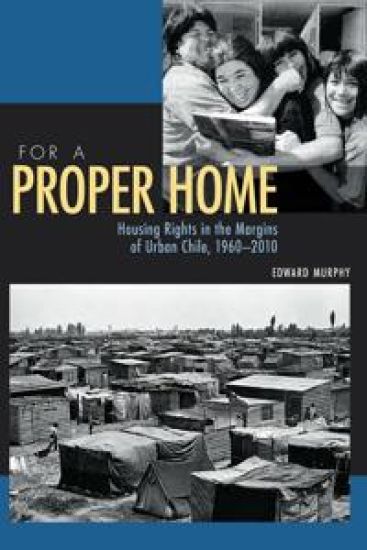
From 1967 to 1973, a period that culminated in the socialist project of Salvador Allende, nearly 400,000 low-income Chileans illegally seized parcels of land on the outskirts of Santiago. Remarkably, today almost all of these individuals live in homes with property titles. As Edward Murphy shows, this transformation came at a steep price, through an often-violent political and social struggle that continues to this day.In analyzing the causes and consequences of this struggle, Murphy reveals a crucial connection between homeownership and understandings of proper behavior and governance. This link between property and propriety has been at the root of a powerful, contested urban politics central to both social activism and urban development projects. Through projects of reform, revolution, and reaction, a right to housing and homeownership has been a significant symbol of governmental benevolence and poverty reduction. Under Pinochet’s neoliberalism, subsidized housing and slum eradication programs displaced many squatters, while awarding them homes of their own. This process, in addition to ongoing forms of activism, has permitted the vast majority of squatters to live in homes with property titles, a momentous change of the past half-century.This triumph is tempered by the fact that today the urban poor struggle with high levels of unemployment and underemployment, significant debt, and a profoundly segregated and hostile urban landscape. They also find it more difficult to mobilize than in the past, and as homeowners they can no longer rally around the cause of housing rights.Citing cultural theorists from Marx to Foucault, Murphy directly links the importance of home ownership and property rights among Santiago’s urban poor to definitions of Chilean citizenship and propriety. He explores how the deeply embedded liberal belief system of individual property ownership has shaped political, social, and physical landscapes in the city. His approach sheds light on the role that social movements and the gendered contours of home life have played in the making of citizenship. It also illuminates processes through which squatters have received legally sanctioned homes of their own, a phenomenon of critical importance in cities throughout much of Latin America and the Global South.

In the wake of the Great Recession, housing and its financing suddenly re-emerged as questions of significant public concern. Yet both public and academic debates about housing have remained constricted, tending not to explore how the evolution of housing simultaneously entails basic forms of socio-spatial reproduction and underlying tensions in the political order. Drawing on cutting edge perspectives from urban studies, this book grants renewed, interdisciplinary energy to the housing question. It explores how housing raises a series of vexing issues surrounding rights, identity, and justice in the modern city. Through finely detailed studies that illuminate national and regional particularities- ranging from analyses of urban planning in the Soviet Union, the post-Katrina reconstruction of New Orleans, to squatting in contemporary Lima - the volume underscores how housing questions matter in a wide range of contexts. It draws attention to ruptures and continuities between high modernist and neoliberal forms of urbanism, demonstrating how housing and the dilemmas surrounding it are central to governance and the production of space in a rapidly urbanizing world.
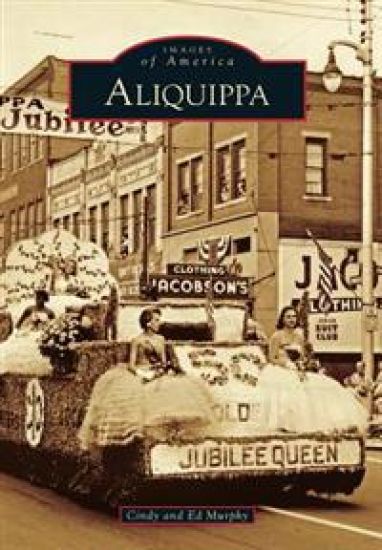
This is the story of how one quaint Pennsylvanian village became a modern utopia. Until 1906, Aliquippa was known as a small farming community called Woodlawn, but the 20th century ushered in tremendous change when the Jones & Laughlin Steel Company came to town. The company designated the plant site as the Aliquippa Works, ultimately leading the town to change its name to Aliquippa in 1928 to more closely identify with the mill. By 1930, the population would balloon to over 27,000 residents. To accommodate its workforce, Jones & Laughlin developed a community that boasted of homes with all of the modern conveniences, including indoor plumbing and electricity. Schools and businesses were built to support the population, along with fire and police departments and a modern transportation system. Immigrant workers were recruited from around the world to man the massive industrial complex, and as the mill grew, so did the town. Aliquippa is a testimony to the people who built and nurtured the growth of this memorable city.



For one of Vietnam's bloodiest battles, America brought out its most successful soldiers. They were an all-volunteer paratrooper unit, General William Westmoreland's `fire brigade', who were dropped from the air wherever the fighting was heaviest. And during the five months from June to November, 1967, they fought many of the bloodiest battles of the entire, decade-long Vietnam War, at the small mountain hamlet in the Central Highlands called Dak To.From their very first engagement with the North Vietnamese Army, when a whole company of paratroopers was nearly wiped out, to the savage, climactic battle for Hill 875, here is a riveting, hard-hitting account of how the Sky Soldiers plunged into some of Southeast Asia's most forbidding terrain, against a professional enemy who held no fear of the airborne. Denied food and water, cut off from support, facing annihilation, the beleaguered fighters finally faced down the North Vietnamese in a nightmarish Thanksgiving Day confrontation.As a result, three NVA regiments, crippled by the 173rd, were forced to sit out the crucial Tet Offensive of January, 1968. The most eloquent testimony to the courage of the Sky Soldiers came during the memorial service to their dead comrades, when pairs of jump boots were arranged in neat rows to represent each fallen paratrooper. It was a ceremony every survivor of the 173rd Airborne and the battle for Dak To remembers to this day.Edward F. Murphy is a U.S. Army veteran of the Vietnam War. He is the author of a three-volume series on Medal of Honor Recipients: Heroes of WWII, Korean War Heroes, and Vietnam Medal of Honor Heroes, as well as two highly acclaimed Vietnam War histories: Dak To and Semper Fi-Vietnam.