Kirjojen hintavertailu. Mukana 12 489 896 kirjaa ja 12 kauppaa.

Kirjailija

Edward P. St. John

Kirjat ja teokset yhdessä paikassa: 17 kirjaa, julkaisuja vuosilta 2003-2024, suosituimpien joukossa Left Behind. Vertaile teosten hintoja ja tarkista saatavuus suomalaisista kirjakaupoista.

17 kirjaa

Kirjojen julkaisuhaarukka 2003-2024.

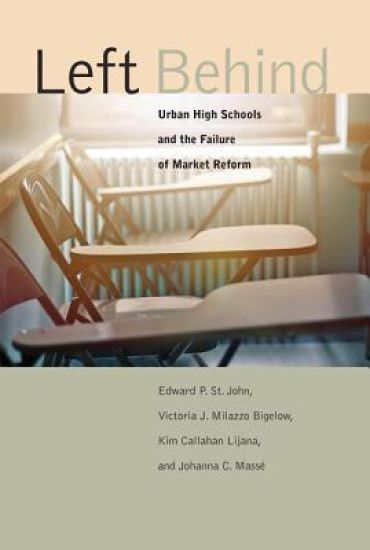
Left Behind

Left Behind

Edward P. St. John; Victoria J. Milazzo Bigelow; Kim Callahan Lijana; Johanna C. Massé

Johns Hopkins University Press
2016
sidottu
In Left Behind, a team of education scholars led by Edward P St John argues that American cities have been engaged for the past three decades in a radical-but failing-effort to transform general and vocational high schools into college preparatory institutions. By examining the educational reforms in four urban charter schools across the United States and four public high schools in New York City, Left Behind reveals how educators contend with the challenge of developing new courses while providing social support for students to build college-going cultures. The research shows that district schools struggle to comply with standards that leave little room to develop advanced thematic curricula and that charter schools have not succeeded in substantially raising student test scores. Many students who start in rigorous charter schools transfer back to public schools while both public and charter schools struggle to prepare their students for college-level work. Left Behind provides crucial insights into the troubling trajectory of public policy while offering teachers and administrators effective strategies for overcoming barriers.
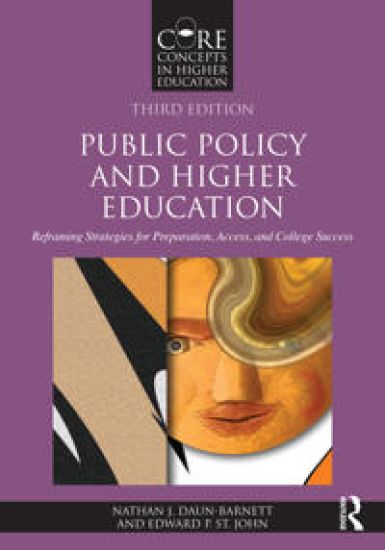
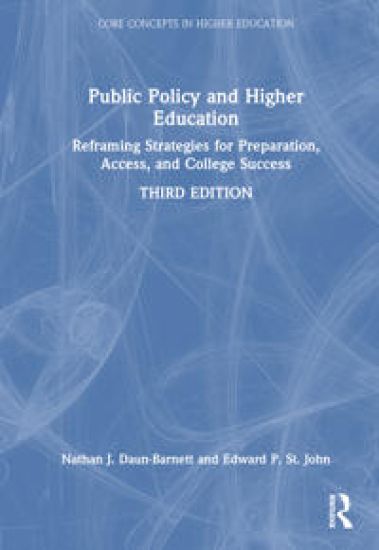
Public Policy and Higher Education

Public Policy and Higher Education

Nathan J. Daun-Barnett; Edward P. St. John

TAYLOR FRANCIS LTD
2024
nidottu
Public Policy and Higher Education, third edition, provides readers with the tools to examine how policies affect students’ access and success in college. Rather than arguing for a single approach, the authors use research-based evidence and consider political and historical values and beliefs to examine how policymakers and higher education administrators can inform and influence change within systems of higher education. Raising new questions and examining recent developments, this fully updated edition is an invaluable resource for graduate students, administrators, policymakers, and researchers who seek to learn more about the crucial contexts underlying policy decisions and college access. This third edition includes updates across the board to reflect current policy contexts. Expanded historical frameworks allow readers to better understand the preparation, access, persistence, and the development of state education systems. New considerations of state and national political ideologies help to inform contemporary contexts. Finally, refreshed cases, including an additional case about Florida and updated cases for California, Minnesota, Indiana, and North Carolina, equip readers with new ways to analyze complex state policies and their impact on higher education.Special Features:Case Studies help readers to build their skills in analyzing how political values, beliefs, and traditions influence policy decisions and adaptations within state systems.Reflective Questions encourage readers to discuss state and campus contexts for policy decisions and to consider the strategies used in a state or institution.Approachable Explanations unpack complex public policies and financial strategies for readers who seek an understanding of public policy in higher education.Research-Based Recommendations explore how policymakers, higher education administrators, and faculty can work together to improve quality, diversity, and financial stewardship.
Public Policy and Higher Education

Public Policy and Higher Education

Nathan J. Daun-Barnett; Edward P. St. John

TAYLOR FRANCIS LTD
2024
sidottu
Public Policy and Higher Education, third edition, provides readers with the tools to examine how policies affect students’ access and success in college. Rather than arguing for a single approach, the authors use research-based evidence and consider political and historical values and beliefs to examine how policymakers and higher education administrators can inform and influence change within systems of higher education. Raising new questions and examining recent developments, this fully updated edition is an invaluable resource for graduate students, administrators, policymakers, and researchers who seek to learn more about the crucial contexts underlying policy decisions and college access. This third edition includes updates across the board to reflect current policy contexts. Expanded historical frameworks allow readers to better understand the preparation, access, persistence, and the development of state education systems. New considerations of state and national political ideologies help to inform contemporary contexts. Finally, refreshed cases, including an additional case about Florida and updated cases for California, Minnesota, Indiana, and North Carolina, equip readers with new ways to analyze complex state policies and their impact on higher education.Special Features:Case Studies help readers to build their skills in analyzing how political values, beliefs, and traditions influence policy decisions and adaptations within state systems.Reflective Questions encourage readers to discuss state and campus contexts for policy decisions and to consider the strategies used in a state or institution.Approachable Explanations unpack complex public policies and financial strategies for readers who seek an understanding of public policy in higher education.Research-Based Recommendations explore how policymakers, higher education administrators, and faculty can work together to improve quality, diversity, and financial stewardship.
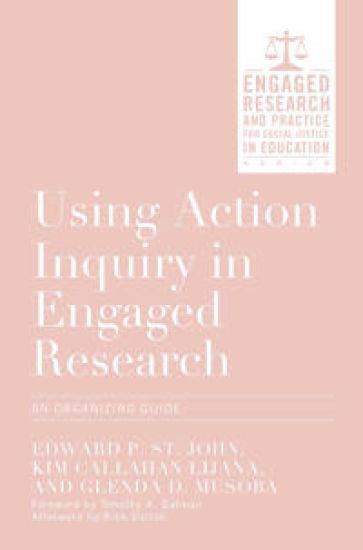
Using Action Inquiry in Engaged Research

Using Action Inquiry in Engaged Research

Edward P. St. John; Kim Callahan Lijana; Glenda D. Musoba

Stylus Publishing
2017
sidottu
Using Action Inquiry in Engaged Research: An Organizing Guide offers higher education and school professionals practical guidance and methods for using the Action Inquiry Model (AIM) in engaged research initiatives and community partnerships. Replete with group exercises and case studies, this guide was originally developed to supplement workshops for faculty, administrators and students working on action initiatives that focused on critical educational issues facing local communities. It provides a useful framework and straightforward techniques for building empowering partnerships. The Action Inquiry Model (AIM) includes four stages: • Assessment: Using research and experience to identify critical challenges facing the university with respect to the improvement of educational opportunities• Organization: Developing workgroups to collaborate on initiatives that address critical challenges; providing financial support for new initiatives; and providing release time and professional development opportunities for faculty and staff who engage in reform initiatives• Action Initiatives: Treating reforms as pilot tests for new strategies, as a means of promoting organizational learning, professional development, and student success• Evaluation: Integrating the evaluation of current programs and incorporating new initiatives into the reform process.This guide provides two methods for learning the inquiry process: a step-by-step process for defining tasks for teams of researchers and practitioners working together to use research to inform the educational improvement; and sets of case studies on assessment and action inquiry to inform groups in collectively discussing problems and strategies, an approach that supports the classroom use of the Guide.The key tasks in action inquiry initiatives include: 1. Build an understanding of the challenge 2 Identify the causes of the challenge using data to test hypotheses2. Look internally and externally for solutions3. Assess possible solutions4. Develop action plans5. Implement pilot test, and evaluateThis guide is appropriate for professional development programs and as a text for higher education Masters and Ph.D. programs.
Using Action Inquiry in Engaged Research

Using Action Inquiry in Engaged Research

Edward P. St. John; Kim Callahan Lijana; Glenda D. Musoba

Stylus Publishing
2017
nidottu
Using Action Inquiry in Engaged Research: An Organizing Guide offers higher education and school professionals practical guidance and methods for using the Action Inquiry Model (AIM) in engaged research initiatives and community partnerships. Replete with group exercises and case studies, this guide was originally developed to supplement workshops for faculty, administrators and students working on action initiatives that focused on critical educational issues facing local communities. It provides a useful framework and straightforward techniques for building empowering partnerships. The Action Inquiry Model (AIM) includes four stages: • Assessment: Using research and experience to identify critical challenges facing the university with respect to the improvement of educational opportunities• Organization: Developing workgroups to collaborate on initiatives that address critical challenges; providing financial support for new initiatives; and providing release time and professional development opportunities for faculty and staff who engage in reform initiatives• Action Initiatives: Treating reforms as pilot tests for new strategies, as a means of promoting organizational learning, professional development, and student success• Evaluation: Integrating the evaluation of current programs and incorporating new initiatives into the reform process.This guide provides two methods for learning the inquiry process: a step-by-step process for defining tasks for teams of researchers and practitioners working together to use research to inform the educational improvement; and sets of case studies on assessment and action inquiry to inform groups in collectively discussing problems and strategies, an approach that supports the classroom use of the Guide.The key tasks in action inquiry initiatives include: 1. Build an understanding of the challenge 2 Identify the causes of the challenge using data to test hypotheses2. Look internally and externally for solutions3. Assess possible solutions4. Develop action plans5. Implement pilot test, and evaluateThis guide is appropriate for professional development programs and as a text for higher education Masters and Ph.D. programs.
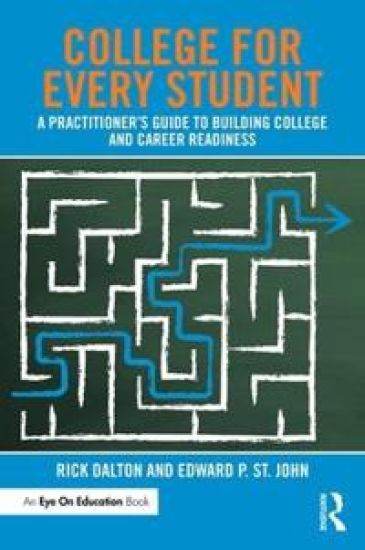
College For Every Student

College For Every Student

Rick Dalton; Edward P. St. John

Routledge
2016
nidottu
College For Every Student shares best practices for raising college and career aspirations and increasing educational opportunities for underserved and diverse students in rural and urban districts. Providing guidance for educating your students and organizing communities for expanding educational opportunities, this is a must-read for every school leader and counselor interested in promoting educational uplift. This comprehensive guidebook offers a wealth of resources and tools for educators and professionals to help students build essential college and career readiness skills. College For Every Student gives you the research-based, proven strategies needed for promoting the core student skills essential for college and career readiness: aspiration, grit, perseverance, adaptability, leadership, and teamwork.
College For Every Student

College For Every Student

Rick Dalton; Edward P. St. John

Routledge
2016
sidottu
College For Every Student shares best practices for raising college and career aspirations and increasing educational opportunities for underserved and diverse students in rural and urban districts. Providing guidance for educating your students and organizing communities for expanding educational opportunities, this is a must-read for every school leader and counselor interested in promoting educational uplift. This comprehensive guidebook offers a wealth of resources and tools for educators and professionals to help students build essential college and career readiness skills. College For Every Student gives you the research-based, proven strategies needed for promoting the core student skills essential for college and career readiness: aspiration, grit, perseverance, adaptability, leadership, and teamwork.
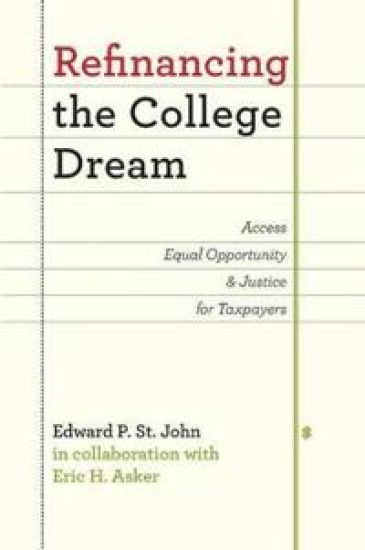
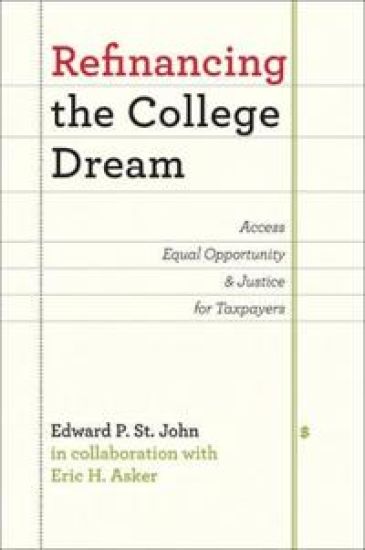
Refinancing the College Dream

Refinancing the College Dream

Edward P. St. John

Johns Hopkins University Press
2014
pokkari
During the 1990s, rising tuition costs and inadequate federal grant aid prevented more than a million otherwise qualified, low-income students from continuing their education past high school. Education policy expert Edward P. St. John is troubled by this situation and argues that equal access to higher education is both feasible and just. In Refinancing the College Dream, he examines recent trends in public funding of education and explores alternatives to financing which would provide equal access to postsecondary education for all Americans. The growing gap in the rate of participation in higher education for low-income groups compared to upper-income groups over the past three decades, St. John finds, has been a direct result of the decreased availability of federal grants, even after taking into account such factors as an increased emphasis on strengthening high school graduation requirements. To reverse this trend, he suggests that policymakers refocus the debate over the public financing of higher education from taxpayer costs to principles of social responsibility and justice, along with economic theories of human capital. He then shows how improved coordination between state and federal agencies, expanded use of loans, and better targeting of grant aid can maximize access for low-income students while minimizing increases in taxes. Making higher education accessible to low-income students is one of the crucial challenges for citizens and policymakers in the early twenty-first century. Refinancing the College Dream offers a theoretical and practical foundation for boldly rethinking the financial strategies used by colleges and universities, states, and the federal government to accomplish this essential goal.
Research, Actionable Knowledge, and Social Change

Research, Actionable Knowledge, and Social Change

Edward P. St. John

Stylus Publishing
2013
nidottu
A professional text written for social science researchers and practitioners, Research, Actionable Knowledge and Social Change provides strategies and frameworks for using social science research to engage in critical social and educational problem solving. Combining the best practices of critical analysis and traditional research methods, this professional text offers guidance for using the Action Inquiry Model (AIM), a transformative model that explains how to successfully conduct action-oriented research in a multitude of professional service organizations. The aim of the text is to encourage a new generation of research-based partnerships reforms that promote equity and access for underserved populations.Topics discussed include:The historical precedents for universities engaged in social changeThe limitations of current social science theory and methodsThe critical-empirical approach to social researchThe issues relating to social justice within the policy decision processThe use of social research to integrate an emphasis of social justice into economic and policy decision makingResearch, Actionable Knowledge and Social Change does not propose different foundations for social research, but rather argues that it is necessary to reconsider how to work with theory and research methods to inform change. This text can also be used by students enrolled in graduate and Ed.D/Ph.D Higher Education Leadership programs and graduate programs across professional fields including K-12, public administration, sociology, health, cultural studies, organizational development and organizational theory. It further offers students guidance for research design and dissertation research.
Research, Actionable Knowledge, and Social Change

Research, Actionable Knowledge, and Social Change

Edward P. St. John

Stylus Publishing
2013
sidottu
A professional text written for social science researchers and practitioners, Research, Actionable Knowledge and Social Change provides strategies and frameworks for using social science research to engage in critical social and educational problem solving. Combining the best practices of critical analysis and traditional research methods, this professional text offers guidance for using the Action Inquiry Model (AIM), a transformative model that explains how to successfully conduct action-oriented research in a multitude of professional service organizations. The aim of the text is to encourage a new generation of research-based partnerships reforms that promote equity and access for underserved populations.Topics discussed include:The historical precedents for universities engaged in social changeThe limitations of current social science theory and methodsThe critical-empirical approach to social researchThe issues relating to social justice within the policy decision processThe use of social research to integrate an emphasis of social justice into economic and policy decision makingResearch, Actionable Knowledge and Social Change does not propose different foundations for social research, but rather argues that it is necessary to reconsider how to work with theory and research methods to inform change. This text can also be used by students enrolled in graduate and Ed.D/Ph.D Higher Education Leadership programs and graduate programs across professional fields including K-12, public administration, sociology, health, cultural studies, organizational development and organizational theory. It further offers students guidance for research design and dissertation research.
Pathways to Academic Success in Higher Education

Pathways to Academic Success in Higher Education

Edward P. St. John; Glenda Droogsma Musoba

Routledge
2012
nidottu
Pathways to Academic Success in Higher Education examines two major challenges facing the nation. The first is preparing high school students for college, a reform that has been tackled largely through state policy initiatives. The second is creating new pathways to academic success for underrepresented students in higher education, a challenge that must be addressed within a decentralized system of higher education. Part one: Presents and documents key findings from research on K-12 education policy.Part two: Provides action research using a state data system to inform colleges and universities.Part three: Focuses on the future of policy and organizational initiatives to improve opportunity. This book integrates studies conducted over nearly a decade and offers guidance on how best to understand and promote retention and success once students have gained access.
Education and the Public Interest

Education and the Public Interest

Edward P. St. John

Springer
2010
nidottu
Economic globalization has been accompanied by implementation of education reforms linked to accountability and public finance schemes that emphasize student choice in schools and student loans in higher education. In the U.S. these reforms are rationalized based on intermediate variables, like the number of math credits completed in high school and net prices. However, the reforms rationalized based on this research are seldom evaluated in relation to outcomes (i.e., measures of student achievement and equal opportunity to attain an education). In Education and the Public Interest the editor re-examines the political rationales for these reforms. John Rawls’s theory of justice is reconstructed to develop a framework for assessing the effects of public policy on these outcomes. This volume undertakes a comparative study of the states in the U.S. to examine how education reforms influence student achievement, high school graduation, and college access; and finance schemes influence college access. Policies implemented by states in the 1990s were associated with improved achievement, as measured by test scores for high school students. These policies also correlate with increased high school drop out rates and the widening gap in college enrolment rates across income groups. This volume considers how privatization and accountability policies can be reconstructed to reduce inequality while continuing to improve student achievement and college enrolment. 'I enjoyed reading the book and benefited from it, and I feel confident others will as well. I am particularly taken by its sweep and by the skill and persuasiveness with which the author ties together the broad trends and themes of privatization, globalization, school reform, preparation, equity, equality and college access.' Prof. James C. Hearn, Vanderbilt University, USA '(What I)...especially like about this book is the framing of the importance of the topic in terms of the globalpolitical and economic changes and the notion of access to quality education as a basic right.' Prof. Laura W. Perna, College of Education, University of Maryland, USA
Breaking Through the Access Barrier

Breaking Through the Access Barrier

Edward P. St. John; Shouping Hu; Amy S. Fisher

Routledge
2010
sidottu
Breaking Through the Access Barrier argues that the policies designed to address inequalities in college access are failing to address underlying issues of inequality. This book introduces academic capital formation (ACF), a groundbreaking new theory defined by family knowledge of educational options and the opportunities for pursuing them. The authors suggest focusing on intervention programs and public policy to promote improvement in academic preparation, college information, and student aid. This textbook offers: a new construct–academic capital–that integrates and draws upon existing literature on influencing access to college practical advice for better preparation and interventionreal student outcomes, databases, and interviews taken from exemplary intervention programsempirical research illuminating the role of class reproduction in education and how interventions (financial, academic, and networking) can reduce student barriersquantitative and qualitative analysis of the importance and effectiveness of several major policy interventions.Written for courses on higher education policy and policy analysis, readers will find Breaking Through the Access Barrier offers valuable advice for working within new policy frameworks and reshaping the future of educational opportunities and access for under-represented students from disadvantaged backgrounds.
Breaking Through the Access Barrier

Breaking Through the Access Barrier

Edward P. St. John; Shouping Hu; Amy S. Fisher

Routledge
2010
nidottu
Breaking Through the Access Barrier argues that the policies designed to address inequalities in college access are failing to address underlying issues of inequality. This book introduces academic capital formation (ACF), a groundbreaking new theory defined by family knowledge of educational options and the opportunities for pursuing them. The authors suggest focusing on intervention programs and public policy to promote improvement in academic preparation, college information, and student aid. This textbook offers: a new construct–academic capital–that integrates and draws upon existing literature on influencing access to college practical advice for better preparation and interventionreal student outcomes, databases, and interviews taken from exemplary intervention programsempirical research illuminating the role of class reproduction in education and how interventions (financial, academic, and networking) can reduce student barriersquantitative and qualitative analysis of the importance and effectiveness of several major policy interventions.Written for courses on higher education policy and policy analysis, readers will find Breaking Through the Access Barrier offers valuable advice for working within new policy frameworks and reshaping the future of educational opportunities and access for under-represented students from disadvantaged backgrounds.
Pathways to Academic Success in Higher Education

Pathways to Academic Success in Higher Education

Edward P. St. John; Glenda Droogsma Musoba

Routledge
2010
sidottu
Pathways to Academic Success in Higher Education examines two major challenges facing the nation. The first is preparing high school students for college, a reform that has been tackled largely through state policy initiatives. The second is creating new pathways to academic success for underrepresented students in higher education, a challenge that must be addressed within a decentralized system of higher education. Part one: Presents and documents key findings from research on K-12 education policy.Part two: Provides action research using a state data system to inform colleges and universities.Part three: Focuses on the future of policy and organizational initiatives to improve opportunity. This book integrates studies conducted over nearly a decade and offers guidance on how best to understand and promote retention and success once students have gained access.
Education and the Public Interest

Education and the Public Interest

Edward P. St. John

Springer-Verlag New York Inc.
2006
sidottu
Economic globalization has been accompanied by implementation of education reforms linked to accountability and public finance schemes that emphasize student choice in schools and student loans in higher education. In the U.S. these reforms are rationalized based on intermediate variables, like the number of math credits completed in high school and net prices. However, the reforms rationalized based on this research are seldom evaluated in relation to outcomes (i.e., measures of student achievement and equal opportunity to attain an education). In Education and the Public Interest the editor re-examines the political rationales for these reforms. John Rawls’s theory of justice is reconstructed to develop a framework for assessing the effects of public policy on these outcomes. This volume undertakes a comparative study of the states in the U.S. to examine how education reforms influence student achievement, high school graduation, and college access; and finance schemes influence college access. Policies implemented by states in the 1990s were associated with improved achievement, as measured by test scores for high school students. These policies also correlate with increased high school drop out rates and the widening gap in college enrolment rates across income groups. This volume considers how privatization and accountability policies can be reconstructed to reduce inequality while continuing to improve student achievement and college enrolment. 'I enjoyed reading the book and benefited from it, and I feel confident others will as well. I am particularly taken by its sweep and by the skill and persuasiveness with which the author ties together the broad trends and themes of privatization, globalization, school reform, preparation, equity, equality and college access.' Prof. James C. Hearn, Vanderbilt University, USA '(What I)...especially like about this book is the framing of the importance of the topic in terms of the globalpolitical and economic changes and the notion of access to quality education as a basic right.' Prof. Laura W. Perna, College of Education, University of Maryland, USA
Refinancing the College Dream

Refinancing the College Dream

Edward P. St. John

Johns Hopkins University Press
2003
sidottu
During the 1990s, rising tuition costs and inadequate federal grant aid prevented more than a million otherwise qualified, low-income students from continuing their education past high school. Education policy expert Edward P. St. John is troubled by this situation and argues that equal access to higher education is both feasible and just. In Refinancing the College Dream, he examines recent trends in public funding of education and explores alternatives to financing which would provide equal access to postsecondary education for all Americans. The growing gap in the rate of participation in higher education for low-income groups compared to upper-income groups over the past three decades, St. John finds, has been a direct result of the decreased availability of federal grants, even after taking into account such factors as an increased emphasis on strengthening high school graduation requirements. To reverse this trend, he suggests that policymakers refocus the debate over the public financing of higher education from taxpayer costs to principles of social responsibility and justice, along with economic theories of human capital. He then shows how improved coordination between state and federal agencies, expanded use of loans, and better targeting of grant aid can maximize access for low-income students while minimizing increases in taxes. Making higher education accessible to low-income students is one of the crucial challenges for citizens and policymakers in the early twenty-first century. Refinancing the College Dream offers a theoretical and practical foundation for boldly rethinking the financial strategies used by colleges and universities, states, and the federal government to accomplish this essential goal.