Kirjojen hintavertailu. Mukana 12 301 844 kirjaa ja 12 kauppaa.

Kirjailija

Edward R. Dougherty

Kirjat ja teokset yhdessä paikassa: 9 kirjaa, julkaisuja vuosilta 1998-2021, suosituimpien joukossa Nonlinear Filters for Image Processing. Vertaile teosten hintoja ja tarkista saatavuus suomalaisista kirjakaupoista.

9 kirjaa

Kirjojen julkaisuhaarukka 1998-2021.

Nonlinear Filters for Image Processing

Nonlinear Filters for Image Processing

Edward R. Dougherty; Jaakko Astola

IEEE Publications,U.S.
1999
sidottu
Nonlinear Filters for Image Processing Editors: Edward R. Dougherty, Texas A&M University Jaakko T. Astola, Tampere University of Technology Part of the SPIE/IEEE Series on Imaging Science & Engineering This text covers key mathematical principles and algorithms for nonlinear filters used in image processing. Readers will gain an in-depth understanding of the underlying mathematical and filter design methodologies needed to construct and utilize nonlinear filters in a variety of applications. The 11 chapters, written by experts in the field, explore topics of contemporary interest as well as fundamentals drawn from nonlinear filtering’s historical roots in mathematical morphology and digital signal processing. Linear filtering has dominated image processing, partly because the mathematical analysis is much easier than for nonlinear operators. However, nonlinear filters often yield superior results. This book explains in depth various filter options and the types of applications for which they are best suited. The presentation is rigorous, yet accessible to engineers with a solid background in mathematics. Contents: Logical image operators (E. R. Dougherty, J. Barrera). Computational gray-scale operators (E. R. Dougherty, J. Barrera). Translation-invariant set operators (E. R. Dougherty). Granulometric filters (E.R. Dougherty, Y. Chen). Easy recipes for morphological filters (H. J. A. M. Heijmans). Introduction to connected operators (H. J. A. M. Heijmans). Representation and optimization of stack filters (J. T. Astola, P. Kuosmanen). Invariant signals of median and stack filters (J. T. Astola, P. Kuosmanen). Binary polynomial transforms and logical correlation (K. O. Egiazarian, J. T. Astola, S. S. Agaian). Applications of binary polynomial transforms (K. O. Egiazarian, J. T. Astola, S. S. Agaian, R. Öktem). Random sets in view of image filtering applications (I. S. Molchanov).
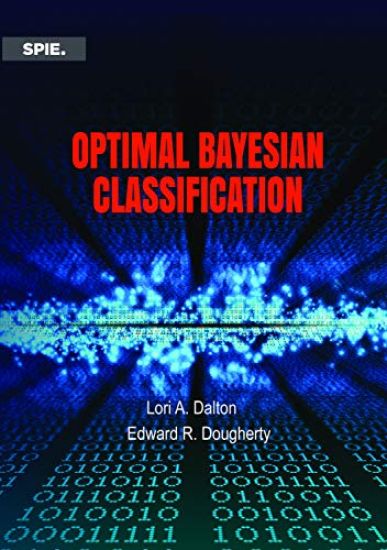
Optimal Bayesian Classification

Optimal Bayesian Classification

Lori A. Dalton; Edward R. Dougherty

SPIE Press
2021
nidottu
The most basic problem of engineering is the design of optimal operators. Design takes different forms depending on the random process constituting the scientific model and the operator class of interest. For classification, the random process is a feature-label distribution, and a Bayes classifier minimizes classification error. Rarely do we know the feature-label distribution or have sufficient data to estimate it.To best use available knowledge and data, this book takes a Bayesian approach to modeling the feature-label distribution and designs an optimal classifier relative to a posterior distribution governing an uncertainty class of feature-label distributions. The origins of this approach lie in estimating classifier error when there are insufficient data to hold out test data, in which case an optimal error estimate can be obtained relative to the uncertainty class. A natural next step is to forgo classical ad hoc classifier design and find an optimal classifier relative to the posterior distribution over the uncertainty class - this being an optimal Bayesian classifier.
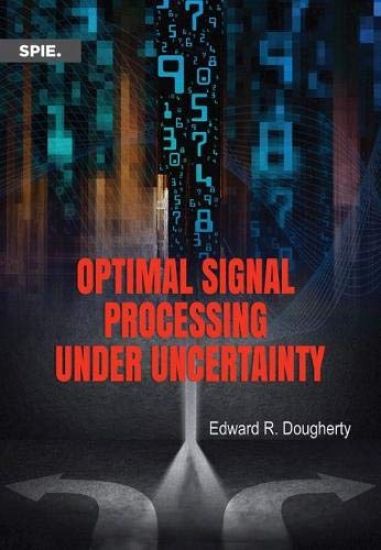
Optimal Signal Processing Under Uncertainty

Optimal Signal Processing Under Uncertainty

Edward R. Dougherty

Spie Press
2018
pokkari
In the classical approach to optimal filtering, it is assumed that the stochastic model of the physical process is fully known. With uncertain models, the natural solution is to optimize over both the original objective and the model uncertainty, thereby arriving at optimal robust operators, the topic of this book.
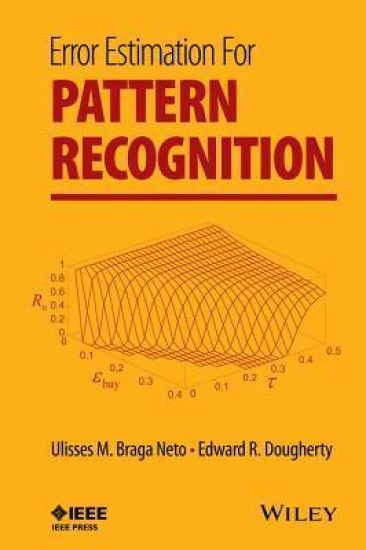
Error Estimation for Pattern Recognition

Error Estimation for Pattern Recognition

Ulisses M. Braga Neto; Edward R. Dougherty

John Wiley Sons Inc
2015
sidottu
This book is the first of its kind to discuss error estimation with a model-based approach. From the basics of classifiers and error estimators to distributional and Bayesian theory, it covers important topics and essential issues pertaining to the scientific validity of pattern classification. Error Estimation for Pattern Recognition focuses on error estimation, which is a broad and poorly understood topic that reaches all research areas using pattern classification. It includes model-based approaches and discussions of newer error estimators such as bolstered and Bayesian estimators. This book was motivated by the application of pattern recognition to high-throughput data with limited replicates, which is a basic problem now appearing in many areas. The first two chapters cover basic issues in classification error estimation, such as definitions, test-set error estimation, and training-set error estimation. The remaining chapters in this book cover results on the performance and representation of training-set error estimators for various pattern classifiers. Additional features of the book include: • The latest results on the accuracy of error estimation• Performance analysis of re-substitution, cross-validation, and bootstrap error estimators using analytical and simulation approaches• Highly interactive computer-based exercises and end-of-chapter problems This is the first book exclusively about error estimation for pattern recognition. Ulisses M. Braga Neto is an Associate Professor in the Department of Electrical and Computer Engineering at Texas A&M University, USA. He received his PhD in Electrical and Computer Engineering from The Johns Hopkins University. Dr. Braga Neto received an NSF CAREER Award for his work on error estimation for pattern recognition with applications in genomic signal processing. He is an IEEE Senior Member. Edward R. Dougherty is a Distinguished Professor, Robert F. Kennedy ’26 Chair, and Scientific Director at the Center for Bioinformatics and Genomic Systems Engineering at Texas A&M University, USA. He is a fellow of both the IEEE and SPIE, and he has received the SPIE Presidents Award. Dr. Dougherty has authored several books including Epistemology of the Cell: A Systems Perspective on Biological Knowledge and Random Processes for Image and Signal Processing (Wiley-IEEE Press).
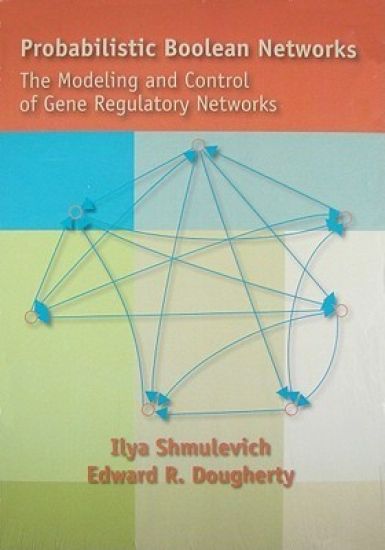
Probabilistic Boolean Networks

Probabilistic Boolean Networks

Ilya Shmulevich; Edward R. Dougherty

Society for Industrial Applied Mathematics,U.S.
2009
pokkari
This is the first comprehensive treatment of probabilistic Boolean networks (PBNs), an important model class for studying genetic regulatory networks. This book covers basic model properties, including the relationships between network structure and dynamics, steady-state analysis, and relationships to other model classes. It also discusses the inference of model parameters from experimental data and control strategies for driving network behavior towards desirable states. The PBN model is well suited to serve as a mathematical framework to study basic issues dealing with systems-based genomics, specifically, the relevant aspects of stochastic, nonlinear dynamical systems.The book builds a rigorous mathematical foundation for exploring these issues, which include long-run dynamical properties and how these correspond to therapeutic goals; the effect of complexity on model inference and the resulting consequences of model uncertainty; altering network dynamics via structural intervention, such as perturbing gene logic; optimal control of regulatory networks over time; limitations imposed on the ability to achieve optimal control owing to model complexity; and the effects of asynchronicity. The authors attempt to unify different strands of current research and address emerging issues such as constrained control, greedy control, and asynchronicity.
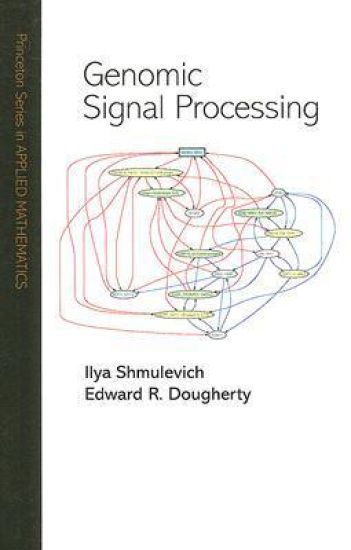
Genomic Signal Processing

Genomic Signal Processing

Ilya Shmulevich; Edward R. Dougherty

Princeton University Press
2007
sidottu
Genomic signal processing (GSP) can be defined as the analysis, processing, and use of genomic signals to gain biological knowledge, and the translation of that knowledge into systems-based applications that can be used to diagnose and treat genetic diseases. Situated at the crossroads of engineering, biology, mathematics, statistics, and computer science, GSP requires the development of both nonlinear dynamical models that adequately represent genomic regulation, and diagnostic and therapeutic tools based on these models. This book facilitates these developments by providing rigorous mathematical definitions and propositions for the main elements of GSP and by paying attention to the validity of models relative to the data. Ilya Shmulevich and Edward Dougherty cover real-world situations and explain their mathematical modeling in relation to systems biology and systems medicine. Genomic Signal Processing makes a major contribution to computational biology, systems biology, and translational genomics by providing a self-contained explanation of the fundamental mathematical issues facing researchers in four areas: classification, clustering, network modeling, and network intervention.
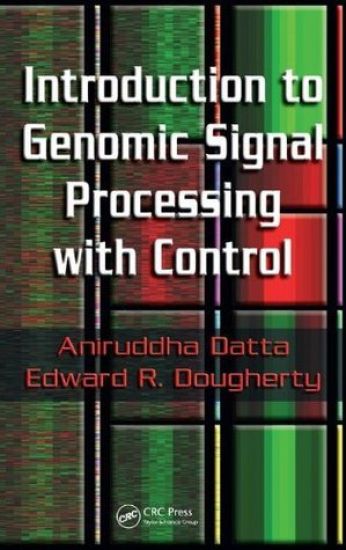
Introduction to Genomic Signal Processing with Control

Introduction to Genomic Signal Processing with Control

Aniruddha Datta; Edward R. Dougherty

CRC Press Inc
2006
sidottu
Studying large sets of genes and their collective function requires tools that can easily handle huge amounts of information. Recent research indicates that engineering approaches for prediction, signal processing, and control are well suited for studying multivariate interactions. A tutorial guide to the current engineering research in genomics, Introduction to Genomic Signal Processing with Control provides a state-of-the-art account of the use of control theory to obtain intervention strategies for gene regulatory networks. The book builds up the necessary molecular biology background with a basic review of organic chemistry and an introduction of DNA, RNA, and proteins, followed by a description of the processes of transcription and translation and the genetic code that is used to carry out the latter. It discusses control of gene expression, introduces genetic engineering tools such as microarrays and PCR, and covers cell cycle control and tissue renewal in multi-cellular organisms. The authors then delineate how the engineering approaches of classification and clustering are appropriate for carrying out gene-based disease classification. This leads naturally to expression prediction, which in turn leads to genetic regulatory networks. The book concludes with a discussion of control approaches that can be used to alter the behavior of such networks in the hope that this alteration will move the network from a diseased state to a disease-free state. Written by recognized leaders in this emerging field, the book provides the exact amount of molecular biology required to understand the engineering applications. It is a self-contained resource that spans the diverse disciplines of molecular biology and electrical engineering.
Random Processes for Image Signal Processing

Random Processes for Image Signal Processing

Edward R. Dougherty

IEEE Publications,U.S.
1998
sidottu
Random Processes for Image and Signal Processing Edward R. Dougherty Second in the SPIE/IEEE Series on Imaging Science & Engineering Science and engineering deal with temporal, spatial, and higher-dimensional processes that vary randomly from observation to observation. Deterministic analysis does not provide a framework for understanding the ensemble of observations, nor does it provide a mechanism for predicting future events. Random processes provide the tools to bridge these gaps. Readers of this book will gain an intuitive appreciation of random functions, in addition to understanding theory and processes necessary for sophisticated applications. The initial chapter covers basic theory of probability, with special attention to multivariate distributions and functions of several random variables. Subsequent topics include the basic properties of random functions, canonical representation, transform coding, optimal filter design (linear and nonlinear), neural networks, discrete- and continuous-time Markov chains, and the theory of random closed sets. This book can be used as a one-semester course for students with a strong background in probability and statistics or as a full-year course for students who lack such preparation. The large number of imaging applications also makes it useful for graduate courses on image processing. Contents: Probability theory. Random processes. Canonical representation. Optimal filtering. Random models. Bibliography. Index.