Kirjojen hintavertailu. Mukana 12 595 353 kirjaa ja 12 kauppaa.

Kirjailija

Edward S. Casey

Kirjat ja teokset yhdessä paikassa: 19 kirjaa, julkaisuja vuosilta 2000-2025, suosituimpien joukossa Turning Emotion Inside Out. Vertaile teosten hintoja ja tarkista saatavuus suomalaisista kirjakaupoista.

19 kirjaa

Kirjojen julkaisuhaarukka 2000-2025.

Thinking in Transit

Thinking in Transit

Edward S. Casey; Megan Craig

Columbia University Press
2025
sidottu
Does being in motion change how we think? Tracing the connections between thinking and transit—including walking, being transported by a vehicle, and many other modes—this innovative book shows how embodiment and movement deepen, expand, and transform creative thought.Megan Craig and Edward S. Casey provide a collaborative phenomenological exploration of thought in motion, interspersing lively first-person accounts with broader philosophical inquiry. Their investigation, structured around the four ancient elements—water, air, earth, and fire—ranges across swimming, boats, balloons, planes, cars, trains, and other modes of transport. Craig and Casey invite readers to recall their own experiences of travel and how thinking changes in tandem with shifting environments and whatever conveys a person from place to place. They also consider how changing climates and evolving technologies, with new rhythms and materialities, have shaped human thinking in its many varieties.Thinking in Transit celebrates forms of movement and motion that carry the body and mind out of their habituated routines. This book urges a change in how philosophers have traditionally framed the setting for serious thought: from the austere, solitary space of a study to populated places of interaction and passage.
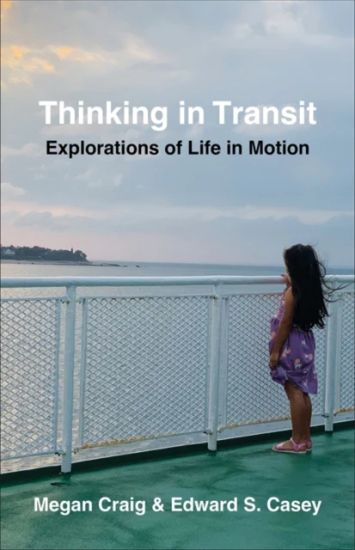
Thinking in Transit

Thinking in Transit

Edward S. Casey; Megan Craig

Columbia University Press
2025
pokkari
Does being in motion change how we think? Tracing the connections between thinking and transit—including walking, being transported by a vehicle, and many other modes—this innovative book shows how embodiment and movement deepen, expand, and transform creative thought.Megan Craig and Edward S. Casey provide a collaborative phenomenological exploration of thought in motion, interspersing lively first-person accounts with broader philosophical inquiry. Their investigation, structured around the four ancient elements—water, air, earth, and fire—ranges across swimming, boats, balloons, planes, cars, trains, and other modes of transport. Craig and Casey invite readers to recall their own experiences of travel and how thinking changes in tandem with shifting environments and whatever conveys a person from place to place. They also consider how changing climates and evolving technologies, with new rhythms and materialities, have shaped human thinking in its many varieties.Thinking in Transit celebrates forms of movement and motion that carry the body and mind out of their habituated routines. This book urges a change in how philosophers have traditionally framed the setting for serious thought: from the austere, solitary space of a study to populated places of interaction and passage.
Plants in Place

Plants in Place

Edward S. Casey; Michael Marder

Columbia University Press
2023
pokkari
Plants are commonly considered immobile, in contrast to humans and other animals. But vegetal existence involves many place-based forms of change: stems growing upward, roots spreading outward, fronds unfurling in response to sunlight, seeds traveling across wide distances, and other intricate relationships with the surrounding world. How do plants as sessile, growing, decaying, and metamorphosing beings shape the places they inhabit, and how are they shaped by them? How do human places interact with those of plants—in lived experience; in landscape painting; in cultivation and contemplation; in forests, fields, gardens, and cities?Examining these questions and many more, Plants in Place is a collaborative study of vegetal phenomenology at the intersection of Edward S. Casey’s phenomenology of place and Michael Marder’s plant-thinking. It focuses on both the microlevel of the dynamic constitution of plant edges or a child’s engagement with moss and the macrolevel of habitats that include the sociality of trees. This compelling portrait of plants and their places provides readers with new ways to appreciate the complexity and vitality of vegetal life. Eloquent, descriptively rich, and insightful, the book also shows how the worlds of plants can enhance our understanding and experience of place more broadly.
Plants in Place

Plants in Place

Edward S. Casey; Michael Marder

Columbia University Press
2023
sidottu
Plants are commonly considered immobile, in contrast to humans and other animals. But vegetal existence involves many place-based forms of change: stems growing upward, roots spreading outward, fronds unfurling in response to sunlight, seeds traveling across wide distances, and other intricate relationships with the surrounding world. How do plants as sessile, growing, decaying, and metamorphosing beings shape the places they inhabit, and how are they shaped by them? How do human places interact with those of plants—in lived experience; in landscape painting; in cultivation and contemplation; in forests, fields, gardens, and cities?Examining these questions and many more, Plants in Place is a collaborative study of vegetal phenomenology at the intersection of Edward S. Casey’s phenomenology of place and Michael Marder’s plant-thinking. It focuses on both the microlevel of the dynamic constitution of plant edges or a child’s engagement with moss and the macrolevel of habitats that include the sociality of trees. This compelling portrait of plants and their places provides readers with new ways to appreciate the complexity and vitality of vegetal life. Eloquent, descriptively rich, and insightful, the book also shows how the worlds of plants can enhance our understanding and experience of place more broadly.
Turning Emotion Inside Out

Turning Emotion Inside Out

Edward S. Casey

Northwestern University Press
2021
sidottu
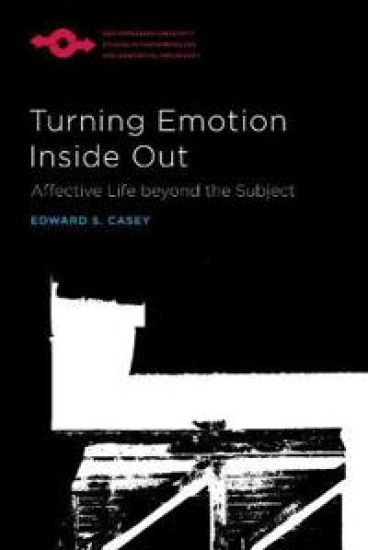
In Turning Emotion Inside Out, Edward S. Casey challenges the commonplace assumption that our emotions are to be located inside our minds, brains, hearts, or bodies. Instead, he invites us to rethink our emotions as fundamentally, although not entirely, emerging from outside and around the self, redirecting our attention from felt interiority to the emotions located in the world around us, beyond the confines of subjectivity. This book begins with a brief critique of internalist views of emotion that hold that feelings are sequestered within a subject. Casey affirms that while certain emotions are felt as resonating within our subjectivity, many others are experienced as occurring outside any such subjectivity. These include intentional or expressive feelings that transpire between ourselves and others, such as an angry exchange between two people, as well as emotions or affects that come to us from beyond ourselves. Casey claims that such far?out emotions must be recognized in a full picture of affective life. In this way, the book proposes to “turn emotion inside out.”
Turning Emotion Inside Out

Turning Emotion Inside Out

Edward S. Casey

Northwestern University Press
2021
nidottu
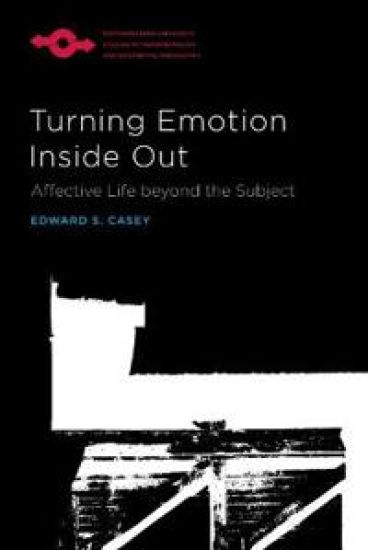
In Turning Emotion Inside Out, Edward S. Casey challenges the commonplace assumption that our emotions are to be located inside our minds, brains, hearts, or bodies. Instead, he invites us to rethink our emotions as fundamentally, although not entirely, emerging from outside and around the self, redirecting our attention from felt interiority to the emotions located in the world around us, beyond the confines of subjectivity.This book begins with a brief critique of internalist views of emotion that hold that feelings are sequestered within a subject. Casey affirms that while certain emotions are felt as resonating within our subjectivity, many others are experienced as occurring outside any such subjectivity. These include intentional or expressive feelings that transpire between ourselves and others, such as an angry exchange between two people, as well as emotions or affects that come to us from beyond ourselves. Casey claims that such far?out emotions must be recognized in a full picture of affective life. In this way, the book proposes to “turn emotion inside out.”
The World on Edge

The World on Edge

Edward S. Casey

Indiana University Press
2017
sidottu
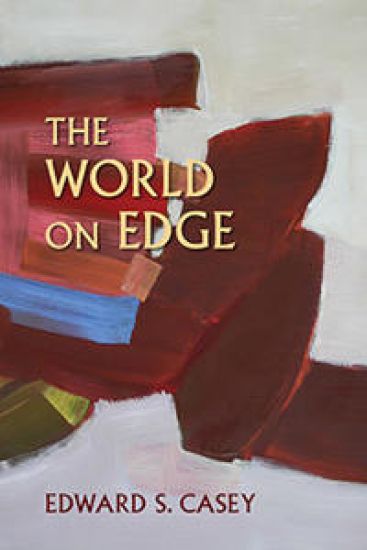
From one of continental philosophy's most distinctive voices comes a creative contribution to spatial studies, environmental philosophy, and phenomenology. Edward S. Casey identifies how important edges are to us, not only in terms of how we perceive our world, but in our cognitive, artistic, and sociopolitical attentions to it. We live in a world that is constantly on edge, yet edges as such are rarely explored. Casey systematically describes the major and minor edges that configure the human and other-than-human realms, including our everyday experience. He also explores edges in high- stakes situations, such as those that emerge in natural disasters, moments of political and economic upheaval, and encroaching climate change. Casey's work enables a more lucid understanding of the edge-world that is a necessary part of living in a shared global environment.
The World on Edge

The World on Edge

Edward S. Casey

Indiana University Press
2017
pokkari
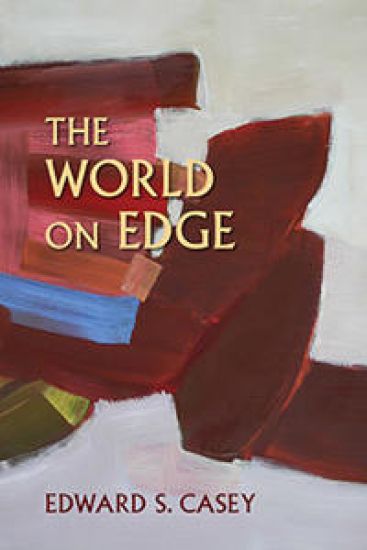
From one of continental philosophy's most distinctive voices comes a creative contribution to spatial studies, environmental philosophy, and phenomenology. Edward S. Casey identifies how important edges are to us, not only in terms of how we perceive our world, but in our cognitive, artistic, and sociopolitical attentions to it. We live in a world that is constantly on edge, yet edges as such are rarely explored. Casey systematically describes the major and minor edges that configure the human and other-than-human realms, including our everyday experience. He also explores edges in high- stakes situations, such as those that emerge in natural disasters, moments of political and economic upheaval, and encroaching climate change. Casey's work enables a more lucid understanding of the edge-world that is a necessary part of living in a shared global environment.
Labor and Global Justice

Labor and Global Justice

Edward S. Casey

Lexington Books
2016
nidottu
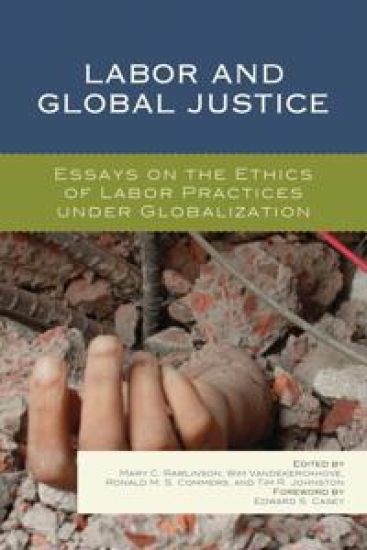
Labor and Global Justice: Essays on the Ethics of Labor Practices under Globalization combines conceptual and theoretical perspectives across a multiplicity of relevant differences, both geographical and disciplinary, to develop a transnational perspective on labor and justice. Through its multidisciplinary, transnational approach and its engagement with public policy, the contributors advance urgent contemporary debates around work and clearly demonstrate the necessity of articulating the rights of labor to any global ethics or to any concept of global justice. Together, the chapters make evident why justice requires, both theoretically and practically, a rethinking and rearticulation of the relation between labor and capital. Framing the theoretical and practical question of justice in a new way, the editors have gathered addresses scholars across multiple disciplines, including philosophy, international relations, and the social sciences. As the volume emphasizes the connection between the concept of justice and real public policy, it also appeals to human rights workers and labor organizers, as well as those who make the public policies that establish the relation between labor and capital, just or unjust, and that determine the well-being of workers, for good or ill.
The Much-at-Once

The Much-at-Once

Bruce W. Wilshire; Edward S. Casey

Fordham University Press
2016
pokkari
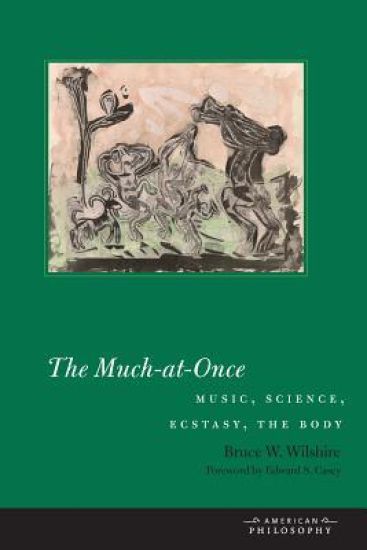
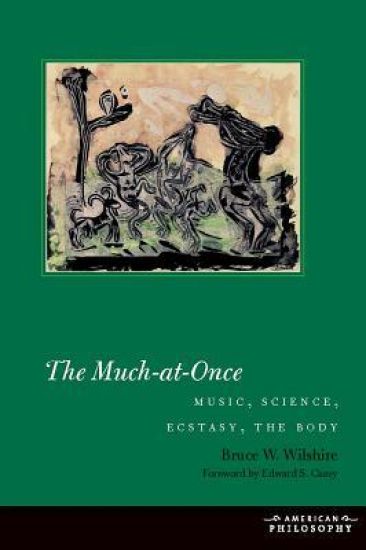
In this capstone work, the late Bruce Wilshire seeks to rediscover the fullness of life in the world by way of a more complete activation of the body's potentials. Appealing to our powers of hearing and feeling, with a special emphasis on music, he engages a rich array of composers, writers, and thinkers ranging from Beethoven and Mahler to Emerson and William James. Wilshire builds on James's concept of the much-at-once to name the superabundance of the world that surrounds, nourishes, holds, and stimulates us; that pummels and provokes us; that responds to our deepest need—to feel ecstatically real.
The Much-at-Once

The Much-at-Once

Bruce W. Wilshire; Edward S. Casey

Fordham University Press
2016
sidottu
In this capstone work, the late Bruce Wilshire seeks to rediscover the fullness of life in the world by way of a more complete activation of the body's potentials. Appealing to our powers of hearing and feeling, with a special emphasis on music, he engages a rich array of composers, writers, and thinkers ranging from Beethoven and Mahler to Emerson and William James. Wilshire builds on James's concept of the much-at-once to name the superabundance of the world that surrounds, nourishes, holds, and stimulates us; that pummels and provokes us; that responds to our deepest need—to feel ecstatically real.
Labor and Global Justice

Labor and Global Justice

Edward S. Casey

Lexington Books
2014
sidottu
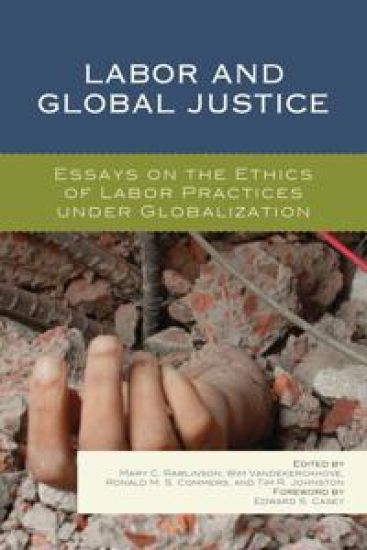
Labor and Global Justice: Essays on the Ethics of Labor Practices under Globalization combines conceptual and theoretical perspectives across a multiplicity of relevant differences, both geographical and disciplinary, to develop a transnational perspective on labor and justice. Through its multidisciplinary, transnational approach and its engagement with public policy, the contributors advance urgent contemporary debates around work and clearly demonstrate the necessity of articulating the rights of labor to any global ethics or to any concept of global justice. Together, the chapters make evident why justice requires, both theoretically and practically, a rethinking and rearticulation of the relation between labor and capital. Framing the theoretical and practical question of justice in a new way, the editors have gathered addresses scholars across multiple disciplines, including philosophy, international relations, and the social sciences. As the volume emphasizes the connection between the concept of justice and real public policy, it also appeals to human rights workers and labor organizers, as well as those who make the public policies that establish the relation between labor and capital, just or unjust, and that determine the well-being of workers, for good or ill.
Up Against the Wall

Up Against the Wall

Edward S. Casey; Mary Watkins

University of Texas Press
2014
pokkari
Using the U.S. wall at the border with Mexico as a focal point, two experts examine the global surge of economic and environmental refugees, presenting a new vision of the relationships between citizen and migrant in an era of “Juan Crow,” which systematically creates a perpetual undercaste.Winner, National Association for Ethnic Studies (NAES) Outstanding Book Award, 2017As increasing global economic disparities, violence, and climate change provoke a rising tide of forced migration, many countries and local communities are responding by building walls-literal and metaphorical-between citizens and newcomers. Up Against the Wall: Re-imagining the U.S.-Mexico Border examines the temptation to construct such walls through a penetrating analysis of the U.S. wall at the U.S.-Mexico border, as well as investigating the walling out of Mexicans in local communities. Calling into question the building of a wall against a friendly neighboring nation, Up Against the Wall offers an analysis of the differences between borders and boundaries. This analysis opens the way to envisioning alternatives to the stark and policed divisions that are imposed by walls of all kinds. Tracing the consequences of imperialism and colonization as citizens grapple with new migrant neighbors, the book paints compelling examples from key locales affected by the wall-Nogales, Arizona vs. Nogales, Sonora; Tijuana/San Diego; and the lower Rio Grande Valley of Texas. An extended case study of Santa Barbara describes the creation of an internal colony in the aftermath of the U.S. conquest of Mexican land, a history that is relevant to many U.S. cities and towns.Ranging from human rights issues in the wake of massive global migration to the role of national restorative shame in the United States for the treatment of Mexicans since 1848, the authors delve into the broad repercussions of the unjust and often tragic consequences of excluding others through walled structures along with the withholding of citizenship and full societal inclusion. Through the lens of a detailed examination of forced migration from Mexico to the United States, this transdisciplinary text, drawing on philosophy, psychology, and political theory, opens up multiple insights into how nations and communities can coexist with more justice and more compassion.
Getting Back Into Place, Second Edition

Getting Back Into Place, Second Edition

Edward S. Casey

Indiana University Press
2009
pokkari
What would the world be like if there were no places? Our lives are so place-oriented that we cannot begin to comprehend the loss of locality. Indeed, the space we occupy has much to do with what and who we are. Yet, despite the pervasiveness of place in our everyday lives, philosophers have neglected it. Since its publication in 1993, Getting Back into Place has been recognized as a pioneering study of the importance of place in people's lives. This edition includes new material that reflects on the development of the field of environmental philosophy and presents Edward S. Casey's current thinking on place and home in our increasingly troubled world.
The World at a Glance

The World at a Glance

Edward S. Casey

Indiana University Press
2007
pokkari
What happens when we glance around a room? How do we trust what we see in fleeting moments? In The World at a Glance, Edward S. Casey describes how glancing counts for more of human perception than previously imagined. An entire universe is perceived in a glance, but our quick and uncommitted attention prevents examination of these rapid acts and processes. While breaking down this paradox, Casey surveys the glance as an essential way by which we acquaint ourselves with the world. This experiential tour-de-force reveals what happens in a blink of an eye. It will become a landmark study in phenomenology, philosophy, environmental philosophy, and the philosophy of mind.
Earth-Mapping

Earth-Mapping

Edward S. Casey

University of Minnesota Press
2005
nidottu
Dutch world maps of the sixteenth and seventeenth centuries, with their decorative pictures and elaborate typography, stand in sharp contrast to the wholly practical maps of today, which emphasize precise detail and consistent scale. Art, since the Impressionist period, has seemingly moved in the opposite direction, toward a less realistic interpretation of the world around us. Edward S. Casey demonstrates that the disciplines of mapping and painting, long thought to have diverged, are again intersecting. Earth-Mapping describes the ways in which artists of the last half century have incorporated ingenious mapping techniques into their art works. Beginning with a reassessment of the pioneering earth art of Robert Smithson in the 1960s and 1970s, Casey follows Smithson's legacy in the works of Sandy Gellis, Margot McLean, and Michelle Stuart. He also explores the visions of the earth found in the abstract paintings of Richard Diebenkorn, Jasper Johns, Willem de Kooning, Eve Ingalls, and Dan Rice. Focusing on forms of mapping that depart radically from conventional cartography - particularly "mapping with/in," being with or in a place, and "mapping out," communicating that experience of connection with others - Casey shows how earth art and abstract painting respectively reshape our landscape and our view of it, drawing us in from our bird's-eye view of the grid of highways and roads. In these works, we come to see the earth as it is sensed, remembered, and reshaped by artists as they explore the effect of the landscape on humans and the human effect on the landscape, and as they demand a response to the changing world around us.
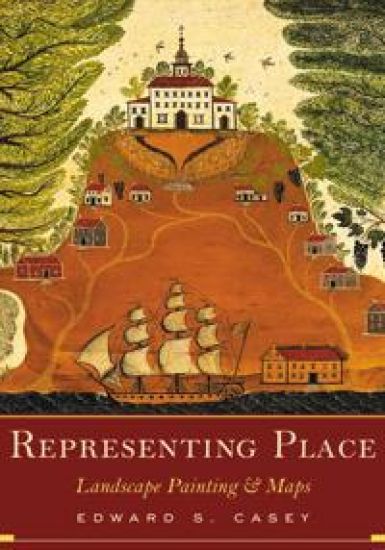
Representing Place

Representing Place

Edward S. Casey

University of Minnesota Press
2002
nidottu
You are here, a map declares, but of course you are not, any more than you truly occupy the vantage point into which a landscape painting puts you. How maps and paintings figure and reconfigure space-as well as our place in it-is the subject of Edward S. Casey’s ambitious study, an exploration of how we portray the world and its many places. Casey’s discussion ranges widely from Northern Sung landscape painting to nineteenth-century American and British landscape painting and photography, from prehistoric petroglyphs and medieval portolan charts to seventeenth-century Dutch cartography and land survey maps of the American frontier. From these culturally and historically diverse forays a theory of representation emerges. Casey proposes that the representation of place in visual works be judged in terms not of resemblance, but of reconnecting with an earth and world that are not the mere content of mind or language-a reconnection that calls for the embodiment and implacement of the human subject. Representing Place is the third volume in Casey’s influential epic project of reinterpreting evolving conceptions of space in world thought. He combines history with philosophy, and cartography with art, to create a new understanding of how representation requires and thrives on space, ultimately renewing our appreciation of the power of place as it is set forth in paintings and maps.
Remembering, Second Edition

Remembering, Second Edition

Edward S. Casey

Indiana University Press
2000
pokkari
RememberingA Phenomenological StudySecond EditionEdward S. Casey A pioneering investigation of the multiple ways of remembering and the difference that memory makes in our daily lives. A Choice Outstanding Academic Book "An excellent book that provides an in-depth phenomenological and philosophical study of memory." —Choice ". . . a stunning revelation of the pervasiveness of memory in our lives." —Contemporary Psychology "[Remembering] presents a study of remembering that is fondly attentive to its rich diversity, its intricacy of structure and detail, and its wide-ranging efficacy in our everyday, life-world experience. . . . genuinely pioneering, it ranges far beyond what established traditions in philosophy and psychology have generally taken the functions and especially the limits of memory to be." —The Humanistic Psychologist Edward S. Casey provides a thorough description of the varieties of human memory, including recognizing and reminding, reminiscing and commemorating, body memory and place memory. The preface to the new edition extends the scope of the original text to include issues of collective memory, forgetting, and traumatic memory, and aligns this book with Casey's newest work on place and space. This ambitious study demonstrates that nothing in our lives is unaffected by remembering. Studies in Continental Thought—John Sallis, general editor ContentsPreface to the Second EditionIntroduction Remembering Forgotten: The Amnesia of AnamnesisPart One: Keeping Memory in MindFirst ForaysEidetic FeaturesRemembering as Intentional: Act PhaseRemembering as Intentional: Object PhasePart Two: Mnemonic ModesPrologueRemindingReminiscingRecognizingCodaPart Three: Pursuing Memory beyond MindPrologueBody MemoryPlace MemoryCommemorationCodaPart Four: Remembering Re-memberedThe Thick Autonomy of MemoryFreedom in Remembering
Imagining, Second Edition

Imagining, Second Edition

Edward S. Casey

Indiana University Press
2000
pokkari
Imagining A Phenomenological Study Second Edition Edward S. Casey A classic firsthand account of the lived character of imaginative experience. "This scrupulous, lucid study is destined to become a touchstone for all future writings on imagination." —Library Journal "Casey's work is doubly valuable—for its major substantive contribution to our understanding of a significant mental activity, as well as for its exemplary presentation of the method of phenomenological analysis." —Contemporary Psychology ". . . an important addition to phenomenological philosophy and to the humanities generally." —Choice ". . . deliberately and consistently phenomenological, oriented throughout to the basically intentional character of experience and disciplined by the requirement of proceeding by way of concrete description. . . . [Imagining] is an exceptionally well-written work." —International Philosophical Quarterly Drawing on his own experiences of imagining, Edward S. Casey describes the essential forms that imagination assumes in everyday life. In a detailed analysis of the fundamental features of all imaginative experience, Casey shows imagining to be eidetically distinct from perceiving and defines it as a radically autonomous act, involving a characteristic freedom of mind. A new preface places Imagining within the context of current issues in philosophy and psychology. [use one Casey bio for both Imagining and Remembering] Edward S. Casey is Professor of Philosophy at the State University of New York at Stony Brook. He is author of Getting Back into Place: Toward a Renewed Understanding of the Place-World (Indiana University Press) and The Fate of Place: A Philosophical History. Studies in Continental Thought—John Sallis, general editor Contents Preface to the Second Edition Introduction The Problematic Place of Imagination Part One: Preliminary Portrait Examples and First Approximations Imagining as Intentional Part Two Detailed Descriptions Spontaneity and Controlledness Self-Containedness and Self-Evidence Indeterminacy and Pure Possibility Part Three: Phenomenological Comparisons Imagining and Perceiving: Continuities Imagining and Perceiving: Discontinuities Part Four: The Autonomy of Imagining The Nature of Imaginative Autonomy The Significance of Imaginative Autonomy