Kirjojen hintavertailu. Mukana 12 595 353 kirjaa ja 12 kauppaa.

Kirjailija

Edward Shorter

Kirjat ja teokset yhdessä paikassa: 26 kirjaa, julkaisuja vuosilta 1990-2022, suosituimpien joukossa Shock Therapy. Vertaile teosten hintoja ja tarkista saatavuus suomalaisista kirjakaupoista.

26 kirjaa

Kirjojen julkaisuhaarukka 1990-2022.

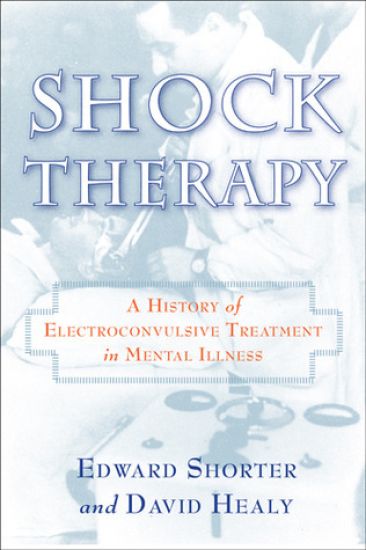
Shock Therapy

Shock Therapy

Edward Shorter; David Healy

Rutgers University Press
2013
nidottu
Shock therapy is making a comeback today in the treatment of serious mental illness. Despite its reemergence as a safe and effective psychiatric tool, however, it continues to be shrouded by a longstanding negative public image, not least due to films such as the classic One Flew over the Cuckoo's Nest, where the inmate of a psychiatric clinic (played by Jack Nicholson) is subjected to electro-shock to curb his rebellious behavior. Beyond its vilification in popular culture, the stereotype of convulsive therapy as a dangerous and inhumane practice is fuelled by professional posturing and public misinformation. Electroconvulsive therapy, or ECT, has in the last thirty years been considered a method of last resort in the treatment of debilitating depression, suicidal ideation, and other forms of mental illness. Yet, ironically, its effectiveness in treating these patients would suggest it as a frontline therapy, bringing relief from acute symptoms and saving lives. In this book, Edward Shorter and David Healy trace the controversial history of ECT and other "shock" therapies. Drawing on case studies, public debates, extensive interviews, and archival research, the authors expose the myths about ECT that have proliferated over the years. By showing ECT's often life-saving results, Shorter and Healy endorse a point of view that is hotly contested in professional circles and in public debates, but for the nearly half of all clinically depressed patients who do not respond to drugs, this book brings much needed hope.
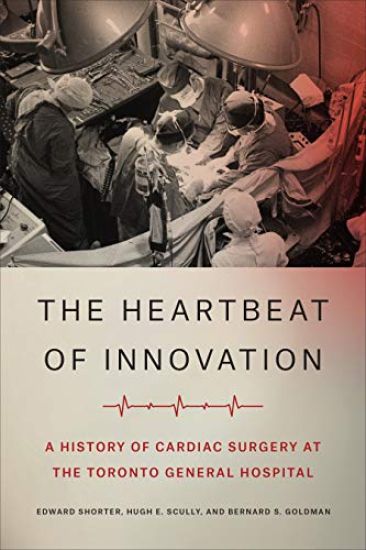
The Heartbeat of Innovation

The Heartbeat of Innovation

Edward Shorter; Hugh E. Scully; Bernard S. Goldman

University of Toronto Press
2022
sidottu
Great innovations take place within great institutions. Founded in 1819, Toronto General Hospital (TGH) is one of Canada’s oldest hospitals and has created a nurturing environment for early Canadian innovations in heart surgery. The Heartbeat of Innovation tells the story of the brilliant surgeons who worked there and the hospital environment that provided an incubator to the many people – skilled perfusionists, dedicated nurses, and pioneering cardiologists – who participated in the revolution in heart surgery that took place along University Avenue in Toronto. Supported by historical records, hospital archives, personal memoirs, and interviews, this book is an extensive and descriptive account of the seemingly inexorable development of cardiac surgery at this leading academic health science centre. It pursues several themes: the complexity of this surgical specialty, its generally male-dominated nature, the trend toward teamwork in practice, and the evolution and incorporation of original research into this branch of healthcare. These strands are woven together to demonstrate how the TGH has evolved into such a dominant leader in the competitive and demanding field of cardiac surgery. Canadian hearts may beat with pride at the knowledge that one of the major stories in modern medicine took place here – and continues here.
The Rise and Fall of the Age of Psychopharmacology

The Rise and Fall of the Age of Psychopharmacology

Edward Shorter

Oxford University Press Inc
2021
nidottu
The Age of Psychopharmacology began with a brilliant rise in the 1950s, when for the first time science entered the study of drugs that affect the brain and mind. But, esteemed historian Edward Shorter argues that there has been a recent fall, as the field has seen its drug offerings impoverished and its diagnoses distorted by the "Diagnostic and Statistical Manual of Mental Disorders." The new drugs, such as Prozac, have been less effective than the old. The new diagnoses, such as "major depression," have strayed increasingly from the real disorders of most patients. Behind this disaster has been the invasion of the field by the pharmaceutical industry. This invasion has paid off commercially but not scientifically: There have been no new classes of psychiatry drugs in the last thirty years. Given that psychiatry's diagnoses and therapeutics have largely failed, the field has greatly declined from earlier days. Based on extensive research discovered in litigation, Shorter provides a historical perspective of change and decline over time, concluding that the story of the psychopharmacology is a story of a public health disaster.
Partnership for Excellence

Partnership for Excellence

Edward Shorter

University of Toronto Press
2021
pokkari
The University of Toronto’s Faculty of Medicine is North America’s largest medical school and a major health consortium, boasting nine affiliated teaching hospitals and a network of research institutes. It is where insulin was pioneered, stem cells were first discovered, and famous physicians from Vincent Lam to Sheela Basrur began their careers. But despite all its major accomplishments, the faculty’s impressive history has never before been comprehensively documented. In Partnership for Excellence, senior medical historian and award-winning author Edward Shorter details the Faculty of Medicine’s history from its inception as a small provincial school to its present day status as an international powerhouse. Deeply researched through front-line interviews and primary sources, it ties the story of the faculty and its teaching hospitals to the general history of medicine over this period. Shorter emphasizes the enormous concentration of intellectual energy in the faculty that has allowed it to become the dominant force in Canadian medicine, home to a legion of medical pioneers and achievements.
Stormy's World: Inside Porn

Stormy's World: Inside Porn

Edward Shorter

Bpt Press
2019
nidottu
Stormy Daniels is on the front page now. This book sets Stormy in context. But it's not just a biopic. It's about the larger forces at play here.Sexuality is of enormous interest to people. They are keen to find out if the world is changing, and if they are changing with it. This is where porn comes in. People use porn to expand their erotic imaginations. The argument of this book is that porn drives desire. It gives people new tastes, new ideas that they want to act on. We aren't in the 1950s anymore. People today are able to enact their fantasies, and if they see something in porn they really like, they want to do it. This is a huge change in sexuality.Stormy's World is essential to understanding where our society is sexually and where it might go.
Psykiatrian historia

Psykiatrian historia

Edward Shorter

Into Kustannus
2019
nidottu
Miltä näyttää nykypäivän psykiatriaan johtava - sen joskus kiistanalainenkin - historiallinen polku?Psykiatrian historia on helppolukuinen kuvaus eurooppalaisen ja yhdysvaltalaisen psykiatrisen hoidon juurista. Teos on kiehtova matka mielisairaaloiden synnystä neurotieteeseen ja Freudista Prozaciin. Edward Shorter onnistuu tarjoamaan hämmästyttävän paljon mielenkiintoisia näkökulmia psykiatrian historiasta. Mukaan mahtuu kuvausta sekä vanhoista hoitomuodoista että tautien luokittelun kehityksestä aina lobotomia- ja sähkösokkihoitoihin asti.Mitä tarkoittavat kuumeparannus ja neurosyfilis? Mikä oli ensimmäinen tehokas lääke mielisairauksien hoitoon? Shorter tutustuttaa aiheesta tietämättömänkin yhteen maailman kiistanalaisimmista tieteistä. Kirja sopiikin kaikenikäisille ihmisistä kiinnostuneille lukijoille.
The Madness of Fear

The Madness of Fear

Edward Shorter; Max Fink

Oxford University Press Inc
2018
nidottu
What are the real disease entities in psychiatry? This is a question that has bedeviled the study of the mind for more than a century yet it is low on the research agenda of psychiatry. Basic science issues such as neuroimaging, neurochemistry, and genetics carry the day instead. There is nothing wrong with basic science research, but before studying the role of brain circuits or cerebral chemistry, shouldn't we be able to specify how the various diseases present clinically? Catatonia is a human behavioral syndrome that for almost a century was buried in the poorly designated psychiatric concept of schizophrenia. Its symptoms are well-know, and some of them are serious. Catatonic patients may die as their temperatures accelerate; they become dehydrated because they refuse to drink; they risk inanition because they refuse to eat or move. Autistic children with catatonia may hit themselves repeatedly in the head. We don't really know what catatonia is, in the sense that we know what pneumonia is. But we can identify it, and it is eminently treatable. Clinicians can make these patients better on a reliable basis. There are few other disease entities in psychiatry of which this is true. So why has there been so little psychiatric interest in catatonia? Why is it simply not on the radar of most clinicians? Catatonia actually occurs in a number of other medical illnesses as well, but it is certainly not on the radar of most internists or emergency physicians. In The Madness of Fear, Drs. Shorter and Fink seek to understand why this "vast field of ignorance" exists. In the history of catatonia, they see a remarkable story about how medicine flounders, and then seems to find its way. And it may help doctors, and the public, to recognize catatonia as one of the core illnesses in psychiatry.
Women's Bodies

Women's Bodies

Edward Shorter

Routledge
2017
sidottu
This book describes how women's physical experience historically has affected the whole constellation of values that represents womanliness, and the constellation of power relationships that binds men and women together. It explores the role of herbs and of mechanical procedures for abortion.
Doctors and Their Patients

Doctors and Their Patients

Edward Shorter

Routledge
2017
sidottu
With every passing year, the mutual mistrust between doctor and patient widens, as doctors retreat into resentment and patients become increasingly disillusioned with the quality of care. Rich in anecdote as well as science 'Doctors and Their Patients' describes how both have arrived at this sad shape.
What Psychiatry Left Out of the DSM-5
Choice Recommended ReadWhat Psychiatry Left Out of the DSM-5: Historical Mental Disorders Today covers the diagnoses that the Diagnostic and Statistical Manual of Mental Disorders (DSM) failed to include, along with diagnoses that should not have been included, but were. Psychiatry as a field is over two centuries old and over that time has gathered great wisdom about mental illnesses. Today, much of that knowledge has been ignored and we have diagnoses such as "schizophrenia" and "bipolar disorder" that do not correspond to the diseases found in nature; we have also left out disease labels that on a historical basis may be real. Edward Shorter proposes a history-driven alternative to the DSM.
What Psychiatry Left Out of the DSM-5
Choice Recommended ReadWhat Psychiatry Left Out of the DSM-5: Historical Mental Disorders Today covers the diagnoses that the Diagnostic and Statistical Manual of Mental Disorders (DSM) failed to include, along with diagnoses that should not have been included, but were. Psychiatry as a field is over two centuries old and over that time has gathered great wisdom about mental illnesses. Today, much of that knowledge has been ignored and we have diagnoses such as "schizophrenia" and "bipolar disorder" that do not correspond to the diseases found in nature; we have also left out disease labels that on a historical basis may be real. Edward Shorter proposes a history-driven alternative to the DSM.
Partnership for Excellence

Partnership for Excellence

Edward Shorter

University of Toronto Press
2013
sidottu
The University of Toronto’s Faculty of Medicine is North America’s largest medical school and a major health consortium, boasting nine affiliated teaching hospitals and a network of research institutes. It is where insulin was pioneered, stem cells were first discovered, and famous physicians from Vincent Lam to Sheela Basrur began their careers. But despite all its major accomplishments, the faculty’s impressive history has never before been comprehensively documented. In Partnership for Excellence, senior medical historian and award-winning author Edward Shorter details the Faculty of Medicine’s history from its inception as a small provincial school to its present day status as an international powerhouse. Deeply researched through front-line interviews and primary sources, it ties the story of the faculty and its teaching hospitals to the general history of medicine over this period. Shorter emphasizes the enormous concentration of intellectual energy in the faculty that has allowed it to become the dominant force in Canadian medicine, home to a legion of medical pioneers and achievements.
How Everyone Became Depressed

How Everyone Became Depressed

Edward Shorter

Oxford University Press Inc
2013
sidottu
This book argues that psychiatry's love affair with the diagnosis of depression has become a death grip. Depression is a real illness, especially in its melancholic form. But most patients who get the diagnosis of 'depression' are also anxious, fatigued, unable to sleep, have all kinds of physical symptoms, and tend to obsess about the whole thing. They do not have a disorder of 'mood'. It is a travesty to call them all 'depressed.' How did this happen? How did everyone become depressed? A well-known historian, the author describes how in the 19th century patients with those symptoms were considered 'nervous,' and when they lost control it was a 'nervous breakdown.' Then psychiatry turned its back on the whole concept of nerves, and - first under the influence of Freud's psychoanalysis and then the influence of the pharmaceutical industry - the diagnosis of depression took center stage. The result has been a scientific disaster, leading to the misdiagnosis and inappropriate treatment (with antidepressants) of millions of patients. Urging that the diagnosis of depression be re-thought, the book turns a dramatic page in the understanding of psychiatric symptoms that are as common as the common cold. The book makes an immediate contribution to the debate about DSM5, which is due to be released very soon, in terms of discussing the diagnosis of depression. The author controversially proposes replacing the diagnosis of 'major depression' with 'melancholia' and 'nonmelancholia'; he argues that depression and anxiety usually occur together and are really the same disease; and he says that patients with so-called mood disorders really have a disorder of the entire body. The author's ability to make use of the enormous well of psychiatry's past history in several languages make this a unique book that contributes to the important discussions today of diagnosis and treatment.
Psychotic Depression

Psychotic Depression

Conrad M. Swartz; Edward Shorter

Cambridge University Press
2012
pokkari
Psychotic depression is a distinct and acute clinical condition along the spectrum of depressive disorders. It can manifest itself in many ways and often induces very violent and suicidal behavior. This book aims to help clinical practitioners and trainees describe their observations of psychotic depression, formulate treatment, and express expectations of recovery from illness. It focuses on all facets of the disorder, from clinical history to coverage of diagnostic and treatment protocols. Medical readers of this book will come away able to diagnose and readily treat psychotic depression and thus will be able to serve their patients better. Non-physician readers will come away with the message that this is a terrible illness, but there is hope.
Endocrine Psychiatry

Endocrine Psychiatry

Edward Shorter; Max Fink

Oxford University Press Inc
2010
sidottu
The riddle of melancholia has stumped generations of doctors. It is a serious depressive illness that often leads to suicide and premature death. The disease's link to biology has been intensively studied. Unlike almost any other psychiatric disorder, melancholia sufferers have abnormal endocrine functions. Tests capable of separating melancholia from other mood disorders were useful discoveries, but these tests fell into disuse as psychiatrists lost interest in biology and medicine. In the nineteenth century, theories about the role of endocrine organs encouraged endocrine treatments that loomed prominently in practice. This interest faded in the 1930s but was revived by the discovery of the adrenal hormone cortisol and descriptions of its abnormal functioning in melancholic and psychotic depressed patients. New endocrine tests were devised to plumb the secrets of mood disorders. Two colorful individuals, Bernard Carroll and Edward Sachar, led this revival and for a time in the 1960s and 1970s intensive research interest established connections between hormone dysfunctions and behavior. In the 1980s, psychiatrists lost interest in hormonal approaches largely because they did not correlate with the arbitrary classification of mood disorders. Today the relation between endocrines and behavior have been disregarded. This history traces the enthusiasm of biological efforts to solve the mystery of melancholia and their fall. Using vibrant language accessible to family care practitioners, psychiatrists and interested lay readers, the authors propose that a useful, a potentially live-saving connection between medicine and psychiatry, has been lost.
Before Prozac

Before Prozac

Edward Shorter

Oxford University Press Inc
2008
sidottu
Psychiatry today is a barren tundra, writes medical historian Edward Shorter, where drugs that don't work are used to treat diseases that don't exist. In this provocative volume, Shorter illuminates this dismal landscape, in a revealing account of why psychiatry is "losing ground" in the struggle to treat depression. Naturally, the book looks at such culprits as the pharmaceutical industry, which is not inclined to market drugs once the patent expires, leading to the endless introduction of new--but not necessarily better--drugs. But the heart of the book focuses on an unexpected villain: the FDA, the very agency charged with ensuring drug safety and effectiveness. Shorter describes how the FDA permits companies to test new products only against placebo. If you can beat sugar pills, you get your drug licensed, whether or not it is actually better than (or even as good as) current medications, thus sweeping from the shelves drugs that may be superior but have lost patent protection. The book also examines the FDA's early power struggles against the drug industry, an influence-grab that had little to do with science, and which left barbiturates, opiates, and amphetamines all underprescribed, despite the fact that under careful supervision they are better at treating depression, with fewer side effects, than the newer drugs in the Prozac family. Shorter also castigates academia, showing how two forms of depression, melancholia and nonmelancholia--"as different from each other as chalk and cheese"--became squeezed into one dubious classification, major depression, which was essentially a political artifact born of academic infighting. An astonishing and troubling look at modern psychiatry, Losing Ground is a book that is sure to spark controversy for years to come.
Psychotic Depression

Psychotic Depression

Conrad M. Swartz; Edward Shorter

Cambridge University Press
2007
sidottu
Psychotic depression is a distinct and acute clinical condition along the spectrum of depressive disorders. It can manifest itself in many ways and often induces very violent and suicidal behavior. This book aims to help clinical practitioners and trainees describe their observations of psychotic depression, formulate treatment, and express expectations of recovery from illness. It focuses on all facets of the disorder, from clinical history to coverage of diagnostic and treatment protocols. Medical readers of this book will come away able to diagnose and readily treat psychotic depression and thus will be able to serve their patients better. Non-physician readers will come away with the message that this is a terrible illness, but there is hope.
Written in the Flesh

Written in the Flesh

Edward Shorter

University of Toronto Press
2006
pokkari
Written in the Flesh is a history of sexual desire – a startling and provocative history of what people yearn to do sexually. It is the story of the whole body's need for sexual attention rather than simply the genitalia and their procreational function. The desire for sexual pleasure and total body sex – that is, the expansion of sexuality from a limited focus on the face and genitals to include the entire body – is certainly not a new phenomenon: the ancient Greeks, Romans, and Chinese, amongst others, were quite familiar with eroticism that went beyond the strictly heterosexual and procreational. In the long centuries of Christian Europe, when miserable conditions of life and religious repression conspired to minimize the expression of sexual longing, desire was driven underground. Yet in the late nineteenth century, increasing privacy, prosperity, and good health again permitted the underlying biological urge for total body sex to express itself, and encouraged a shift of erotic pleasure toward new and unexplored body zones: the mouth, nipples, anus, and further. This new work by renowned medical historian Edward Shorter demonstrates that desire is hard-wired into the brain, expressing itself in remarkably similar ways in men and women, adolescent and adult, and in gays, lesbians, and straights alike. Drawing from a wide array of sources, including memoirs, novels, collections of letters, diaries, and indeed a large pornographic corpus, Shorter explores the widening of Western society's sexual repertoire. Written in the Flesh is a history of what people like to do in bed and how that has changed. The change is relentless: human sexuality continually seeks new means of liberation in its expression of pleasure.
Written in the Flesh

Written in the Flesh

Edward Shorter

University of Toronto Press
2005
sidottu
Written in the Flesh is a history of sexual desire – a startling and provocative history of what people yearn to do sexually. It is the story of the whole body's need for sexual attention rather than simply the genitalia and their procreational function. The desire for sexual pleasure and total body sex – that is, the expansion of sexuality from a limited focus on the face and genitals to include the entire body – is certainly not a new phenomenon: the ancient Greeks, Romans, and Chinese, amongst others, were quite familiar with eroticism that went beyond the strictly heterosexual and procreational. In the long centuries of Christian Europe, when miserable conditions of life and religious repression conspired to minimize the expression of sexual longing, desire was driven underground. Yet in the late nineteenth century, increasing privacy, prosperity, and good health again permitted the underlying biological urge for total body sex to express itself, and encouraged a shift of erotic pleasure toward new and unexplored body zones: the mouth, nipples, anus, and further. This new work by renowned medical historian Edward Shorter demonstrates that desire is hard-wired into the brain, expressing itself in remarkably similar ways in men and women, adolescent and adult, and in gays, lesbians, and straights alike. Drawing from a wide array of sources, including memoirs, novels, collections of letters, diaries, and indeed a large pornographic corpus, Shorter explores the widening of Western society's sexual repertoire. Written in the Flesh is a history of what people like to do in bed and how that has changed. The change is relentless: human sexuality continually seeks new means of liberation in its expression of pleasure.
A Historical Dictionary of Psychiatry

A Historical Dictionary of Psychiatry

Edward Shorter

Oxford University Press Inc
2005
sidottu
This is the first historical dictionary of psychiatry. It covers the subject from autism to Vienna, and includes the key concepts, individuals, places, and institutions that have shaped the evolution of psychiatry and the neurosciences. An introduction puts broad trends and international differences in context, with an extensive bibliography for further reading. Each entry gives the main dates, themes, and personalities involved in the unfolding of the topic. Longer entries describe the evolution of such subjects as depression, schizophrenia, and psychotherapy. The book gives ready reference to when things happened in psychiatry, how and where they happened, and who made the main contributions. In addition, it touches on such social themes as "women in psychiatry," "criminality and psychiatry," and "homosexuality and psychiatry." A comprehensive index makes immediately accessible subjects that do not appear in the alphabetical listing. Bringing together information from the English, French, German, Italian, and Scandinavian languages, the dictionary rests on an enormous base of primary sources that cover the growth of psychiatry through all of Western society.