Kirjojen hintavertailu. Mukana 12 595 353 kirjaa ja 12 kauppaa.

Kirjailija

Edward Simpson

Kirjat ja teokset yhdessä paikassa: 11 kirjaa, julkaisuja vuosilta 2006-2025, suosituimpien joukossa A Treatise on Ordnance and Naval Gunnery. Vertaile teosten hintoja ja tarkista saatavuus suomalaisista kirjakaupoista.

11 kirjaa

Kirjojen julkaisuhaarukka 2006-2025.

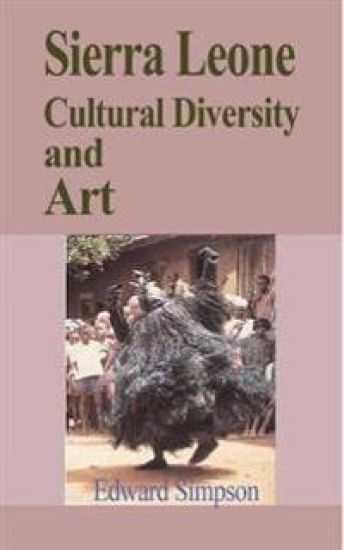
Sierra Leone Cultural Diversity and Art
Sierra Leone Cultural Diversity and Art. Travel Guide to Sierra Leone. Sierra Leoneans have a unique blend of cultural traditions. They are vibrant, exuberant and expressive people and their cultural values, traditions and belief systems are widely practised and respected. A variety of food, flamboyant clothing, jewellery, hand-made crafts, lively festivals and the performing arts are expressions of this colourful society. Rituals and ceremonies are performed by different groups at different times, including the 'secret societies.' These 'societies' are hugely secretive and members (men and women have separate societies) obey a strict code of conduct. Religious beliefs and practices are very present in everyday life and there are many fascinating historic sights, monuments and relics to see. Keep your eyes open and you never know what you might come across Around the next corner, there could be a national cultural show where traditional dancers gyrate and revel to the drums and music
Highways to the End of the World

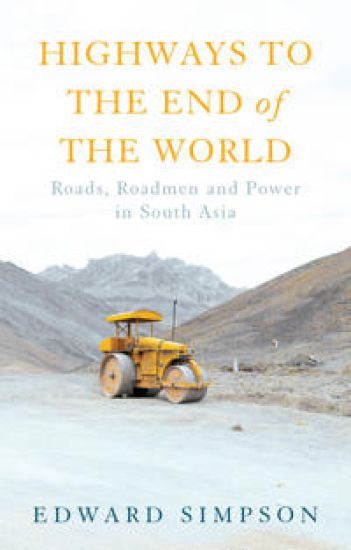
Highways to the End of the World

Edward Simpson

C Hurst Co Publishers Ltd
2022
sidottu
This book argues that road-building was naturalised in the twentieth century to the point of common sense, integrating roadbuilding into a system of climate change denial hidden within a broad international development imperative. But if we can 'read' South Asian roads as forms of governance and knowledge, we can challenge the region's established geopolitical narratives, and the idea of a never-ending future. Highways to the End of the World explores the political economy of these ideas by focusing on the history of this phenomenon, and on the road-builders of South Asia themselves. How do these flamboyant and controversial 'roadmen' think about their work and the future of the planet? What do roads do, and why? And how did they become central to the region's nationalist and developmental projects in the first place? Edward Simpson's fascinating ethnographic account takes us from fume-filled toll booths in the heart of India, via overworked government offices in Pakistan, to pharaonic bridges in the Indian Ocean. Simpson follows the money, explores the politics of evidence, and argues against the utopian hyperbole of present-day 'road talk', finding both humanitarian crises and freewheeling international capital in the hedgerows. Roads have never been so interesting, or so controversial.
A Treatise on Ordnance and Naval Gunnery
A Treatise on Ordnance and Naval Gunnery is an unchanged, high-quality reprint of the original edition of 1862. Hansebooks is editor of the literature on different topic areas such as research and science, travel and expeditions, cooking and nutrition, medicine, and other genres. As a publisher we focus on the preservation of historical literature. Many works of historical writers and scientists are available today as antiques only. Hansebooks newly publishes these books and contributes to the preservation of literature which has become rare and historical knowledge for the future.
The Political Biography of an Earthquake: Aftermath and Amnesia in Gujarat, India
For those so-minded, the aftermath of an earthquake presents opportunities to intervene. Thus, in Gujarat, following the disaster of 2001, leaders were deposed, proletariats created, religious fundamentalism incubated, the state restructured, and industrial capital-ism expanded exponentially. Rather than gazing in at those struggling in the ruins, as is commonplace in the literature, this book looks out from the affected region at those who came to intervene. Based on extensive research amid the dust and noise of reconstruction, the author focuses on the survivors and their interactions with death, history, and with those who came to use the shock of disaster to change the order of things. Edward Simpson takes us deep into the experience of surviving a "natural" disaster. We see a society in mourning, further alienated by manufactured conditions of uncertainty and absurdity. We witness arguments about the past. What was important? What should be preserved? Was modernisation the cause of the disaster or the antidote? As people were putting things back together, they also knew that future earthquakes were inevitable. How did they learn to live with this terrible truth? How have people in other times and places come to terms with the promise of another earthquake, knowing that things will fall apart again?
The Political Biography of an Earthquake

The Political Biography of an Earthquake

Edward Simpson

C Hurst Co Publishers Ltd
2014
nidottu
For those so-minded, the aftermath of an earthquake presents opportunities to intervene. Thus, in Gujarat, following the disaster of 2001, leaders were deposed, proletariats created, religious fundamentalism incubated, the state restructured, and industrial capital- ism expanded exponentially. Rather than gazing in at those struggling in the ruins, as is commonplace in the literature, this book looks out from the affected region at those who came to intervene. Based on extensive research amid the dust and noise of re- construction, the author focuses on the survivors and their interactions with death, history, and with those who came to use the shock of disaster to change the order of things. Edward Simpson takes us deep into the experience of surviving a 'natural' disaster. We see a society in mourning, further alienated by manufactured conditions of uncertainty and absurdity. We witness arguments about the past. What was important? What should be preserved? Was modernisation the cause of the disaster or the antidote? As people were putting things back together, they also knew that future earthquakes were inevitable. How did they learn to live with this terrible truth? How have people in other times and places come to terms with the promise of another earthquake, knowing that things will fall apart again?
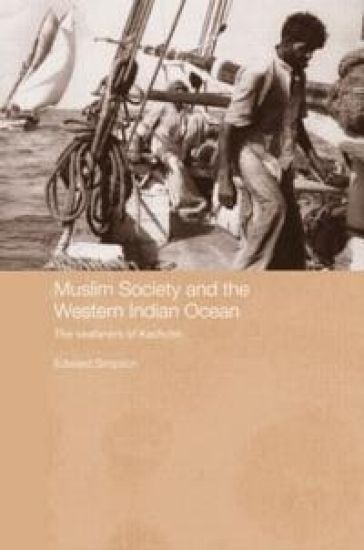
Muslim Society and the Western Indian Ocean
Based on substantial ethnographic, textual and archival research, this interesting book offers a new perspective on the anthropology of the western Indian Ocean. Writing in a clear, engaging style, and covering an impressive range of theoretical terrain, Simpson critically explores the relationships between people and things that give life to the region and drive shifting patterns of social change among Muslims in the highly-politicized state of Gujarat. Scholars of the Indian Ocean, Muslim society in South Asia, and Hindu nationalism, as well as anthropologists in general, will find this a fascinating read and a major contribution to research in this area.
Muslim Society and the Western Indian Ocean
Based on substantial ethnographic, textual and archival research, this interesting book offers a new perspective on the anthropology of the western Indian Ocean. Writing in a clear, engaging style, and covering an impressive range of theoretical terrain, Simpson critically explores the relationships between people and things that give life to the region and drive shifting patterns of social change among Muslims in the highly-politicized state of Gujarat. Scholars of the Indian Ocean, Muslim society in South Asia, and Hindu nationalism, as well as anthropologists in general, will find this a fascinating read and a major contribution to research in this area.