Kirjojen hintavertailu. Mukana 12 390 323 kirjaa ja 12 kauppaa.
Kirjailija
Edward Singleton Holden
Kirjat ja teokset yhdessä paikassa: 28 kirjaa, julkaisuja vuosilta 2007-2025, suosituimpien joukossa The Sciences. Vertaile teosten hintoja ja tarkista saatavuus suomalaisista kirjakaupoista.
This biographical register, compiled by George Washington Cullum and continued by Edward Singleton Holden, offers a detailed record of officers and graduates of the U.S. Military Academy at West Point. Covering individuals numbered 3385 to 3993, the register provides invaluable insights into the careers and contributions of these military figures. Researchers, historians, and anyone interested in the history of West Point and the United States military will find this volume an indispensable resource. Explore the lives and achievements of those who served, and gain a deeper understanding of the academy's role in shaping American military leadership. This work has been selected by scholars as being culturally important, and is part of the knowledge base of civilization as we know it. This work was reproduced from the original artifact, and remains as true to the original work as possible. Therefore, you will see the original copyright references, library stamps (as most of these works have been housed in our most important libraries around the world), and other notations in the work. This work is in the public domain in the United States of America, and possibly other nations. Within the United States, you may freely copy and distribute this work, as no entity (individual or corporate) has a copyright on the body of the work. As a reproduction of a historical artifact, this work may contain missing or blurred pages, poor pictures, errant marks, etc. Scholars believe, and we concur, that this work is important enough to be preserved, reproduced, and made generally available to the public. We appreciate your support of the preservation process, and thank you for being an important part of keeping this knowledge alive and relevant.
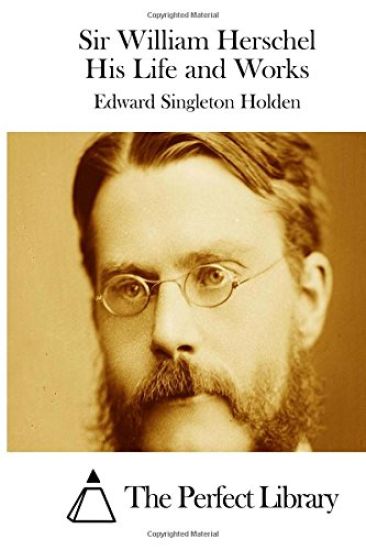
Edward Singleton Holden (November 5, 1846 - March 16, 1914) was an American astronomer and the fifth president of the University of California. Early years;He was born in St. Louis, Missouri, in 1846 to Jeremiah and Sarah Holden. From 1862-66, he attended Washington University in St. Louis, where he obtained a B.S. degree. He later trained at West Point in the class of 1870.Career: In 1873 he became professor of mathematics at the US Naval Observatory, where he made a favorable impression on Simon Newcomb. On August 28, 1877, a few days after Asaph Hall discovered the moons of Mars Deimos and Phobos, he claimed to have found a third satellite of Mars. Further analysis showed large mistakes in his observations. 2] He was director of Washburn Observatory at the University of Wisconsin-Madison from 1881 to 1885. He was elected a member of the American National Academy of Sciences in 1885. He discovered a total of 22 NGC objects during his work at Washburn Observatory.He was president of the University of California from 1885 until 1888, and the first director of the Lick Observatory from 1888 until the end of 1897. He resigned as a result of internal dissent over his management among his subordinates. While at the Lick Observatory, he was the founder of the Astronomical Society of the Pacific and its first president (1889-1891).In 1901 he became the librarian of the United States Military Academy at West Point, where he remained until his death. ....Frederick William Herschel, KH, FRS (German: Friedrich Wilhelm Herschel; 15 November 1738 - 25 August 1822) was a German-born British astronomer, composer and brother of fellow astronomer Caroline Herschel, with whom he worked. Born in the Electorate of Hanover, Herschel followed his father into the Military Band of Hanover, before migrating to Great Britain in 1757 at the age of nineteen. His works were praised by Mozart, Haydn (who met Herschel in London) and Beethoven. citation needed]Herschel constructed his first large telescope in 1774, after which he spent nine years carrying out sky surveys to investigate double stars. The resolving power of the Herschel telescopes revealed that the nebulae in the Messier catalogue were clusters of stars. Herschel published catalogues of nebulae in 1802 (2,500 objects) and in 1820 (5,000 objects). In the course of an observation on 13 March 1781, he realized that one celestial body he had observed was not a star, but a planet, Uranus. This was the first planet to be discovered since antiquity and Herschel became famous overnight. As a result of this discovery, George III appointed him Court Astronomer. He was elected as a Fellow of the Royal Society and grants were provided for the construction of new telescopes.Herschel pioneered the use of astronomical spectrophotometry, using prisms and temperature measuring equipment to measure the wavelength distribution of stellar spectra. In addition, Herschel discovered infrared radiation. Other work included an improved determination of the rotation period of Mars, 4] the discovery that the Martian polar caps vary seasonally, the discovery of Titania and Oberon (moons of Uranus) and Enceladus and Mimas (moons of Saturn). Herschel was made a Knight of the Royal Guelphic Order in 1816. He was the first President of the Royal Astronomical Society when it was founded in 1820. He died in August 1822, and his work was continued by his only son, John Hersche
Astronomy for High Schools and Colleges - Sixth Edition is an unchanged, high-quality reprint of the original edition of 1889. Hansebooks is editor of the literature on different topic areas such as research and science, travel and expeditions, cooking and nutrition, medicine, and other genres. As a publisher we focus on the preservation of historical literature. Many works of historical writers and scientists are available today as antiques only. Hansebooks newly publishes these books and contributes to the preservation of literature which has become rare and historical knowledge for the future.
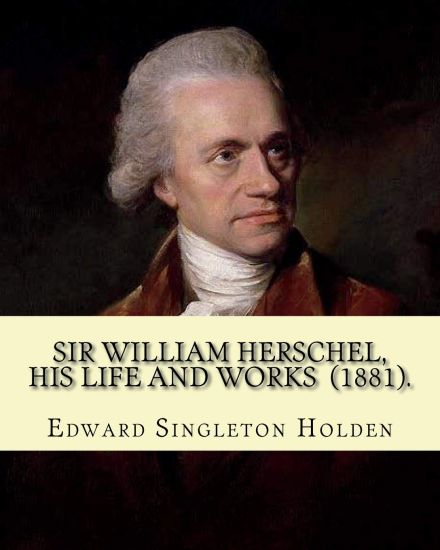
In the following account of the life and works of Sir WILLIAM HERSCHEL, I have been obliged to depend strictly upon data already in print--the Memoir of his sister, his own scientific writings and the memoirs and diaries of his cotemporaries. The review of his published works will, I trust, be of use. It is based upon a careful study of all his papers in the Philosophical Transactions and elsewhere. Frederick William Herschel (15 November 1738 - 25 August 1822) was a German-born British astronomer, composer and brother of fellow astronomer Caroline Herschel, with whom he worked. Born in the Electorate of Hanover, William Herschel followed his father into the Military Band of Hanover, before migrating to Great Britain in 1757 at the age of nineteen. William Herschel constructed his first large telescope in 1774, after which he spent nine years carrying out sky surveys to investigate double stars. The resolving power of the Herschel telescopes revealed that the nebulae in the Messier catalogue were clusters of stars. Herschel published catalogues of nebulae in 1802 (2,500 objects) and in 1820 (5,000 objects). In the course of an observation on 13 March 1781, he realized that one celestial body he had observed was not a star, but a planet, Uranus. This was the first planet to be discovered since antiquity and Herschel became famous overnight. As a result of this discovery, George III appointed him Court Astronomer. He was elected as a Fellow of the Royal Society and grants were provided for the construction of new telescopes. William Herschel pioneered the use of astronomical spectrophotometry as a diagnostic tool, using prisms and temperature measuring equipment to measure the wavelength distribution of stellar spectra. Other work included an improved determination of the rotation period of Mars, the discovery that the Martian polar caps vary seasonally, the discovery of Titania and Oberon (moons of Uranus) and Enceladus and Mimas (moons of Saturn). In addition, Herschel discovered infrared radiation. Herschel was made a Knight of the Royal Guelphic Order in 1816. He was the first President of the Royal Astronomical Society when it was founded in 1820. He died in August 1822, and his work was continued by his only son, John Herschel.