Kirjojen hintavertailu. Mukana 12 595 353 kirjaa ja 12 kauppaa.

Kirjailija

Edward W. Klink III

Kirjat ja teokset yhdessä paikassa: 5 kirjaa, julkaisuja vuosilta 2007-2023, suosituimpien joukossa John. Vertaile teosten hintoja ja tarkista saatavuus suomalaisista kirjakaupoista.

Mukana myös kirjoitusasut: Edward W Klink III

5 kirjaa

Kirjojen julkaisuhaarukka 2007-2023.

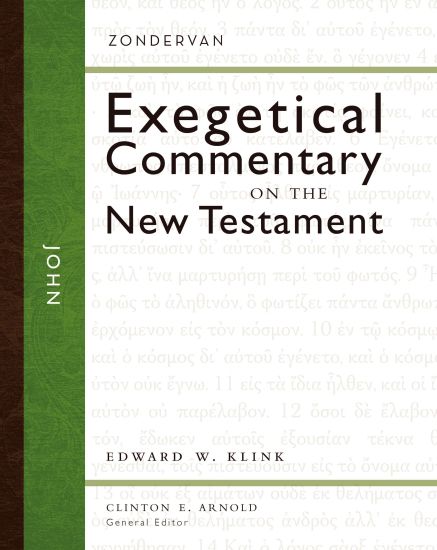
John

John

Edward W Klink III

Zondervan
2017
sidottu
Concentrate on the biblical author's message as it unfolds.Designed to assist the pastor and Bible teacher in conveying the significance of God's Word, the Zondervan Exegetical Commentary on the New Testament series treats the literary context and structure of every passage of the New Testament book in the original Greek.With a unique layout designed to help you comprehend the form and flow of each passage, the ZECNT unpacks:The key message.The author's original translation.An exegetical outline.Verse-by-verse commentary.Theology in application.While primarily designed for those with a basic knowledge of biblical Greek, all who strive to understand and teach the New Testament will benefit from the depth, format, and scholarship of these volumes.
The Beginning and End of All Things

The Beginning and End of All Things

Edward W. Klink III

IVP Academic
2023
nidottu
Many Christians think of the doctrine of creation primarily as relating to the world's origins. In The Beginning and End of All Things, Edward W. Klink III presents a more holistic understanding of creation--a story that is unfolded throughout all of Scripture and is at the core of the gospel itself.From beginning to end, the theme of creation and new creation not only directs the movement of the entire biblical story but also unifies its message. Klink explores the goodness of the physical world and how it will be perfected in the new creation of heaven and earth. Along with offering rich insights about God and his purposes for the world, a biblical theology of creation guides how we engage nature, culture, and life as embodied beings.Essential Studies in Biblical Theology (ESBT), edited by Benjamin L. Gladd, explore the central or essential themes of the Bible's grand storyline. Taking cues from Genesis 1-3, authors trace the presence of these themes throughout the entire sweep of redemptive history. Written for students, church leaders, and laypeople, the ESBT offers an introduction to biblical theology.
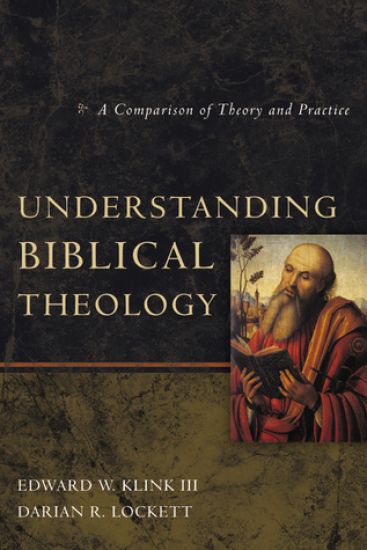
Understanding Biblical Theology

Understanding Biblical Theology

Edward W Klink III; Darian R. Lockett

Zondervan
2012
nidottu
Examines and compares the five major schools of thought regarding biblical theology.Understanding Biblical Theology provides an expert and clarifying look at the catch-all term “biblical theology,” a movement that tries to remove the often-held dichotomy between biblical studies for the Church and as an academic pursuit.Using a spectrum between history and theology, each of the five “types” of biblical theology are identified as landing somewhere on the continuum from “more theological” to “more historical” in concern and practice.This text defines them in detail and gives a brief developmental history for each one, exploring each method through the lens of one contemporary scholar who champions it:Biblical Theology as Historical Description (James Barr)Biblical Theology as History of Redemption (D. A. Carson)Biblical Theology as Worldview-Story (N. T. Wright)Biblical Theology as Canonical Approach (Brevard Childs)Biblical Theology as Theological Construction (Francis Watson).Readers will gain an appreciation for each of these approaches and understand how any student of the Bible can learn from them.
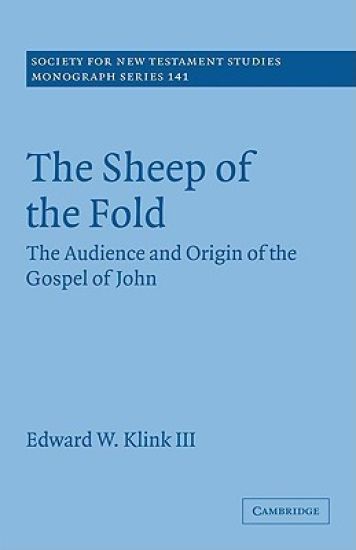
The Sheep of the Fold

The Sheep of the Fold

Edward W. Klink III

Cambridge University Press
2010
pokkari
The last generation of gospel scholarship has considered the reconstruction and analysis of the audience behind the gospels as paradigmatic. The key hermeneutical template for reading the gospels has been the quest for the community that each gospel represents. This scholarly consensus regarding the audience of the gospels has been reconsidered. Using as a test case one of the most entrenched gospels, Edward Klink explores the evidence for the audience behind the Gospel of John. This study challenges the prevailing gospel paradigm by examining the community construct and its functional potential in early Christianity, the appropriation of a gospel text and J. L. Martyn's two-level reading of John, and the implied reader located within the narrative. The study concludes by proposing a more appropriate audience model for reading John, as well as some implications for the function of the gospel in early Christianity.
The Sheep of the Fold

The Sheep of the Fold

Edward W. Klink III

Cambridge University Press
2007
sidottu
The last generation of gospel scholarship has considered the reconstruction and analysis of the audience behind the gospels as paradigmatic. The key hermeneutical template for reading the gospels has been the quest for the community that each gospel represents. This scholarly consensus regarding the audience of the gospels has been reconsidered. Using as a test case one of the most entrenched gospels, Edward Klink explores the evidence for the audience behind the Gospel of John. This study challenges the prevailing gospel paradigm by examining the community construct and its functional potential in early Christianity, the appropriation of a gospel text and J. L. Martyn's two-level reading of John, and the implied reader located within the narrative. The study concludes by proposing a more appropriate audience model for reading John, as well as some implications for the function of the gospel in early Christianity.