Kirjojen hintavertailu. Mukana 12 595 353 kirjaa ja 12 kauppaa.

Kirjailija

Edwidge Danticat

Kirjat ja teokset yhdessä paikassa: 55 kirjaa, julkaisuja vuosilta 1996-2027, suosituimpien joukossa Vale of Tears. Vertaile teosten hintoja ja tarkista saatavuus suomalaisista kirjakaupoista.

55 kirjaa

Kirjojen julkaisuhaarukka 1996-2027.

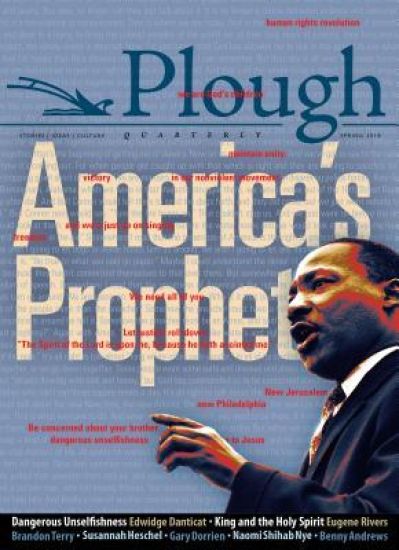
Plough Quarterly No. 16 - America's Prophet

Plough Quarterly No. 16 - America's Prophet

Edwidge Danticat; Susannah Heschel; Eugene F. Rivers III; Brandon M. Terry; Gary Dorrien; D. L. Mayfield; Chris Gibson; Oscar Romero; Oddny Gumaer; Nathaniel Peters; Philip Britts

Plough Publishing House
2018
pokkari
What if Martin Luther King Jr., this name-branded, oft-sanitized preacher from Atlanta, is a prophet whose message America has yet to fully reckon with? Ten days before Martin Luther King Jr.’s assassination, Rabbi Abraham Joshua Heschel said, “Where in America today do we hear a voice like the voice of the prophets of Israel? Martin Luther King is a sign that God has not forsaken the United States of America. God has sent him to us.” What if Heschel’s words about King are true? What if this name-branded, oft-sanitized, Super-Bowl-ad-commercialized, National-Mall-memorialized preacher from Atlanta . . . is a prophet whose message America has yet to fully reckon with? This issue of Plough Quarterly looks at King’s unfinished struggle against the three evils of racism, materialism, and militarism. Perspectives from Edwidge Danticat, Gary Dorrien, Brandon M. Terry, D. L. Mayfield, Eugene Rivers, and Susannah Heschel explore the ways King’s message of nonviolence, justice, and love of neighbor still matters today: to refugees and immigrants, soldiers and veterans, preachers and prisoners, black lives matter activists and the white working class. Also in this issue: original poetry by Naomi Shihab Nye; reviews of new books by James Forman Jr., Steve Krivák, Jim Forest, and Christopher de Hamel; and art by Yvan Lamothe, Roberson Joseph, Barry Moser, Benny Andrews, Zoe Cromwell, Julian Peters, Asuka Hishiki, Mark Smith, Mary Kang, Marc Chagall, John Partipilo, Yuri Kozyrev, Vinicius Barajas, Iain Stewart, Giovanni Bellini. Plough Quarterly features stories, ideas, and culture for people eager to put their faith into action. Each issue brings you in-depth articles, interviews, poetry, book reviews, and art to help you put Jesus’ message into practice and find common cause with others.
Claire of the Sea Light

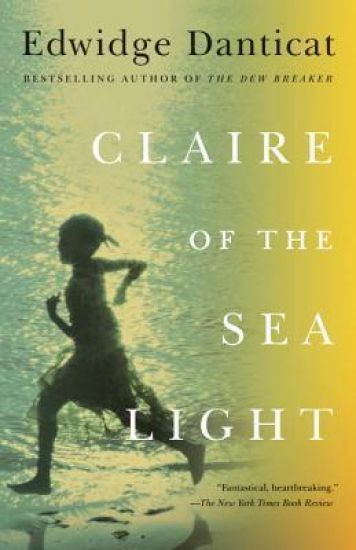
Claire of the Sea Light

Edwidge Danticat

VINTAGE
2014
nidottu
From the national bestselling author of Brother, I'm Dying and The Dew Breaker a "fiercely beautiful" novel (Los Angeles Times) that brings us deep into the intertwined lives of a small seaside town where a little girl, the daughter of a fisherman, has gone missing. Just as her father makes the wrenching decision to send her away for a chance at a better life, Claire Limy Lanm --Claire of the Sea Light--suddenly disappears. As the people of the Haitian seaside community of Ville Rose search for her, painful secrets, haunting memories, and startling truths are unearthed. In this stunning novel about intertwined lives, Edwidge Danticat crafts a tightly woven, breathtaking tapestry that explores the mysterious bonds we share--with the natural world and with one another.
Vale of Tears

Vale of Tears

Paulette Poujol Oriol; Edwidge Danticat

IBEX Publishers,U.S.
2005
nidottu
Fiction. Caribbean Studies. Translated from the French by Dolores A. Schaefer. VALE OF TEARS is a stark, meditative, and vivid exploration of Coralie Santeuil's life through a series of flashbacks she has on New Year's eve as she makes fourteen stops while walking from one end of the busy city of Port-au-Prince to the other in a last quest to save her life and retain her dignity. Although the novel is set in the period around the Second World War, it is in many ways a book about contemporary Haiti. We pause to wonder what happens to the privileged when their world disintegrates. We contemplate thesurvival skills of the poor. Vale of Tears offers a critical reading of the class system and corruption which plague the country. Paulette Poujol-Oriol is one of Haiti's most celebrated novelists.
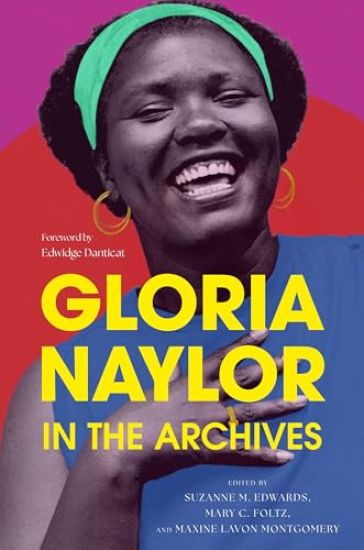
Gloria Naylor in the Archives

Gloria Naylor in the Archives

Edwidge Danticat

UNIVERSITY PRESS OF MISSISSIPPI
2027
pokkari
Contributions by Suzanne M. Edwards, Mary C. Foltz, Randi K. Gill-Sadler, Lauren Gilmore, Mahaliah Ayana Little, Michelle Loris, Maxine Lavon Montgomery, Kiana T. Murphy, Jennifer O’Reilly, Isaiah Frost Rivera, Elizabeth Rivlin, Annie Strausa, and Jennifer D. Williams Although she is best known through her published novels, acclaimed author Gloria Naylor (1950–2016) also worked behind the scenes as an archivist, curating an expansive record of the cultural, professional, and personal influences relevant to her literary production. She preserved drafts of works-in-progress, research materials, correspondence with fans and literary luminaries, travel itineraries, journal entries, photographs, newspaper clippings, and ephemera. The Gloria Naylor Archive (GNA) was founded in 2009 when Gloria Naylor donated her collected papers to Sacred Heart University. It offers rich insights into her writing process, the intellectual histories with which she was in dialogue, and late twentieth-century global literary networks that inspired her creative production. Gloria Naylor in the Archives examines how the archival sensibility in her novels connects with her own complementary curatorial praxis. Together, the essays in this volume position Naylor’s archival praxis as an integral part of her creative vision, important to understanding her interventions into twentieth-century intellectual and literary history. Connecting archival materials to her published novels, Gloria Naylor in the Archives excavates Naylor’s multifaceted strategies of historical recovery in her fiction and her private papers, exploring the varied ways in which they counter the erasure, silence, and misrepresentation of Black communities within institutional, state, and academic archives. In conversation with Naylor’s own record-keeping practices, her novels highlight the importance of archives developed, kept, and preserved by Black women in the service of emancipation.
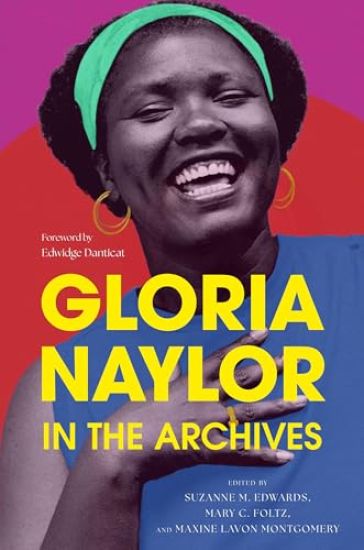
Gloria Naylor in the Archives

Gloria Naylor in the Archives

Edwidge Danticat

UNIVERSITY PRESS OF MISSISSIPPI
2027
sidottu
Contributions by Suzanne M. Edwards, Mary C. Foltz, Randi K. Gill-Sadler, Lauren Gilmore, Mahaliah Ayana Little, Michelle Loris, Maxine Lavon Montgomery, Kiana T. Murphy, Jennifer O’Reilly, Isaiah Frost Rivera, Elizabeth Rivlin, Annie Strausa, and Jennifer D. Williams Although she is best known through her published novels, acclaimed author Gloria Naylor (1950–2016) also worked behind the scenes as an archivist, curating an expansive record of the cultural, professional, and personal influences relevant to her literary production. She preserved drafts of works-in-progress, research materials, correspondence with fans and literary luminaries, travel itineraries, journal entries, photographs, newspaper clippings, and ephemera. The Gloria Naylor Archive (GNA) was founded in 2009 when Gloria Naylor donated her collected papers to Sacred Heart University. It offers rich insights into her writing process, the intellectual histories with which she was in dialogue, and late twentieth-century global literary networks that inspired her creative production. Gloria Naylor in the Archives examines how the archival sensibility in her novels connects with her own complementary curatorial praxis. Together, the essays in this volume position Naylor’s archival praxis as an integral part of her creative vision, important to understanding her interventions into twentieth-century intellectual and literary history. Connecting archival materials to her published novels, Gloria Naylor in the Archives excavates Naylor’s multifaceted strategies of historical recovery in her fiction and her private papers, exploring the varied ways in which they counter the erasure, silence, and misrepresentation of Black communities within institutional, state, and academic archives. In conversation with Naylor’s own record-keeping practices, her novels highlight the importance of archives developed, kept, and preserved by Black women in the service of emancipation.
Dèy

Dèy

Edwidge Danticat

Quercus Publishing
2026
sidottu
'Is home the place where we are born? Or is it the place where we die?' These questions haunt Magnolia, a successful Haitian American real estate agent in Miami, after she hears the terrifying sounds of gunfire while shopping for her daughter's first-ever cellphone; she takes shelter in a restaurant called Oasis, cowering with fellow shoppers and diners, each praying to their respective gods. Once she's safely home, Magnolia hides the fact that she was at the mall shooting from everyone close to her. But given her life back, she begins to see it all clearly, and as if for the first time - what the extraordinary bond she has with her teenage daughter, Zoë, really means to her, and what Zoë may feel in return; what the nearly broken relationship she has with her partner, Harrison, has cost her, despite his love for her and their daughter; why her mentally troubled mother - whose unraveling patterns Magnolia worries she's spiraling toward herself - might be so ghost-haunted; what the source of her father's pain, and his reason for seeking solace in the arms of a mistress, really is. As Magnolia struggles through the labyrinth of her past, she must also come to terms with the losses sustained that traumatic day, losses that we all bear witness to all too often in our troubling times. Can love, can family protect us from harm? Does optimism or fear win out in one's heart? Which side will win out for Magnolia - and where does she really belong? Pulled between these questions, and her beloved, high-stakes choices and worlds - Miami or Haiti, single or married, mortal or ghost, before or after - Magnolia is one of the most compelling characters that Danticat has ever created - a narrator who is "yon pati koukouy, part firefly": shimmering, flitting between choices, drawn to the light yet emitting their own. Taking its title for the Creole word for collective mourning, Dèy is a profoundly warm and moving novel about the importance of sharing grief and leave-taking, but also of the ties of family - takeout dinners around a table, fresh dirt on a plant's roots in the garden, swimming together in the azure seas. As Magnolia questions whether all has not yet been lost, Dèy celebrates the complexity of life in a brave and striking novel that is one of Danticat's most powerful and deeply affecting works yet.
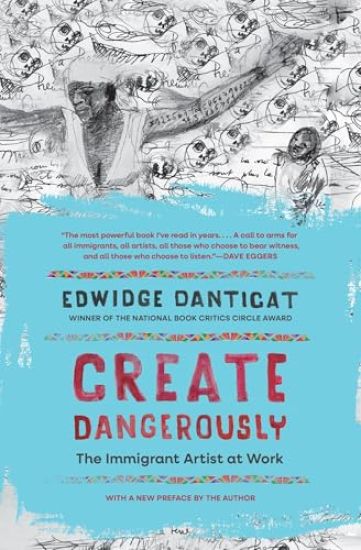
Create Dangerously

Create Dangerously

Edwidge Danticat

PRINCETON UNIVERSITY PRESS
2025
pokkari
A New York Times Notable BookA Miami Herald Best Book of the YearA moving and deeply personal account of art and exile from Edwidge Danticat, winner of two National Book Critics Circle Awards—now with a new preface by the author"Create dangerously, for people who read dangerously. This is what I've always thought it meant to be a writer. Writing, knowing in part that no matter how trivial your words may seem, someday, somewhere, someone may risk his or her life to read them."—Create DangerouslyIn this deeply personal book, the celebrated Haitian-American writer Edwidge Danticat reflects on art and exile, examining what it means to be an immigrant artist from a country in crisis. Inspired by Albert Camus' lecture, "Create Dangerously," and combining memoir and essay, Danticat tells the stories of artists, including herself, who create despite—or because of—the horrors that drove them from their homelands.She writes about the Haitian novelists she first read as a girl at the Brooklyn Public Library, Jean-Michel Basquiat and other artists of Haitian descent, and a renowned Haitian radio journalist whose political assassination shocked the world. She also eulogizes an aunt who guarded her family’s homestead in the Haitian countryside, a cousin who died of AIDS while living in Miami as an undocumented immigrant, and a Haitian woman mutilated in a machete attack who became a public witness against torture.Create Dangerously is an eloquent and moving expression of Danticat's belief that immigrant artists are obliged to bear witness when their countries of origin are suffering from violence, oppression, poverty, and tragedy.
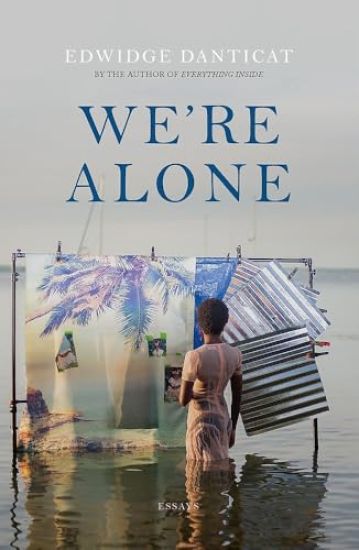
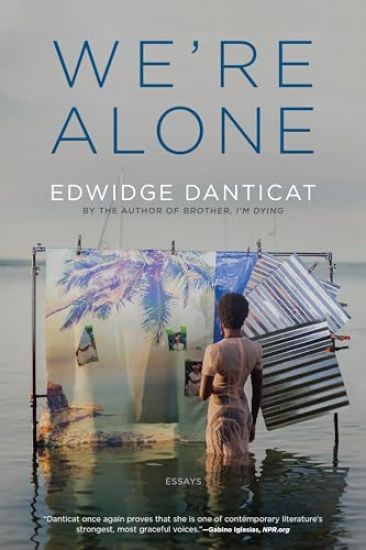
We're Alone

We're Alone

Edwidge Danticat

Quercus Publishing
2025
pokkari
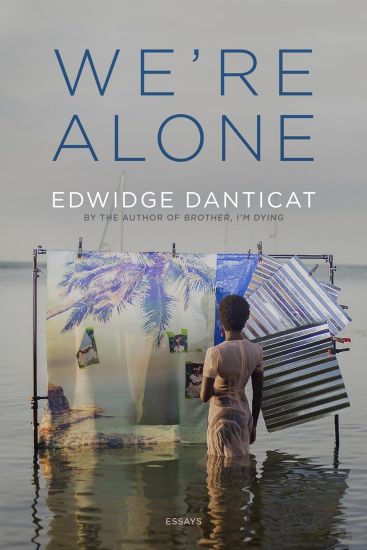
'Danticat offers an invaluable primer to the Haitian American experience in all its inherited trauma. Arguably she does for the Haitian diaspora what Junot Díaz has done for Dominican Americans' TLS'Danticat's observations feel more like a guide to living - a testament to what writers can offer in difficult times' Tinbete Ermyas, NPR Best Books of 2024Tracing a loose arc from Edwidge Danticat's childhood to the COVID-19 pandemic and recent events in Haiti, the essays gathered in We're Alone include personal narrative, reportage, and tributes to mentors and heroes such as Toni Morrison, Paule Marshall, Gabriel García Márquez, and James Baldwin that explore several abiding themes: environmental catastrophe, the traumas of colonialism, motherhood, and the complexities of resilience.From hurricanes to political violence, from her days as a new student at a Brooklyn elementary school knowing little English to her account of a shooting hoax at a Miami mall, Danticat has an extraordinary ability to move from the personal to the global and back again. Throughout, literature and art prove to be her reliable companions and guides in both tragedies and triumphs.Danticat is an irresistible presence on the page: full of heart, outrage, humor, clear thinking, and moral questioning, while reminding us of the possibilities of community. And so "we're alone" is both a fearsome admission and an intimate invitation-we're alone now, we can talk. We're Alone is a book that asks us to think through some of the world's intractable problems while deepening our understanding of one of the most significant novelists at work today.PRAISE FOR EDWIDGE DANTICAT'In Danticat's hands, with great tenderness, these hidden lives are moved away from the margins' TLS'Stunning ruminations on the Haitian diaspora identity, as well as the layered complexities of seeking hope after tragedy . . . Read it, you will not be disappointed' Bad Form
We're Alone: Essays

We're Alone: Essays

Edwidge Danticat

GRAYWOLF PRESS
2025
nidottu
A collection of exceptional new essays by one of the most significant contemporary writers on the world stage Tracing a loose arc from Edwidge Danticat's childhood to the COVID-19 pandemic and recent events in Haiti, the essays gathered in We're Alone include personal narrative, reportage, and tributes to mentors and heroes such as Toni Morrison, Paule Marshall, Gabriel Garc a M rquez, and James Baldwin that explore several abiding themes: environmental catastrophe, the traumas of colonialism, motherhood, and the complexities of resilience. From hurricanes to political violence, from her days as a new student at a Brooklyn elementary school knowing little English to her account of a shooting hoax at a Miami mall, Danticat has an extraordinary ability to move from the personal to the global and back again. Throughout, literature and art prove to be her reliable companions and guides in both tragedies and triumphs. Danticat is an irresistible presence on the page: full of heart, outrage, humor, clear thinking, and moral questioning, while reminding us of the possibilities of community. And so "we're alone" is both a fearsome admission and an intimate invitation--we're alone now, we can talk. We're Alone is a book that asks us to think through some of the world's intractable problems while deepening our understanding of one of the most significant novelists at work today.
We're Alone

We're Alone

Edwidge Danticat

Quercus Publishing
2024
sidottu
'Danticat offers an invaluable primer to the Haitian American experience in all its inherited trauma. Arguably she does for the Haitian diaspora what Junot Díaz has done for Dominican Americans' TLSShortlisted for the 2025 OCM Bocas Prize for Nonfiction'Danticat's observations feel more like a guide to living - a testament to what writers can offer in difficult times' Tinbete Ermyas, NPR Best Books of 2024Tracing a loose arc from Edwidge Danticat's childhood to the COVID-19 pandemic and recent events in Haiti, the essays gathered in We're Alone include personal narrative, reportage, and tributes to mentors and heroes such as Toni Morrison, Paule Marshall, Gabriel García Márquez, and James Baldwin that explore several abiding themes: environmental catastrophe, the traumas of colonialism, motherhood, and the complexities of resilience.From hurricanes to political violence, from her days as a new student at a Brooklyn elementary school knowing little English to her account of a shooting hoax at a Miami mall, Danticat has an extraordinary ability to move from the personal to the global and back again. Throughout, literature and art prove to be her reliable companions and guides in both tragedies and triumphs.Danticat is an irresistible presence on the page: full of heart, outrage, humor, clear thinking, and moral questioning, while reminding us of the possibilities of community. And so "we're alone" is both a fearsome admission and an intimate invitation-we're alone now, we can talk. We're Alone is a book that asks us to think through some of the world's intractable problems while deepening our understanding of one of the most significant novelists at work today.PRAISE FOR EDWIDGE DANTICAT'In Danticat's hands, with great tenderness, these hidden lives are moved away from the margins' TLS'Stunning ruminations on the Haitian diaspora identity, as well as the layered complexities of seeking hope after tragedy . . . Read it, you will not be disappointed' Bad Form
We're Alone: Essays

We're Alone: Essays

Edwidge Danticat

GRAYWOLF PRESS
2024
sidottu
A collection of exceptional new essays by one of the most significant contemporary writers on the world stage Tracing a loose arc from Edwidge Danticat's childhood to the COVID-19 pandemic and recent events in Haiti, the essays gathered in We're Alone include personal narrative, reportage, and tributes to mentors and heroes such as Toni Morrison, Paule Marshall, Gabriel Garc a M rquez, and James Baldwin that explore several abiding themes: environmental catastrophe, the traumas of colonialism, motherhood, and the complexities of resilience. From hurricanes to political violence, from her days as a new student at a Brooklyn elementary school knowing little English to her account of a shooting hoax at a Miami mall, Danticat has an extraordinary ability to move from the personal to the global and back again. Throughout, literature and art prove to be her reliable companions and guides in both tragedies and triumphs. Danticat is an irresistible presence on the page: full of heart, outrage, humor, clear thinking, and moral questioning, while reminding us of the possibilities of community. And so "we're alone" is both a fearsome admission and an intimate invitation--we're alone now, we can talk. We're Alone is a book that asks us to think through some of the world's intractable problems while deepening our understanding of one of the most significant novelists at work today.
Dødens kunst

Dødens kunst

Edwidge Danticat

Oktober
2023
sidottu
Med forord av Linn Ullmann. "Å skrive har vært min viktigste metode for å forsøke å forstå tap jeg har erfart." Høsten 2014 mistet Edwidge Danticat moren sin til kreft. «Dødens kunst. Å fortelle siste kapittel» springer ut fra denne erfaringen: Gjennom lesninger av andre forfatteres tekster om døden - fra Toni Morrison og Joan Didion til Albert Camus og Haruki Murakami - forsøker Danticat å forstå eget liv og tap. Hun skriver innsiktsfullt og engasjerende om drap og selvmord, dødsstraff og naturkatastrofer, sykdom og alderdom - i livet og litteraturen. Og hun skriver personlig og presist om Haiti, rasespørsmål, migrasjon, mødre og døtre. «Dødens kunst» er en tankevekkende og skarpsindig bok, samtidig som den dypest sett er en rørende hyllest til en mor som ikke lenger er - slik datteren ser henne, minnes henne.
Breath, Eyes, Memory (50th Anniversary Edition)

Breath, Eyes, Memory (50th Anniversary Edition)

Edwidge Danticat

Little, Brown Book Group
2023
pokkari
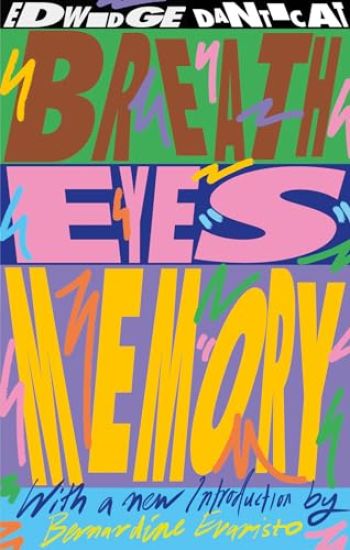
Edwidge Danticat's groundbreaking debut, with new introduction from Booker Prize winner Bernardine EvaristoAt the age of twelve, Sophie Caco is sent from her impoverished Haitian village to New York to be reunited with a mother she barely remembers. There she discovers secrets that no child should ever know, and a legacy of shame that can be healed only when she returns to Haiti - to the women who first reared her. What ensues is a passionate journey through a landscape charged with the supernatural and scarred by political violence.In her stunning literary debut, Danticat evokes the wonder, terror, and heartache of her native Haiti - and the enduring strength of Haiti's women - with vibrant imagery and narrative grace that bear witness to her people's suffering and courage.AN OPRAH BOOK CLUB SELECTION 'A vision of female solidarity which transcends place and time' Sunday Times'Exquisite and unforgettable' Washington Post'Extraordinarily successful' New York Times Book Review'A first novel of precious humanity' Independent
Behind the Mountains

Behind the Mountains

Edwidge Danticat

Scholastic Press
2022
nidottu
A lyrical and poignant coming-of-age story about one girl's immigration experience, as she moves from Haiti to New York City, by award-winning author Edwidge Danticat.It is election time in Haiti, and bombs are going off in the capital city of Port-au-Prince. During a visit from her home in rural Haiti, Celiane Esp rance and her mother are nearly killed. Looking at her country with new eyes, Celiane gains a fresh resolve to be reunited with her father in Brooklyn, New York.The harsh winter and concrete landscape of her new home are a shock to Celiane, who witnesses her parents' struggle to earn a living and her brother's uneasy adjustment to American society, and at the same time encounters her own challenges with learning and school violence.National Book Award finalist Edwidge Danticat weaves a beautiful, honest, and timely story of the American immigrant experience in this luminous novel about resilience, hope, and family.
Plough Quarterly No. 30 – Made Perfect

Plough Quarterly No. 30 – Made Perfect

Molly McCully Brown; Victoria Reynolds Farmer; Edwidge Danticat; Stephanie Saldaña; Kelsey Osgood; Christian Wiman; Amy Julia Becker; Ross Douthat; Eugene Vodolazkin; Sarah C. Williams; Isaac T. Soon; Leah Libresco Sargeant

PLOUGH PUBLISHING HOUSE
2021
pokkari
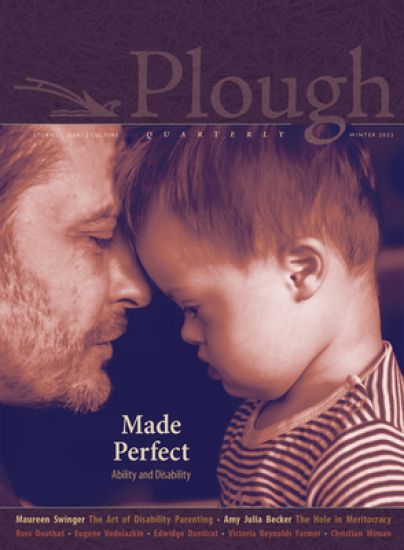
Whose lives count as fully human? The answer matters for everyone, disabled or not.The ancient Greek ideal linked physical wholeness to moral wholeness – the virtuous citizen was “beautiful and good.” It’s an ideal that has all too often turned deadly, casting those who do not measure up as less than human. In the pre-Christian era, infants with disabilities were left on the rocks; in modern times, they have been targeted by eugenics.Much has changed, thanks to the tenacious advocacy of the disability rights movement. Yesteryear’s hellish institutions have given way to customized educational programs and assisted living centers. Public spaces have been reconfigured to improve access. Therapies and medical technology have advanced rapidly in sophistication and effectiveness. Protections for people with disabilities have been enshrined in many countries’ antidiscrimination laws.But these victories, impressive as they are, mask other realities that collide awkwardly with society’s avowals of equality. Why are parents choosing to abort a baby likely to have a disability? Why does Belgian law allow for euthanasia in cases of disability, even absent a terminal diagnosis or physical pain? Why, when ventilators were in short supply during the first Covid wave, did some states list disability as a reason to deny care?On this theme: - Heonju Lee tells how his son with Down syndrome saved another child’s life.- Molly McCully Brown and Victoria Reynolds Farmer recount their personal experiences with disability.- Amy Julia Becker says meritocracies fail because they value the wrong things.- Maureen Swinger asks six mothers around the world about raising a child with disabilities.- Joe Keiderling documents the unfinished struggle for disability rights.- Isaac T. Soon wonders if Saint Paul’s “thorn in the flesh” was a disability.- Leah Libresco Sargeant reviews What Can a Body Do? and Making Disability Modern.- Sarah C. Williams says testing for fetal abnormalities is not a neutral practice.Also in the issue: - Ross Douthat is brought low by intractable Lyme disease.- Edwidge Danticat flees an active shooter in a packed mall.- Eugene Vodolazkin finds comic relief at funerals, including his own father’s.- Kelsey Osgood discovers that being an Orthodox Jew is strange, even in Brooklyn.- Christian Wiman pens three new poems.- Susannah Black profiles Flannery O’Conner.- Our writers review Eyal Press’s Dirty Work, Steve Coll’s Directorate S, and Millennial Nuns by the Daughters of Saint Paul.Plough Quarterly features stories, ideas, and culture for people eager to apply their faith to the challenges we face. Each issue includes in-depth articles, interviews, poetry, book reviews, and art.
Plough Quarterly No. 29 – Beyond Borders

Plough Quarterly No. 29 – Beyond Borders

Edwidge Danticat; Russell Moore; Ashley Lucas; Stephanie Saldaña; River Claure; Santiago Ramos; Ann Thomas; Simeon Wiehler; Yaniv Sagee

PLOUGH PUBLISHING HOUSE
2021
pokkari
Can we move beyond borders that divide us without losing our identity? Over the past decade, the yearning for rootedness, for being part of a story bigger than oneself, has flared up as a cultural force to be reckoned with. There’s much to affirm in this desire to belong to a people. That means pride in all that is admirable in the nation to which we belong – and repentance for its historic sins. A focus on national identity, of course, can lead to darker places. The new nationalists, who in Western countries often appeal to the memory of a Christian past, applaud when governments fortify borders to keep out people who are fleeing for their lives. (Needless to say, such actions are contrary to the Christian faith.) Is our yearning for roots doomed to lead to a heartless politics of exclusion? Does maintaining group or national identity require borders guarded with lethal violence? The answer isn’t artificial schemes for universal brotherhood, such as a universal language. Our differences are what make a community human. Might the true ground for community lie deeper even than shared nationality or language? After all, the biblical vision of humankind’s ultimate future has “every tribe and language and people and nation” coming together – beyond all borders but still as themselves. In this issue: - Santiago Ramos describes a double homelessness immigrant children experience as outsiders in both countries. - Ashley Lucas profiles a Black Panther imprisoned for life and looks at the impact on his family. - Simeon Wiehler helps a museum repatriate a thousand human skulls collected by a colonialist. - Yaniv Sagee calls Zionism back to its founding vision of a shared society with Palestinians. - Stephanie Saldaña finds the lost legendary chocolates of Damascus being crafted in Texas. - Edwidge Danticat says storytelling builds a home that no physical separation can take away. - Phographer River Claure reimagines Saint-Exupéry’s Le Petit Prince as an Aymara fairy tale. - Ann Thomas tells of liminal experiences while helping families choose a cemetery plot. - Russell Moore challenges the church to reclaim its integrity and staunch an exodus. You’ll also find: - Prize-winning poems by Mhairi Owens, Susan de Sola, and Forester McClatchey - A profile of Japanese peacemaker Toyohiko Kagawa - Reviews of Fredrik deBoer’s The Cult of Smart, Anna Neima’s The Utopians, and Amor Towles’s The Lincoln Highway - Insights on following Jesus from E. Stanley Jones, Barbara Brown Taylor, Teresa of Ávila, Oscar Romero, Martin Luther King Jr., Eberhard Arnold, Leonardo Boff, Meister Eckhart, C. S. Lewis, Hermas, and Dietrich Bonhoeffer Plough Quarterly features stories, ideas, and culture for people eager to put their faith into action. Each issue brings you in-depth articles, interviews, poetry, book reviews, and art to help you put Jesus’ message into practice and find common cause with others.
The African Lookbook

The African Lookbook

Catherine E. McKinley; Jacqueline Woodson; Edwidge Danticat

Bloomsbury Publishing USA
2021
sidottu
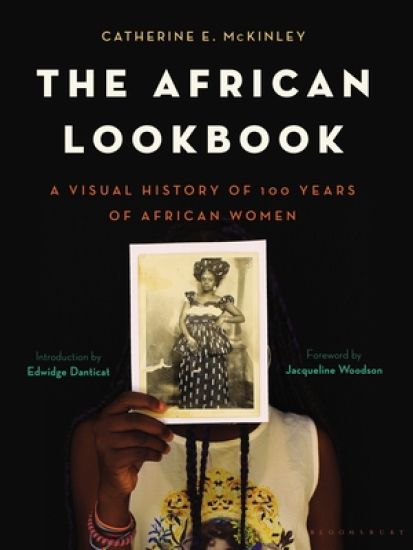
An unprecedented visual history of African women told in striking and subversive historical photographs--featuring an Introduction by Edwidge Danticat and a Foreword by Jacqueline Woodson. Most of us grew up with images of African women that were purely anthropological--bright displays of exotica where the deeper personhood seemed tucked away. Or they were chronicles of war and poverty--"poverty porn." But now, curator Catherine E. McKinley draws on her extensive collection of historical and contemporary photos to present a visual history spanning a hundred-year arc (1870-1970) of what is among the earliest photography on the continent. These images tell a different story of African women: how deeply cosmopolitan and modern they are in their style; how they were able to reclaim the tools of the colonial oppression that threatened their selfhood and livelihoods. Featuring works by celebrated African masters, African studios of local legend, and anonymous artists, The African Lookbook captures the dignity, playfulness, austerity, grandeur, and fantasy-making of African women across centuries. McKinley also features photos by Europeans--most starkly, striking nudes--revealing the relationships between white men and the Black female sitters where, at best, a grave power imbalance lies. It's a bittersweet truth that when there is exploitation there can also be profound resistance expressed in unexpected ways--even if it's only in gazing back. These photos tell the story of how the sewing machine and the camera became powerful tools for women's self-expression, revealing a truly glorious display of everyday beauty.
Plough Quarterly No. 26 – What Are Families For?

Plough Quarterly No. 26 – What Are Families For?

Ross Douthat; Edwidge Danticat; Sarah C. Williams; Rabbi Jonathan Sacks; Cardinal Christoph Schönborn; Leah Libresco Sargeant; Gina Dalfonzo; Zito Madu; Norann Voll; Noah Van Niel

Plough Publishing House
2020
pokkari
What is a family and what is it good for? Story 1: Families are in crisis, and the cause is moral breakdown. We urgently need a deep renewal of our family culture, supported by public policies that strengthen traditional marriage and encourage childbearing. Story 2: Families are in crisis, and the cause is capitalism. We need structural changes in society so that all families can flourish: parental leave, guaranteed healthcare, flexible work hours for parents, restorative justice. What if both these stories are true? This issue of Plough reflects on what a family is and what it is for, so that the transformations needed to solve the crisis of the family start from a firm basis, not a nostalgic ideal or progressive theorizing. As always, we take as a starting point the teachings of Jesus. It turns out his idea of family values might not be what people think. He calls us to extend our natural love for our biological family to a vast new throng of siblings – a family of many ethnicities and cultures that includes the widowed, the unmarried, the outsider, and the stranger. In this issue: - Ross Douthat asks what is stopping people from having the one more child they desire. - Edwidge Danticat says families are not nuclear. - Gina Dalfonzo reveals what singles know best about the church as family. - Norann Voll remembers a Jewish woman who escaped the Holocaust and married a German. - W. Bradford Wilcox and Alysse ElHage report on how the Covid pandemic has impacted the family. - Noah Van Niel asks whether masculinity is OK anymore. - Cardinal Christoph Schönborn reflects the burden of family history, celibacy, and monument toppling. - Sarah C. Williams pinpoints the source of feminist pioneer Josephine Butler’s daring. - Rabbi Jonathan Sacks begins the story of marriage 385 million years ago in a lake in Scotland. - Zito Madu recalls how his father’s amazing storytelling saved the past from oblivion. You’ll also find: - M. M. Townsend on what Louisa May Alcott and Simone de Beauvoir had in common - A special announcement about Plough’s new poetry contest: the Rhina Espaillat Poetry Award - A reading from G. K. Chesterton - Two new poems by Rachel Hadas - Reviews of Eric Edstrom’s Un-American, Maya Schenwar and Victoria Law’s Prison by Any Other Name, Brian Doyle’s One Long River of Song, and Martín Caparrós’s Hunger Plough Quarterly features stories, ideas, and culture for people eager to put their faith into action. Each issue brings you in-depth articles, interviews, poetry, book reviews, and art to help you put Jesus’ message into practice and find common cause with others.