Kirjojen hintavertailu. Mukana 12 203 816 kirjaa ja 12 kauppaa.

Kirjailija

Edwin G. Corr

Kirjat ja teokset yhdessä paikassa: 9 kirjaa, julkaisuja vuosilta 2003-2022, suosituimpien joukossa The Middle East Peace Process. Vertaile teosten hintoja ja tarkista saatavuus suomalaisista kirjakaupoista.

Mukana myös kirjoitusasut: Edwin G Corr

9 kirjaa

Kirjojen julkaisuhaarukka 2003-2022.

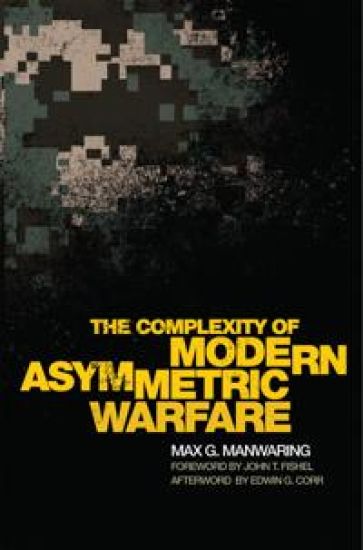
The Complexity of Modern Asymmetric Warfare

The Complexity of Modern Asymmetric Warfare

Max G. Manwaring; John T. Fishel; Edwin G. Corr

UNIVERSITY OF OKLAHOMA PRESS
2022
nidottu
Today more than one hundred small, asymmetric, and revolutionary wars are being waged around the world. This book provides invaluable tools for fighting such wars by taking enemy perspectives into consideration. The third volume of a trilogy by Max G. Manwaring, it continues the arguments the author presented in Insurgency, Terrorism, and Crime and Gangs, Pseudo-Militaries, and Other Modern Mercenaries. Using case studies, Manwaring outlines vital survival lessons for leaders and organizations concerned with national security in our contemporary world.The insurgencies Manwaring describes span the globe. Beginning with conflicts in Algeria in the 1950s and 1960s and El Salvador in the 1980s, he goes on to cover the Shining Path and its resurgence in Peru, Al Qaeda in Spain, popular militias in Cuba, Haiti, and Brazil, the Russian youth group Nashi, and drugs and politics in Guatemala, as well as cyber warfare.Large, wealthy, well-armed nations such as the United States have learned from experience that these small wars and insurgencies do not resemble traditional wars fought between geographically distinct nation-state adversaries by easily identified military forces. Twenty-first-century irregular conflicts blur traditional distinctions among crime, terrorism, subversion, insurgency, militia, mercenary and gang activity, and warfare.Manwaring’s multidimensional paradigm offers military and civilian leaders a much needed blueprint for achieving strategic victories and ensuring global security now and in the future. It combines military and police efforts with politics, diplomacy, economics, psychology, and ethics. The challenge he presents to civilian and military leaders is to take probable enemy perspectives into consideration, and turn resultant conceptions into strategic victories.
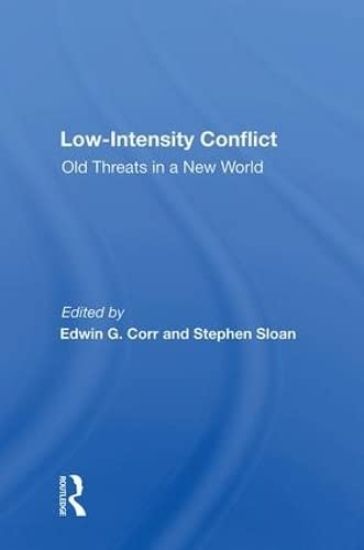
Low-intensity Conflict

Low-intensity Conflict

Edwin G Corr

TAYLOR FRANCIS LTD
2021
nidottu
The end of the cold war does not necessarily mean the end of the social and political instability that can lead to low-intensity conflicts. This book provides fresh insights into a difficult subject by bringing together knowledgeable contributors who have the academic expertise, operational experience, and strategic perspective essential to underst
Gangs, Pseudo-militaries, and Other Modern Mercenaries

Gangs, Pseudo-militaries, and Other Modern Mercenaries

Max G. Manwaring; John T. Fishel; Edwin G. Corr

University of Oklahoma Press
2020
nidottu
As the first decade of the twenty-first century has made brutally clear, the very definitions of war and the enemy have changed almost beyond recognition. Threats to security are now as likely to come from armed propagandists, popular militias, or mercenary organizations as they are from conventional armies backed by nation-states. In this timely book, national security expert Max G. Manwaring explores a little-understood actor on the stage of irregular warfare - the gang.Since the end of the Cold War, some one hundred insurgencies or irregular wars have erupted throughout the world. Gangs have figured prominently in more than half of those conflicts, yet these and other nonstate actors have received little focused attention from scholars or analysts. This book fills that void.Employing a case study approach, and believing that shadows from the past often portend the future, Manwaring begins with a careful consideration of the writings of V. I. Lenin. He then scrutinizes the Piqueteros in Argentina, gangs in Colombia, private armies in Mexico, Hugo Chavez's use of popular militias in Venezuela, and the looming threat of Al Qaeda in Western Europe.As conventional warfare is increasingly eclipsed by these irregular and ""uncomfortable"" wars, Manwaring boldly diagnoses the problem and recommends solutions that policymakers should heed.
Low-intensity Conflict

Low-intensity Conflict

Edwin G Corr

TAYLOR FRANCIS LTD
2019
sidottu
The end of the cold war does not necessarily mean the end of the social and political instability that can lead to low-intensity conflicts. This book provides fresh insights into a difficult subject by bringing together knowledgeable contributors who have the academic expertise, operational experience, and strategic perspective essential to underst
The Complexity of Modern Asymmetric Warfare

The Complexity of Modern Asymmetric Warfare

Max G. Manwaring; John T. Fishel; Edwin G. Corr

University of Oklahoma Press
2012
sidottu
Today more than one hundred small, asymmetric, and revolutionary wars are being waged around the world. This book provides invaluable tools for fighting such wars by taking enemy perspectives into consideration. The third volume of a trilogy by Max G. Manwaring, it continues the arguments the author presented in Insurgency, Terrorism, and Crime and Gangs, Pseudo-Militaries, and Other Modern Mercenaries. Using case studies, Manwaring outlines vital survival lessons for leaders and organizations concerned with national security in our contemporary world.The insurgencies Manwaring describes span the globe. Beginning with conflicts in Algeria in the 1950s and 1960s and El Salvador in the 1980s, he goes on to cover the Shining Path and its resurgence in Peru, Al Qaeda in Spain, popular militias in Cuba, Haiti, and Brazil, the Russian youth group Nashi, and drugs and politics in Guatemala, as well as cyber warfare.Large, wealthy, well-armed nations such as the United States have learned from experience that these small wars and insurgencies do not resemble traditional wars fought between geographically distinct nation-state adversaries by easily identified military forces. Twenty-first-century irregular conflicts blur traditional distinctions among crime, terrorism, subversion, insurgency, militia, mercenary and gang activity, and warfare.Manwaring's multidimensional paradigm offers military and civilian leaders a much needed blueprint for achieving strategic victories and ensuring global security now and in the future. It combines military and police efforts with politics, diplomacy, economics, psychology, and ethics. The challenge he presents to civilian and military leaders is to take probable enemy perspectives into consideration, and turn resultant conceptions into strategic victories.
Gangs, Pseudo-militaries, and Other Modern Mercenaries

Gangs, Pseudo-militaries, and Other Modern Mercenaries

Max G. Manwaring; John T. Fishel; Edwin G. Corr

University of Oklahoma Press
2010
sidottu
As the first decade of the twenty-first century has made brutally clear, the very definitions of war and the enemy have changed almost beyond recognition. Threats to security are now as likely to come from armed propagandists, popular militias, or mercenary organizations as they are from conventional armies backed by nation-states. In this timely book, national security expert Max G. Manwaring explores a little-understood actor on the stage of irregular warfare - the gang.Since the end of the Cold War, some one hundred insurgencies or irregular wars have erupted throughout the world. Gangs have figured prominently in more than half of those conflicts, yet these and other nonstate actors have received little focused attention from scholars or analysts. This book fills that void.Employing a case study approach, and believing that shadows from the past often portend the future, Manwaring begins with a careful consideration of the writings of V. I. Lenin. He then scrutinizes the Piqueteros in Argentina, gangs in Colombia, private armies in Mexico, Hugo Chavez's use of popular militias in Venezuela, and the looming threat of Al Qaeda in Western Europe.As conventional warfare is increasingly eclipsed by these irregular and ""uncomfortable"" wars, Manwaring boldly diagnoses the problem and recommends solutions that policymakers should heed.
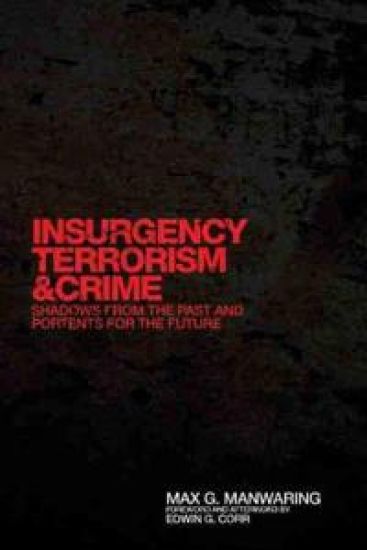
Insurgency, Terrorism, and Crime

Insurgency, Terrorism, and Crime

Max G. Manwaring; Edwin G. Corr

University of Oklahoma Press
2008
sidottu
New insights for understanding and combating Al Qaeda and other contemporary security threatsWars were once fought mainly between nations - a presumption put to rest on September 11, 2001. Al Qaeda showed that nonstate actors could threaten a traditional nation-state and pursue strategic objectives without conventional weaponry, thereby altering the nature of war and often rendering military firepower meaningless.National security expert Max G. Manwaring examines the emergence of nonstate actors in a geopolitical world. Manwaring invites policy makers to look past familiar insurgencies such as those in Vietnam and Iraq and consider global security problems from multiple perspectives. He concludes that the use of calculated political and psychological power may be the most effective response in many situations.The power to make war no longer rests solely in the hands of traditional governments. Manwaring analyzes the context, conduct, and outcome of today's irregular wars and applies proven methods of effective response to seven case studies: Colombia, Al Qaeda, Portugal, Uruguay, Venezuela, Italy, and Central American gangs and criminal organizations.Insurgency, Terrorism, and Crime translates the cogent lessons of recent events into workable strategies for tomorrow's leaders. This book is required reading for students of national security policy and foreign-policy analysis.
Uncomfortable Wars Revisited

Uncomfortable Wars Revisited

John T. Fishel; Max G. Manwaring; Edwin G. Corr

University of Oklahoma Press
2008
nidottu
Since the end of the Cold War, and especially since September 11, 2001, the United States has faced daunting challenges in the areas of foreign policy and national security. Threatened by failing states, insurgencies, civil wars, and terrorism, the nation has been compelled to re-evaluate its traditional responses to global conflict. In this timely book, John T. Fishel and Max G. Manwaring present a much-needed strategy for conducting unconventional warfare in an increasingly violent world.In the early 1990s, Manwaring introduced a new paradigm for addressing low-intensity conflicts, or conflicts other than major wars. Termed the Manwaring Paradigm or SWORD (Small Wars Operations Research Directorate) model, it has been tested successfully by scholars and practitioners and refined in the wake of new and significant ""uncomfortable wars"" around the world, most notably the conflicts in Afghanistan and Iraq. Uncomfortable Wars Revisited broadens the definition of the original paradigm and applies it to specific confrontations
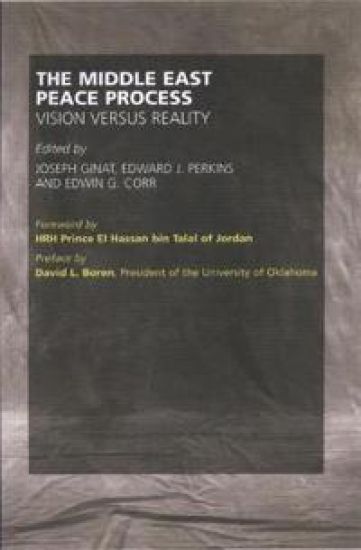
The Middle East Peace Process

The Middle East Peace Process

Joseph Ginat; Edward J. Perkins; Edwin G. Corr; HRH Prince El Hassan bin Talal of Jordan

University of Oklahoma Press
2003
sidottu
Political stability is a crucial precondition for peace in the Middle East. In The Middle East Peace Process: Vision versus Reality, Joseph Ginat, Edward J. Perkins, and Edwin G. Corr have assembled a comprehensive overview of the complex peace negotiations taking place among Middle Eastern nations to resolve the Israeli-Palestinian conflict and forge normal relations between Arab nations and Israel.More than thirty academics and practitioners probe, discuss, and engage themselves with issues concerning the peace process. The volume focuses first on the Oslo Agreement and the Palestinian Track; then addresses Israeli relations with Egypt, Jordan, Lebanon, Syria, and Iraq; and concludes with an examination of relations between Israelis and Palestinians in Jerusalem.The Middle East Peace Process is the result of the Center for Peace Studies conference ""The Peace Process in the Middle East,"" cosponsored by the International Program Center at the University of Oklahoma and the University of Haifa in Israel. The volume features a foreword by HRH Prince El Hassan bin Talal of Jordan and a preface by David L. Boren, President of the University of Oklahoma.